A reveller from Unidos do Viradouro samba school performs during the first night of the Carnival parade at the Sambadrome in Rio de Janeiro, Brazil, April 23, 2022. (Photo by Amanda Perobelli/Reuters)
A reveler from Vila Isabel samba school performs during the second night of the carnival parade at the Sambadrome, in Rio de Janeiro, Brazil on February 21, 2023. (Photo by Pilar Olivares/Reuters)
A reveller from Unidos da Tijuca samba school performs during the second night of the carnival parade at the Sambadrome in Rio de Janeiro, Brazil, February 28, 2017. (Photo by Ricardo Moraes/Reuters)
Ketula Melo from the Imperatriz Leopoldinense samba school performs during Carnival celebrations at the Sambadrome in Rio de Janeiro, Brazil, Friday, April 22, 2022. (AP Photo/Bruna Prado)
A Beija-Flor samba school member performs during the second night of the Carnival parade at the Sambadrome in Rio de Janeiro, Brazil on February 25, 2020. (Photo by Sergio Moraes/Reuters)
Model Juliana Paesthe (C) of Viradouro samba school participates in the annual carnival parade in Rio de Janeiro's Sambadrome, February 15, 2015. (Photo by Ricardo Moraes/Reuters)
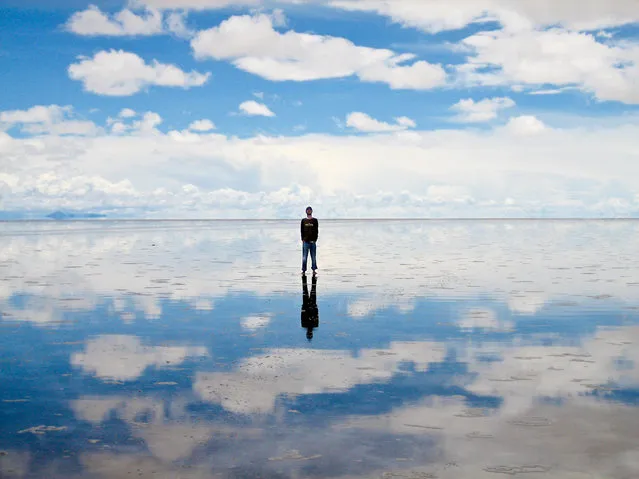
Salar de Uyuni (or Salar de Tunupa) is the world's largest salt flat at 10,582 square kilometers (4,086 sq mi). It is located in the Potosí and Oruro departments in southwest Bolivia, near the crest of the Andes, and is elevated 3,656 meters (11,995 ft) above mean sea level. The Salar was formed as a result of transformations between several prehistoric lakes. It is covered by a few meters of salt crust, which has an extraordinary flatness with the average altitude variations within one meter over the entire area of the Salar.
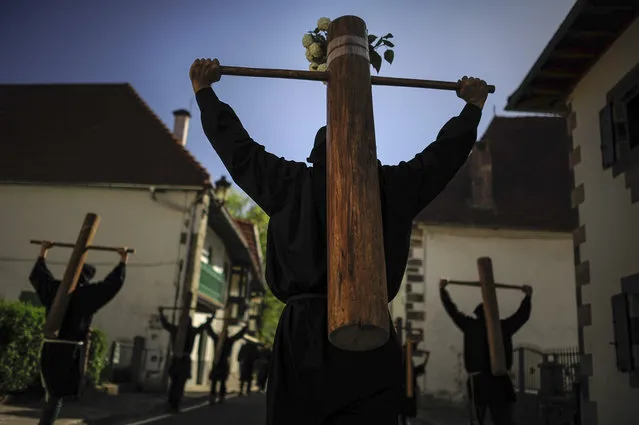
Masked penitents holds their crosses during spring “Romeria Cruceros de Arce”, in Roncesvalles, northern Spain, Sunday, May 10, 2015. Every year on the second Sunday in spring, people with crosses march from their small Pyrenees towns to Roncesvalles Church in tribute of the Virgin. (Photo by Alvaro Barrientos/AP Photo)