Loading...
Done
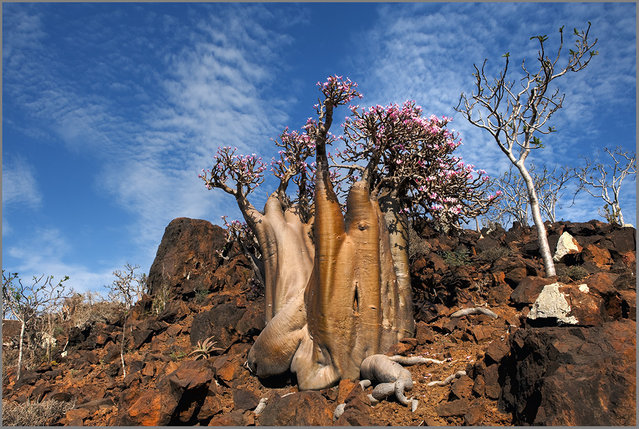
The Wonder Land of Socotra, Yemen

The largest island, also called Socotra, is about 95% of the landmass of the archipelago. It lies some 240 kilometres (150 mi) east of the Horn of Africa and 380 kilometres (240 mi) south of the Arabian Peninsula. The island is very isolated and through the process of speciation, a third of its plant life is found nowhere else on the planet. It has been described as the most alien-looking place on Earth. The island measures 132 kilometres (82 mi) in length and 49.7 kilometres (30.9 mi) in width.
Details
25 Sep 2013 09:11:00


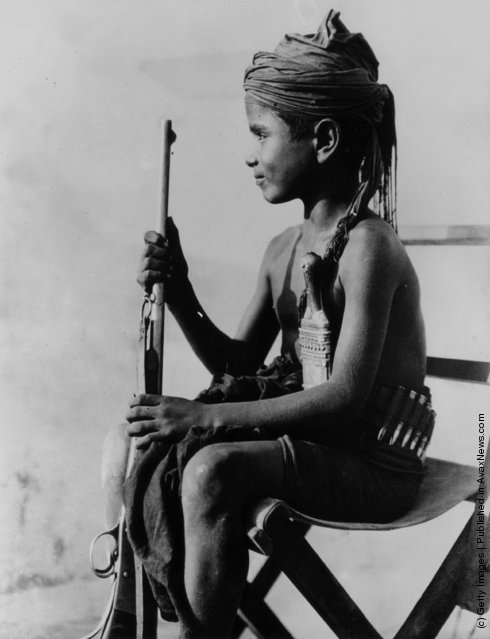
A young arab boy, armed with a rifle and a knife, in the Aden Protectorate near Yemen. (Photo by Richards/Fox Photos/Getty Images). February 1938
Details
01 Apr 2011 14:39:00
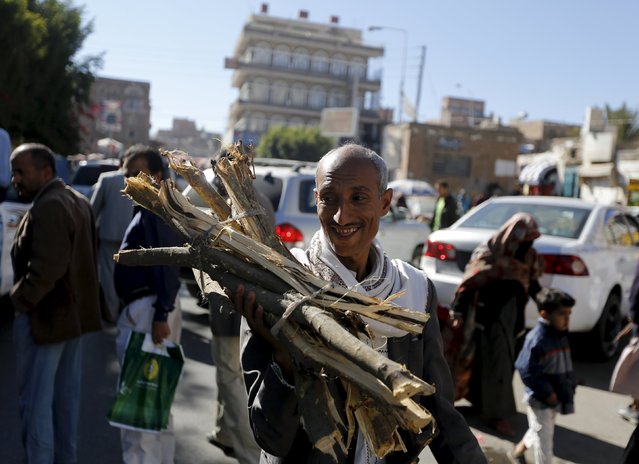
A man smiles as he carries firewood he bought on a street amid ongoing fuel and cooking gas shortages in Yemen's capital Sanaa December 2, 2015. (Photo by Khaled Abdullah/Reuters)

A man smiles as he carries firewood he bought on a street amid ongoing fuel and cooking gas shortages in Yemen's capital Sanaa December 2, 2015. (Photo by Khaled Abdullah/Reuters)
Details
04 Dec 2015 08:00:00
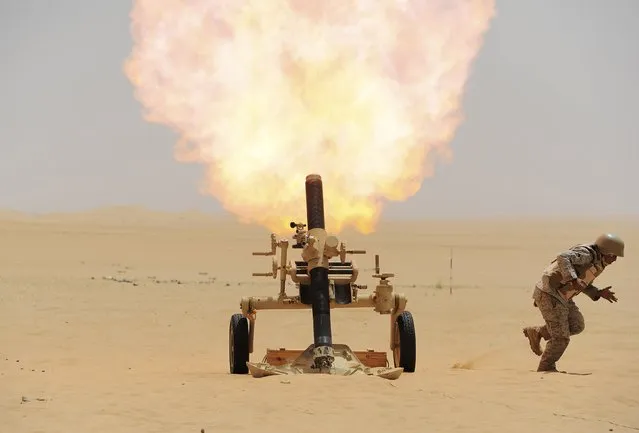
A Saudi soldier fires a mortar towards Houthi movement position, at the Saudi border with Yemen April 21, 2015. (Photo by Reuters/Stringer)

A Saudi soldier fires a mortar towards Houthi movement position, at the Saudi border with Yemen April 21, 2015. (Photo by Reuters/Stringer)
Details
22 Apr 2015 09:10:00


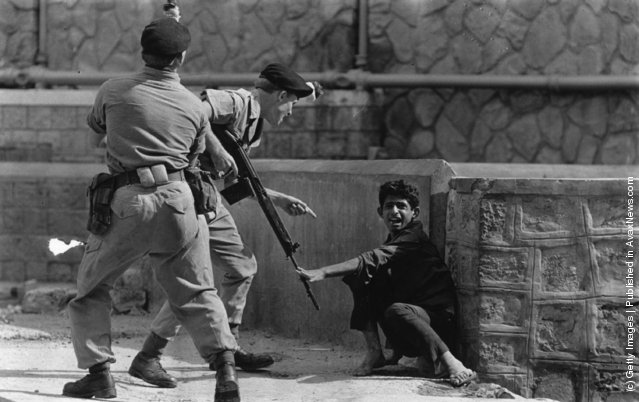
An Aden civilian crouching in terror as British soldiers threaten him during Arabian demonstrations in Crater. (Photo by Express Newspapers/Getty Images). 1967
Details
04 Apr 2011 07:28:00
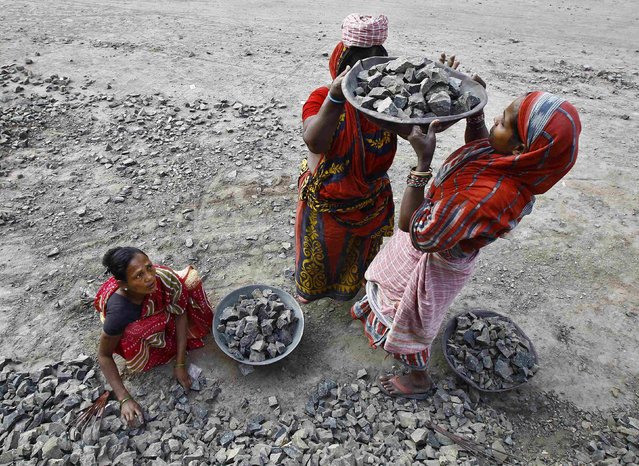
Women labourers work at the construction site of a road in Kolkata January 8, 2015. Across towns and cities in India, it is not uncommon to see women cleaning building sites, carrying bricks and or shoveling gravel - helping construct the infrastructure necessary for the country's economic and social development. (Photo by Rupak De Chowdhuri/Reuters)

Women labourers work at the construction site of a road in Kolkata January 8, 2015. Across towns and cities in India, it is not uncommon to see women cleaning building sites, carrying bricks and or shoveling gravel – helping construct the infrastructure necessary for the country's economic and social development. They help build roads, railway tracks, airports, and offices. They lay pipes for clean water supplies, cables for telecommunications, and dig the drains for sewage systems. But although women make up at least 20 percent of India's 40 million construction workers, they are less recognized than male workers with lower pay and often prone to safety hazards and sexual harassment. They are often unaware of their rights or scared to complain, say activists now trying to campaign for better treatment of women in the construction industry. (Photo by Rupak De Chowdhuri/Reuters)
Details
15 Jan 2015 13:47:00
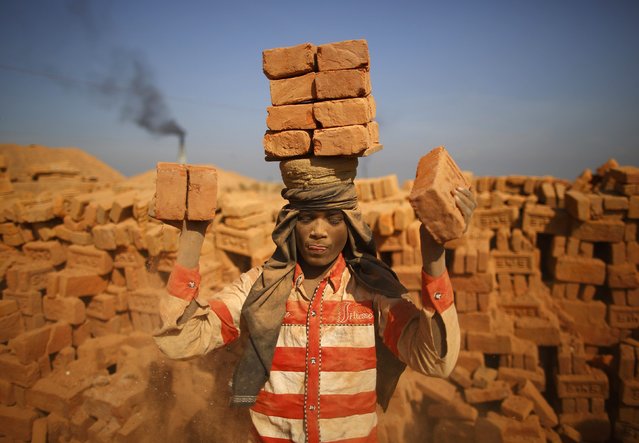
A worker stack bricks on his head at a brick factory in Lalitpur January 12, 2015. (Photo by Navesh Chitrakar/Reuters)

A worker stack bricks on his head at a brick factory in Lalitpur January 12, 2015. (Photo by Navesh Chitrakar/Reuters)
Details
16 Jan 2015 12:40:00
A sales woman of a fish shop shows king crabs to a customer and negotiates the price in Noryangjin Fish Market is seen on August 1, 2015 in Seoul, South Korea. Noryangjin Fish Market was established in 1927 as Gyeongseong Susan in Jung-gu near Seoul Station and moved to its current location in 1971. (Photo by Shin Woong-jae/The Washington Post)

A sales woman of a fish shop shows king crabs to a customer and negotiates the price in Noryangjin Fish Market is seen on August 1, 2015 in Seoul, South Korea. Noryangjin Fish Market was established in 1927 as Gyeongseong Susan in Jung-gu near Seoul Station and moved to its current location in 1971. (Photo by Shin Woong-jae/The Washington Post)
Details
11 Sep 2015 12:21:00