Loading...
Done
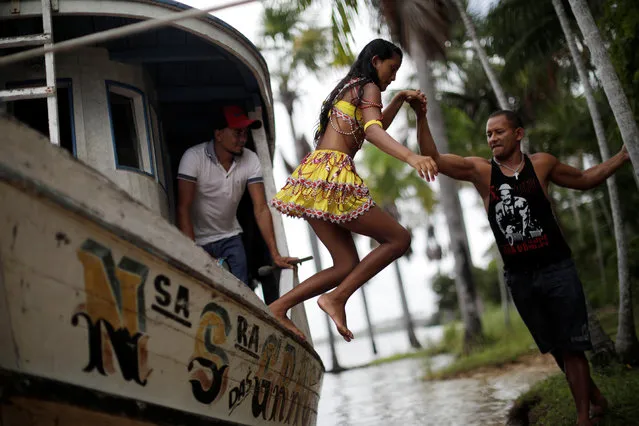
A member of the “Bloco Ultima Hora” group gets off a boat during Carnival of the Waters, where costumed and colorful boats navigate the river Tentem, around the islands near the city of Cameta, Brazil on February 8, 2018. (Photo by Ueslei Marcelino/Reuters)

A member of the “Bloco Ultima Hora” group gets off a boat during Carnival of the Waters, where costumed and colorful boats navigate the river Tentem, around the islands near the city of Cameta, Brazil on February 8, 2018. (Photo by Ueslei Marcelino/Reuters)
Details
14 Feb 2018 00:02:00
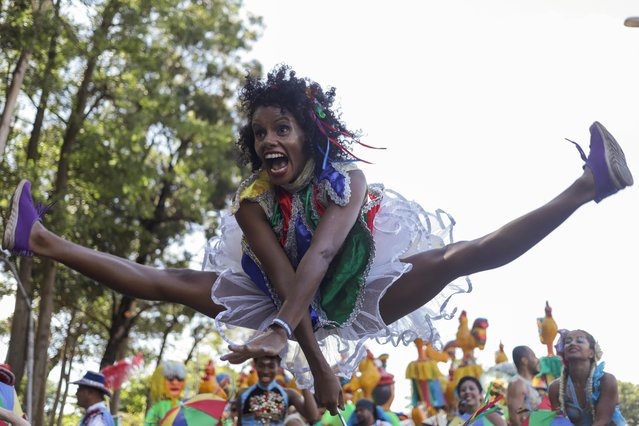
A reveller performs while attending the block party “Galo da Madrugada” during carnival festivities in Sao Paulo, Brazil on February 25, 2020. (Photo by Rahel Patrasso/Reuters)

A reveller performs while attending the block party “Galo da Madrugada” during carnival festivities in Sao Paulo, Brazil on February 25, 2020. (Photo by Rahel Patrasso/Reuters)
Details
27 Feb 2020 00:03:00
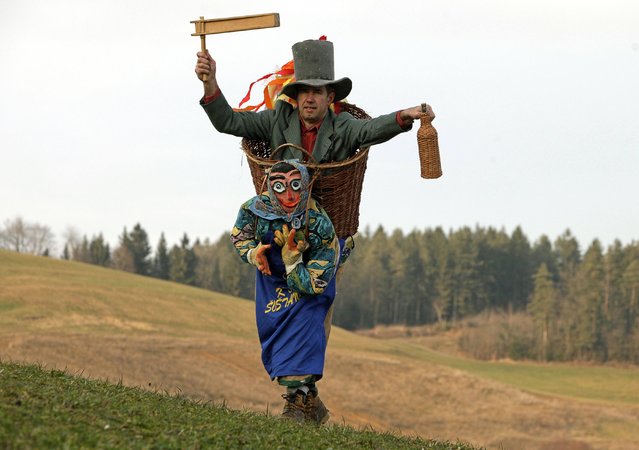
A man wearing a native costume named “Woman Carrying Husband” poses ahead of the Carnival in Sostanj January 15, 2015. (Photo by Srdjan Zivulovic/Reuters)

A man wearing a native costume named “Woman Carrying Husband” poses ahead of the Carnival in Sostanj January 15, 2015. Slovenians and members of various ethnological groups celebrate the annual carnival, also known locally as Pust, by wearing traditional masks and costumes to symbolically “chase away” the winter. Prust runs from February 7 to 17 this year. (Photo by Srdjan Zivulovic/Reuters)
Details
08 Feb 2015 12:07:00
A Brazilian Navy member ejects spent cartridges while shooting rubber bullets during an exhibition of their operational capacity to combat terrorist attacks and riots ahead of the FIFA Confederations Cup and World Youth Day in Rio de Janeiro on May 27, 2013. (Photo by Ricardo Moraes/Reuters)

A Brazilian Navy member ejects spent cartridges while shooting rubber bullets during an exhibition of their operational capacity to combat terrorist attacks and riots ahead of the FIFA Confederations Cup and World Youth Day in Rio de Janeiro on May 27, 2013. (Photo by Ricardo Moraes/Reuters)
Details
31 May 2013 12:12:00
An unidentified man keeps a hotel employee with an explosive-laden vest at a balcony of the hotel in Brasilia on September 29, 2014. (Photo by Evaristo Sa/AFP Photo)

“A Brazilian hotel was evacuated in the capital, Brasilia, on Monday after a man took hostage an employee who was held for hours before he was safely released to police. Firefighters and police cordoned off the area and about 300 guests and other employees left the hotel – some reportedly told to leave by the man who took the employee hostage”. – Associated Press. (Photo by Evaristo Sa/AFP Photo)
Details
30 Sep 2014 08:59:00
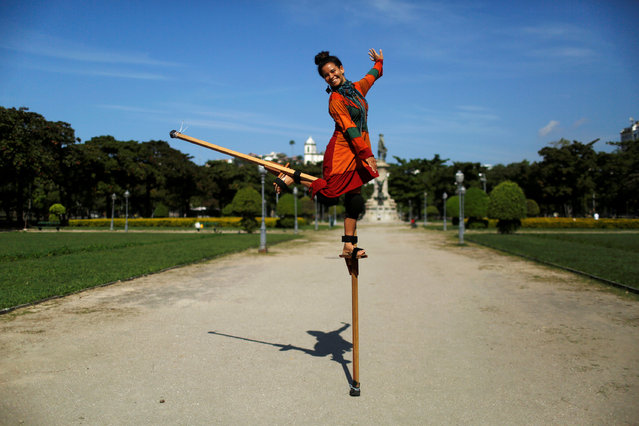
Raquel Poti, a 32-year-old street artist, poses at a park in Rio de Janeiro, Brazil, June 25, 2016. Raquel thinks the Olympics promotes a lifestyle that combines sports, culture and education. She is concerned about the large investment for the event while the population needs improvements in basic services. (Photo by Pilar Olivares/Reuters)

Just a week before Rio de Janeiro hosts South America's first Olympics, city residents expressed mixed feelings about the cost and security of the Games, while holding out hope they will bring joy to a nation facing economic and political crises. The conflicted thoughts mirror a recent survey by the Datafolha polling group showing that half of Brazilians were opposed to holding the Games, while 63 percent think the costs of hosting the event will outweigh benefits. (Photo by Pilar Olivares/Reuters)
Details
03 Aug 2016 11:51:00
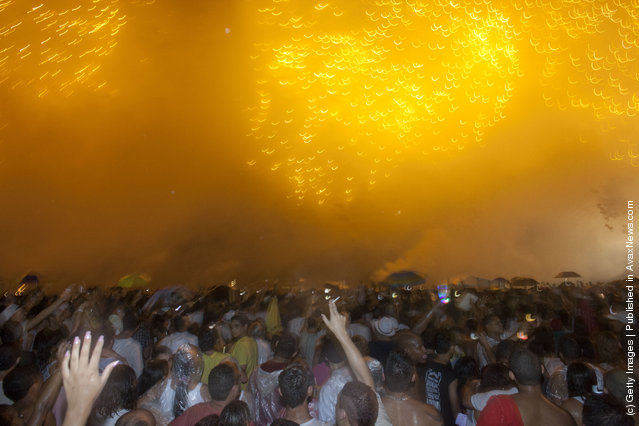
Brazilians Flock To Ocean For New Year's Eve Ritual

Brazilians celebrate at the annual New Year's Eve beach party on December 31, 2011 for the Copacabana Reveillon in Rio De Janeiro, Brazil. (Photo by Konrad Fiedler/Getty Images)
Details
01 Jan 2012 11:12:00
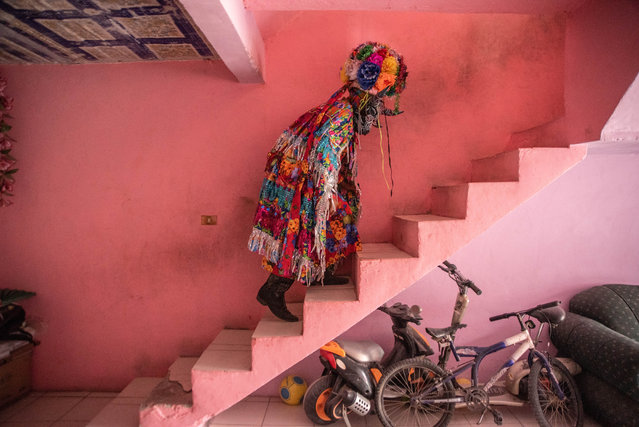
Inhabitants of the community of Coyolillo celebrate their Afro-descendant carnival in Veracruz, Mexico on February 25, 2020. This carnival has more than 100 years of history and is the heritage of the African workers who arrived in that area more than 300 years ago to work in the sugar cane fields. The event is known for the colourful robes, capes and animal masks – of bulls, deer, goats and cows – worn by participants. As such, the carnival is a unique expression of African-Mexican folk art. (Photo by Hector Adolfo Quintanar Perez/ZUMA Wire/Rex Features/Shutterstock)

Inhabitants of the community of Coyolillo celebrate their Afro-descendant carnival in Veracruz, Mexico on February 25, 2020. This carnival has more than 100 years of history and is the heritage of the African workers who arrived in that area more than 300 years ago to work in the sugar cane fields. (Photo by Hector Adolfo Quintanar Perez/ZUMA Wire/Rex Features/Shutterstock)
Details
05 Mar 2020 00:03:00