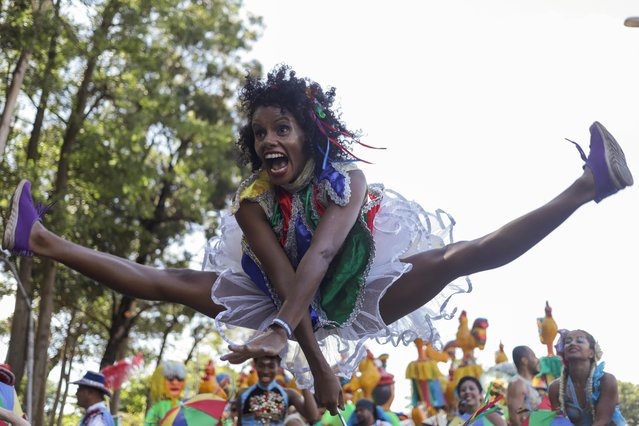
A reveller performs while attending the block party “Galo da Madrugada” during carnival festivities in Sao Paulo, Brazil on February 25, 2020. (Photo by Rahel Patrasso/Reuters)
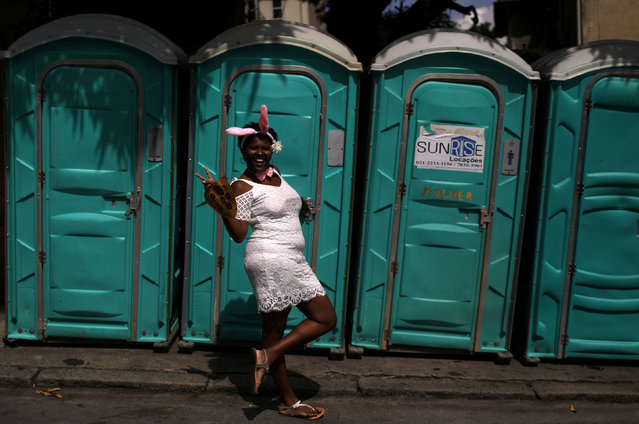
A reveller takes part in an annual block party known as “Ceu na Terra” (Heaven on Earth), during carnival festivities in Rio de Janeiro, Brazil February 3, 2018. (Photo by Pilar Olivares/Reuters)
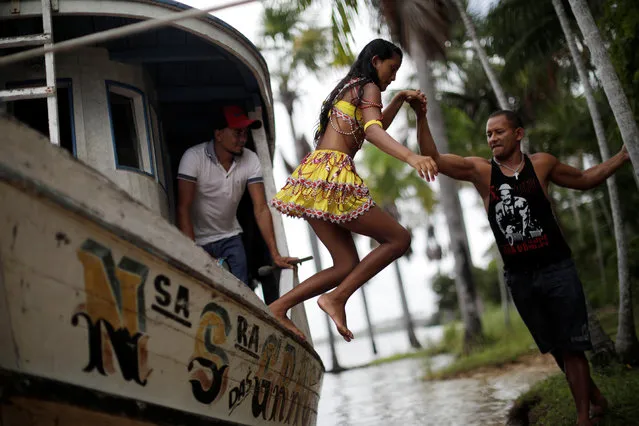
A member of the “Bloco Ultima Hora” group gets off a boat during Carnival of the Waters, where costumed and colorful boats navigate the river Tentem, around the islands near the city of Cameta, Brazil on February 8, 2018. (Photo by Ueslei Marcelino/Reuters)
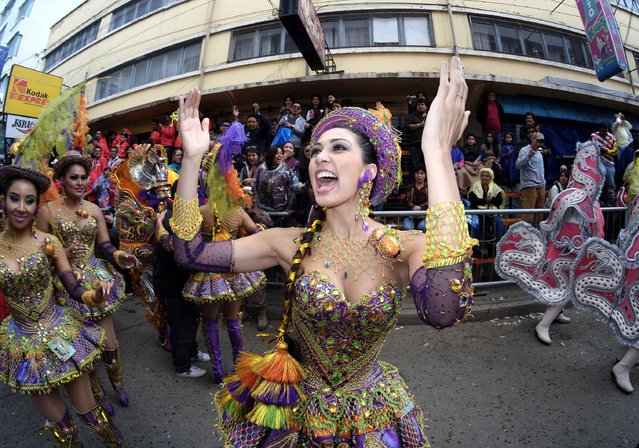
A member of the “Morenada Los Cocanis” group dances during the Carnival parade in Oruro February 14, 2015. Thousands of dancers and tourists attend the carnival celebrations in Oruro, south of La Paz. (Photo by David Mercado/Reuters)
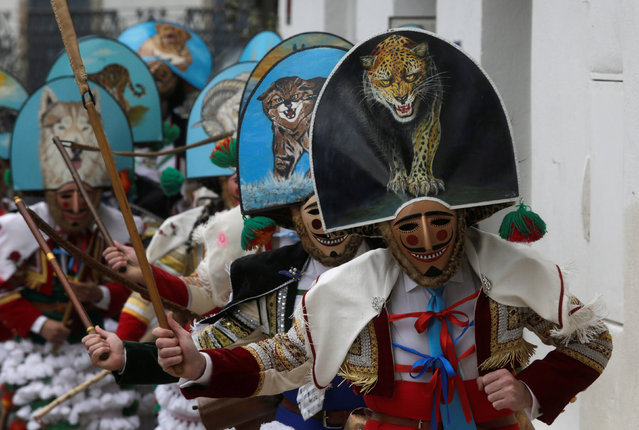
Carnival revellers dressed as “Peliqueiros” run along a street in the village of Laza, Spain February 26, 2017. “Peliqueiros”, or ancient tax collectors, pursued villagers through the streets ringing their cowbells and hitting villagers with their sticks. (Photo by Miguel Vidal/Reuters)
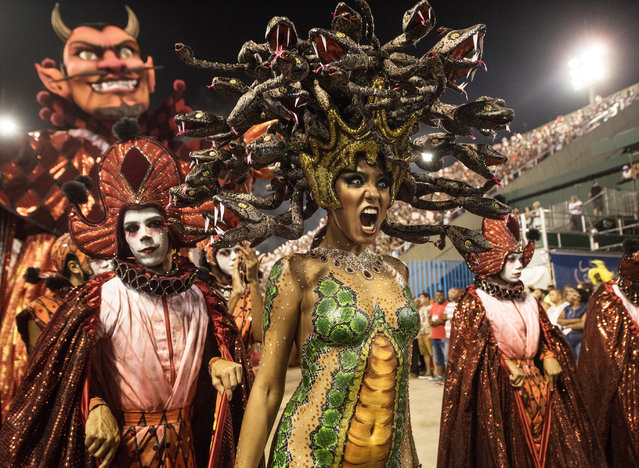
A performer dances during Salgueiro performance at the Rio de Janeiro Carnival at Sambodromo on February 26, 2017 in Rio de Janeiro, Brazil. (Photo by Raphael Dias/Getty Images)
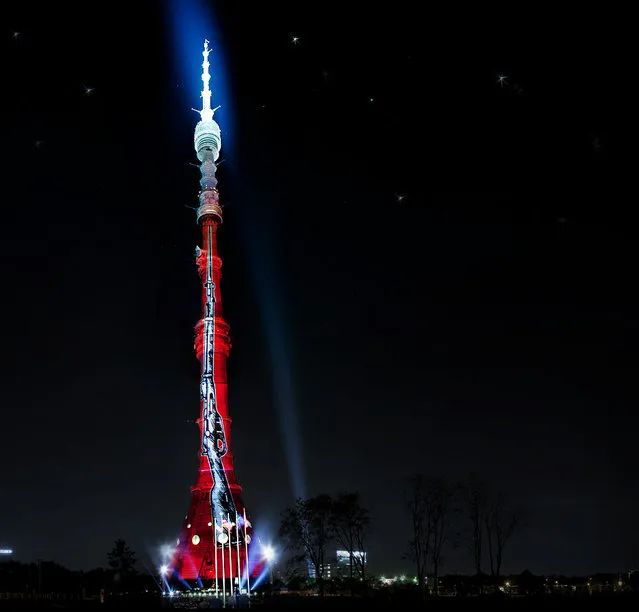
Ostankino Tower is a television and radio tower in Moscow, Russia. Standing 540.1 metres (1,772 ft) tall, Ostankino was designed by Nikolai Nikitin. It is currently the tallest freestanding structure in Europe and sixth tallest in the world. The tower was the first free-standing structure to exceed 500 m (1,600 ft) in height. Ostankino was built to mark the 50th anniversary of the October Revolution. It is named after the Ostankino district of Moscow in which it is located.