Loading...
Done
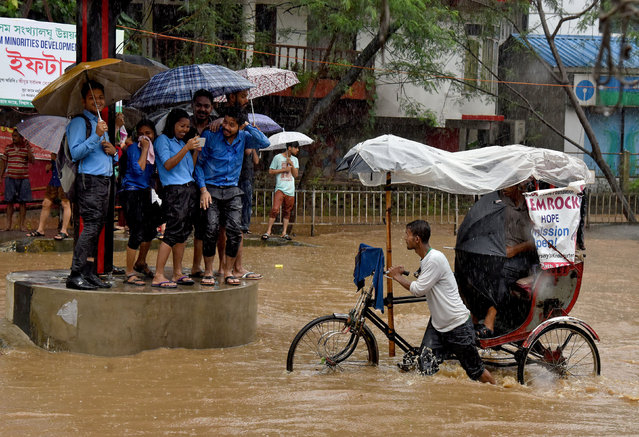
College students take shelter at a traffic point as a man paddles his rickshaw through a flooded road during heavy rain in Guwahati, India, June 13, 2017. (Photo by Anuwar Hazarika/Reuters)

College students take shelter at a traffic point as a man paddles his rickshaw through a flooded road during heavy rain in Guwahati, India, June 13, 2017. (Photo by Anuwar Hazarika/Reuters)
Details
18 Jun 2017 03:31:00
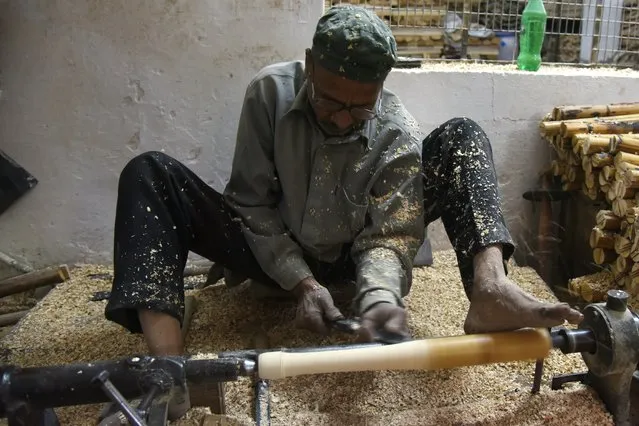
In this photograph taken on December 14, 2016, an Indian craftsman works on unfinished cricket bats in a factory in Meerut, some 70 kms north- east of New Delhi. As Indian factory worker Jitender Singh carves out another big- hitting slab of thick willow he insists MCC proposals to limit the size of cricket bats won' t tame Twenty20 marauders. “I don' t think the thickness matters. It' s more about the balance of the bat and the talent of the batsman”, says Singh, who has made bats for many stars, including South Africa's AB de Villiers. The World Cricket committee of the MCC, the guardians of the game, recommended in December 2016 that limitations be placed on the width and depth of bats because it had become too easy to smash fours and sixes. (Photo by Dominique Faget/AFP Photo)

In this photograph taken on December 14, 2016, an Indian craftsman works on unfinished cricket bats in a factory in Meerut, some 70 kms north- east of New Delhi. (Photo by Dominique Faget/AFP Photo)
Details
11 Jan 2017 14:32:00
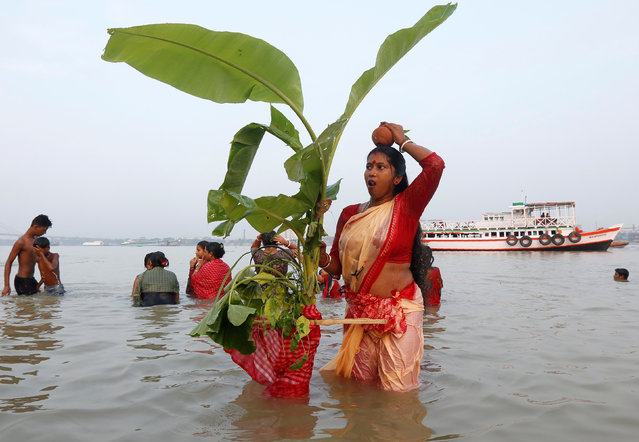
A Hindu devotee ululates as she holds a banana tree trunk after taking a dip in the waters of the Ganges river during a ritual as part of the Durga Puja festival in Kolkata, India, September 27, 2017. (Photo by Rupak De Chowdhuri/Reuters)

A Hindu devotee ululates as she holds a banana tree trunk after taking a dip in the waters of the Ganges river during a ritual as part of the Durga Puja festival in Kolkata, India, September 27, 2017. (Photo by Rupak De Chowdhuri/Reuters)
Details
05 Oct 2017 07:14:00
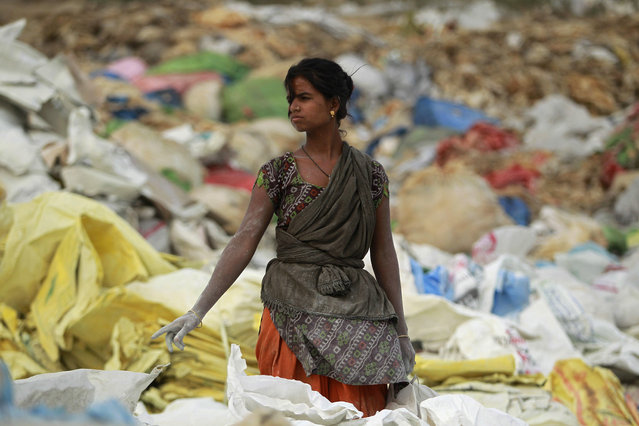
An Indian rag picker collects plastic bags at an industrial area on the outskirts of Jammu, India, Tuesday, June 5, 2018. The U.N. says government bans on plastic can be effective in cutting back on waste but poor planning and follow-through have left many such bans ineffective. (Photo by Channi Anand/AP Photo)

An Indian rag picker collects plastic bags at an industrial area on the outskirts of Jammu, India, Tuesday, June 5, 2018. The U.N. says government bans on plastic can be effective in cutting back on waste but poor planning and follow-through have left many such bans ineffective. (Photo by Channi Anand/AP Photo)
Details
08 Jun 2018 00:01:00
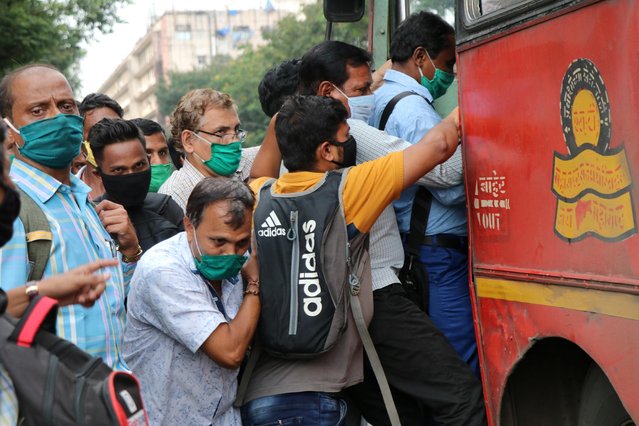
People board a passenger bus during rush hour at a bus terminal, amidst the coronavirus disease (COVID-19) outbreak, in Mumbai, India, September 9, 2020. (Photo by Niharika Kulkarni/Reuters)

People board a passenger bus during rush hour at a bus terminal, amidst the coronavirus disease (COVID-19) outbreak, in Mumbai, India, September 9, 2020. (Photo by Niharika Kulkarni/Reuters)
Details
15 Sep 2020 00:05:00
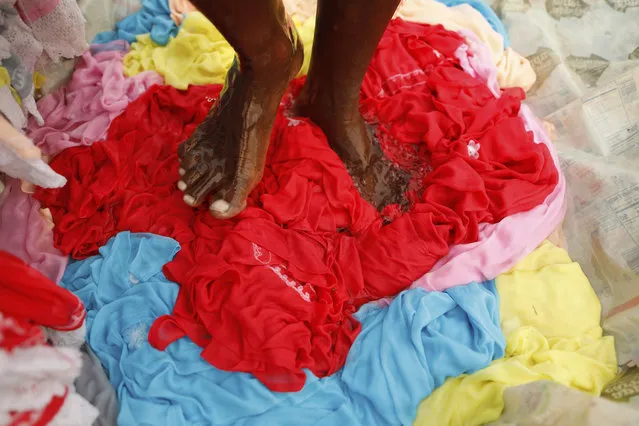
A dhobi, or a washerman washes cloths on the banks of the River Gomti in Lucknow, India, Saturday, September 12, 2020. Dhobis are traditional laundry workers who wash clothes by hand and dry them in the sun, an occupation which has been in existence for generations. Most cities in India have a Dhobi Ghat, or washermen's area, where the city's pile of clothes is laundered. This practice is still popular in India, despite of modern technology. Around 1,000 families work in Lucknow's Dhobi Ghat. However, in light of the novel coronavirus, their wages have decreased drastically. With each family earning around US$100-200 per month. (Photo by Rajesh Kumar Singh/AP Photo)

A dhobi, or a washerman washes cloths on the banks of the River Gomti in Lucknow, India, Saturday, September 12, 2020. Dhobis are traditional laundry workers who wash clothes by hand and dry them in the sun, an occupation which has been in existence for generations. Most cities in India have a Dhobi Ghat, or washermen's area, where the city's pile of clothes is laundered. This practice is still popular in India, despite of modern technology. Around 1,000 families work in Lucknow's Dhobi Ghat. However, in light of the novel coronavirus, their wages have decreased drastically. With each family earning around US$100-200 per month. (Photo by Rajesh Kumar Singh/AP Photo)
Details
25 Sep 2020 00:03:00
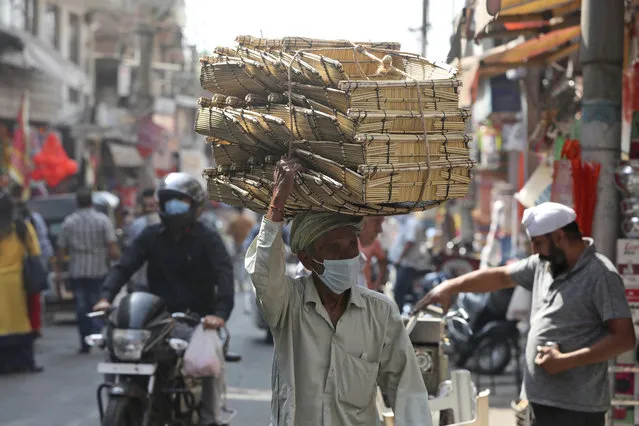
An Indian villager wearing a face mask as a precaution against the coronavirus sells his ware at market in Jammu, India, Friday, October 9, 2020. (Photo by Channi Anand/AP Photo)

An Indian villager wearing a face mask as a precaution against the coronavirus sells his ware at market in Jammu, India, Friday, October 9, 2020. (Photo by Channi Anand/AP Photo)
Details
14 Oct 2020 00:05:00
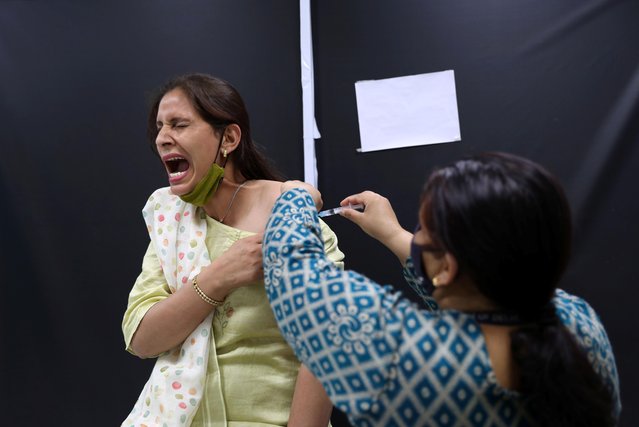
A frontline worker reacts as she receives a dose of AstraZeneca's COVISHIELD vaccine, produced by the Serum Institute of India, during the coronavirus disease (COVID-19) vaccination campaign at a medical centre in New Delhi, India, February 24, 2021. (Photo by Anushree Fadnavis/Reuters)

A frontline worker reacts as she receives a dose of AstraZeneca's COVISHIELD vaccine, produced by the Serum Institute of India, during the coronavirus disease (COVID-19) vaccination campaign at a medical centre in New Delhi, India, February 24, 2021. (Photo by Anushree Fadnavis/Reuters)
Details
04 Mar 2021 08:30:00