Loading...
Done
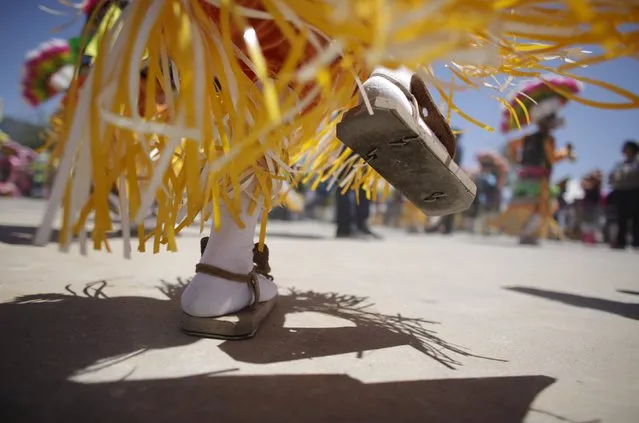
Matachines dancers participate in a religious festival in Saltillo, Mexico, April 17, 2016. Matachines dancing is a masked dance introduced by Spanish missionaries, and has been adopted by cultures from Peru to northern Mexico. It is performed to show respect to Mother Mary or the Guadalupe Virgin, a saint, or to simply worship God. (Photo by Daniel Becerril/Reuters)

Matachines dancers participate in a religious festival in Saltillo, Mexico, April 17, 2016. Matachines dancing is a masked dance introduced by Spanish missionaries, and has been adopted by cultures from Peru to northern Mexico. It is performed to show respect to Mother Mary or the Guadalupe Virgin, a saint, or to simply worship God. (Photo by Daniel Becerril/Reuters)
Details
19 Apr 2016 13:27:00
A woman prepares to release carps to Hoan Kiem lake on Kitchen God's Day as part of the traditional Vietnamese Lunar New Year celebrations, the biggest festival of the year in Hanoi, Vietnam on February 4, 2021. (Photo by Kham via Reuters)

A woman prepares to release carps to Hoan Kiem lake on Kitchen God's Day as part of the traditional Vietnamese Lunar New Year celebrations, the biggest festival of the year in Hanoi, Vietnam on February 4, 2021. (Photo by Kham via Reuters)
Details
17 Mar 2021 10:17:00
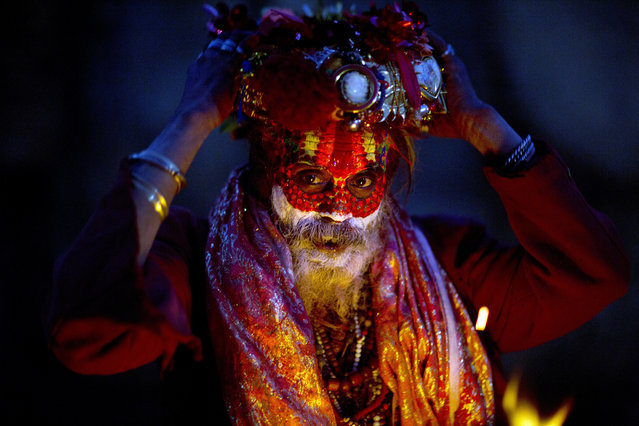
A Hindu holy man with his face smears with ash and vermilion powder adjusts his head gear sitting at the courtyard of the Pashupatinath Temple during Shivaratri festival in Kathmandu, Nepal, Monday, March 4, 2019. Shivaratri, or the night of Shiva, is dedicated to the worship of Lord Shiva, the Hindu god of death and destruction. (Photo by Niranjan Shrestha/AP Photo)

A Hindu holy man with his face smears with ash and vermilion powder adjusts his head gear sitting at the courtyard of the Pashupatinath Temple during Shivaratri festival in Kathmandu, Nepal, Monday, March 4, 2019. Shivaratri, or the night of Shiva, is dedicated to the worship of Lord Shiva, the Hindu god of death and destruction. (Photo by Niranjan Shrestha/AP Photo)
Details
07 Mar 2019 00:03:00
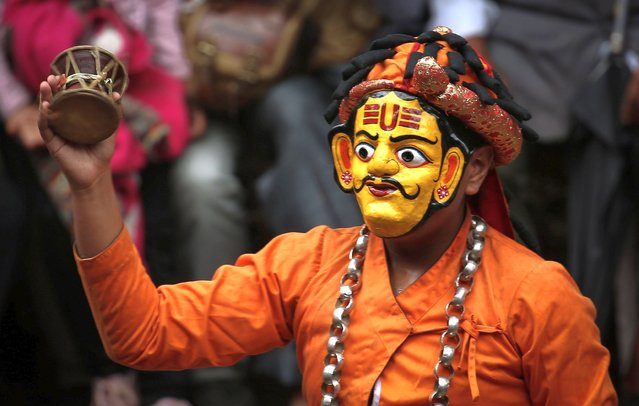
A masked dancer performs as part of “Devi Pyankha” (Devi Dance) to mark the beginning of the Indra Jatra Festival in Kathmandu, Nepal on September 15, 2021. Nepali celebrate the Indra Jatra festival to worship “Indra”, the god of rain and to mark the end of monsoon season. (Photo by Sunil Sharma/ZUMA Press Wire/Rex Features/Shutterstock)

A masked dancer performs as part of “Devi Pyankha” (Devi Dance) to mark the beginning of the Indra Jatra Festival in Kathmandu, Nepal on September 15, 2021. Nepali celebrate the Indra Jatra festival to worship “Indra”, the god of rain and to mark the end of monsoon season. (Photo by Sunil Sharma/ZUMA Press Wire/Rex Features/Shutterstock)
Details
23 Sep 2021 08:21:00
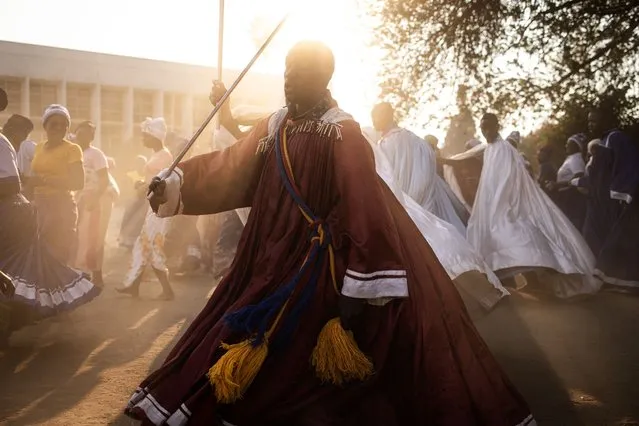
Followers of the Stowdart Sect of the Zion Church of God, sing and dance during a service in the historic neighborhood of Mbare in Harare on August 20, 2023. Zimbabweans will head to the polls on August 23, 2023 to vote in general and presidential elections. (Photo by John Wessels/AFP Photo)

Followers of the Stowdart Sect of the Zion Church of God, sing and dance during a service in the historic neighborhood of Mbare in Harare on August 20, 2023. Zimbabweans will head to the polls on August 23, 2023 to vote in general and presidential elections. (Photo by John Wessels/AFP Photo)
Details
26 Aug 2023 02:36:00
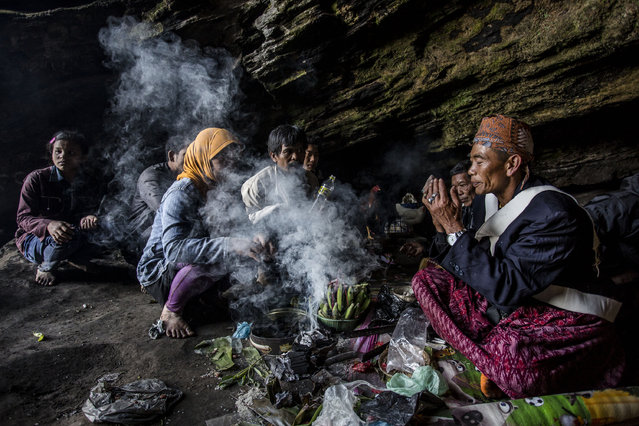
A Tenggerese shaman praying for worshippers at Widodaren cave during the Tenggerese Hindu Yadnya Kasada festival on July 31, 2015 in Probolinggo, East Java, Indonesia. The festival is the main festival of the Tenggerese people and lasts about a month. On the fourteenth day, the Tenggerese make the journey to Mount Bromo to make offerings of rice, fruits, vegetables, flowers and livestock to the mountain gods by throwing them into the volcano's caldera. (Photo by Ulet Ifansasti/Getty Images)

A Tenggerese shaman praying for worshippers at Widodaren cave during the Tenggerese Hindu Yadnya Kasada festival on July 31, 2015 in Probolinggo, East Java, Indonesia. The festival is the main festival of the Tenggerese people and lasts about a month. On the fourteenth day, the Tenggerese make the journey to Mount Bromo to make offerings of rice, fruits, vegetables, flowers and livestock to the mountain gods by throwing them into the volcano's caldera. The origin of the festival lies in the 15th century when a princess named Roro Anteng started the principality of Tengger with her husband Joko Seger, and the childless couple asked the mountain Gods for help in bearing children. The legend says the Gods granted them 24 children but on the provision that the 25th must be tossed into the volcano in sacrifice. The 25th child, Kesuma, was finally sacrificed in this way after initial refusal, and the tradition of throwing sacrifices into the caldera to appease the mountain Gods continues today. (Photo by Ulet Ifansasti/Getty Images)

Details
01 Aug 2015 12:07:00
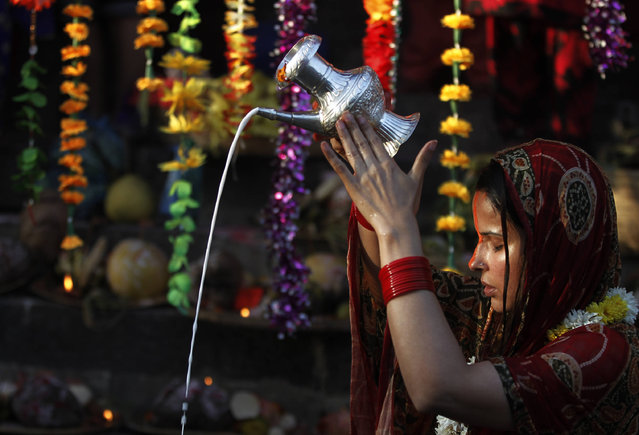
A Nepalese woman pours milk as she offers prayers to the setting Sun on the banks of the Bagmati River during the Chhath Puja festival in Kathmandu, Nepal, Sunday, November 6, 2016. During Chhath, an ancient Hindu festival, rituals are performed to thank the Sun God for sustaining life on earth. (Photo by Niranjan Shrestha/AP Photo)

A Nepalese woman pours milk as she offers prayers to the setting Sun on the banks of the Bagmati River during the Chhath Puja festival in Kathmandu, Nepal, Sunday, November 6, 2016. During Chhath, an ancient Hindu festival, rituals are performed to thank the Sun God for sustaining life on earth. (Photo by Niranjan Shrestha/AP Photo)
Details
08 Nov 2016 11:30:00
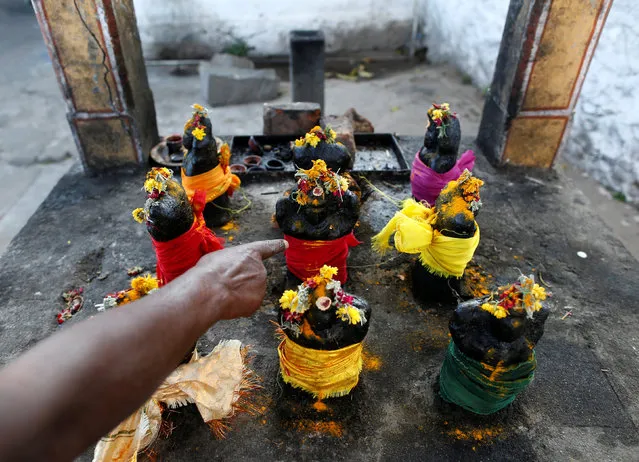
Paramasivan points to the statue of sun god Surya at a temple outside the Kodaikanal Solar Observatory, India, February 5, 2017. (Photo by Danish Siddiqui/Reuters)

Paramasivan points to the statue of sun god Surya at a temple outside the Kodaikanal Solar Observatory, India, February 5, 2017. In the early morning darkness, Devendran P. walks up a hill to a solar observatory in India's southern hill town of Kodaikanal, trudging the same path his father and grandfather walked in a century-old family tradition of studying the sun. (Photo by Danish Siddiqui/Reuters)
Details
24 Feb 2017 00:03:00