Loading...
Done


“Baby jumping (El Colacho) is a traditional Spanish practice dating back to 1620 that takes place annually to celebrate the Catholic feast of Corpus Christi in the village of Castrillo de Murcia near Burgos. During the act – known as El Salto del Colacho (the devil's jump) or simply El Colacho – men dressed as the Devil (known as the Colacho) jump over babies born during the previous twelve months of the year who lie on mattresses in the street. ... The festival has been rated as one of the most dangerous in the world”. – Wikipedia

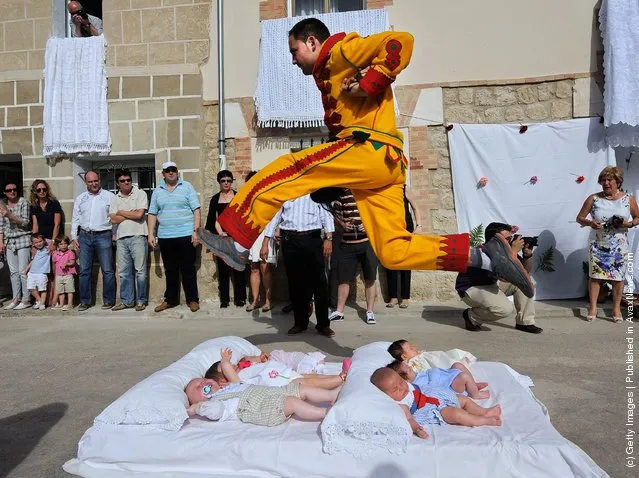
Photo: A man representing the devil leaps over babies during the festival of El Colacho on June 26, 2011 in Castrillo de Murcia near Burgos, Spain. The festival, held on the first Sunday after Corpus Cristi, represents the devil taking away original sin from the newly born babies by leaping over them. (Photo by Denis Doyle/Getty Images)
Details
27 Jun 2011 09:20:00
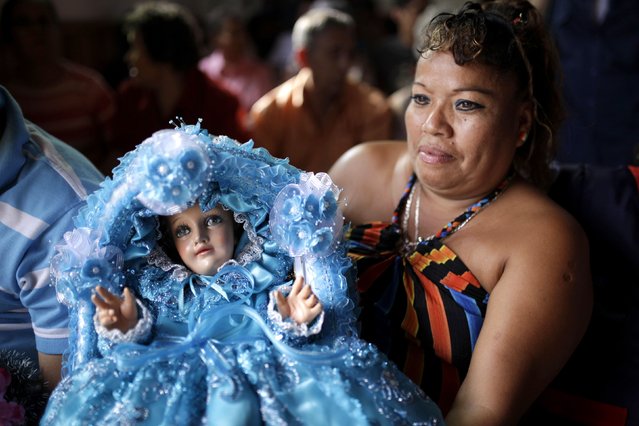
A Catholic faithful holds a figurine of baby Jesus during a religious procession on Holy Innocents Day in Antiguo Cuscatlan, on the outskirts of San Salvador, December 28, 2014. Festivities are held every December 28 in honor of children, termed the Holy Innocents, below the age of two who were ordered to be killed by King Herod, according to biblical passages. (Photo by Jose Cabezas/Reuters)

A Catholic faithful holds a figurine of baby Jesus during a religious procession on Holy Innocents Day in Antiguo Cuscatlan, on the outskirts of San Salvador, December 28, 2014. Festivities are held every December 28 in honor of children, termed the Holy Innocents, below the age of two who were ordered to be killed by King Herod, according to biblical passages. (Photo by Jose Cabezas/Reuters)
Details
30 Dec 2014 11:32:00
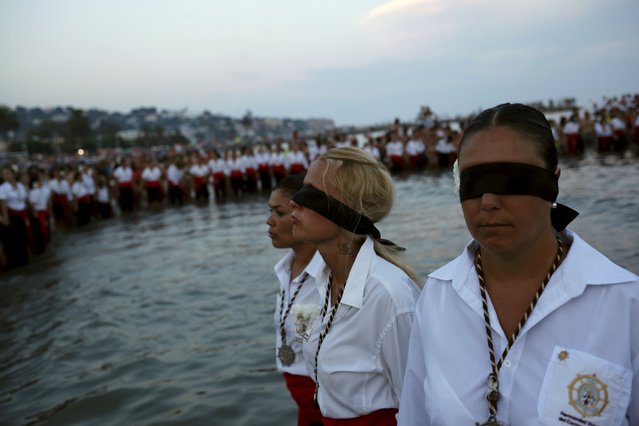
Women in traditional costumes wait for a statue of the El Carmen Virgin to be carried into the sea during a procession in Malaga July 16, 2015. (Photo by Jon Nazca/Reuters)

Women in traditional costumes wait for a statue of the El Carmen Virgin to be carried into the sea during a procession in Malaga July 16, 2015. Many seaside towns celebrate the annual feast of the El Carmen Virgin, who is worshipped as the patron saint of sailors. (Photo by Jon Nazca/Reuters)
Details
17 Jul 2015 13:31:00
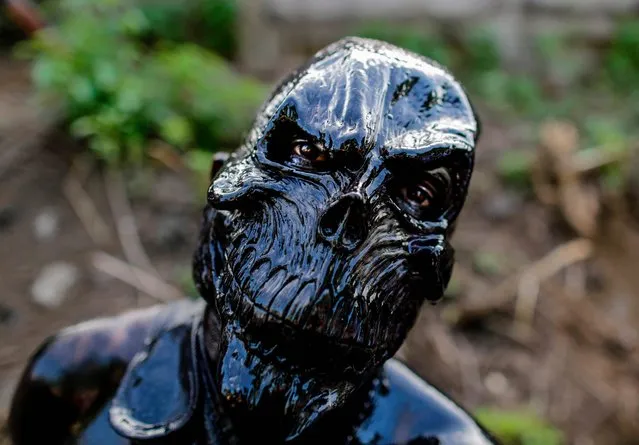
A catholic faithful smeared in burnt oil, takes part in the opening of the ten-day celebration of the Santo Domingo de Guzman festival in Managua, on August 1, 2019. (Photo by Inti Ocon/AFP Photo)

A catholic faithful smeared in burnt oil, takes part in the opening of the ten-day celebration of the Santo Domingo de Guzman festival in Managua, on August 1, 2019. In Central America the black devil, or El Cadejo, is an evil dog-like spirit with glowing red eyes that locals believe eats new born puppies. (Photo by Inti Ocon/AFP Photo)
Details
06 Aug 2019 00:01:00
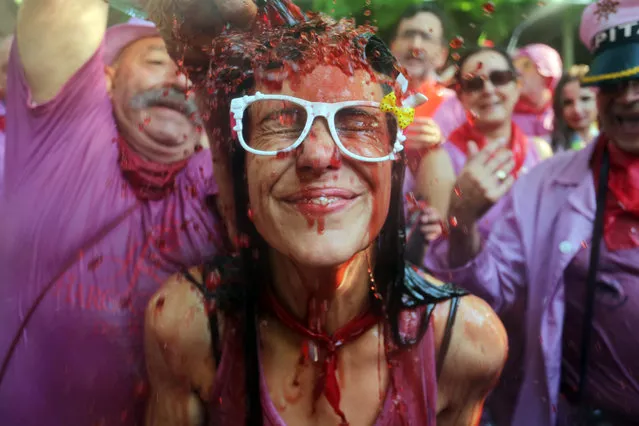
A man pours red wine on a girl's head during the Batalla del Vino (Battle of Wine) in Haro, on June 29, 2015. Every year thousands of locals and tourists climb a mountain in the northern Spanish province of La Rioja to celebrate St. Peter's day covering each other in red wine while tanker trucks filled with wine distribute the alcoholic beverage to water pistols, back mounted spraying devices, buckets which are randomly poured on heads and into any other available container. (Photo by Cesar Manso/AFP Photo)

A man pours red wine on a girl's head during the Batalla del Vino (Battle of Wine) in Haro, on June 29, 2015. Every year thousands of locals and tourists climb a mountain in the northern Spanish province of La Rioja to celebrate St. Peter's day covering each other in red wine while tanker trucks filled with wine distribute the alcoholic beverage to water pistols, back mounted spraying devices, buckets which are randomly poured on heads and into any other available container. More than nine thousand people threw around 130,000 litres of wine during this year's Haro Wine Festival, according to local media. (Photo by Cesar Manso/AFP Photo)
Details
30 Jun 2015 11:56:00
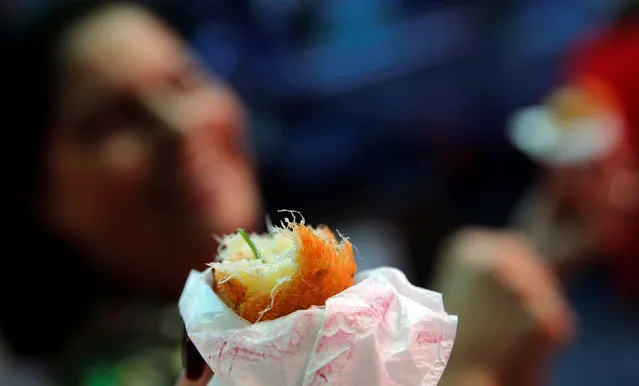
A view of traditional bolinhos de bacalhau (fried codfish balls) in Rio de Janeiro, Brazil, May 7, 2016. (Photo by Sergio Moraes/Reuters)

If the most popular foods of Rio de Janeiro have one thing in common, it is their informality. You can find fine restaurants in the city, but they do not set Rio apart from other places. What does set it apart, and what invariably brings its residents, known as "Cariocas," together is the unpretentious food they eat in bright, loud, crowded bars and restaurants, on busy street corners, or after a day at the beach. Here: A view of traditional bolinhos de bacalhau (fried codfish balls) in Rio de Janeiro, Brazil, May 7, 2016. (Photo by Sergio Moraes/Reuters)
Details
05 Aug 2016 13:20:00
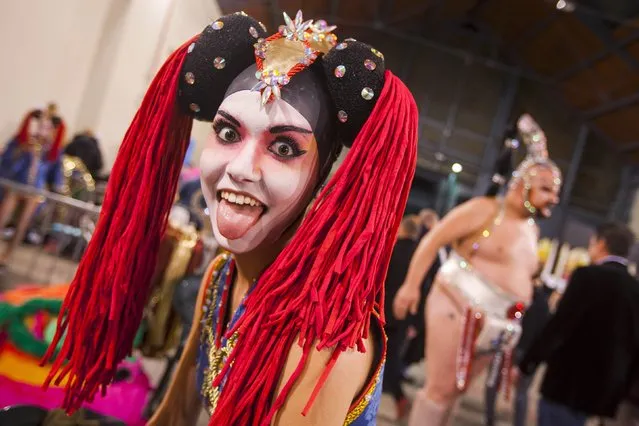
A participant poses backstage before a drag queen competition during carnival festivities in Las Palmas on the Spanish Canary Island of Gran Canaria February 20, 2015. (Photo by Borja Suarez/Reuters)

A participant poses backstage before a drag queen competition during carnival festivities in Las Palmas on the Spanish Canary Island of Gran Canaria February 20, 2015. (Photo by Borja Suarez/Reuters)
Details
22 Feb 2015 10:39:00
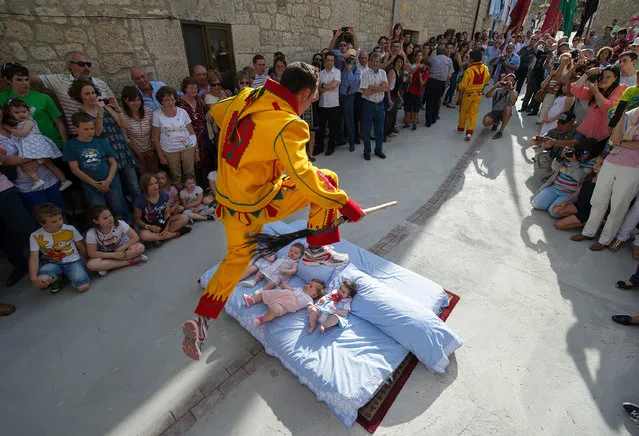
A man representing the devil leaps over babies during the festival of El Salto del Colacho (the devil's jump) on June 22, 2014 in Castrillo de Murcia, Spain. The festival, held on the first Sunday after Corpus Cristi, is a catholic rite of the devil cleansing babies of original sin. (Photo by Denis Doyle/Getty Images)

A man representing the devil leaps over babies during the festival of El Salto del Colacho (the devil's jump) on June 22, 2014 in Castrillo de Murcia, Spain. The festival, held on the first Sunday after Corpus Cristi, is a catholic rite of the devil cleansing babies of original sin. (Photo by Denis Doyle/Getty Images)
Details
29 Jun 2014 09:07:00