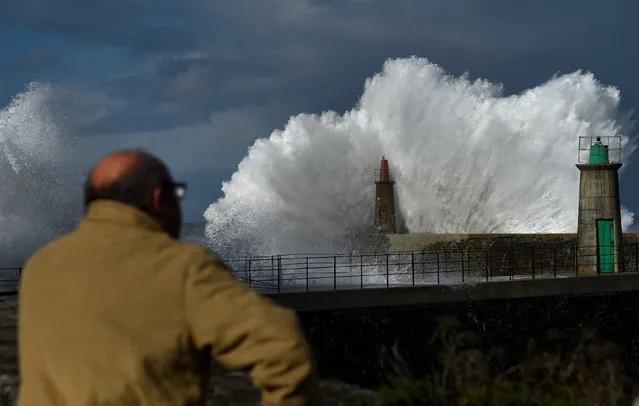
A man looks at waves as they crash against a lighthouse in the northern Spanish village of Viavelez, Spain January 13, 2017. (Photo by Eloy Alonso/Reuters)
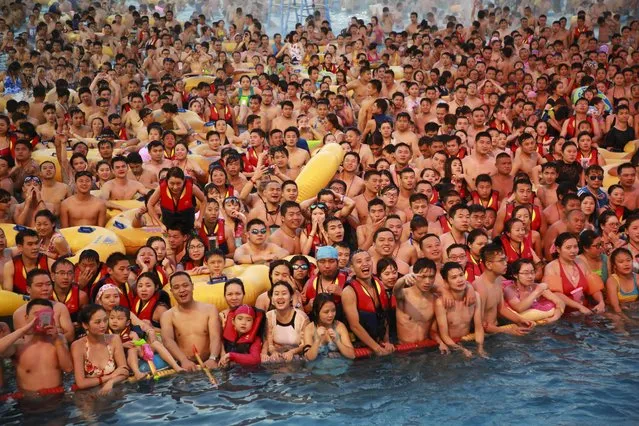
Tourists crowd a water park in Wuhan city, central China's Hubei province on July 15, 2017. Days of heat wave drove many citizens to the water park for fun and coolness. Nanchang has become the new four “furnace cities” in China according to a ranking of the hottest cities released by the China Meteorological Administration on July 9. (Photo by Imaginechina/Rex Features/Shutterstock)
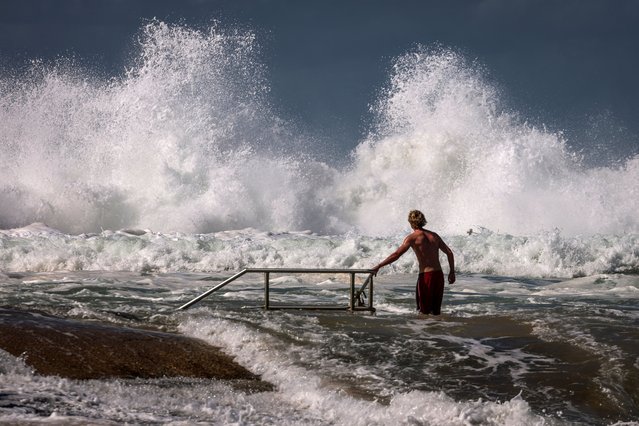
A man walks towards a wave breaking on a rock pool at North Narrabeen Beach in Sydney on April 18, 2025, as large swells hit the east coast of Australia. (Photo by David Gray/AFP Photo)
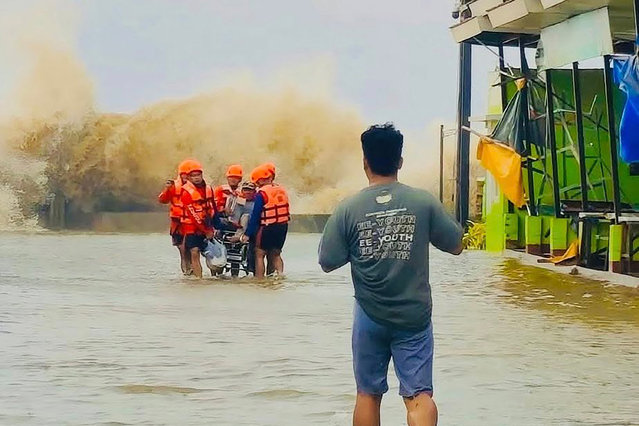
This handout photo taken on September 26, 2025 and released on September 27 by the Philippine Coast Guard shows coast guard personnel (background) evacuating a person at the height of Severe Tropical Storm Bualoi in San Agustin town, Romblon province. The Philippines evacuated hundreds of thousands of people and confirmed at least three deaths on Friday as it faced yet another tropical storm, days after it was battered by deadly Super Typhoon Ragasa. (Photo by Handout/Philippine Coast Guard (PCG)/AFP Photo)
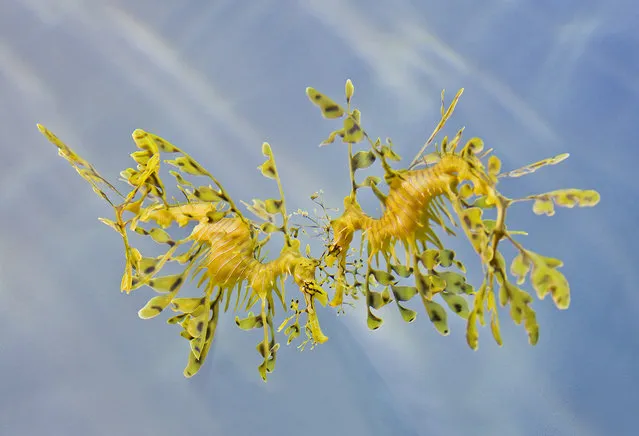
The leafy seadragon or Glauert's seadragon, Phycodurus eques, is a marine fish in the family Syngnathidae, which also includes the seahorses. It is the only member of the genus Phycodurus. It is found along the southern and western coasts of Australia. The name is derived from the appearance, with long leaf-like protrusions coming from all over the body. These protrusions are not used for propulsion; they serve only as camouflage. The leafy seadragon propels itself by means of a pectoral fin on the ridge of its neck and a dorsal fin on its back closer to the tail end. These small fins are almost completely transparent and difficult to see as they undulate minutely to move the creature sedately through the water, completing the illusion of floating seaweed.
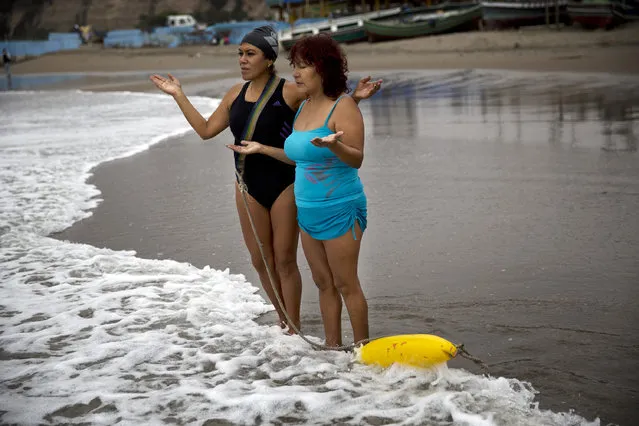
In this May 8, 2015 photo, sisters Zoraida Infante, left, and Graciela Trujillo pray on Fishermen's Beach before therapeutic swimming in the Pacific Ocean in Lima, Peru. Under overcast skies, the bathers practice thalassotherapy, which derives from the Greek “thalasso”, for “sea”, and draws on the ocean's healing properties. (Photo by Rodrigo Abd/AP Photo)
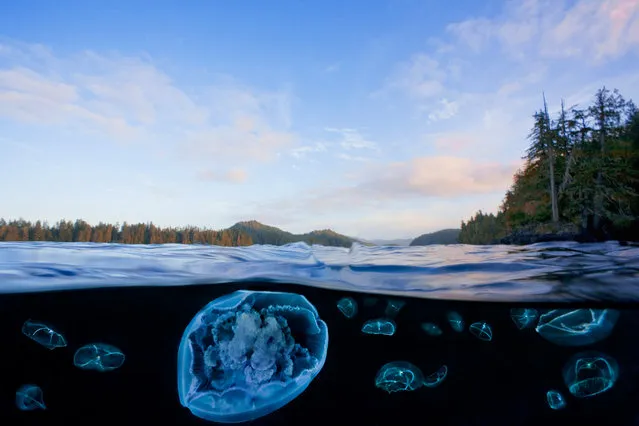
David Hall’s photographs of scenery and creatures off the coast of Canada in the Pacific Northwest portray serenity under the water, which belie the extreme challenges he faces to get his images. For each shoot, Hall wears a dry suit, a neoprene body suit that covers all of his body but his head and traps air inside to keep him warm. Water temperature in Canada’s British Columbia typically ranges between 45 and 50 degrees Fahrenheit. Photo: Moon jellyfish and cross jellies. (Photo by David Hall)