Loading...
Done
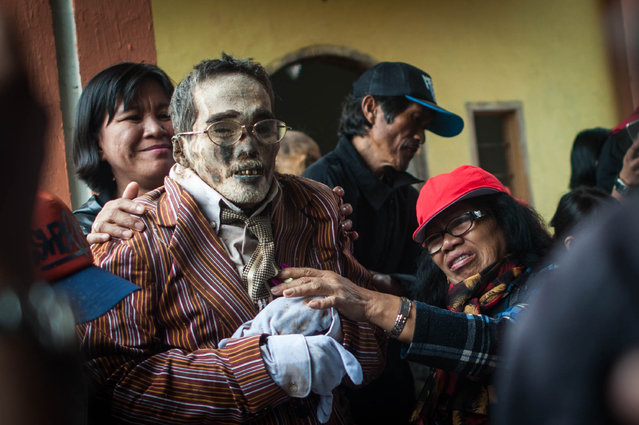
Relatives clean the body of Paul Sampe Lumba who has been dead for seven yeas during the Ma'nene ritual at Panggala Village on August 26, 2016 in Toraja, Indonesia. (Photo by Sijori Images/Barcroft Images)

Relatives clean the body of Paul Sampe Lumba who has been dead for seven yeas during the Ma'nene ritual at Panggala Village on August 26, 2016 in Toraja, Indonesia. The Ma'nene ritual in performed during a ceremony every three years, where the dead are exhumed for a change of clothes, among the people of Toraja as an expression of the love of the surviving family. (Photo by Sijori Images/Barcroft Images)
Details
09 Sep 2016 09:12:00
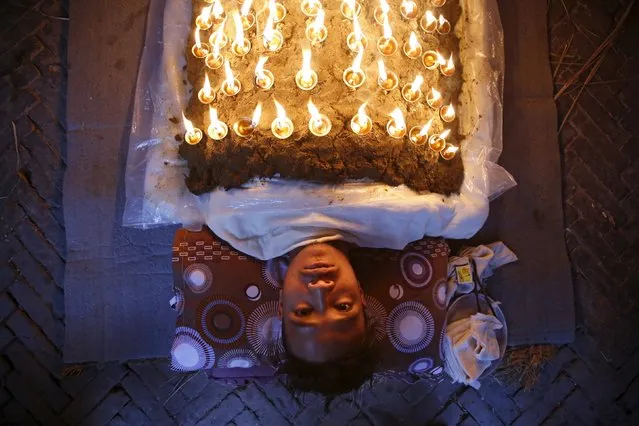
A devotee offers oil lamps on top of his body as part of a ritual during Dashain, the biggest religious festival for Hindus in Bhaktapur, Nepal, October 22, 2015. (Photo by Navesh Chitrakar/Reuters)

A devotee offers oil lamps on top of his body as part of a ritual during Dashain, the biggest religious festival for Hindus in Bhaktapur, Nepal, October 22, 2015. Hindus in Nepal celebrate victory over evil during the festival by flying kites, feasting, playing swings, sacrificing animals and worshipping the Goddess Durga as well as other gods and goddess as part of celebrations held throughout the country. (Photo by Navesh Chitrakar/Reuters)
Details
25 Oct 2015 08:02:00
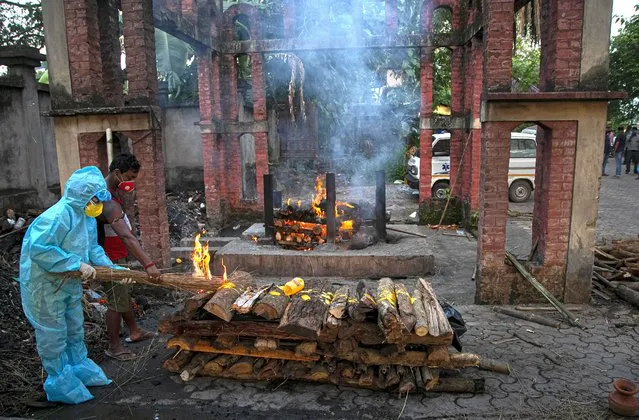
An Indian woman performs rituals near the body of her husband who died of COVID-19 in Gauhati, India, Monday, September 28, 2020. India’s confirmed coronavirus tally has reached 6 million cases, keeping the country second to the United States in number of reported cases since the pandemic began. (Photo by Anupam Nath/AP Photo)

An Indian woman performs rituals near the body of her husband who died of COVID-19 in Gauhati, India, Monday, September 28, 2020. India’s confirmed coronavirus tally has reached 6 million cases, keeping the country second to the United States in number of reported cases since the pandemic began. (Photo by Anupam Nath/AP Photo)
Details
07 Oct 2020 00:01:00
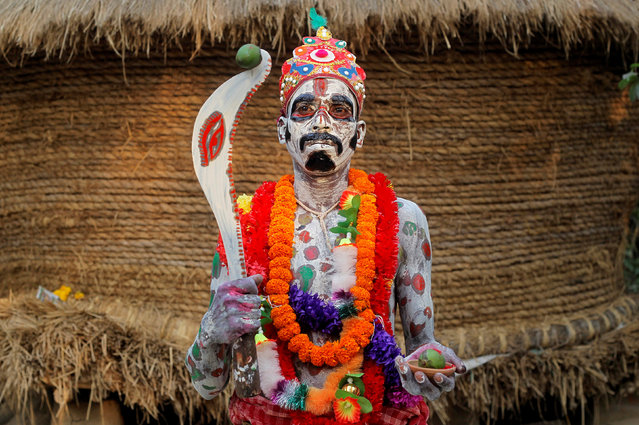
A devotee with his body painted poses as he waits to perform during a ritual as part of the annual Shiva Gajan religious festival at Sona Palasi village, in West Bengal, India, April 11, 2016. Devotees offer sacrifices and perform acts of devotion during the festival in the hopes of winning the favour of Hindu god Shiva and ensuring the fulfillment of their wishes, and also to mark the end of the Bengali calendar year. (Photo by Rupak De Chowdhuri/Reuters)

A devotee with his body painted poses as he waits to perform during a ritual as part of the annual Shiva Gajan religious festival at Sona Palasi village, in West Bengal, India, April 11, 2016. Devotees offer sacrifices and perform acts of devotion during the festival in the hopes of winning the favour of Hindu god Shiva and ensuring the fulfillment of their wishes, and also to mark the end of the Bengali calendar year. (Photo by Rupak De Chowdhuri/Reuters)
Details
13 Apr 2016 09:42:00
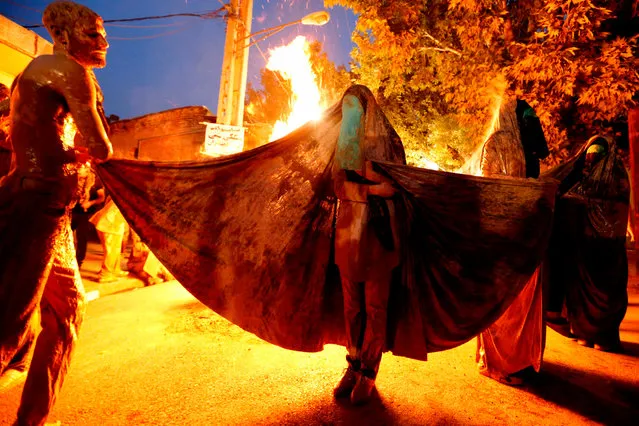
Iranian Shiite Muslim women gather around a bonfire after rubbing mud on their body during the “Kharrah Mali” (Mud Rubbing) ritual to mark the Ashura religious ceremony in the city of Khorramabad, some 470 kms southwest of Tehran, early in the morning on October 1, 2017. “Khrreh Mali” or “Mud Rubbing” is a ritual that is held in the city of Khorramabad every year to commemorate the seventh century slaying of Prophet Mohammed' s grandson Imam Hussein, in which Iranian men roll over in mud and dry themselves by gathering around the bonfires before flagellating themselves. (Photo by Atta Kenare/AFP Photo)

Iranian Shiite Muslim women gather around a bonfire after rubbing mud on their body during the “Kharrah Mali” (Mud Rubbing) ritual to mark the Ashura religious ceremony in the city of Khorramabad, some 470 kms southwest of Tehran, early in the morning on October 1, 2017. “Khrreh Mali” or “Mud Rubbing” is a ritual that is held in the city of Khorramabad every year to commemorate the seventh century slaying of Prophet Mohammed' s grandson Imam Hussein, in which Iranian men roll over in mud and dry themselves by gathering around the bonfires before flagellating themselves. (Photo by Atta Kenare/AFP Photo)
Details
02 Oct 2017 08:38:00
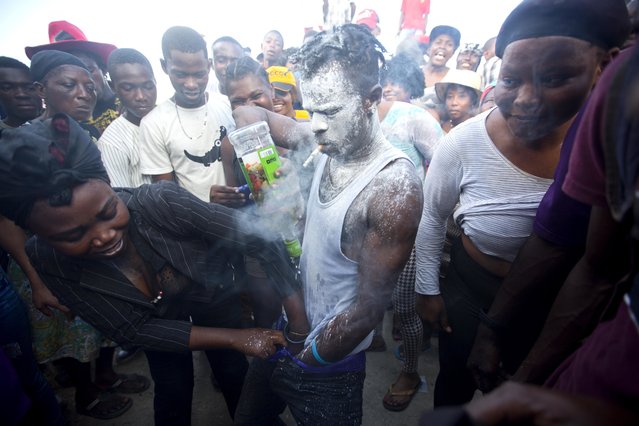
In this November 2, 2018 photo, a voodoo believer who is supposed to be possessed with Gede spirit performs rituals near Baron Samedi's tomb during the annual Voodoo festival Fete Gede at Cite Soleil Cemetery in Port-au-Prince, Haiti. As a proof that they got into trance and their bodies got possessed by Gedes, they drink and wash their faces, their eyes and even their genitals with a mixture of raw rum and hot chili peppers that, according to believers, could burn the skin of any human alive. (Photo by Dieu Nalio Chery/AP Photo)

In this November 2, 2018 photo, a voodoo believer who is supposed to be possessed with Gede spirit performs rituals near Baron Samedi's tomb during the annual Voodoo festival Fete Gede at Cite Soleil Cemetery in Port-au-Prince, Haiti. As a proof that they got into trance and their bodies got possessed by Gedes, they drink and wash their faces, their eyes and even their genitals with a mixture of raw rum and hot chili peppers that, according to believers, could burn the skin of any human alive. (Photo by Dieu Nalio Chery/AP Photo)
Details
06 Nov 2018 00:05:00


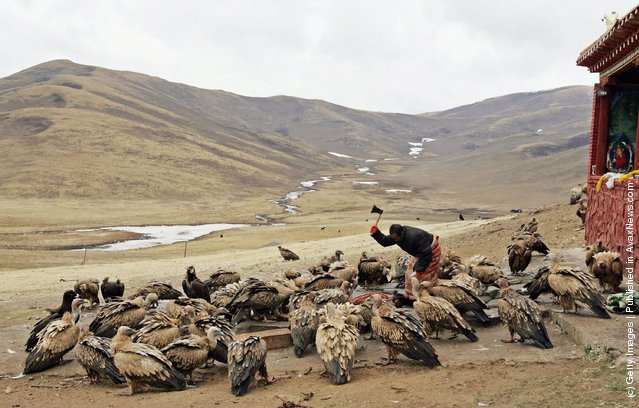
“Sky burial or ritual dissection was once a common funerary practice in Tibet wherein a human corpse is cut in specific locations and placed on a mountaintop, exposing it to the elements or the mahabhuta and animals – especially to birds of prey. The location of the sky burial preparation and place of execution are understood in the Vajrayana traditions as charnel grounds. In Tibet the practice is known as jhator, which literally means, «giving alms to the birds»”. – Wikipedia

Photo: A burial master chops bones of a body to feed vultures during a celestial burial ceremony on April 19, 2006 in Dari County of Guoluo Prefecture, Qinghai Province, northwest China. Celestial burial is a traditional funeral of Tibetan people, which began in the 7th century. (Photo by China Photos/Getty Images)
Details
18 Jun 2011 12:12:00
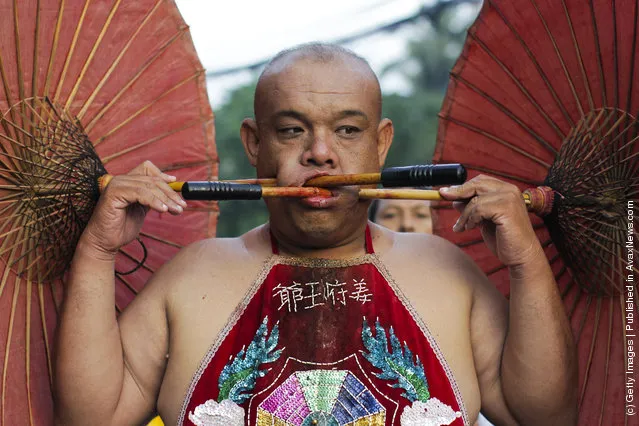
Devotees Practice Self Mutilation At Phuket Vegetarian Festival

A devotee of the Chinese shrine of Kathu Shrine, pierces his cheeks with umbrellas during a procession of Vegetarian Festival on October 4, 2011 in Phuket, Thailand. Ritual Vegetarianism in Phuket Island traces it roots back to the early 1800's. The festival begins on the first evening of the ninth lunar month and lasts for nine days. Participants in the festival perform acts of body piercing as a means of shifting evil spirits from individuals onto themselves and bring the community good luck. (Photo by Athit Perawongmetha/Getty Images)
Details
04 Oct 2011 10:49:00