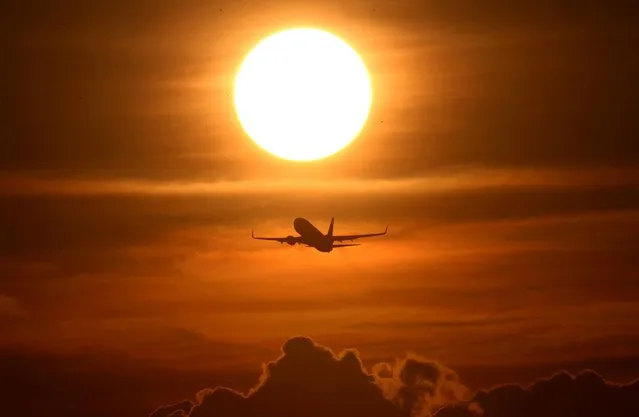
An air plane takes off from the airport as air traffic is effected by the spread of the coronavirus disease (COVID-19) in Frankfurt, Germany, March 16, 2020. (Photo by Kai Pfaffenbach/Reuters)
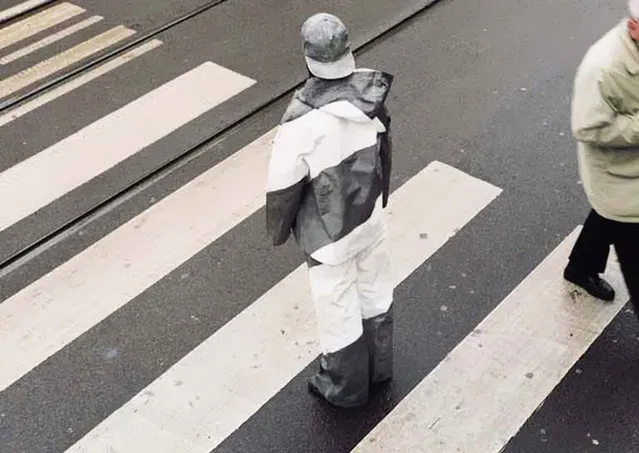
“The artist herself produces the camouflage suit. For each photo, for each environment of her choice, she designs a new suit, which again and again has to be made with the greatest precision, or the illusive effect will not work. By uniting the figure with the background, Desiree Palmen reaches a surprising visual effect that requests a special effort for the observing eye: it must disentangle what is flat and what is spatial.”
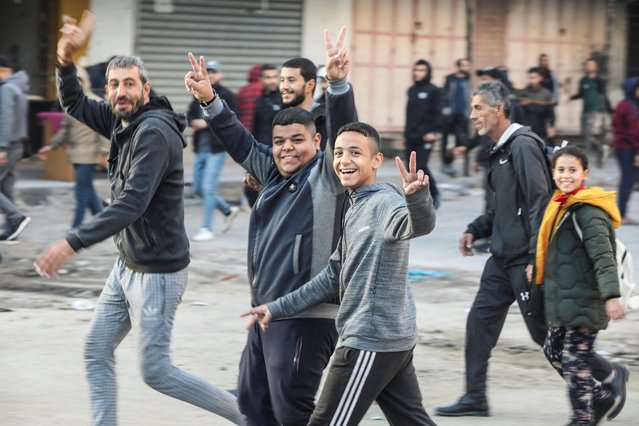
Palestinian refugees walk home in Gaza City on January 19, 2025, making a V sign with their fingers toward the camera, just before the ceasefire took effect. (Photo by Reuters/Yonhap News)
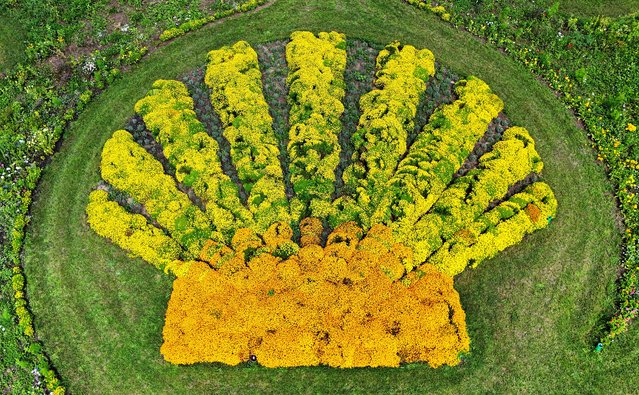
A picture taken with a drone shows a huge work of art created with various flowers and flowering plants in Jacobsdorf, Germany, 29 July 2024. Artist Michael Uy has transformed a piece of fallow land into an insect paradise for bees, bumblebees and butterflies. Using plants, the artist has planted and sown oversized images in the shape of a shell and a winding path of life on a large meadow in Jacobsdorf. (Photo by Hannibal Hanschke/EPA/EFE)
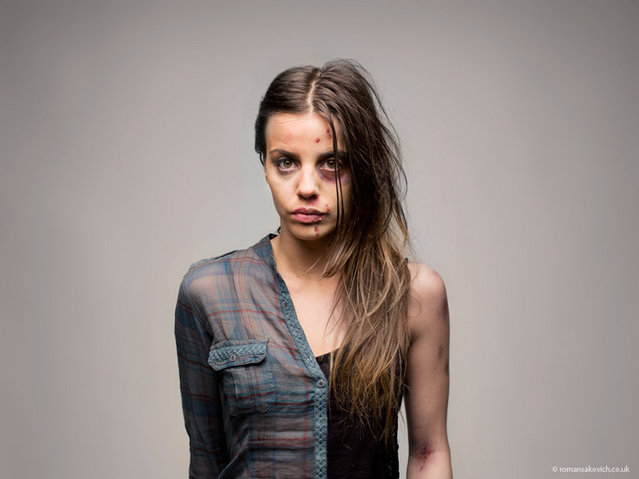
The above portrait is part of London-based photographer Roman Sakovich's project, “Half”, which highlights the drastic physical effects of substance abuse. Sakovich has created split images that simultaneously portray an individual prior to and post addiction, leaving the viewer with a stark visualization of the damaging effects of drug use on our bodies.
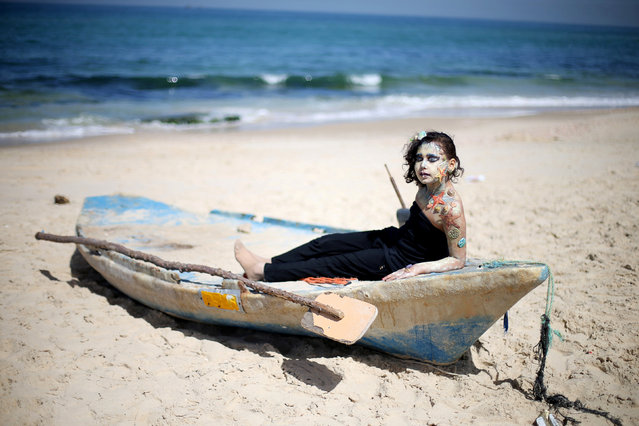
A Palestinian girl with her body painted by special effects makeup artist Alaa Abu Mustafa, 20, sits on a boat in the southern Gaza Strip, March 22, 2018. (Photo by Ibraheem Abu Mustafa/Reuters)
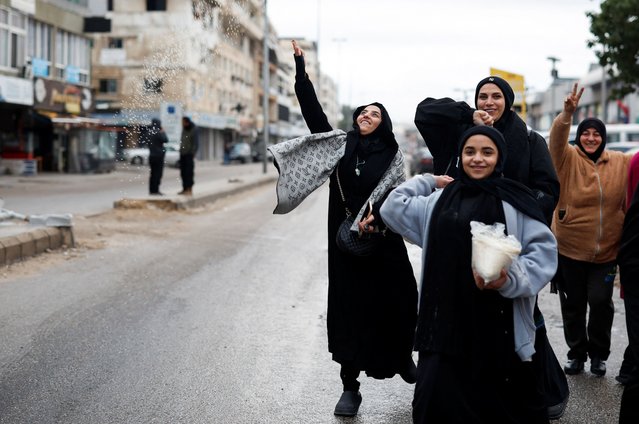
Women welcome the people coming back to Tyre, after a ceasefire between Israel and Iran-backed group Hezbollah took effect, in Lebanon on November 27, 2024. (Photo by Adnan Abidi/Reuters)
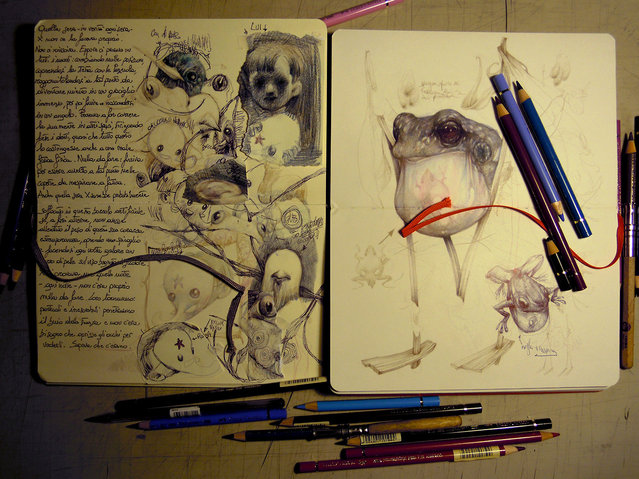
Italian pencil artist Marco Mazzoni‘s work goes far beyond technical perfection. His representation of historical healing women is enigmatic and sublime. Often leaving the eyes blank or covered with an abundance of birds, butterflies and flowers, he gives the impression of a deeper inward focused sight, as well as obscuring the identity of the individual. Many female healers in the past – both medicine woman and midwives – were brutally persecuted by religion, some even burnt as witches… Mazzoni’s work captures their deep connection with nature and their innate power and femininity with delicacy and beautiful detail.