Loading...
Done
London 2012 victory medals

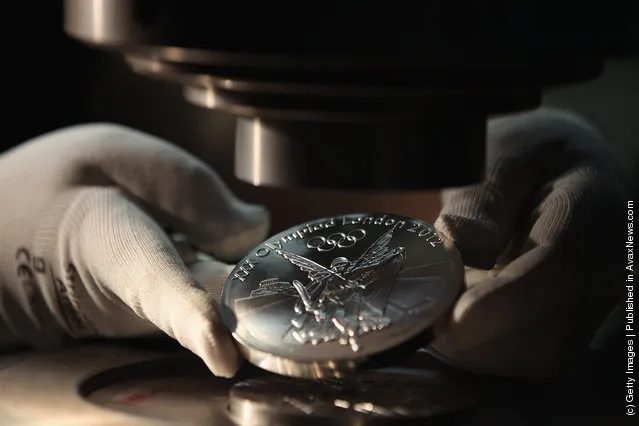
Production begins on the London 2012 victory medals at the Royal Mint on October 27, 2011 in Pontyclun, Wales. A total of 4700 medals will be made, split between the Olympics and Paralympics. Each medal, 85mm in diameter are the heaviest summer Olympic medals made and production will be completed by Spring 2012. (Photo by Michael Steele/Getty Images)
Details
29 Oct 2011 14:30:00
Runner-up; Hon Yen marine ecosystem. Phu Yen, Vietnam. Every year between May and August, the coral of this rich and diverse ecosystem becomes exposed at low tide. (Photo by Truong Hoai Vu/Royal Society of Biology Photography Competition)

Runner-up; Hon Yen marine ecosystem. Phu Yen, Vietnam. Every year between May and August, the coral of this rich and diverse ecosystem becomes exposed at low tide. (Photo by Truong Hoai Vu/Royal Society of Biology Photography Competition)
Details
31 Oct 2021 05:12:00
Operations & Exercises, 1st place. An RAF Voyager aircraft sits in the harsh winter weather at Mount Pleasant Complex, Falkland Islands, while personnel work to ensure the snow is cleared. (Photo by Sgt Andy Holmes/2020 RAF Photo Competition)

Operations & Exercises, 1st place. An RAF Voyager aircraft sits in the harsh winter weather at Mount Pleasant Complex, Falkland Islands, while personnel work to ensure the snow is cleared. (Photo by Sgt Andy Holmes/2020 RAF Photo Competition)
Details
15 Dec 2020 00:05:00
HMS Dragonís Mk8 Lynx Helicopter conducted day into night flying serial by L(Phot) Dave Jenkins which won the Media Operations Category which was awarded to the best single image that is judged to create the most impact as a news in the annual Peregrine Trophy awards. (Photo by Dave Jenkins/PA Wire)

HMS Dragonís Mk8 Lynx Helicopter conducted day into night flying serial by L(Phot) Dave Jenkins which won the Media Operations Category which was awarded to the best single image that is judged to create the most impact as a news in the annual Peregrine Trophy awards. (Photo by Dave Jenkins/PA Wire)
Details
17 Jun 2014 09:56:00
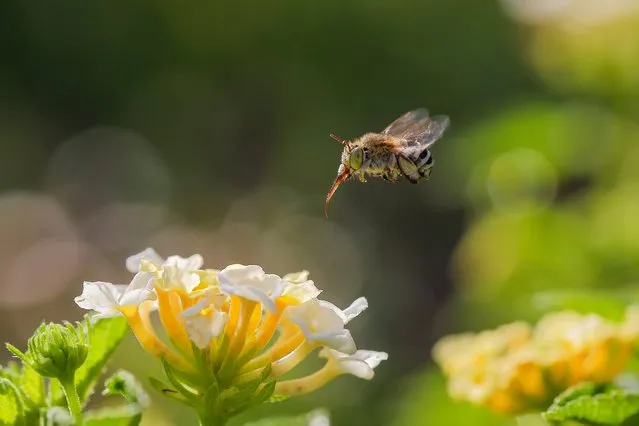
“Tasty Nature” by Dipesh Bhatt. “The blue banded bee (Amegilla cingulata) is pointing this sheath towards the flowers in preparation for sipping nectar”. Taken in Gujarat, India. (Photo by Dipesh Bhatt/2016 Royal Society of Biology Photographer of the Year competition)

“Tasty Nature” by Dipesh Bhatt. “The blue banded bee (Amegilla cingulata) is pointing this sheath towards the flowers in preparation for sipping nectar”. Taken in Gujarat, India. (Photo by Dipesh Bhatt/2016 Royal Society of Biology Photographer of the Year competition)
Details
30 Sep 2016 09:32:00
Mikhail Gorbachev

Former Soviet leader Mikhail Gorbachev attends the Gorby 80 Gala at the Royal Albert Hall on March 30, 2011 in London, England. The concert is to celebrate the 80th birthday of the former Soviet leader Mikhail Gorbachev.
Details
30 Mar 2011 19:43:00
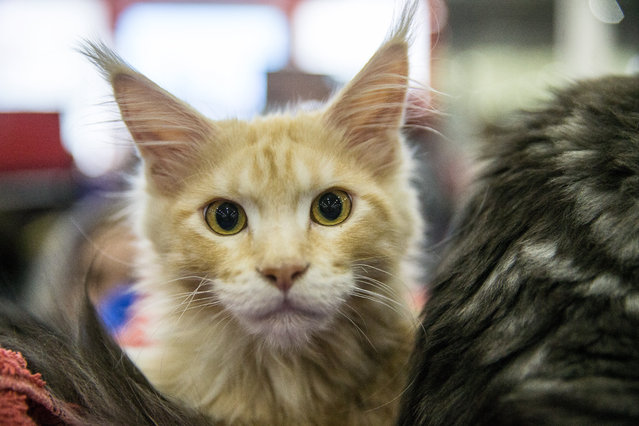
An alert-looking Maine Coon during the Grand Prix Royal Canin cat exhibition in Moscow, Russia on December 4, 2016. The breed’s origin is unknown, but one legend claims it is descended from cats brought to the US by an English seafarer called Captain Coon. (Photo by Dmitry Serebryakov/TASS)

An alert-looking Maine Coon during the Grand Prix Royal Canin cat exhibition in Moscow, Russia on December 4, 2016. The breed’s origin is unknown, but one legend claims it is descended from cats brought to the US by an English seafarer called Captain Coon. (Photo by Dmitry Serebryakov/TASS)
Details
06 Dec 2016 10:58:00
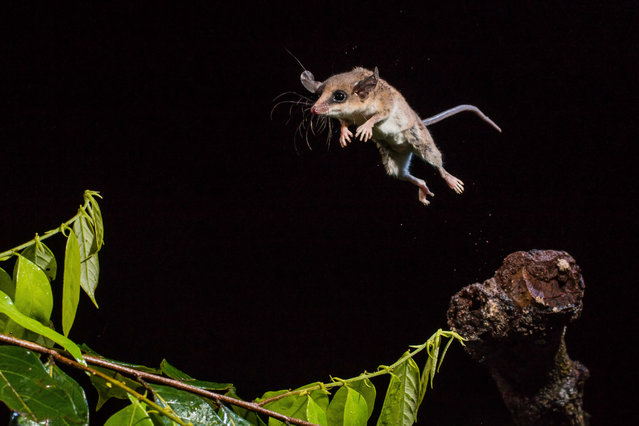
Tropical acrobatics by Adrià López Baucells in Manaus, Brazil. An unidentified South American marsupial, although the characteristic black markings on its face indicate it may be a mouse opossum. These small creatures are nocturnal and feed on bugs, fruit and bird eggs. (Photo by Adrià López Baucells/2019 Royal Society of Biology Photography Competition)

Tropical acrobatics by Adrià López Baucells in Manaus, Brazil. An unidentified South American marsupial, although the characteristic black markings on its face indicate it may be a mouse opossum. These small creatures are nocturnal and feed on bugs, fruit and bird eggs. (Photo by Adrià López Baucells/2019 Royal Society of Biology Photography Competition)
Details
10 Oct 2019 00:03:00