Loading...
Done
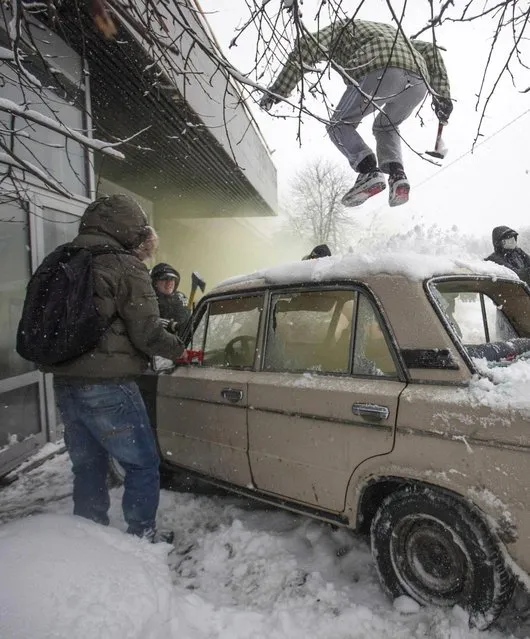
In this photo taken on Friday, March 15, 2013, members of a pro-Kremlin youth group attack pushers of spice, a synthetic drug, in Moscow, Russia. Russian officials and anti-drugs campaigners say that spice has become one of the most dangerous drugs widely available to youngsters and almost impossible to ban because of the constantly changing chemical ingredients. (Photo by Alexander Zemlianichenko Jr/AP Photo)

In this photo taken on Friday, March 15, 2013, members of a pro-Kremlin youth group attack pushers of spice, a synthetic drug, in Moscow, Russia. Russian officials and anti-drugs campaigners say that spice has become one of the most dangerous drugs widely available to youngsters and almost impossible to ban because of the constantly changing chemical ingredients. (Photo by Alexander Zemlianichenko Jr/AP Photo)
Details
26 Apr 2013 08:39:00
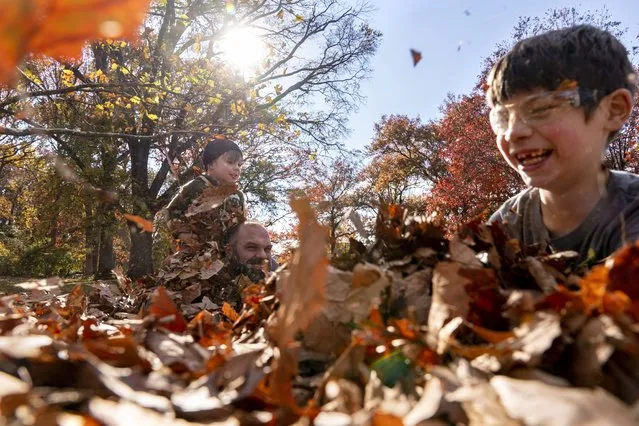
Off from school due to the Thanksgiving holiday this week, Felix Naranch, 7, right, and his brother Asa Naranch, 3, play with their father Stu Naranch in a pile of fall leaves that they raked together in a park, Tuesday, November 23, 2021, in Washington. (Photo by Jacquelyn Martin/AP Photo)

Off from school due to the Thanksgiving holiday this week, Felix Naranch, 7, right, and his brother Asa Naranch, 3, play with their father Stu Naranch in a pile of fall leaves that they raked together in a park, Tuesday, November 23, 2021, in Washington. (Photo by Jacquelyn Martin/AP Photo)
Details
30 Nov 2021 08:52:00
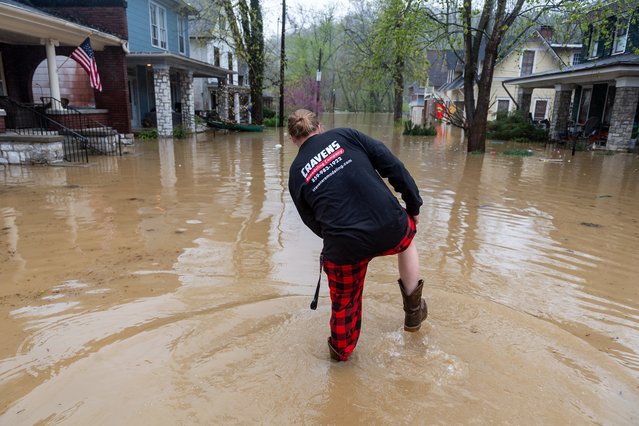
Lukas Evins wades through flood waters to help his brother move belongings to the second floor of his house on April 6, 2025 in Frankfort, Kentucky. Frankfort is expected to experience record flooding as the Kentucky River continues to rise. (Photo by Michael Swensen/Getty Images)

Lukas Evins wades through flood waters to help his brother move belongings to the second floor of his house on April 6, 2025 in Frankfort, Kentucky. Frankfort is expected to experience record flooding as the Kentucky River continues to rise. (Photo by Michael Swensen/Getty Images)
Details
16 Apr 2025 02:57:00
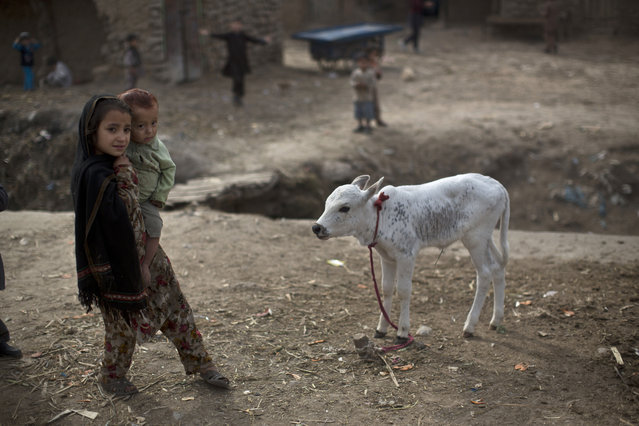
An Afghan refugee girl shows her younger brother a calf in a slum on the outskirts of Islamabad, Pakistan, Friday, February 6, 2015. (Photo by Muhammed Muheisen/AP Photo)

An Afghan refugee girl shows her younger brother a calf in a slum on the outskirts of Islamabad, Pakistan, Friday, February 6, 2015. (Photo by Muhammed Muheisen/AP Photo)
Details
12 Feb 2015 13:04:00
UK Big Brother star Chloe Khan washes her Land Rover wearing a bikini and hot pants  in Borehamwood, England on September 22, 2016. (Photo by Palace Lee)

UK Big Brother star Chloe Khan washes her Land Rover wearing a bikini and hot pants in Borehamwood, England on September 22, 2016. (Photo by Palace Lee)
Details
23 Sep 2016 09:54:00
UK “Ex On The Beach” star Ashley Cain celebrates his birthday with girlfriend and ex “Big Brother” star Chloe Khan at Gallery Nightclub in Maidstone, England, UK on September 25, 2016. (Photo by FameFlynet UK)

UK “Ex On The Beach” star Ashley Cain celebrates his birthday with girlfriend and ex “Big Brother” star Chloe Khan at Gallery Nightclub in Maidstone, England, UK on September 25, 2016. (Photo by FameFlynet UK)
Details
02 Oct 2016 08:38:00
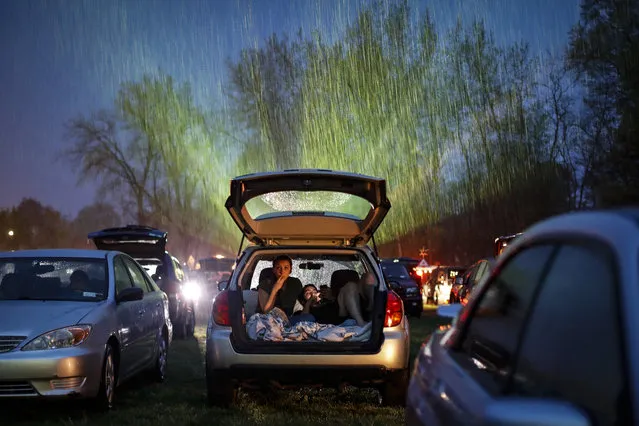
Guests watch “Trolls World Tour”, in the rain at the Four Brothers Drive In Theatre amid the coronavirus pandemic, Friday, May 15, 2020, in Amenia, N.Y. (Photo by John Minchillo/AP Photo)

Guests watch “Trolls World Tour”, in the rain at the Four Brothers Drive In Theatre amid the coronavirus pandemic, Friday, May 15, 2020, in Amenia, N.Y. (Photo by John Minchillo/AP Photo)
Details
17 May 2020 00:07:00
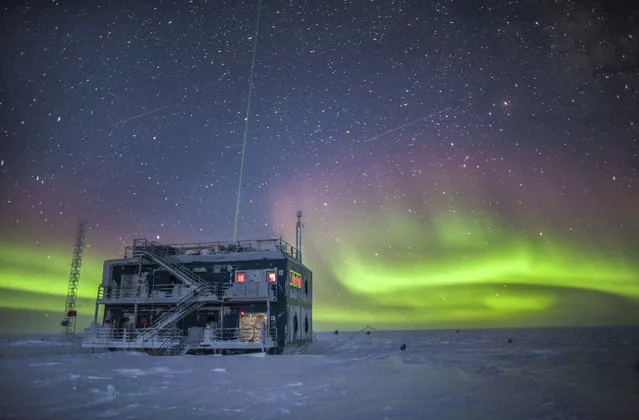
This undated photo provided by NOAA in May 2018 shows aurora australis near the South Pole Atmospheric Research Observatory in Antarctica. When a hole in the ozone formed over Antarctica, countries around the world in 1987 agreed to phase out several types of ozone-depleting chemicals called chlorofluorocarbons (CFCs). Production was banned, emissions fell and the hole shriveled. But according to a study released on Wednesday, May 16, 2018, scientists say since 2013, there’s more of a banned CFC going into the atmosphere. (Photo by Patrick Cullis/NOAA via AP Photo)

This undated photo provided by NOAA in May 2018 shows aurora australis near the South Pole Atmospheric Research Observatory in Antarctica. When a hole in the ozone formed over Antarctica, countries around the world in 1987 agreed to phase out several types of ozone-depleting chemicals called chlorofluorocarbons (CFCs). Production was banned, emissions fell and the hole shriveled. But according to a study released on Wednesday, May 16, 2018, scientists say since 2013, there’s more of a banned CFC going into the atmosphere. (Photo by Patrick Cullis/NOAA via AP Photo)
Details
15 Aug 2018 00:05:00