Loading...
Done
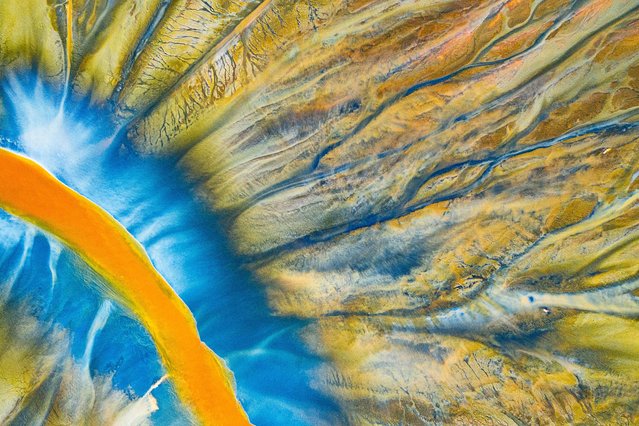
Poisoned River. Abstract Winner. A detailed photograph of a stream filled with poison. “Poisoned Beauty” is a personal project that tells the story of the natural disaster in the Apuseni Mountains in Transylvania, which was a result of chemical waste generated by copper and gold mining, but in a beautifully abstract way. (Photo by Gheorghe Popa/Drone Photography Awards 2021)

Poisoned River. Abstract Winner. A detailed photograph of a stream filled with poison. “Poisoned Beauty” is a personal project that tells the story of the natural disaster in the Apuseni Mountains in Transylvania, which was a result of chemical waste generated by copper and gold mining, but in a beautifully abstract way. (Photo by Gheorghe Popa/Drone Photography Awards 2021)
Details
19 Sep 2021 05:30:00
Rugby Union, New Zealand vs Tonga, IRB Rugby World Cup 2015 Pool C, St James' Park, Newcastle, Englandon October 9, 2015: Fans is fancy dress before the game. (Photo by Andrew Yates/Reuters)

Rugby Union, New Zealand vs Tonga, IRB Rugby World Cup 2015 Pool C, St James' Park, Newcastle, Englandon October 9, 2015: Fans is fancy dress before the game. (Photo by Andrew Yates/Reuters)
Details
11 Oct 2015 08:09:00
Two friends attempt to balance in the icy conditions in Newcastle, England on February 2, 2019. Boozy Brits across the UK took to the streets last night to ensure they got February off to a wet start after “Dry January”. (Photo by Craig Connor/North News and Pictures)

Two friends attempt to balance in the icy conditions in Newcastle, England on February 2, 2019. Boozy Brits across the UK took to the streets last night to ensure they got February off to a wet start after “Dry January”. (Photo by Craig Connor/North News and Pictures)
Details
03 Feb 2019 00:10:00
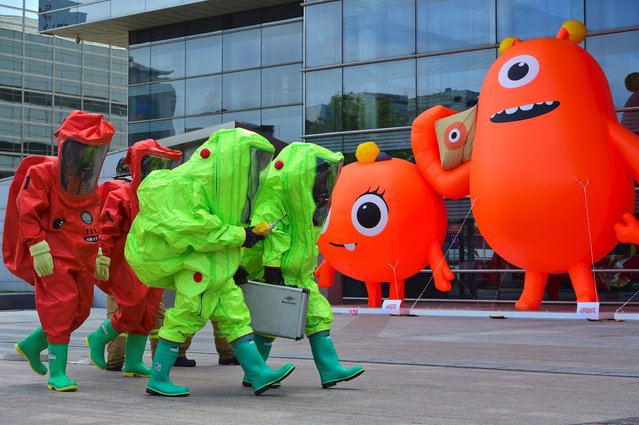
South Korean rescue members wearing chemical protective suits walk past a monster character (R) during an anti-terror drill as part of a disaster management exercise at the COEX shopping and exhibition center in Seoul on May 20, 2016. South Korea is holding its 2016 Safe Korea anti-disaster exercise this week against terrorist threats and natural disasters. (Photo by Jung Yeon-Je/AFP Photo)

South Korean rescue members wearing chemical protective suits walk past a monster character (R) during an anti-terror drill as part of a disaster management exercise at the COEX shopping and exhibition center in Seoul on May 20, 2016. South Korea is holding its 2016 Safe Korea anti-disaster exercise this week against terrorist threats and natural disasters. (Photo by Jung Yeon-Je/AFP Photo)
Details
21 May 2016 11:28:00
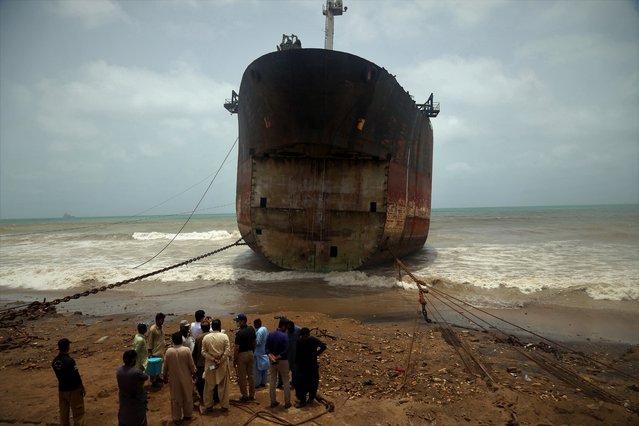
People stand next to a ship, containing tonnes of hazardous mercury-mixed oil, as it was allowed to anchor at Gadani ship-breaking yard in Gadani, Pakistan, 28 May 2021. Authorities have launched an investigation into the anchoring of a ship at the Gadani shipbreaking yard despite Interpol's warning that the ship contains dangerous chemicals. (Photo by Rehan Khan/EPA/EFE)

People stand next to a ship, containing tonnes of hazardous mercury-mixed oil, as it was allowed to anchor at Gadani ship-breaking yard in Gadani, Pakistan, 28 May 2021. Authorities have launched an investigation into the anchoring of a ship at the Gadani shipbreaking yard despite Interpol's warning that the ship contains dangerous chemicals. (Photo by Rehan Khan/EPA/EFE)
Details
18 Jun 2021 14:46:00
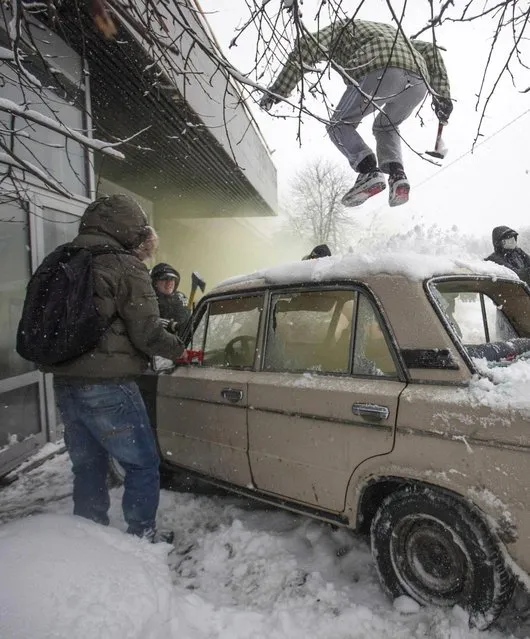
In this photo taken on Friday, March 15, 2013, members of a pro-Kremlin youth group attack pushers of spice, a synthetic drug, in Moscow, Russia. Russian officials and anti-drugs campaigners say that spice has become one of the most dangerous drugs widely available to youngsters and almost impossible to ban because of the constantly changing chemical ingredients. (Photo by Alexander Zemlianichenko Jr/AP Photo)

In this photo taken on Friday, March 15, 2013, members of a pro-Kremlin youth group attack pushers of spice, a synthetic drug, in Moscow, Russia. Russian officials and anti-drugs campaigners say that spice has become one of the most dangerous drugs widely available to youngsters and almost impossible to ban because of the constantly changing chemical ingredients. (Photo by Alexander Zemlianichenko Jr/AP Photo)
Details
26 Apr 2013 08:39:00
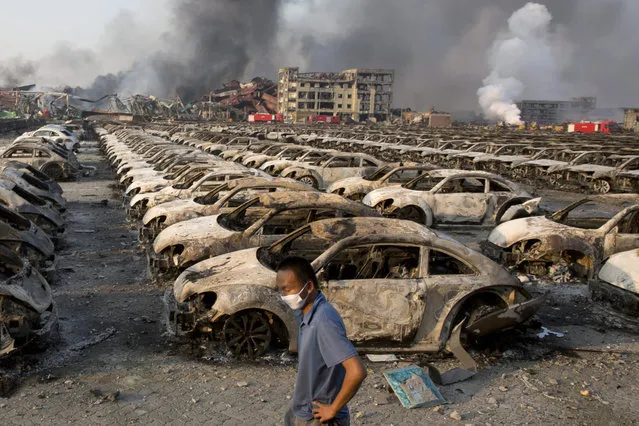
In this photo taken Thursday, August 13, 2015, a man walks past the charred remains of new cars at a parking lot near the site of an explosion at a warehouse in northeastern China's Tianjin municipality. Rescuers have pulled a survivor from an industrial zone about 32 hours after it was devastated by huge blasts in China's Tianjin port. Meanwhile, authorities are moving gingerly forward in dealing with a fire still smoldering amid potentially dangerous chemicals. (Photo by Ng Han Guan/AP Photo)

In this photo taken Thursday, August 13, 2015, a man walks past the charred remains of new cars at a parking lot near the site of an explosion at a warehouse in northeastern China's Tianjin municipality. Rescuers have pulled a survivor from an industrial zone about 32 hours after it was devastated by huge blasts in China's Tianjin port. Meanwhile, authorities are moving gingerly forward in dealing with a fire still smoldering amid potentially dangerous chemicals. (Photo by Ng Han Guan/AP Photo)
Details
14 Aug 2015 13:44:00
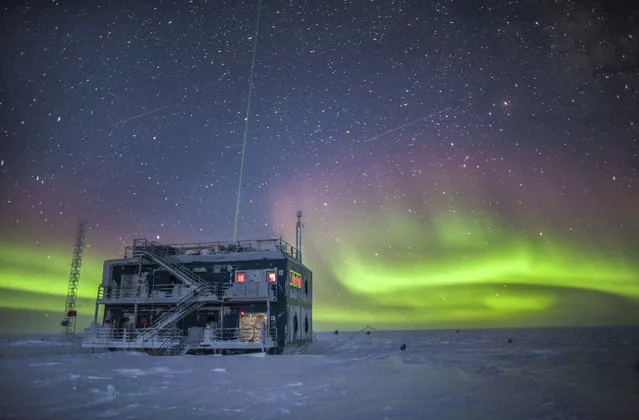
This undated photo provided by NOAA in May 2018 shows aurora australis near the South Pole Atmospheric Research Observatory in Antarctica. When a hole in the ozone formed over Antarctica, countries around the world in 1987 agreed to phase out several types of ozone-depleting chemicals called chlorofluorocarbons (CFCs). Production was banned, emissions fell and the hole shriveled. But according to a study released on Wednesday, May 16, 2018, scientists say since 2013, there’s more of a banned CFC going into the atmosphere. (Photo by Patrick Cullis/NOAA via AP Photo)

This undated photo provided by NOAA in May 2018 shows aurora australis near the South Pole Atmospheric Research Observatory in Antarctica. When a hole in the ozone formed over Antarctica, countries around the world in 1987 agreed to phase out several types of ozone-depleting chemicals called chlorofluorocarbons (CFCs). Production was banned, emissions fell and the hole shriveled. But according to a study released on Wednesday, May 16, 2018, scientists say since 2013, there’s more of a banned CFC going into the atmosphere. (Photo by Patrick Cullis/NOAA via AP Photo)
Details
15 Aug 2018 00:05:00