Loading...
Done
Untitled

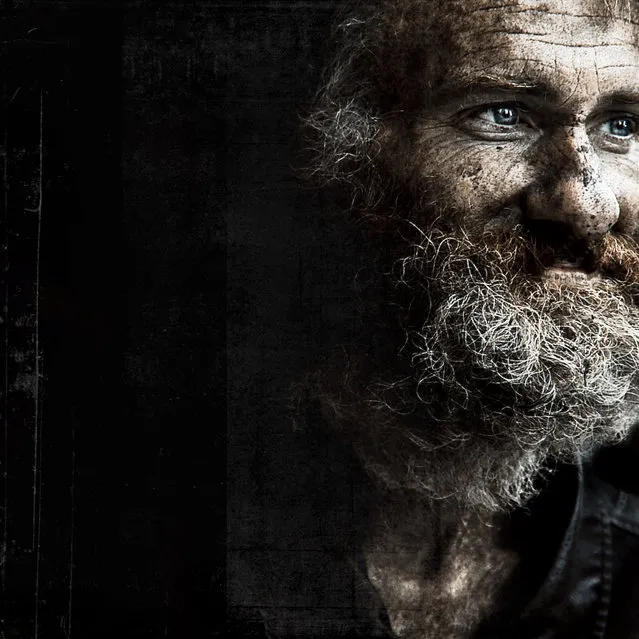
Untitled. (Photo by Lee Jeffries). P.S. The person in the photo – poured-out our yard keeper Volodya (it has no surnames, therefore it's simple – Volodya). It too the homeless, and too the good person (it's visible according to eyes). Looks after stray dogs and cats, every day feeds crowd of pigeons in a yard... I am on friendly terms with it. =) (Forgive please me for bad English – Translate.ru very much tried to inform to you my scanty thought).

Details
26 Oct 2012 12:31:00
A Lebanese man wears a mask to protect himself from the dust as a sandstorm blows over the northern Lebanese city of Tripoli on September 8, 2015. (Photo by Ibrahim Chalhoub/AFP Photo)

A Lebanese man wears a mask to protect himself from the dust as a sandstorm blows over the northern Lebanese city of Tripoli on September 8, 2015. An unseasonal sandstorm has hit the Middle East, reducing visibility and sending dozens to hospitals with breathing difficulties. (Photo by Ibrahim Chalhoub/AFP Photo)
Details
09 Sep 2015 12:12:00
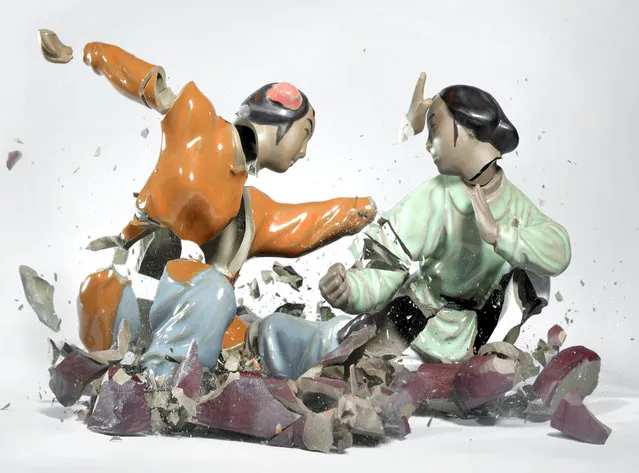
Porcelain Figurines By Martin Klimas

From a height of three meters, porcelain figurines are dropped on the ground, and the sound they make when they hit trips the shutter release. The result: razor-sharp images of disturbing beauty—temporary sculptures made visible to the human eye by high-speed photography technology. The porcelain statuette bursting into pieces isn't what really captures the attention; the fascination lies in the genesis of a dynamic figure that replaces the static pose. In contrast to the inertness of the intact kitsch figurines Klimas started out with, the photographs of their destruction possess a powerfully narrative character.
Details
21 Apr 2014 12:59:00
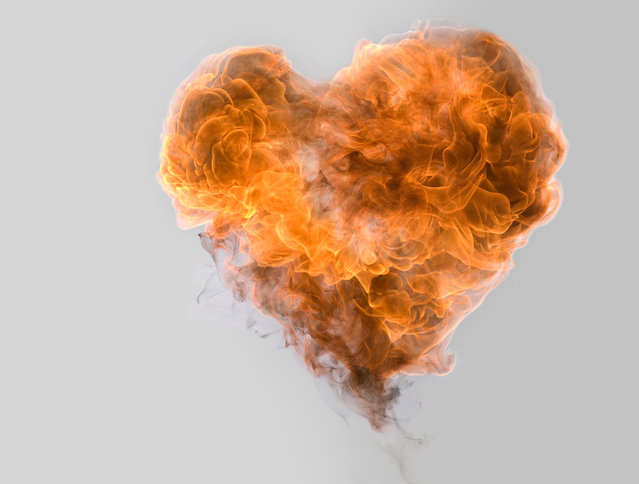
Fire patterns created by igniting gasoline in midair. (Photo by Rob Prideaux)

A photographer has taken an explosive set of images by igniting gasoline in midair. Rob Prideaux, 45, photographs fire and smoke and then creates patterns from it. The San Francisco-based artist captures the fire in the split second its visible by using highly arcane methods. Rob's Smoke and Fire series is his quest “to shape one of the more uncontrollable phenomena in nature”. (Photo by Rob Prideaux)
Details
10 Sep 2013 11:50:00
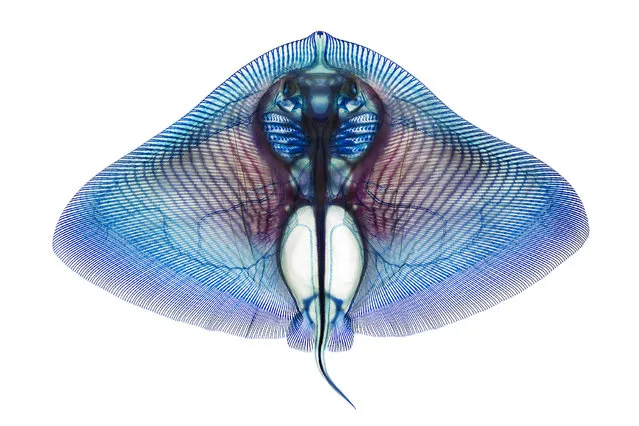
This image of the butterfly ray (Gymnura crebripunctata) helped scientists study the joints in its wings. (Photo by Adam Summers)

The photographs feature fish that have been specially treated to make the stained skeletal tissues visible through the skin and flesh. The technique, developed by Dr. Adam Summers, uses dyes, hydrogen peroxide, a digestive enzyme and glycerin to make the flesh seem to disappear. Photo: This image of the butterfly ray (Gymnura crebripunctata) helped scientists study the joints in its wings. (Photo by Adam Summers)
Details
23 Feb 2014 14:53:00


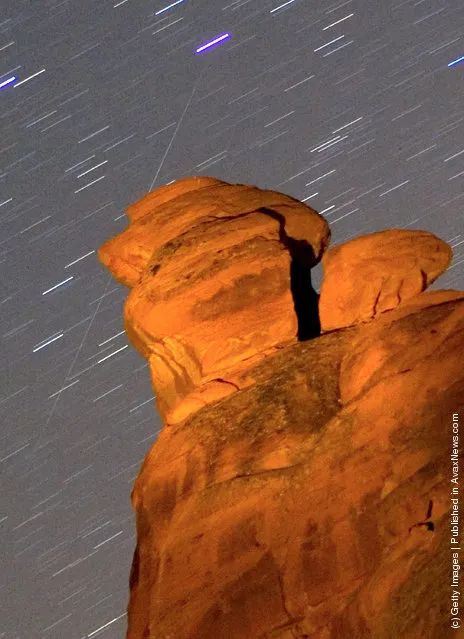
A Geminid meteor streaks diagonally across the sky against a field of star trails behind one of the peaks of the Seven Sisters rock formation in this long exposure early December 14, 2007 in the Valley of Fire State Park in Nevada. The meteor display, known as the Geminid meteor shower because it appears to radiate from near the star Castor in the constellation Gemini, is thought to be the result of debris cast off from an asteroid-like object called 3200 Phaethon. The shower is visible every December. (Photo by Ethan Miller/Getty Images)
Details
07 Jul 2011 10:34:00
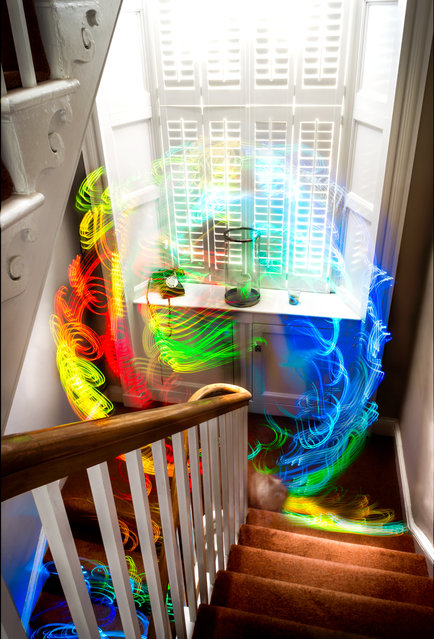
His goal with the project is to make the invisible visible. (Photo by Luis Hernan)

Luis Hernan was always curious about how wireless technologies like radio are transmitted through the air. So after finishing up his studies in architecture, computer science, and design, Hernan decided to research these invisible signals through a PhD at Newcastle University. Hernan set up a system that turned the wireless signals around him into colourful, ghostlike images using long-exposure photography, allowing people to see the strength of the signals around them. (Photo by Luis Hernan)
Details
13 Aug 2014 09:38:00
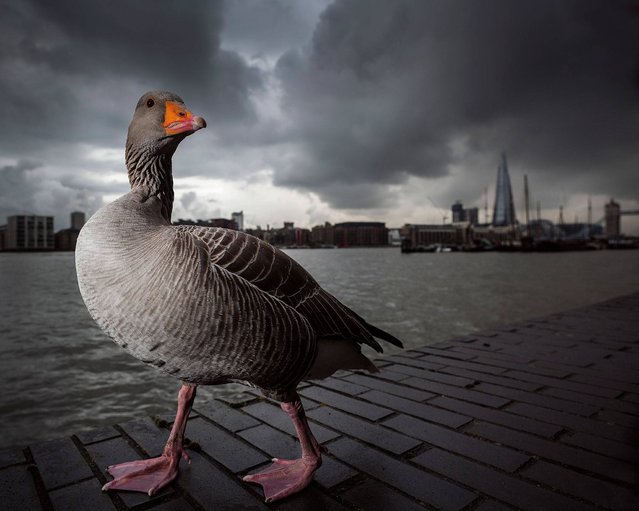
“Urban Tourist (Graylag Goose)”. Urban category and overall winner. (Photo by Lee Acaster/British Wildlife Photography Awards 2014)

The British Wildlife Photography Awards winners have been revealed, with Lee Acaster from Suffolk taking home the top prize for his shot of a Graylag Goose in London. Acaster, who received £5,000, photographed the animal against an ominous London skyline, with The Shard clearly visible in the background. Here: “Urban Tourist (Graylag Goose)”. Urban category and overall winner. (Photo by Lee Acaster/British Wildlife Photography Awards 2014)
Details
02 Sep 2014 12:24:00