Loading...
Done
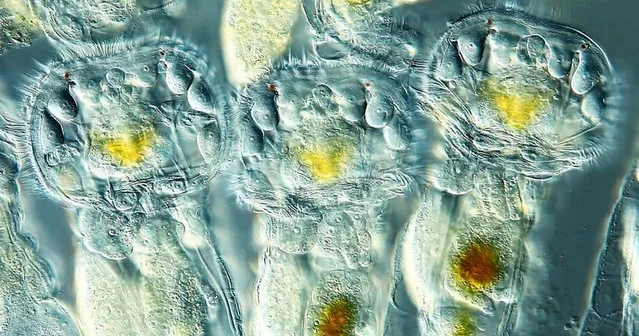
Olympus BioScapes Digital Imaging Competition 2012

Microscope images forge an extraordinary bond between science and art, said Hidenao Tsuchiya, Olympus America's Vice President and General Manager for the Scientific Equipment Group. We founded this competition to focus on the fascinating stories coming out of today's life science research laboratories. The thousands of images that people have shared with the competition over the years reflect some of the most exciting work going on in research today – work that can help shed light on the living universe and ultimately save lives. We look at BioScapes and these beautiful images as sources of education and inspiration to us and the world
Details
23 Dec 2012 15:57:00
ROBOY: Tendon Driven Humanoid Robot

Roboy has a bright future, as he represents a completely new generation of robots. The pioneer project of the Artificial Intelligence Laboratory (AI Lab) of the University of Zurich started six months ago, with the target of developing one of the most modern humanoid robots within nine months. Now the robot has received a new face and is able to move his arms driven by maxon DC motors. On March 9, 2013, Roboy will be presented to the public at the “Robots on Tour” robotics exhibition held in Zurich on the 25th anniversary of the lab.
Details
06 Mar 2013 10:10:00
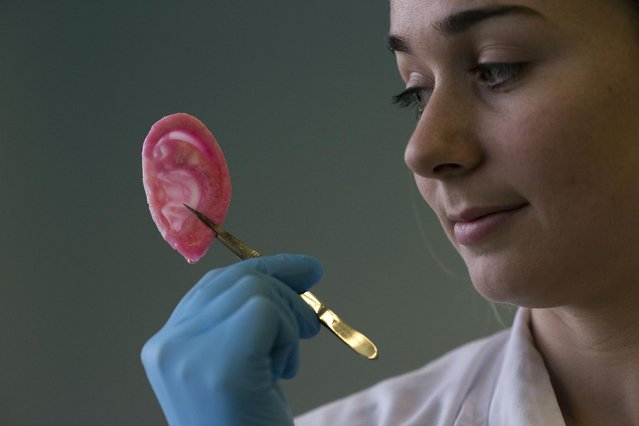
Dr Michelle Griffin, a plastic research fellow, poses for photographs with a synthetic polymer ear at her research facility in the Royal Free Hospital in London, Monday, March 31, 2014. (Photo by Matt Dunham/AP Photo)

In a north London hospital, scientists are growing noses, ears and blood vessels in the laboratory in a bold attempt to make body parts using stem cells. It is among several labs around the world, including in the U.S., that are working on the futuristic idea of growing custom-made organs in the lab. (Photo by Matt Dunham/AP Photo)
Details
10 Apr 2014 09:21:00
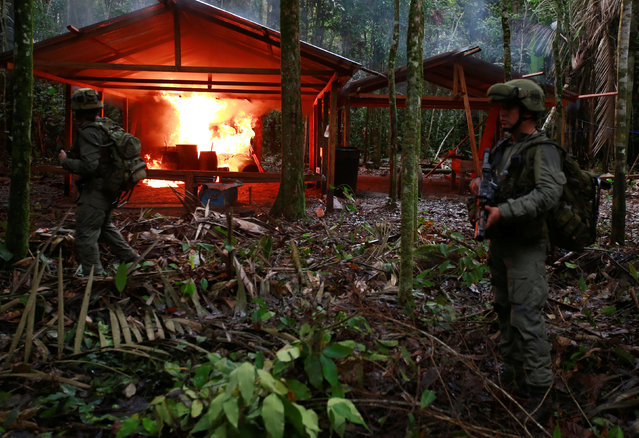
A Colombian anti-narcotics policeman stands guard after burning a cocaine lab, which police said belongs to criminal gangs, in a rural area of Calamar in Guaviare state, Colombia, August 2, 2016. (Photo by John Vizcaino/Reuters)

A Colombian anti-narcotics policeman stands guard after burning a cocaine lab, which police said belongs to criminal gangs, in a rural area of Calamar in Guaviare state, Colombia, August 2, 2016. Colombian law enforcement has destroyed 104 cocaine laboratories capable of producing some 100 tonnes of the drug annually, the head of the anti-narcotics police said on Tuesday. (Photo by John Vizcaino/Reuters)
Details
03 Aug 2016 11:28:00


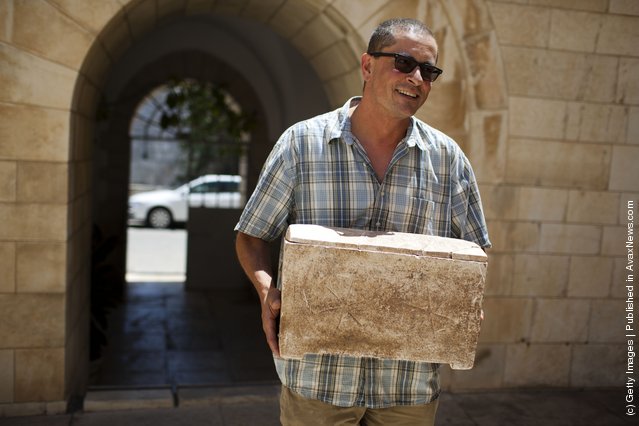
Doctor Boaz Zissu of the Bar Ilan University shows the inscription on a 2,000-year-old ossuary at the Rockefeller Museum on June 30, 2011 in Jerusalem, Israel. The Israel Antiquities Authority have confirmed the credibility of the ancient ossuary, otherwise known as a stone chest in which to store bones, as bearing the name of a relative of the high priest Caiaphas from the New Testament. Laboratory tests have come back saying that the inscription with the name of “Miriam daughter of Yeshua son of Caiaphas, priest of Maaziah from Beth Imri” is both “genuine and ancient”. (Photo by Uriel Sinai/Getty Images)
Details
01 Jul 2011 11:35:00
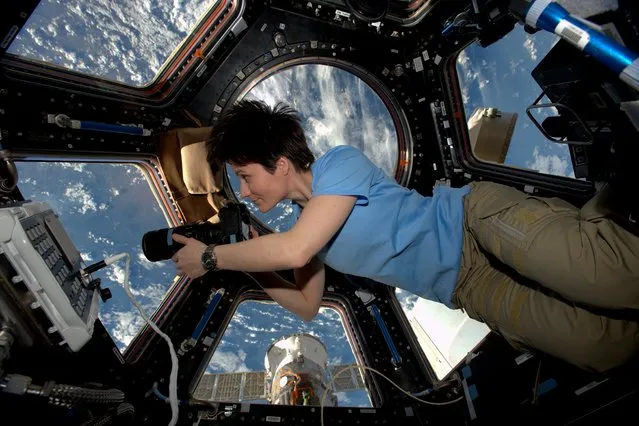
ESA astronaut Samantha Cristoforetti on the International Space Station 3 February 2015 during her Futura mission. Samantha is living and working on the Station as part of the Expedition 42 crew. (Photo by ESA/NASA)

ESA astronaut Samantha Cristoforetti on the International Space Station 3 February 2015 during her Futura mission. Samantha is living and working on the Station as part of the Expedition 42 crew. Picture released on February 10, 2015. (Photo by ESA/NASA)
Details
14 Feb 2015 12:40:00
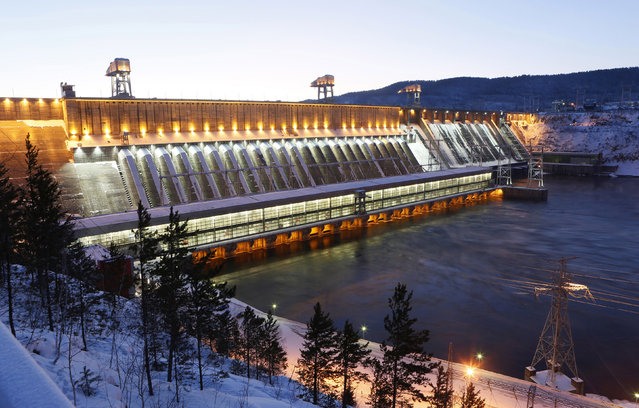
A general view shows the Krasnoyarsk hydro-electric power station on the Yenisei River near the Siberian city of Krasnoyarsk, Russia, January 13, 2016. The power plant, owned by EuroSibEnergo company, part of En+ Group, with a generating capacity of 6,000 megawatt (MW), has a ferro-concrete dam 124-metres high and 1065-metres long and is the second largest Russian hydroelectric power station. About 85% of the energy generated is intended for the Rusal Krasnoyarsk aluminium smelter, according to representatives of the power station. (Photo by Ilya Naymushin/Reuters)

A general view shows the Krasnoyarsk hydro-electric power station on the Yenisei River near the Siberian city of Krasnoyarsk, Russia, January 13, 2016. The power plant, owned by EuroSibEnergo company, part of En+ Group, with a generating capacity of 6,000 megawatt (MW), has a ferro-concrete dam 124-metres high and 1065-metres long and is the second largest Russian hydroelectric power station. About 85% of the energy generated is intended for the Rusal Krasnoyarsk aluminium smelter, according to representatives of the power station. (Photo by Ilya Naymushin/Reuters)
Details
16 Jan 2016 08:03:00
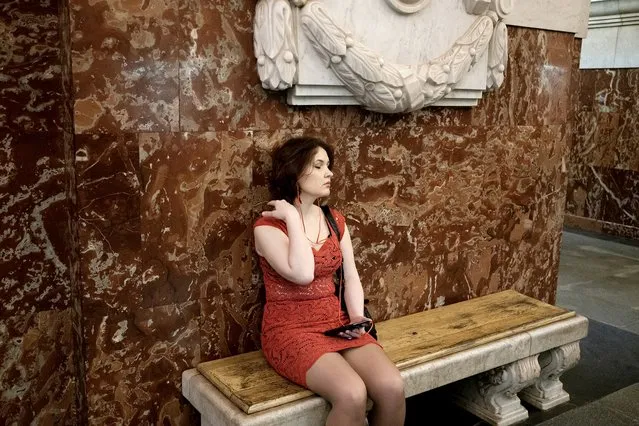
At the Krasnopresnenskaya station, the benches come from the Cathedral of Christ-Sauveur, which was built from 1839 to 1883 in memory of the victory of Russia against the army of Napoleon I. The cathedral was destroyed under Stalin in 1931, but the benches remained intact. Metro architects decided to install them in some stations. (Photo by Didier Bizet/The Washington Post)

At the Krasnopresnenskaya station, the benches come from the Cathedral of Christ-Sauveur, which was built from 1839 to 1883 in memory of the victory of Russia against the army of Napoleon I. The cathedral was destroyed under Stalin in 1931, but the benches remained intact. Metro architects decided to install them in some stations. (Photo by Didier Bizet/The Washington Post)
Details
24 Jan 2018 06:23:00