Loading...
Done
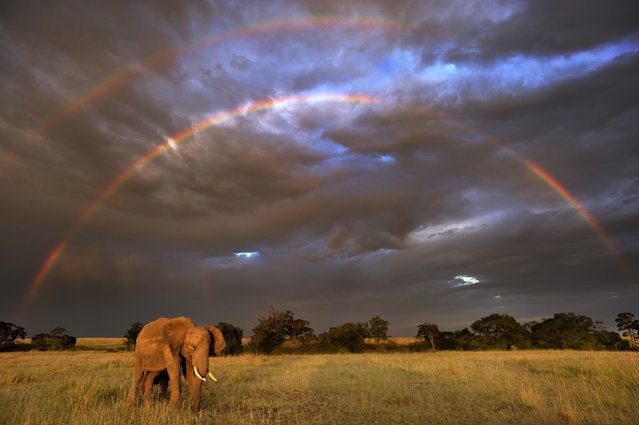
This photo provided by Netflix/naturepl.com and WWF-International shows an African Elephant (Loxodonta africana) in front of double rainbow, in Masai Mara, Kenya, included in the Netflix natural history series, “Our Planet”, in collaboration with Silverback Films and WWF. The eight-part series debuts in 2019. (Photo by Andy Rouse/Naturepl.com/WWF-International/Netflix via AP Photo)

This photo provided by Netflix/naturepl.com and WWF-International shows an African Elephant (Loxodonta africana) in front of double rainbow, in Masai Mara, Kenya, included in the Netflix natural history series, “Our Planet”, in collaboration with Silverback Films and WWF. The eight-part series debuts in 2019. (Photo by Andy Rouse/Naturepl/WWF-International/Netflix via AP Photo)
Details
09 Oct 2015 08:05:00
Emergency services work at the scene of a bus accident on the Kingsway in central London February 2, 2015. A number 91 double-decker bus had its roof ripped off after hitting a tree, causing injury to passengers and passers-by, local media reported. (Photo by Peter Nicholls/Reuters)

Emergency services work at the scene of a bus accident on the Kingsway in central London February 2, 2015. A number 91 double-decker bus had its roof ripped off after hitting a tree, causing injury to passengers and passers-by, local media reported. (Photo by Peter Nicholls/Reuters)
Details
03 Feb 2015 13:21:00
Australia's Matthew Ebden, left, and Jordan Thompson celebrate their victory against Tommy Paul and Ben Shelton of the United States, during their doubles tennis quarterfinal Davis Cup match at the Martin Carpena Sports Hall, in Malaga, southern Spain, on Thursday, November 21, 2024. (Photo by Manu Fernandez/AP Photo)

Australia's Matthew Ebden, left, and Jordan Thompson celebrate their victory against Tommy Paul and Ben Shelton of the United States, during their doubles tennis quarterfinal Davis Cup match at the Martin Carpena Sports Hall, in Malaga, southern Spain, on Thursday, November 21, 2024. (Photo by Manu Fernandez/AP Photo)
Details
28 Nov 2024 02:25:00
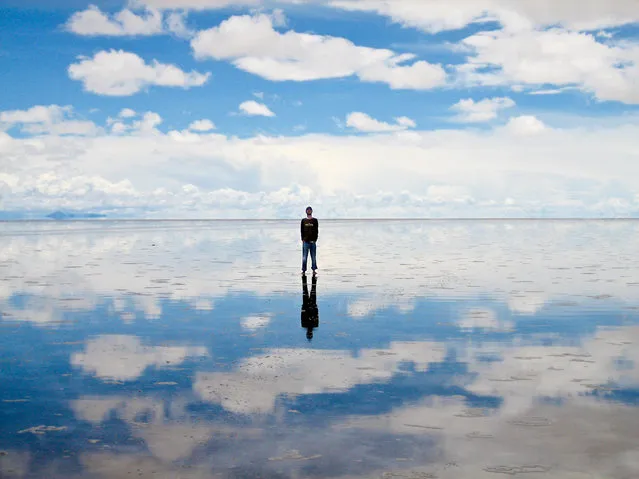
Salar de Uyuni

Salar de Uyuni (or Salar de Tunupa) is the world's largest salt flat at 10,582 square kilometers (4,086 sq mi). It is located in the Potosí and Oruro departments in southwest Bolivia, near the crest of the Andes, and is elevated 3,656 meters (11,995 ft) above mean sea level. The Salar was formed as a result of transformations between several prehistoric lakes. It is covered by a few meters of salt crust, which has an extraordinary flatness with the average altitude variations within one meter over the entire area of the Salar.
Details
04 Aug 2012 08:42:00
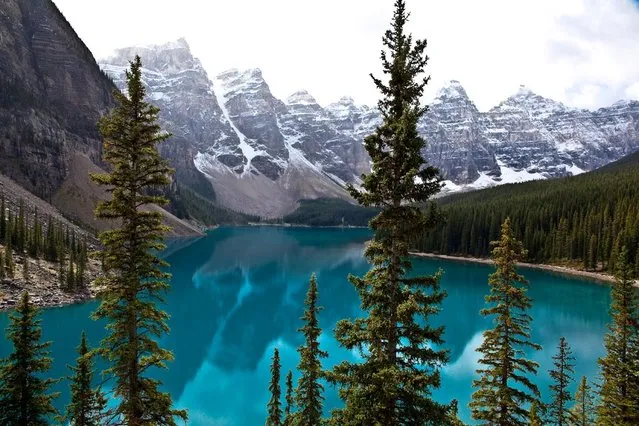
Moraine Lake Canada

Moraine Lake is a glacially-fed lake in Banff National Park, 14 kilometres (8.7 mi) outside the Village of Lake Louise, Alberta, Canada. It is situated in the Valley of the Ten Peaks, at an elevation of approximately 6,183 feet (1,885 m). The lake has a surface area of .5 square kilometres (0.19 sq mi). The lake, being glacially fed, does not reach its crest until mid to late June. When it is full, it reflects a distinct shade of blue. The colour is due to the refraction of light off the rock flour deposited in the lake on a continual basis.
Details
15 Oct 2013 11:56:00
Yonex All England Badminton Open Championship 2011

Imogen Bankier of Scotland (L) and Chris Adcock of England in action during their round one mixed doubles match in the Yonex All England Badminton Open Championship on March 9, 2011 in Birmingham, England.
Details
09 Mar 2011 20:59:00


French tennis champion Suzanne Lenglen (1899–1938) high-kicking during a doubles match at the Wimbledon Lawn Tennis Championships. (Photo by Kirby/Topical Press/Getty Images). 1924
Details
14 Jun 2011 10:02:00
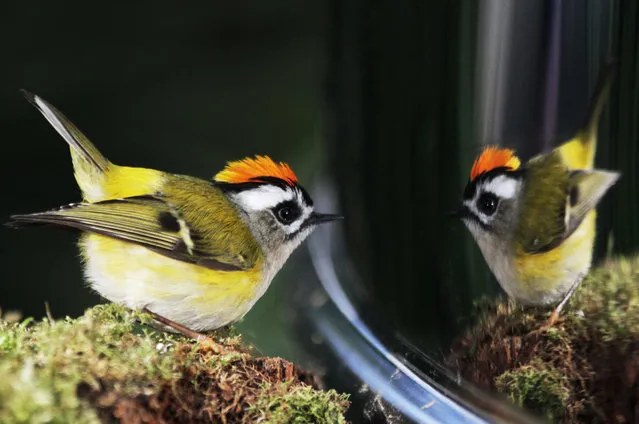
Golden-Crowned Kinglet

Golden-crowned Kinglets boldly bear their flashy lemon-yellow crest and a black eyebrow stripe. Taking a good look at them might be rather challenging, since they spend most of their time in the dense fir foliage or spruce. However, if you’re patient enough to find them, listen for their shrill, thin song. Though these “little Kings” are only a tad bit larger than a hummingbird, they can survive easily extreme cold by huddling close together. They breed in montane west and the far north and only visit North America during winter.
Details
21 Jan 2015 13:20:00