Loading...
Done
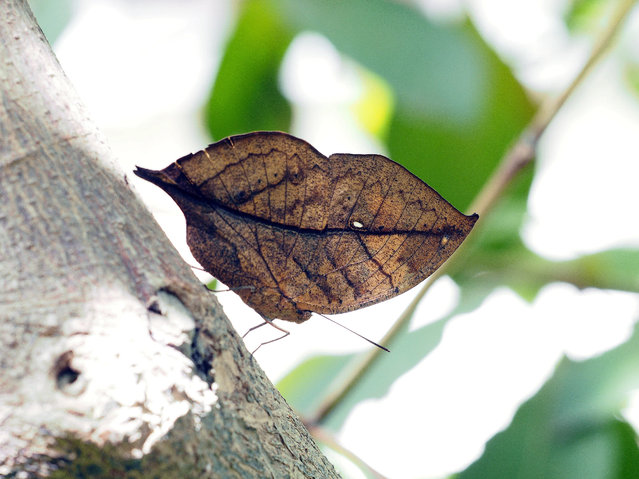
A Dead Leaf butterfly (Kallima inachu formosana, also called Orange Oakleaf Butterfly) rests on a tree trunk at the Taipei Zoo in Taipei, Tawian, 03 August 2019. Dead Leaf butterfly can be found in Tropical Asia from India to Japan. When its wings close, it resembles a dead leaf, providing camouflage against predators including birds, ants, spiders and wasps. (Photo by David Chang/EPA/EFE)

A Dead Leaf butterfly (Kallima inachu formosana, also called Orange Oakleaf Butterfly) rests on a tree trunk at the Taipei Zoo in Taipei, Tawian, 03 August 2019. Dead Leaf butterfly can be found in Tropical Asia from India to Japan. When its wings close, it resembles a dead leaf, providing camouflage against predators including birds, ants, spiders and wasps. (Photo by David Chang/EPA/EFE)
Details
18 Aug 2019 00:01:00
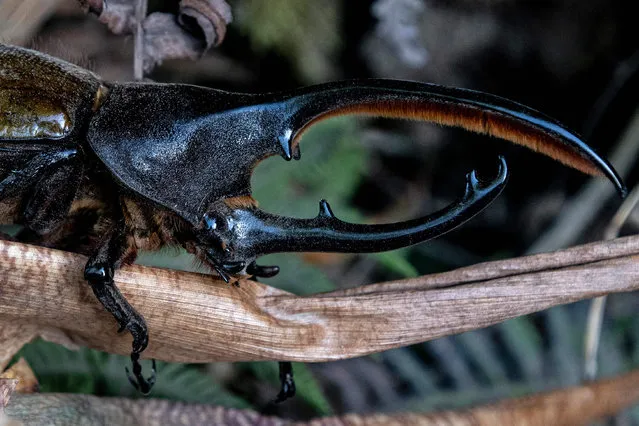
A Hercules beetle, one of the largest species of its kind, in seen at the Monteverde Cloud Forest Biological Reserve, in Puntarenas, Costa Rica, on May 23, 2023. In the Monteverde cloud forest, dense fog among the lush vegetation is increasingly rare and temperatures are increasing each year due to climate change. (Photo by Ezequiel Becerra/AFP Photo)

A Hercules beetle, one of the largest species of its kind, in seen at the Monteverde Cloud Forest Biological Reserve, in Puntarenas, Costa Rica, on May 23, 2023. In the Monteverde cloud forest, dense fog among the lush vegetation is increasingly rare and temperatures are increasing each year due to climate change. (Photo by Ezequiel Becerra/AFP Photo)
Details
21 Sep 2023 03:34:00
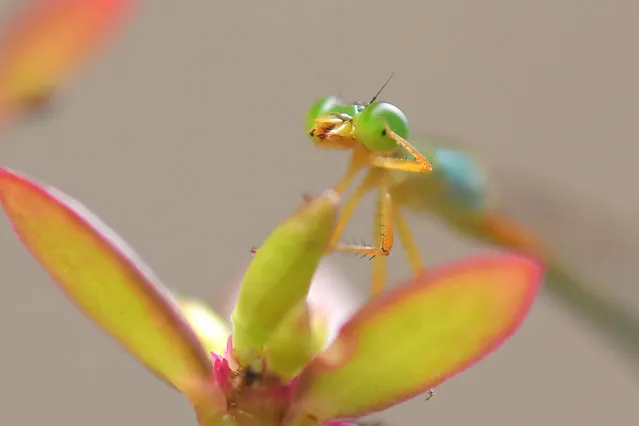
A damselfly sits on a leaf at a garden in Nagaon district in the northeastern state of Assam, India, on October 3 , 2023. (Photo by Anuwar Hazarika/NurPhoto/Rex Features/Shutterstock)

A damselfly sits on a leaf at a garden in Nagaon district in the northeastern state of Assam, India, on October 3 , 2023. (Photo by Anuwar Hazarika/NurPhoto/Rex Features/Shutterstock)
Details
31 Dec 2023 21:36:00
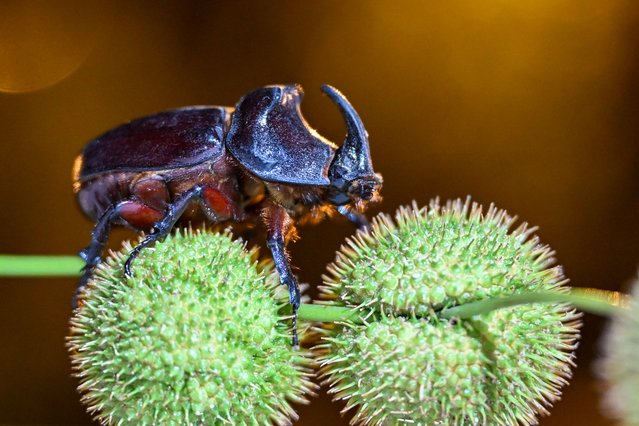
A “Rhino Beetle” (Oryctes nasicornis) is seen in Edremit, Van, Turkiye on August 2, 2024. Named “Rhino Beetle” due to the horn on its head, this beetle is commonly found in moist areas across Europe and Turkiye. (Photo by Ozkan Bilgin/Anadolu via Getty Images)

A “Rhino Beetle” (Oryctes nasicornis) is seen in Edremit, Van, Turkiye on August 2, 2024. Named “Rhino Beetle” due to the horn on its head, this beetle is commonly found in moist areas across Europe and Turkiye. (Photo by Ozkan Bilgin/Anadolu via Getty Images)
Details
24 Aug 2024 04:43:00
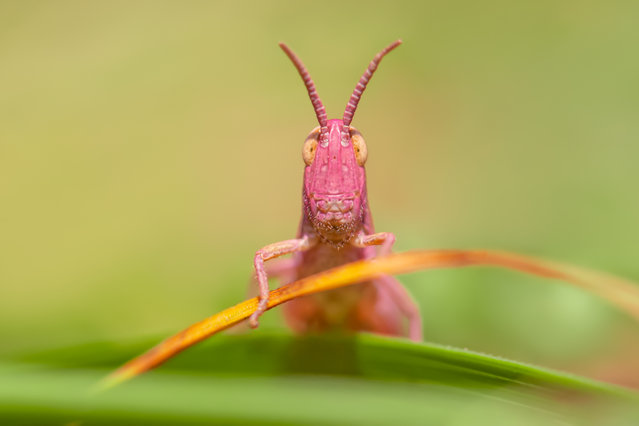
A rare grasshopper shines bright against its leafy background in North Holland, Netherlands in the first decade of October 2024. The insects are usually brown or green but turn pink due to a genetic mutation. (Photo by Roeselien Raimond/Media Drum Images)

A rare grasshopper shines bright against its leafy background in North Holland, Netherlands in the first decade of October 2024. The insects are usually brown or green but turn pink due to a genetic mutation. (Photo by Roeselien Raimond/Media Drum Images)
Details
09 Feb 2025 04:34:00
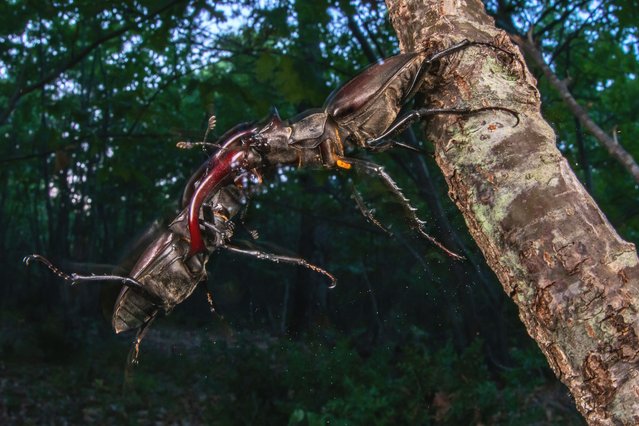
Combat between two male stag beetles, Italy, 2022. During the mating season, male stag beetles (Lucanus cervus) go into a frenzy, with lively but harmless clashes, in which bigger males often have the advantage over smaller ones due to their impressive mandibles. Longer larval development and genetic traits can increase the size of some individuals, but all saproxylic beetles are threatened by poor forest management, logging and dead wood removal to “clean” the forest. (Photo by Iacopo Nerozzi)

Combat between two male stag beetles, Italy, 2022. During the mating season, male stag beetles (Lucanus cervus) go into a frenzy, with lively but harmless clashes, in which bigger males often have the advantage over smaller ones due to their impressive mandibles. Longer larval development and genetic traits can increase the size of some individuals, but all saproxylic beetles are threatened by poor forest management, logging and dead wood removal to “clean” the forest. (Photo by Iacopo Nerozzi)

Details
20 Jul 2025 03:15:00
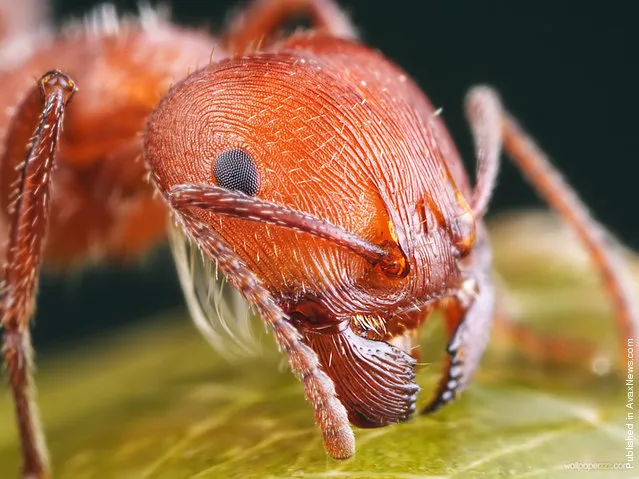
Ants

Once upon a time a myth was born that insects, unlike animals, are just a machines that not capable of learning and survive only based on their instincts. That myth has become the widespread opinion. Of course, this opinion is indeed erroneous, like many other widespread opinions. Let us try to find out which part is a myth and which part is true.
Details
30 Oct 2011 11:34:00
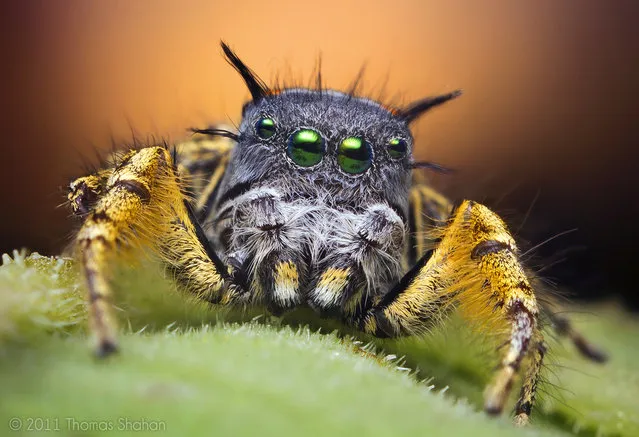
Adult Male Jumping Spider at Sunset – Phidippus mystaceus

“Hey! I'm Thomas Shahan, an artist and macrophotographer from Oklahoma. In my spare time over the past few years, I've been shooting portraiture of local arthropods. Why would I devote countless hours to tramping through forests, fields and the like searching for insects and spiders? Well, despite some common beliefs, arthropods (members of the phylum Arthropoda – insects, spiders, crustaceans...) represent an endlessly varied, wildly beautiful and fascinating bunch of animals with surprisingly personable faces and behavior. Often, all it takes is simply inspecting their lives on a closer level to turn repulsion to reverence”. – Thomas Shahan

Photo: Adult Male Jumping Spider at Sunset – Phidippus mystaceus. (Photo by Thomas Shahan; Source: Flickr)
Details
23 Apr 2012 14:07:00