Loading...
Done
French performer Odile De Mainville applies a makeup backstage before the Parisian transvestite cabaret show at “Madame Arthur” in Paris, on September 29, 2023. Open since 1946, Madame Arthur is the oldest transformist cabaret in Paris. Threatened with extinction the cabaret is undergoing a renaissance, attracting younger customers by returning to the fundamentals of the lie: baroque and queer performers who play with genres and conventions, and sing French hits live. (Photo by Joel Saget/AFP Photo)

French performer Odile De Mainville applies a makeup backstage before the Parisian transvestite cabaret show at “Madame Arthur” in Paris, on September 29, 2023. Open since 1946, Madame Arthur is the oldest transformist cabaret in Paris. Threatened with extinction the cabaret is undergoing a renaissance, attracting younger customers by returning to the fundamentals of the lie: baroque and queer performers who play with genres and conventions, and sing French hits live. (Photo by Joel Saget/AFP Photo)
Details
05 Dec 2024 03:23:00
A topless climate activist Laura Amherst, 31, from Extinction Rebellion protests in Soho, London, United Kingdom on August 25, 2021. The event is part of the “Impossible Rebellion” protest to “target the root cause of the climate and ecological crisis” and are ongoing for two weeks until the Government agrees to stop all new fossil fuel investments. (Photo by Stephen Chung/Alamy Live News)

A topless climate activist Laura Amherst, 31, from Extinction Rebellion protests in Soho, London, United Kingdom on August 25, 2021. The event is part of the “Impossible Rebellion” protest to “target the root cause of the climate and ecological crisis” and are ongoing for two weeks until the Government agrees to stop all new fossil fuel investments. (Photo by Stephen Chung/Alamy Live News)
Details
26 Aug 2021 08:36:00
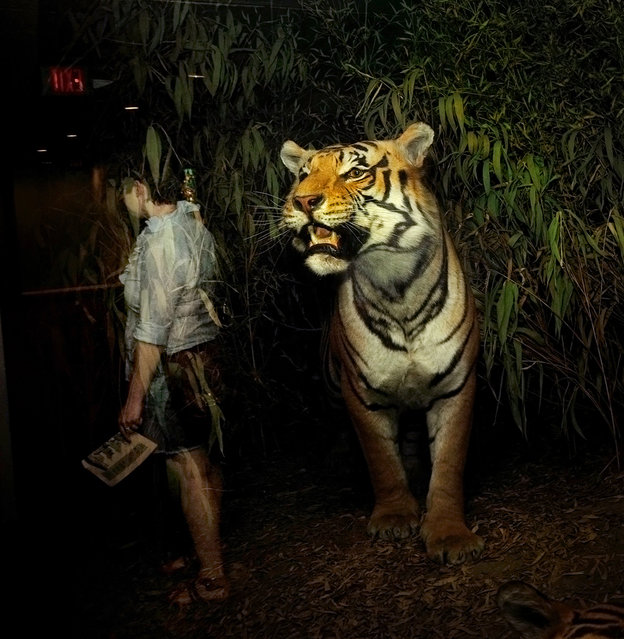
“Natural History”: Tiger. (Photo by Traer Scott)

“Natural History” is a series of completely candid single exposure images that merge the living and the dead to create allegorical narratives of our troubled co-existence with nature. Ghost-like reflections of modern visitors viewing wildlife dioramas are juxtaposed against the antique taxidermied subjects housed behind thick glass, their faces molded into permanent expressions of fear, aggression or fleeting passivity. After decades of over-hunting, climate change, poaching and destruction of habitat, many of these long dead diorama specimens now represent endangered or completely extinct species”. – Traer Scott. (Photo by Traer Scott)
Details
27 Oct 2014 11:39:00
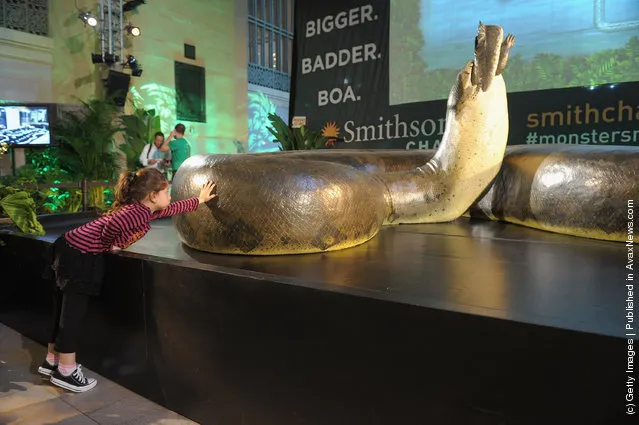
Attendees view a replica of the prehistoric Titanoboa, the largest snake to ever live, on display at Grand Central Terminal in New York City

“Titanoboa is a genus of snake that lived approximately 58–60 million years ago, during the Paleocene epoch, a 10-million-year period immediately following the dinosaur extinction event. The only known species is the Titanoboa cerrejonensis, the largest snake ever discovered, which supplanted the previous record holder, Gigantophis”. – Wikipedia

Photo: Leah Del Rio views a replica of the prehistoric Titanoboa, the largest snake to ever live, on display at Grand Central Terminal on March 23, 2012 in New York City. (Photo by Michael Loccisano/Getty Images)
Details
24 Mar 2012 10:14:00
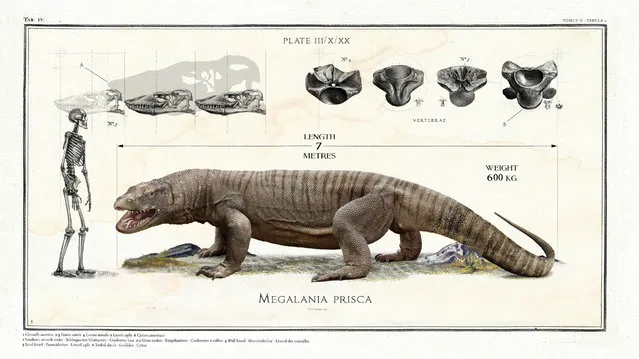
Fossil records indicate that this early lizard, Megalina prisca, was a whopping seven metres in length. (Photo by Sky TV/The Guardian)

Fossil records indicate that this early lizard, Megalania (Megalania prisca or Varanus priscus), was a whopping seven metres in length. They were part of a megafaunal assemblage that inhabited southern Australia during the Pleistocene. The youngest fossil remains date to around 50,000 years ago. The first aboriginal settlers of Australia might have encountered them and been a factor in their extinction. (Photo by Sky TV/The Guardian)
Details
12 Jun 2018 00:05:00
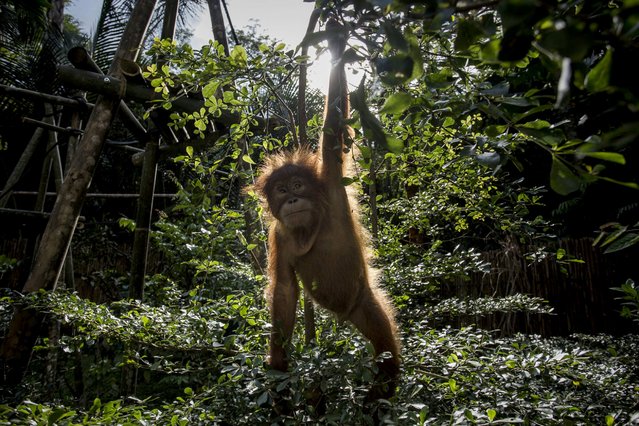
A Baby sumatran orangutan (Pongo abelii) plays around in a tree as they train at Sumatran Orangutan Conservation Programme's rehabilitation center on November 12, 2016 in Kuta Mbelin, North Sumatra, Indonesia. The Orangutans in Indonesia have been known to be on the verge of extinction as a result of deforestation and poaching. Found mostly in South-East Asia, where they live on the islands of Sumatra and Borneo, the endangered species continue to lose their habitat as a result of corporate expansion in a developing economy. Indonesia approved palm oil concessions on nearly 15 million acres of peatlands over the past years and thousands of square miles have been cleared for plantations, including the lowland areas that are the prime habitat for orangutans. (Photo by Ulet Ifansasti/Getty Images)

A Baby sumatran orangutan (Pongo abelii) plays around in a tree as they train at Sumatran Orangutan Conservation Programme's rehabilitation center on November 12, 2016 in Kuta Mbelin, North Sumatra, Indonesia. The Orangutans in Indonesia have been known to be on the verge of extinction as a result of deforestation and poaching. Found mostly in South-East Asia, where they live on the islands of Sumatra and Borneo, the endangered species continue to lose their habitat as a result of corporate expansion in a developing economy. Indonesia approved palm oil concessions on nearly 15 million acres of peatlands over the past years and thousands of square miles have been cleared for plantations, including the lowland areas that are the prime habitat for orangutans. (Photo by Ulet Ifansasti/Getty Images)
Details
16 Nov 2016 11:14:00
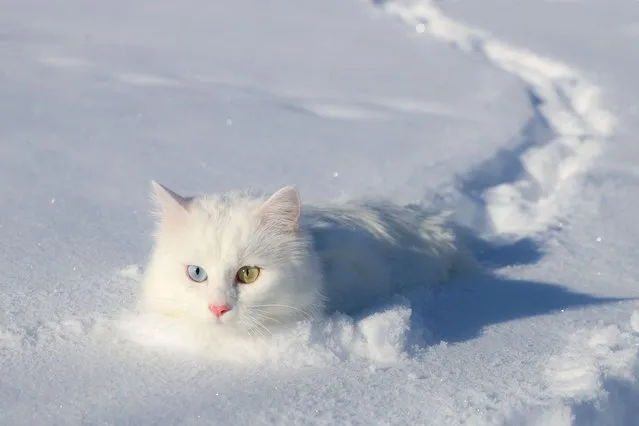
Van cat walks in the snow in Yuzuncu Yil University's “cat villa” where they are carefully cared, in Van, Turkiye on January 21, 2022. One of the most important symbols of Van province of Turkiye endangered Van cats are taken under protection at the Van Cat Research and Application Center of Yuzuncu Yil University. They have been the subject of many scientific studies with their unique characteristics. Efforts are continuing to protect the extinction of the Van cat, which is known for its sensuality, friendliness, white silky fur, lion's walk, fluffy tail, different eye colors and fondness for water. (Photo by Ozkan Bilgin/Anadolu Agency via Getty Images)

Van cat walks in the snow in Yuzuncu Yil University's “cat villa” where they are carefully cared, in Van, Turkiye on January 21, 2022. One of the most important symbols of Van province of Turkiye endangered Van cats are taken under protection at the Van Cat Research and Application Center of Yuzuncu Yil University. They have been the subject of many scientific studies with their unique characteristics. Efforts are continuing to protect the extinction of the Van cat, which is known for its sensuality, friendliness, white silky fur, lion's walk, fluffy tail, different eye colors and fondness for water. (Photo by Ozkan Bilgin/Anadolu Agency via Getty Images)
Details
24 Apr 2023 03:44:00
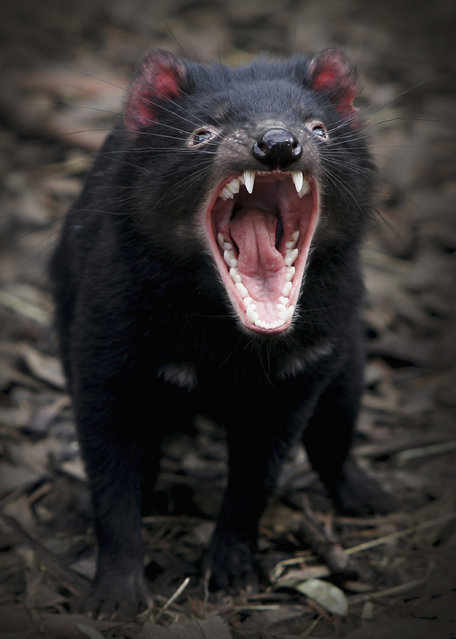
A Tasmanian Devil bears it's teeth at a quarantine facility August 31, 2005 in Hobart, Australia. The Devil, a native marsupial unique to Tasmania, is under threat from Devil Facial Tumor Disease (DFTD) which is decimating numbers throughout Tasmania. (Photo by Ian Waldie/Getty Images)

“The Tasmanian devil (Sarcophilus harrisii) is a carnivorous marsupial of the family Dasyuridae now found in the wild only in the Australian island state of Tasmania. The size of a small dog, it became the largest carnivorous marsupial in the world following the extinction of the thylacine in 1936. It is characterised by its stocky and muscular build, black fur, pungent odour, extremely loud and disturbing screech, keen sense of smell, and ferocity when feeding”. – Wikipedia. Photo: A Tasmanian Devil bears it's teeth at a quarantine facility August 31, 2005 in Hobart, Australia. (Photo by Ian Waldie/Getty Images)
Details
27 Jan 2014 09:45:00