Loading...
Done
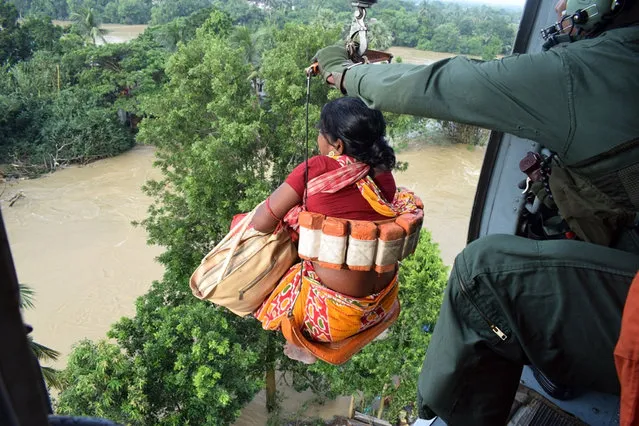
A handout photo made available by the Indian Air Force (IAF) showing an IAF helicopters during the rescue operation in flood affected areas of Dhanyaghari of Khanakul in West Bengal, India, 02 August 2021. According to the IAF, helicopters of Indian Air Force rescued 31 people from rooftops and brought them to safety to Arambaug. The helicopters also dropped emergency food supplies in the affected areas after the torrential rain in the state has thrown life out of gear and created flood like situation in many districts. (Photo by Indian Air Force/Handout via EPA/EFE)

A handout photo made available by the Indian Air Force (IAF) showing an IAF helicopters during the rescue operation in flood affected areas of Dhanyaghari of Khanakul in West Bengal, India, 02 August 2021. According to the IAF, helicopters of Indian Air Force rescued 31 people from rooftops and brought them to safety to Arambaug. The helicopters also dropped emergency food supplies in the affected areas after the torrential rain in the state has thrown life out of gear and created flood like situation in many districts. (Photo by Indian Air Force/Handout via EPA/EFE)
Details
10 Aug 2021 09:44:00
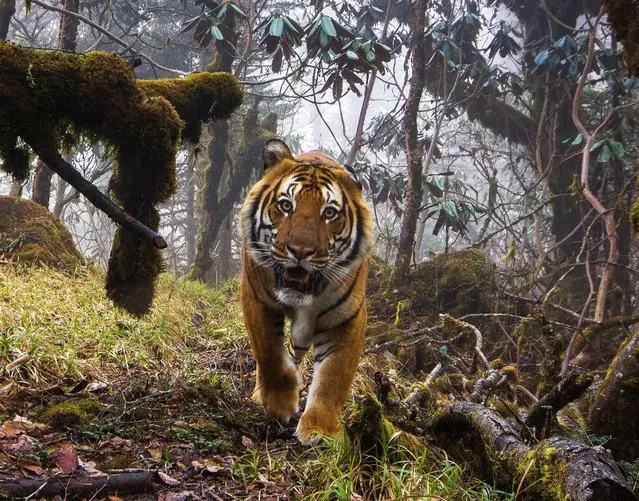
Rare images of wild tigers in Bhutan, captured by camera traps, show tigers and other animals using high-altitude wildlife corridors which are lifelines to isolated tiger populations and critical to genetic diversity, conservation and growth. Here: A wild Bengal tiger (Panthera tigris tigris) captured on a camera trap in corridor eight at an altitude of 3,540 metres in Trongsa, Bhutan. (Photo by Emmanuel Rondeau/WWF UK/The Guardian)

Rare images of wild tigers in Bhutan, captured by camera traps, show tigers and other animals using high-altitude wildlife corridors which are lifelines to isolated tiger populations and critical to genetic diversity, conservation and growth. Here: A wild Bengal tiger (Panthera tigris tigris) captured on a camera trap in corridor eight at an altitude of 3,540 metres in Trongsa, Bhutan. (Photo by Emmanuel Rondeau/WWF UK/The Guardian)


Details
02 Aug 2017 06:49:00
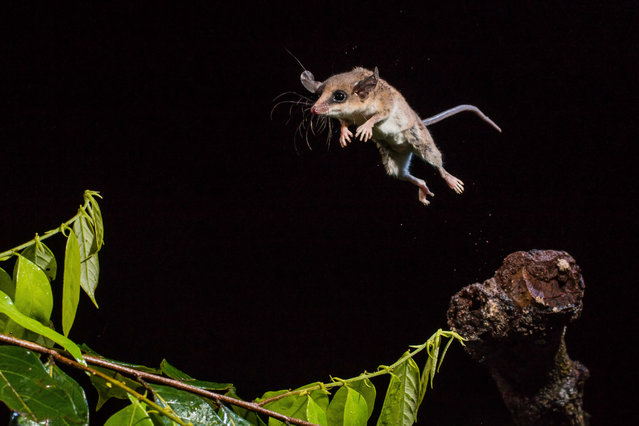
Tropical acrobatics by Adrià López Baucells in Manaus, Brazil. An unidentified South American marsupial, although the characteristic black markings on its face indicate it may be a mouse opossum. These small creatures are nocturnal and feed on bugs, fruit and bird eggs. (Photo by Adrià López Baucells/2019 Royal Society of Biology Photography Competition)

Tropical acrobatics by Adrià López Baucells in Manaus, Brazil. An unidentified South American marsupial, although the characteristic black markings on its face indicate it may be a mouse opossum. These small creatures are nocturnal and feed on bugs, fruit and bird eggs. (Photo by Adrià López Baucells/2019 Royal Society of Biology Photography Competition)
Details
10 Oct 2019 00:03:00
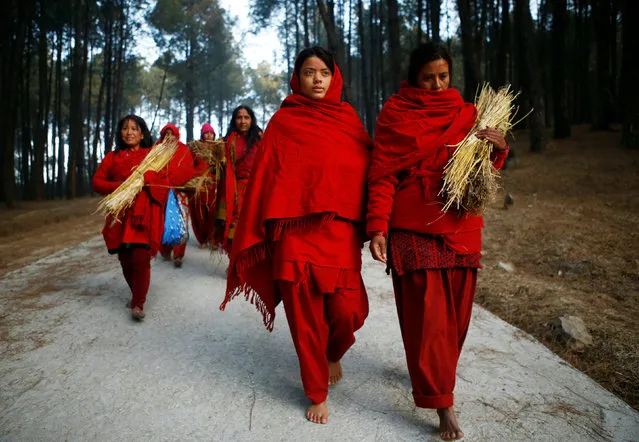
Devotees walk through the woods of Changu Narayan as they arrive to perform rituals and prayers during the Swasthani Bratakatha festival in Bhaktapur, Nepal February 8, 2017. (Photo by Navesh Chitrakar/Reuters)

Devotees walk through the woods of Changu Narayan as they arrive to perform rituals and prayers during the Swasthani Bratakatha festival in Bhaktapur, Nepal February 8, 2017. (Photo by Navesh Chitrakar/Reuters)
Details
12 Feb 2017 00:05:00
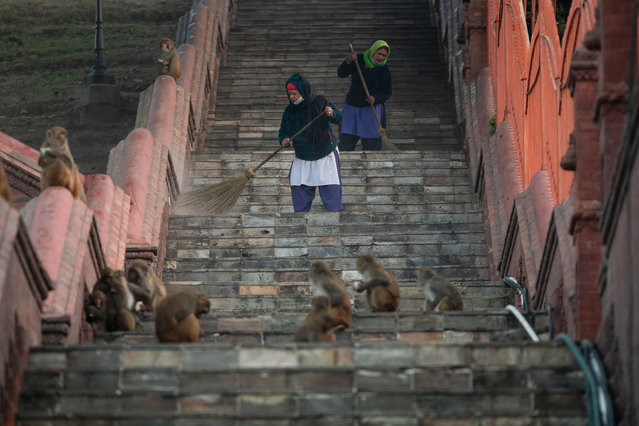
Workers clean the premises of Pashupatinath temple in Kathmandu, Nepal, December 16, 2020. The Pashupatinath Temple in Nepal reopened for devotees on Wednesday morning, almost eight months after it was shut due to the COVID-19 pandemic. (Photo by Xinhua News Agency/Rex Features/Shutterstock)

Workers clean the premises of Pashupatinath temple in Kathmandu, Nepal, December 16, 2020. The Pashupatinath Temple in Nepal reopened for devotees on Wednesday morning, almost eight months after it was shut due to the COVID-19 pandemic. (Photo by Xinhua News Agency/Rex Features/Shutterstock)
Details
22 Jan 2021 09:17:00
A dog is worshiped during Tihar or Diwali festival in Kathmandu, Nepal on November 12, 2023. Nepali people worship dogs, dedicated solely to the human's most devoted friend and guardian on second day of Tihar fesival. “Tihar” the Hindu festival of flowers and lights, is celebrated for five days. (Photo by Sunil Sharma/ZUMA Press Wire/Rex Features/Shutterstock)

A dog is worshiped during Tihar or Diwali festival in Kathmandu, Nepal on November 12, 2023. Nepali people worship dogs, dedicated solely to the human's most devoted friend and guardian on second day of Tihar fesival. “Tihar” the Hindu festival of flowers and lights, is celebrated for five days. (Photo by Sunil Sharma/ZUMA Press Wire/Rex Features/Shutterstock)
Details
01 Dec 2023 03:31:00
Yoga instructors from Anahata Yoga Zone perform yoga postures on a building's terrace in Hyderabad on June 18, 2020, ahead of the International Yoga Day annually celebrated on June 21. (Photo by Noah Seelam/AFP Photo)

Yoga instructors from Anahata Yoga Zone perform yoga postures on a building's terrace in Hyderabad on June 18, 2020, ahead of the International Yoga Day annually celebrated on June 21. (Photo by Noah Seelam/AFP Photo)
Details
25 Jun 2020 00:05:00
The maned wolf is among the large mammals in the Brazilian Cerrado that are threatened by the increasing conversion of grasslands into farmland for grazing and growing crops. (Photo by Ben Cranke/Nature Picture Library/Alamy Stock Photo)

Global wildlife populations will decline by 67% by 2020 unless urgent action is taken to reduce human impact on species and ecosystems, warns the biennial Living Planet Index report from WWF (World Wide Fund for Nature) and ZSL (Zoological Society of London). From elephants to eels, here are some of the wildlife populations most affected by human activity. Here: The maned wolf is among the large mammals in the Brazilian Cerrado that are threatened by the increasing conversion of grasslands into farmland for grazing and growing crops. (Photo by Ben Cranke/Nature Picture Library/Alamy Stock Photo)
Details
28 Oct 2016 10:47:00