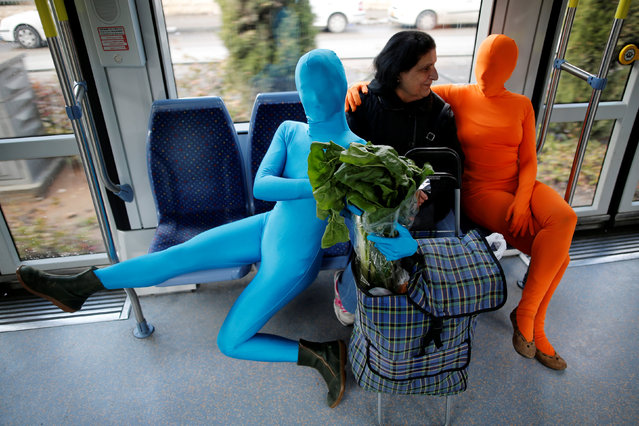
Members of the Prizma Ensemble wearing full solid-coloured bodysuits take part in a festival for the Jewish holiday of Hanukkah, in Jerusalem December 26, 2016. (Photo by Amir Cohen/Reuters)
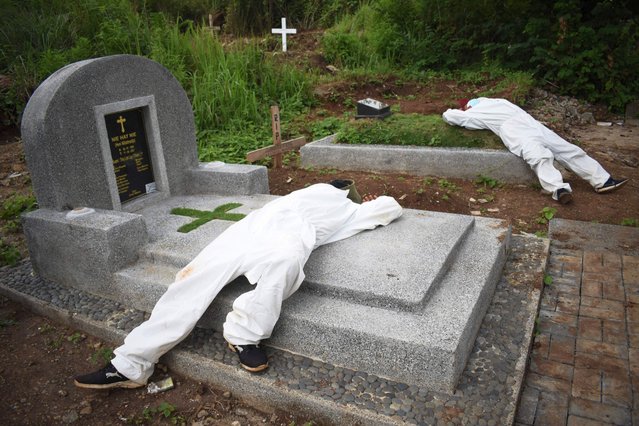
Exhausted grave diggers rest in between funerals at a cemetery designated for Covid-19 victims in Bandung on June 15, 2021, as infection numbers soar in Indonesia. (Photo by Timur Matahari/AFP Photo)
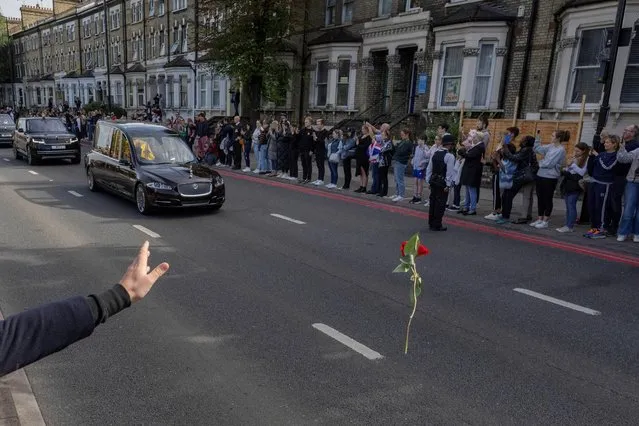
A person throws a flower towards Britain's Queen Elizabeth's coffin, as it is transported, on the day of her state funeral and burial, in London, Britain on September 19, 2022. (Photo by Carlos Barria/Reuters)
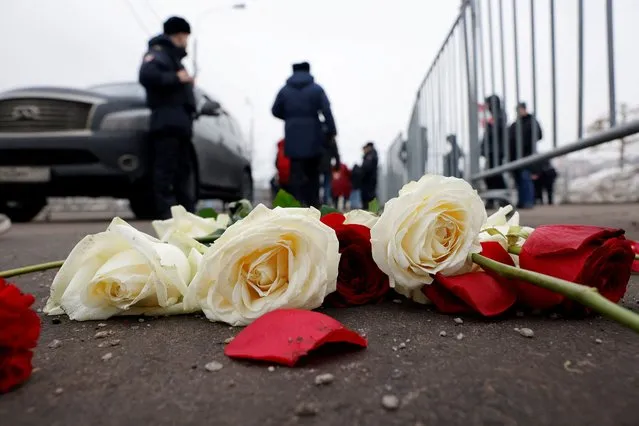
Flowers are left on the ground near the Borisovskoye cemetery during the funeral of Russian opposition politician Alexei Navalny in Moscow, Russia, on March 1, 2024. (Photo by Reuters/Stringer)
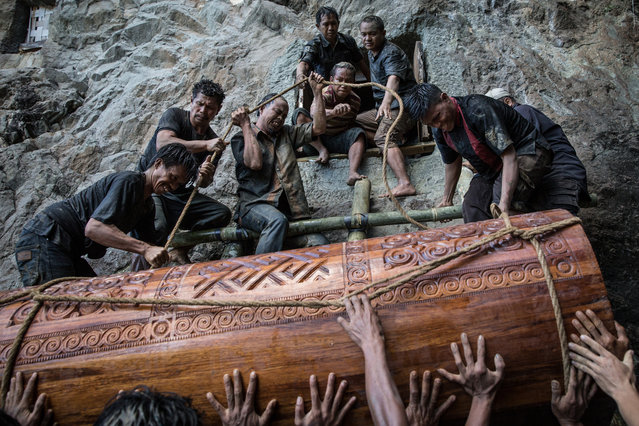
It is said that Torajans are people who “live to die”. For this Indonesian ethnic group, funerals are such extravagant events that they sometimes attract tourists. Families can postpone burials years (and the deceased are considered sick and hosted at home until the funeral) until the family can raise enough money and gather as many relatives as possible. And then it’s a jubilant multiday social event with a parade, dances and animal sacrifices. Agung Parameswara photographed these funerary practices when he traveled to South Sulawesi province, where the Torajans live. (Photo by Agung Parameswara/The Washington Post)
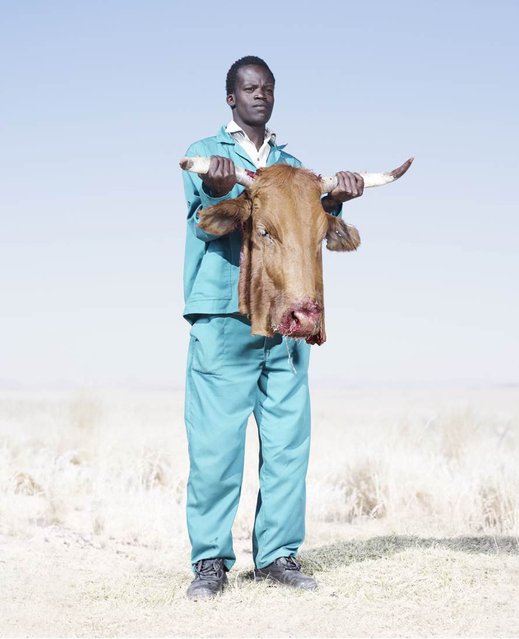
A Herero man holds the head of a freshly butchered cow, killed to supply meat for a funeral, 2012. (Photo by Jim Naughten, courtesy of Klompching Gallery, New York)
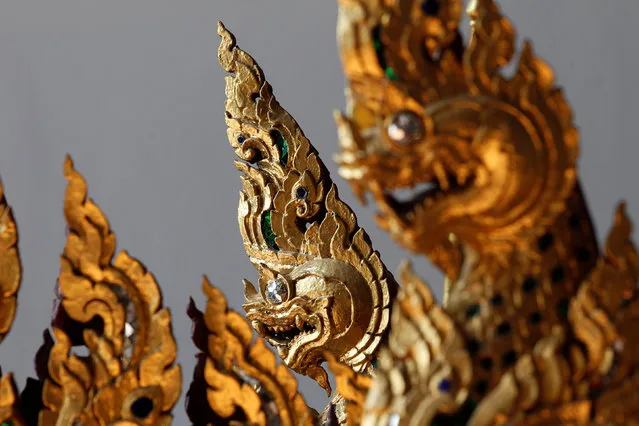
Parts of the Royal Chariot, which will be used during the late King Bhumibol Adulyadej's funeral later this year is seen at the National Museum in Bangkok, Thailand, February 6, 2017. (Photo by Chaiwat Subprasom/Reuters)
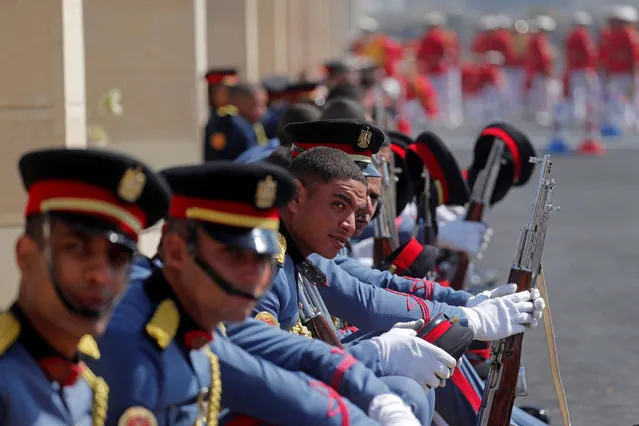
Guards wait for the start of former Egyptian President Hosni Mubarak's funeral at Field Marshal Mohammed Hussein Tantawi Mosque east of Cairo, Egypt on February 26, 2020. (Photo by Amr Abdallah Dalsh/Reuters)