Loading...
Done
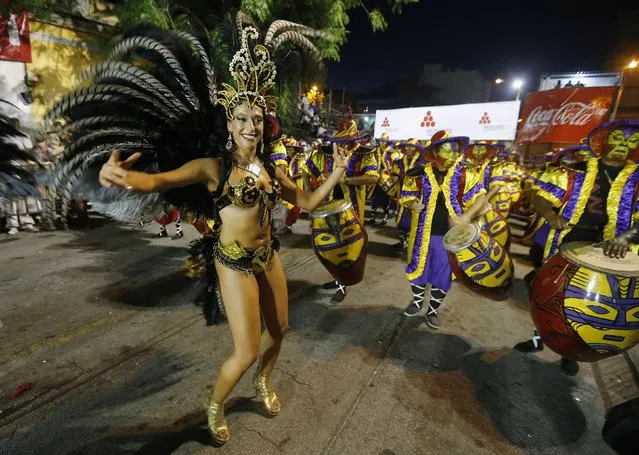
A member of a comparsa, a Uruguayan carnival group, dances during the Llamadas parade in Montevideo February 5, 2015. Thousands of people crowd the capital's Barrio Sur as costumed drummers and dancers kick off the street fiesta known as Llamadas which has traditional Afro-Uruguayan roots. The fiesta, also known in Spanish as “The Calls”, started during the colonial period as a slave parade on the city streets. (Photo by Andres Stapff/Reuters)

A member of a comparsa, a Uruguayan carnival group, dances during the Llamadas parade in Montevideo February 5, 2015. Thousands of people crowd the capital's Barrio Sur as costumed drummers and dancers kick off the street fiesta known as Llamadas which has traditional Afro-Uruguayan roots. The fiesta, also known in Spanish as “The Calls”, started during the colonial period as a slave parade on the city streets. (Photo by Andres Stapff/Reuters)
Details
08 Feb 2015 11:44:00
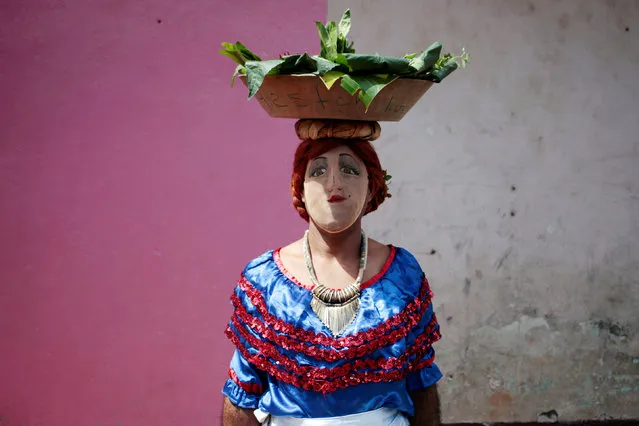
A man with a mask poses for a portrait as he takes part in festivities in honour of patron saint San Jeronimo in Masaya city, Nicaragua November 20, 2016. (Photo by Oswaldo Rivas/Reuters)

A man with a mask poses for a portrait as he takes part in festivities in honour of patron saint San Jeronimo in Masaya city, Nicaragua November 20, 2016. (Photo by Oswaldo Rivas/Reuters)
Details
22 Nov 2016 11:04:00
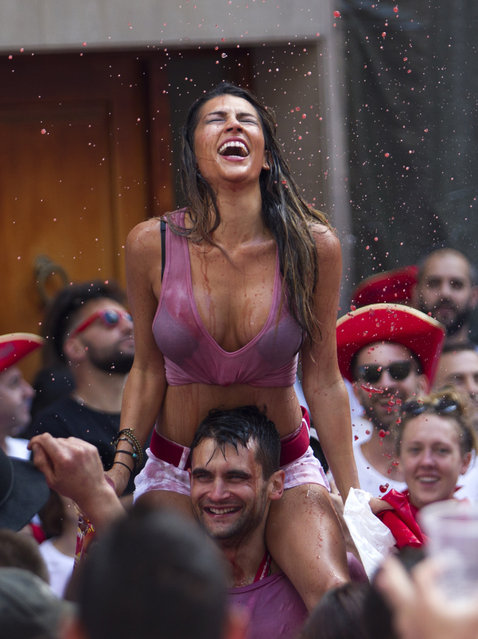
Participants celebrate during the “Chupinazo” (start rocket) to mark the kickoff at noon sharp of the San Fermin Festival, in front of the Town Hall of Pamplona, northern Spain, on July 6, 2018. (Photo by Jaime Reina/AFP Photo)

Participants celebrate during the “Chupinazo” (start rocket) to mark the kickoff at noon sharp of the San Fermin Festival, in front of the Town Hall of Pamplona, northern Spain, on July 6, 2018. (Photo by Jaime Reina/AFP Photo)
Details
09 Jul 2018 00:05:00
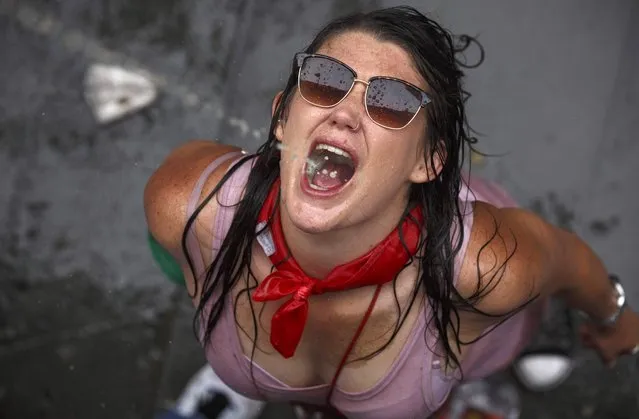
A reveller catches beer thrown from a balcony during the opening day or “Chupinazo” of the San Fermin Running of the Bulls fiesta on July 6, 2017 in Pamplona, Spain. The annual Fiesta de San Fermin, made famous by the 1926 novel of US writer Ernest Hemmingway entitled “The Sun Also Rises”, involves the daily running of the bulls through the historic heart of Pamplona to the bull ring. (Photo by Pablo Blazquez Dominguez/Getty Images)

A reveller catches beer thrown from a balcony during the opening day or “Chupinazo” of the San Fermin Running of the Bulls fiesta on July 6, 2017 in Pamplona, Spain. The annual Fiesta de San Fermin, made famous by the 1926 novel of US writer Ernest Hemmingway entitled “The Sun Also Rises”, involves the daily running of the bulls through the historic heart of Pamplona to the bull ring. (Photo by Pablo Blazquez Dominguez/Getty Images)
Details
08 Jul 2017 08:59:00
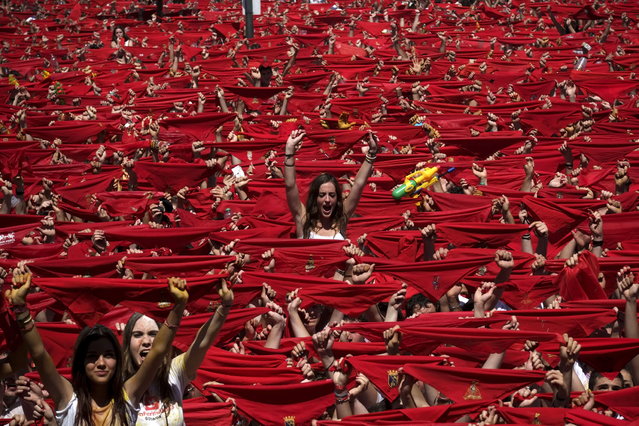
Participants hold red scarves as they celebrate the “Chupinazo” marking the start at noon sharp of the San Fermin Festival at Castle square in Pamplona, northern Spain on July 6, 2013. Ten of thousands of people packed Pamplona's streets for a drunken kick-off to Spain's best-known fiesta: the nine-day San Fermin bull-running festival. (Photo by Pedro Armestre/AFP Photo)

Participants hold red scarves as they celebrate the “Chupinazo” marking the start at noon sharp of the San Fermin Festival at Castle square in Pamplona, northern Spain on July 6, 2013. Ten of thousands of people packed Pamplona's streets for a drunken kick-off to Spain's best-known fiesta: the nine-day San Fermin bull-running festival. (Photo by Pedro Armestre/AFP Photo)
Details
11 Jul 2013 09:30:00
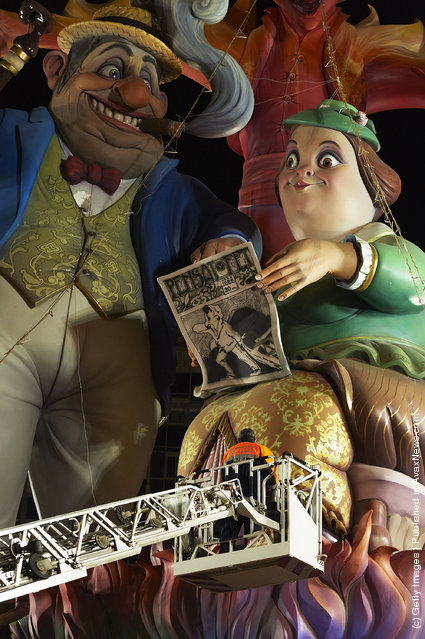
People prepare for the burning of the 'Ninot' caricatures during the last day of the 'Fallas' festival on March 19, 2012 in Valencia, Spain

“The Falles is a traditional celebration held in commemoration of Saint Joseph in Valencia, Spain. The term Falles refers to both the celebration and the monuments created during the celebration. A number of towns in the Valencian Community have similar celebrations inspired by the original in Valencia”. – Wikipedia

Photo: A person prepares for the burning of the “Ninot” caricatures during the last day of the “Fallas” festival on March 19, 2012 in Valencia, Spain. The festival, which runs March 15 – 19, celebrates the arrival of spring with fireworks, fiestas and bonfires. (Photo by Xaume Olleros/Getty Images)
Details
20 Mar 2012 11:36:00
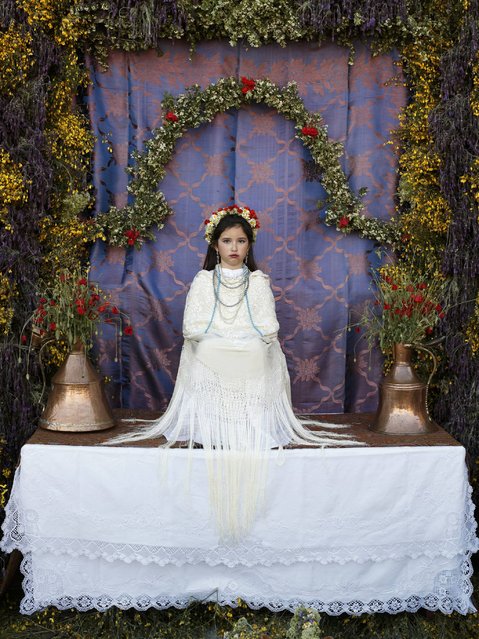
A “Maya” girl sits in an altar during the traditional celebration of “Las Mayas” on the streets in Colmenar Viejo, near Madrid, Spain, Friday, May 2, 2014. (Photo by Daniel Ochoa de Olza/AP Photo)

A “Maya” girl sits in an altar during the traditional celebration of “Las Mayas” on the streets in Colmenar Viejo, near Madrid, Spain, Friday, May 2, 2014. The festivity of the Maya comes from pagan rites and dates from the medieval age, appearing in ancient documents, it takes place every year in the beginning of May and celebrates the beginning off the spring. A girl between 7 and 11years is chosen as “Maya” and should sit still, serious, and quiet for a couple of hours in an altar on the street decorated with flowers and plants, afterwards they walk to the church with their family where they attend a ceremony. (Photo by Daniel Ochoa de Olza/AP Photo)
Details
13 May 2014 10:17:00
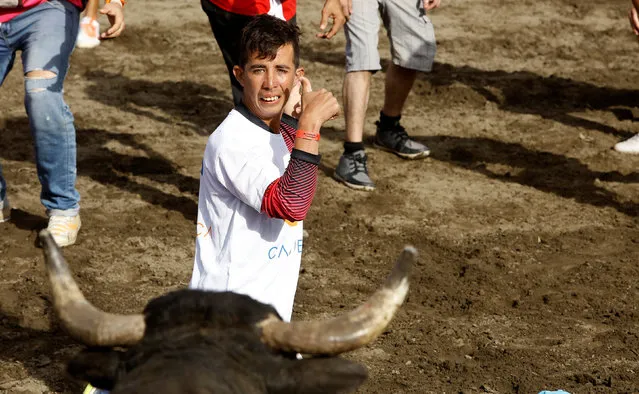
A man gestures towards a bull during a traditional bullfighting festival called “Toros a la tica” in San Jose, Costa Rica January 6, 2017. (Photo by Juan Carlos Ulate/Reuters)

A man gestures towards a bull during a traditional bullfighting festival called “Toros a la tica” in San Jose, Costa Rica January 6, 2017. (Photo by Juan Carlos Ulate/Reuters)
Details
08 Jan 2017 14:14:00