Loading...
Done
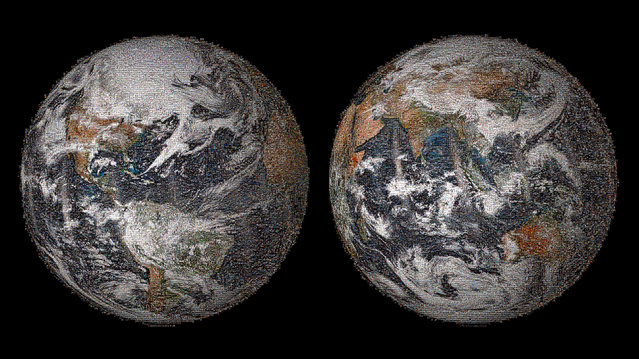
NASA’s “Global Selfie” Earth mosaic contains more than 36,000 individual photographs from the more than 50,000 images posted around the world. (Photo by NASA)

On Earth Day this year, NASA asked people all around the world a question: “Where are you on Earth Right Now?” To answer this question people were asked to post their selfie on social media. The goal was to use each picture as a pixel in the creation of a “Global Selfie” – a mosaic image that would look like Earth appeared from the space. The 3.2 gigapixel “Global Selfie”, was made the with 36,422 individual images.
Details
25 May 2014 08:37:00
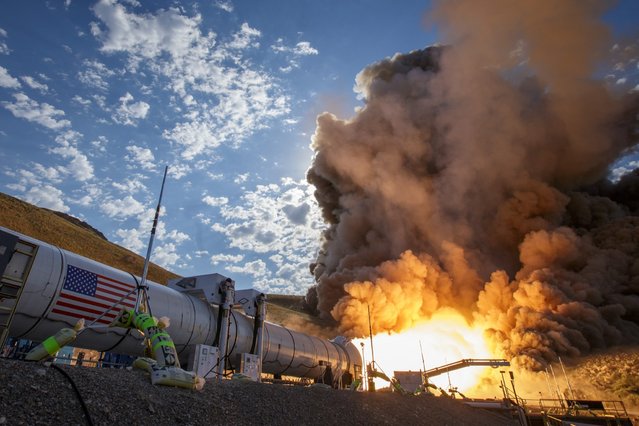
The second and final qualification motor (QM-2) test for the Space Launch System's booster, June 28, 2016, at Orbital ATK Propulsion Systems test facilities in Promontory, Utah. (Photo by Bill Ingalls/NASA)

The second and final qualification motor (QM-2) test for the Space Launch System's booster, June 28, 2016, at Orbital ATK Propulsion Systems test facilities in Promontory, Utah. During the Space Launch System flight the boosters will provide more than 75 percent of the thrust needed to escape the gravitational pull of the Earth, the first step on NASA's Journey to Mars. (Photo by Bill Ingalls/NASA)
Details
29 Jun 2016 11:32:00
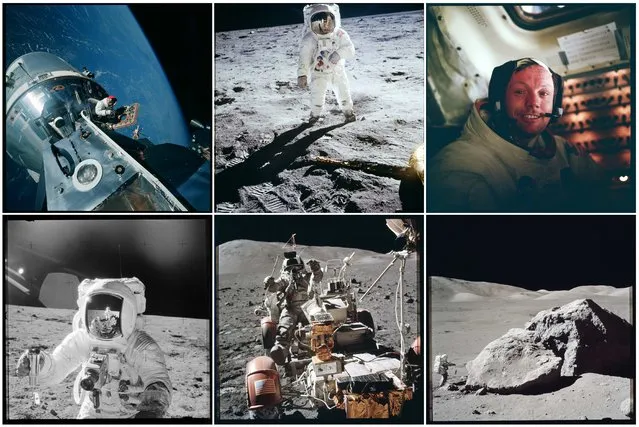
NASA handout photographs from the various Apollo missions are shown in this combination photograph. The photographs are some of more than 12,000 from NASA's archives recently aggregated on the Project Apollo Archive Flickr account. (Photo by Reuters/NASA)

NASA handout photographs from the various Apollo missions are shown in this combination photograph. The photographs are some of more than 12,000 from NASA's archives recently aggregated on the Project Apollo Archive Flickr account. (Top L) David R. Scott, command module pilot, stands in the open hatch of the Command Module during the Apollo 9 mission March 6, 1969. (Top centre) Edwin "Buzz" Aldrin Jr.walks on the surface of the moon during the Apollo 11 mission July 20, 1969. (Top R) Neil Armstrong, Apollo 11 commander, is pictured inside the Lunar Module during the Apollo 11 mission July 20, 1969. (Bottom L) Alan Bean holds a container filled with lunar soil collected during the Apollo 12 mission November 19, 1969. (Bottom centre) Scientist-astronaut Harrison Schmitt rides in the Lunar Roving Vehicle during the Apollo 17 mission December 13, 1972. (Bottom R) Harrison Schmitt stands next to a huge, split boulder during the Apollo 17 mission December 13, 1972. (Photo by Reuters/NASA)

Details
13 Oct 2015 08:02:00
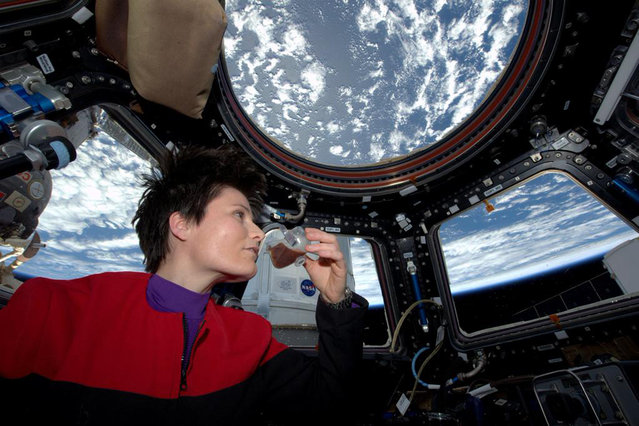
In this photo posted on Twitter, Sunday, May 3, 2015, and provided by NASA, Italian astronaut Samantha Cristoforetti sips espresso from a cup designed for use in zero-gravity, on the International Space Station. Cristoforetti, the first Italian woman in space, fired up the first espresso machine in space, which uses small capsules, or pods, of espresso coffee. (Photo by AP Photo/NASA)

In this photo posted on Twitter, Sunday, May 3, 2015, and provided by NASA, Italian astronaut Samantha Cristoforetti sips espresso from a cup designed for use in zero-gravity, on the International Space Station. Cristoforetti, the first Italian woman in space, fired up the first espresso machine in space, which uses small capsules, or pods, of espresso coffee. (Photo by AP Photo/NASA)
Details
09 May 2015 12:26:00
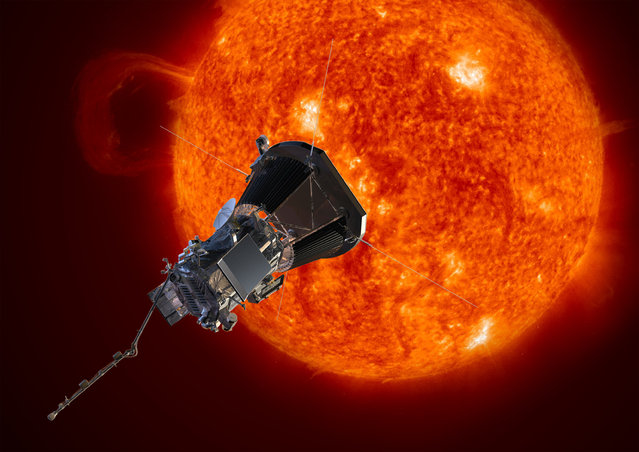
This image made available by the Johns Hopkins University Applied Physics Laboratory on Wednesday, May 31, 2017 depicts NASA's Solar Probe Plus spacecraft approaching the sun. On Wednesday, NASA announced it will launch the probe in summer 2018 to explore the solar atmosphere. It will be subjected to brutal heat and radiation like no other man-made structure before. (Photo by Johns Hopkins University Applied Physics Laboratory via AP Photo)

This image made available by the Johns Hopkins University Applied Physics Laboratory on Wednesday, May 31, 2017 depicts NASA's Solar Probe Plus spacecraft approaching the sun. On Wednesday, NASA announced it will launch the probe in summer 2018 to explore the solar atmosphere. It will be subjected to brutal heat and radiation like no other man-made structure before. (Photo by Johns Hopkins University Applied Physics Laboratory via AP Photo)
Details
08 Sep 2017 09:42:00
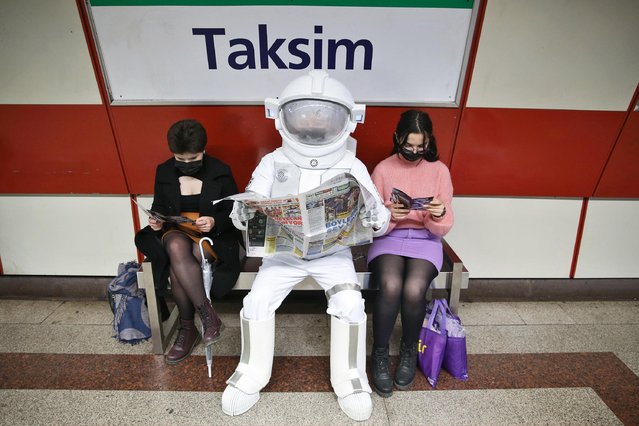
A person dressed as an astronaut is seen at a metro station in Istanbul, Turkey on December 6, 2021. A man with an astronaut outfit walked around the city's metro stations as part of the promotion of NASA Space Exhibition, which reflects 50 years of space studies and experiences of the NASA, to be opened at Metropol Istanbul Mall. (Photo by Mehmet Murat Onel/Anadolu Agency via Getty Images)

A person dressed as an astronaut is seen at a metro station in Istanbul, Turkey on December 6, 2021. A man with an astronaut outfit walked around the city's metro stations as part of the promotion of NASA Space Exhibition, which reflects 50 years of space studies and experiences of the NASA, to be opened at Metropol Istanbul Mall. (Photo by Mehmet Murat Onel/Anadolu Agency via Getty Images)
Details
16 Oct 2022 03:35:00
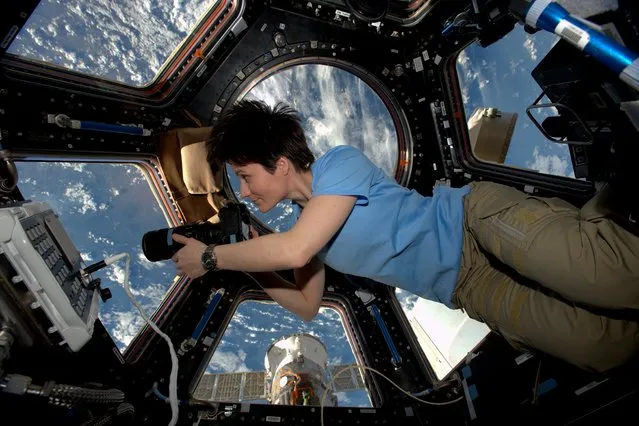
ESA astronaut Samantha Cristoforetti on the International Space Station 3 February 2015 during her Futura mission. Samantha is living and working on the Station as part of the Expedition 42 crew. (Photo by ESA/NASA)

ESA astronaut Samantha Cristoforetti on the International Space Station 3 February 2015 during her Futura mission. Samantha is living and working on the Station as part of the Expedition 42 crew. Picture released on February 10, 2015. (Photo by ESA/NASA)
Details
14 Feb 2015 12:40:00
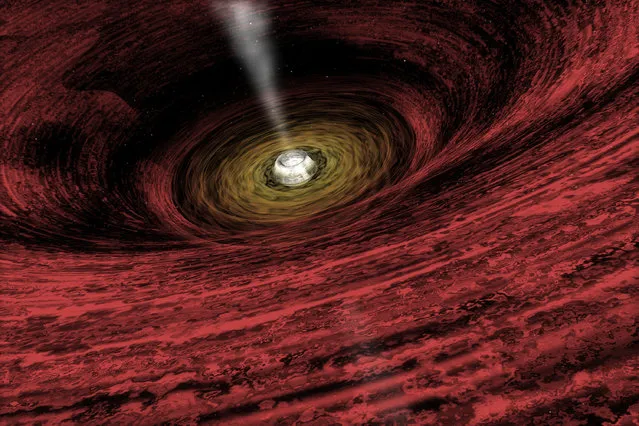
An artist's impression of a growing supermassive black hole located in the early Universe is seen in this NASA handout illustration released on June 15, 2011. Using the deepest X-ray image ever taken, astronomers found the first direct evidence that massive black holes were common in the early universe. This discovery from NASA's Chandra X-Ray Observatory shows that very young black holes grew more aggressively than previously thought, in tandem with the growth of their host galaxies. (Photo by Reuters/NASA/Chandra X-Ray Observatory/A.Hobart)

An artist's impression of a growing supermassive black hole located in the early Universe is seen in this NASA handout illustration released on June 15, 2011. Using the deepest X-ray image ever taken, astronomers found the first direct evidence that massive black holes were common in the early universe. This discovery from NASA's Chandra X-Ray Observatory shows that very young black holes grew more aggressively than previously thought, in tandem with the growth of their host galaxies. (Photo by Reuters/NASA/Chandra X-Ray Observatory/A.Hobart)
Details
11 Feb 2016 12:57:00