Loading...
Done
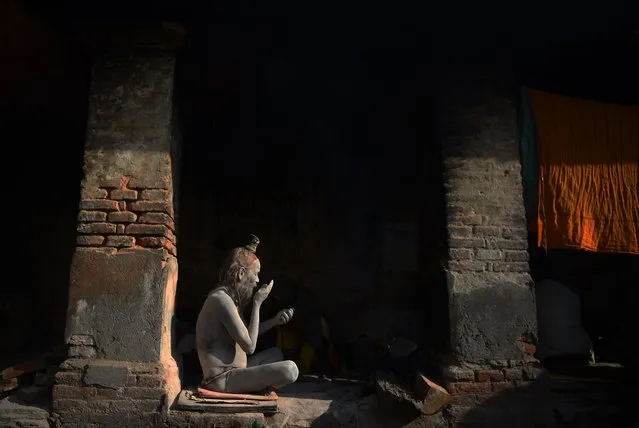
A Hindu sadhu (holy man) smears coloured paste onto his face ahead of the forthcoming Hindu festival of “Maha Shivaratri” at the Pashupatinath temple in Kathmandu on February 11, 2018. Hindus mark the “Maha Shivratri” festival by offering special prayers and fasting, with sadhus arriving at Pashupatinath to take part in the event, which takes place on February 13. (Photo by Prakash Mathema/AFP Photo)

A Hindu sadhu (holy man) smears coloured paste onto his face ahead of the forthcoming Hindu festival of “Maha Shivaratri” at the Pashupatinath temple in Kathmandu on February 11, 2018. Hindus mark the “Maha Shivratri” festival by offering special prayers and fasting, with sadhus arriving at Pashupatinath to take part in the event, which takes place on February 13. (Photo by Prakash Mathema/AFP Photo)
Details
19 May 2018 00:05:00
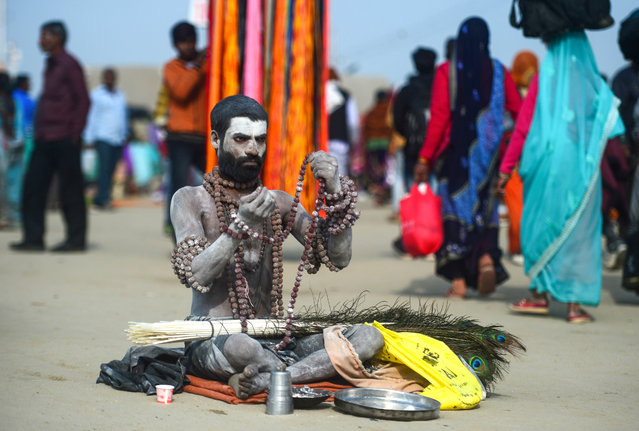
An Indian sadhu (Hindu holy man) sits on the banks of Sangam – the confluence of the Ganges, Yamuna and mythical Saraswati rivers – on the auspicious bathing day of 'Maghi Purnima' during the Kumbh Mela festival in Allahabad on February 19, 2019. Millions of Hindu pilgrims took the plunge in holy rivers on the most auspicious bathing days of the Kumbh Mela festival, led by naked, ash-smeared holy men and accompanied by chants from Hindu holy texts. (Photo by Sanjay Kanojia/AFP Photo)

An Indian sadhu (Hindu holy man) sits on the banks of Sangam – the confluence of the Ganges, Yamuna and mythical Saraswati rivers – on the auspicious bathing day of 'Maghi Purnima' during the Kumbh Mela festival in Allahabad on February 19, 2019. Millions of Hindu pilgrims took the plunge in holy rivers on the most auspicious bathing days of the Kumbh Mela festival, led by naked, ash-smeared holy men and accompanied by chants from Hindu holy texts. (Photo by Sanjay Kanojia/AFP Photo)
Details
16 Mar 2019 00:05:00
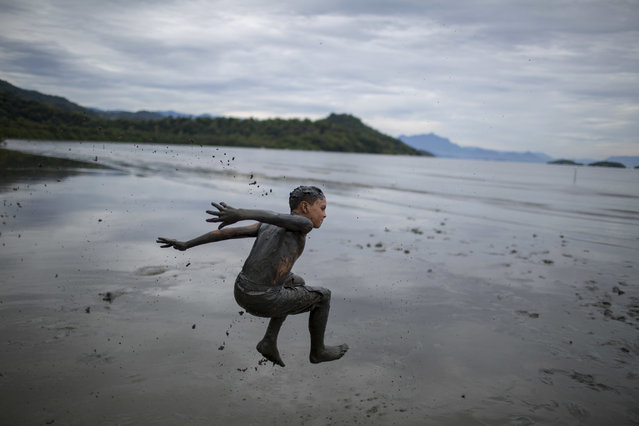
A boy jumps into a pool of mud during the traditional “Bloco da Lama” or “Mud Street” carnival party, in Paraty, Brazil, Saturday, February 25, 2017. Legend has it the “bloco” was born in 1986 after local teens hiking in a nearby mangrove forest smeared themselves with mud to discourage mosquitoes and then wandered through Paraty. The party grew year after year, but revelers eventually were banned from parading in the colonial downtown after shopkeepers complained pristine white walls were stained with the hard-to-remove mud. (Photo by Mauro Pimentel/AP Photo)

A boy jumps into a pool of mud during the traditional “Bloco da Lama” or “Mud Street” carnival party, in Paraty, Brazil, Saturday, February 25, 2017. Legend has it the “bloco” was born in 1986 after local teens hiking in a nearby mangrove forest smeared themselves with mud to discourage mosquitoes and then wandered through Paraty. The party grew year after year, but revelers eventually were banned from parading in the colonial downtown after shopkeepers complained pristine white walls were stained with the hard-to-remove mud. (Photo by Mauro Pimentel/AP Photo)
Details
28 Mar 2017 09:07:00
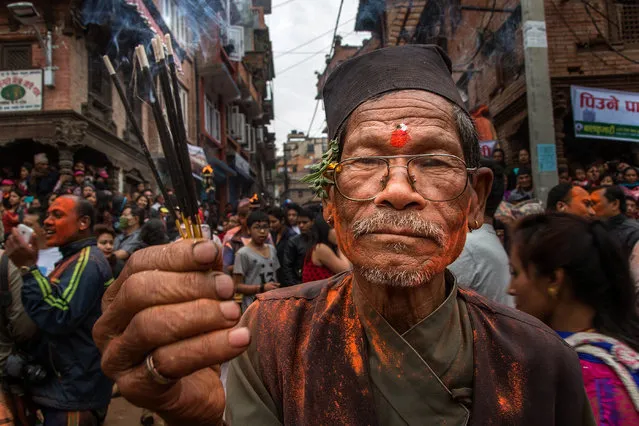
A devotee holds incense sticks while celebrating the Sindoor Jatra Festival on April 15, 2015 in Thimi, Nepal. Sindoor Jatra Festival is celebrated each year in Thimi, on the outskirts of Kathmandu, to welcome the Nepali New Year and celebrate the coming of spring. During the Festival, devotees are smeared with vermillion powder and 30 chariots containing the images of several gods and goddesses are carrying by the devotees around the town, while others sing, dance and play musical instruments. (Photo by Omar Havana/Getty Images)

A devotee holds incense sticks while celebrating the Sindoor Jatra Festival on April 15, 2015 in Thimi, Nepal. Sindoor Jatra Festival is celebrated each year in Thimi, on the outskirts of Kathmandu, to welcome the Nepali New Year and celebrate the coming of spring. During the Festival, devotees are smeared with vermillion powder and 30 chariots containing the images of several gods and goddesses are carrying by the devotees around the town, while others sing, dance and play musical instruments. (Photo by Omar Havana/Getty Images)
Details
18 Apr 2015 09:17:00
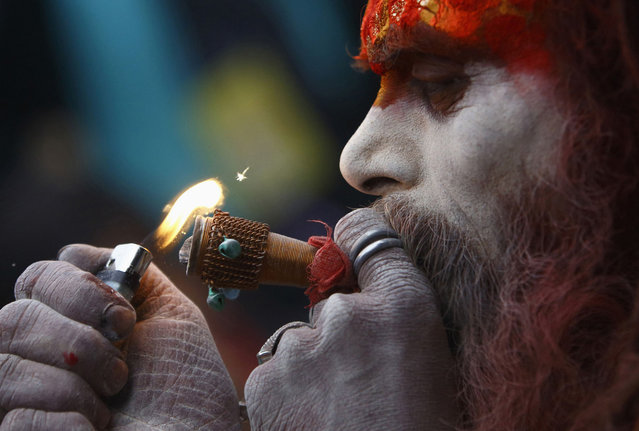
A Hindu holy man, or sadhu, smokes marijuana on a chillum (pipe) at the premises of Pashupatinath Temple during the Shivaratri festival in Kathmandu February 27, 2014. Hindu holy men from Nepal and India come to this temple to take part in the Shivaratri festival. Celebrated by Hindu devotees all over the world, Shivaratri is dedicated to Lord Shiva, and holy men mark the occasion by praying, smoking marijuana or smearing their bodies with ashes. (Photo by Navesh Chitrakar/Reuters)

A Hindu holy man, or sadhu, smokes marijuana on a chillum (pipe) at the premises of Pashupatinath Temple during the Shivaratri festival in Kathmandu February 27, 2014. Hindu holy men from Nepal and India come to this temple to take part in the Shivaratri festival. Celebrated by Hindu devotees all over the world, Shivaratri is dedicated to Lord Shiva, and holy men mark the occasion by praying, smoking marijuana or smearing their bodies with ashes. (Photo by Navesh Chitrakar/Reuters)
Details
27 Feb 2014 08:40:00
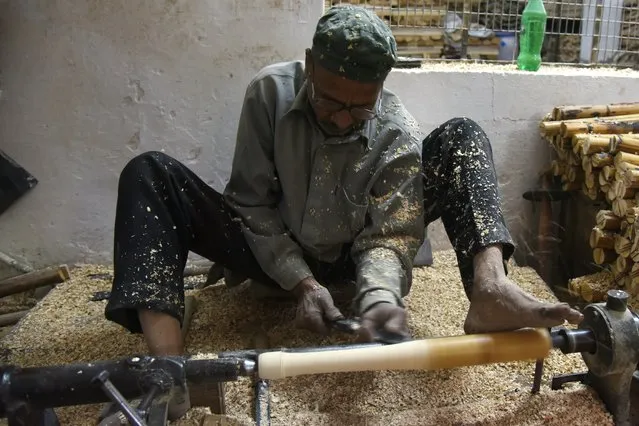
In this photograph taken on December 14, 2016, an Indian craftsman works on unfinished cricket bats in a factory in Meerut, some 70 kms north- east of New Delhi. As Indian factory worker Jitender Singh carves out another big- hitting slab of thick willow he insists MCC proposals to limit the size of cricket bats won' t tame Twenty20 marauders. “I don' t think the thickness matters. It' s more about the balance of the bat and the talent of the batsman”, says Singh, who has made bats for many stars, including South Africa's AB de Villiers. The World Cricket committee of the MCC, the guardians of the game, recommended in December 2016 that limitations be placed on the width and depth of bats because it had become too easy to smash fours and sixes. (Photo by Dominique Faget/AFP Photo)

In this photograph taken on December 14, 2016, an Indian craftsman works on unfinished cricket bats in a factory in Meerut, some 70 kms north- east of New Delhi. (Photo by Dominique Faget/AFP Photo)
Details
11 Jan 2017 14:32:00
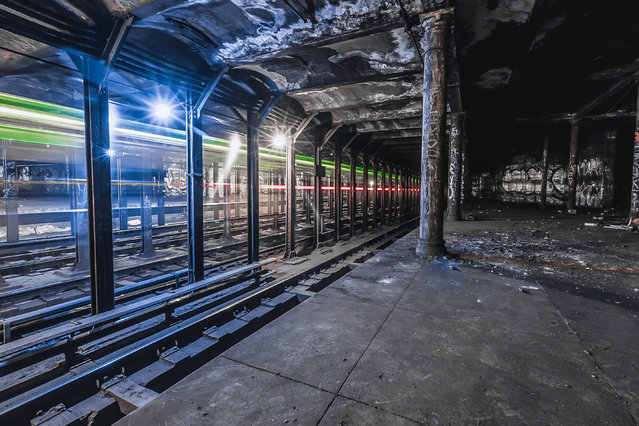
At the dead of night, the photographer – known to his Instagram followers as Dark Cyanide – heads out to look for hidden gems, like abandoned stations, provisions and tunnels. His intriguing images feature vibrant streaks, graffiti, and tight framing – and by adding individuals to some to some of shots, he is also able to depict the incredible scale of some of the tunnels. The photographer, 19, admitted what he and his friends do is highly dangerous, illegal, and he does not recommend others attempt to explore such tunnels. Here: Unnamed subway track in New York City. (Photo by Dark Cyanide/Caters News)

At the dead of night, the photographer – known to his Instagram followers as Dark Cyanide – heads out to look for hidden gems, like abandoned stations, provisions and tunnels. His intriguing images feature vibrant streaks, graffiti, and tight framing – and by adding individuals to some to some of shots, he is also able to depict the incredible scale of some of the tunnels. Here: Unnamed subway track in New York City. (Photo by Dark Cyanide/Caters News)
Details
29 Jan 2016 12:45:00
The Songkran festival

“The Songkran festival is celebrated in Thailand as the traditional New Year's Day from 13 to 15 April. It coincides with the New Year of many calendars of South and Southeast Asia. The most obvious celebration of Songkran is the throwing of water upon others. Thais roam the streets with containers of water or water guns. In addition, many Thais will have small bowls of beige colored talc sold cheaply and mixed with water which is then smeared on the faces and bodies of random passerbys as a blessing for the new year” – Wikipedia. (Photo by Seua Yai)
Details
23 Oct 2013 12:00:00