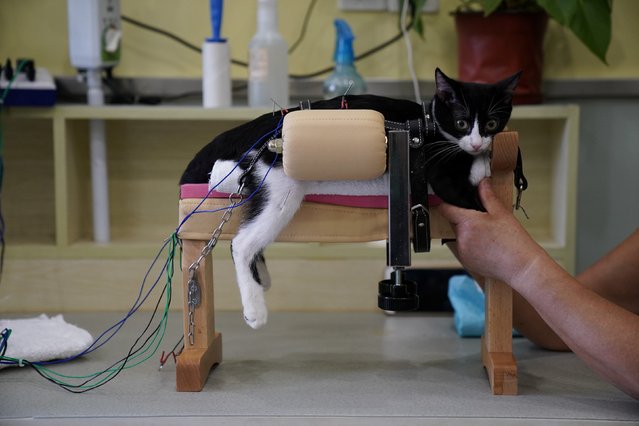
A cat receives acupuncture treatment in Shanghai, China on August 21, 2017. Traditional practitioners believe acupuncture of the body can stimulate blood circulation to promote healing and relieve some aches and pains. (Photo by Aly Song/Reuters)
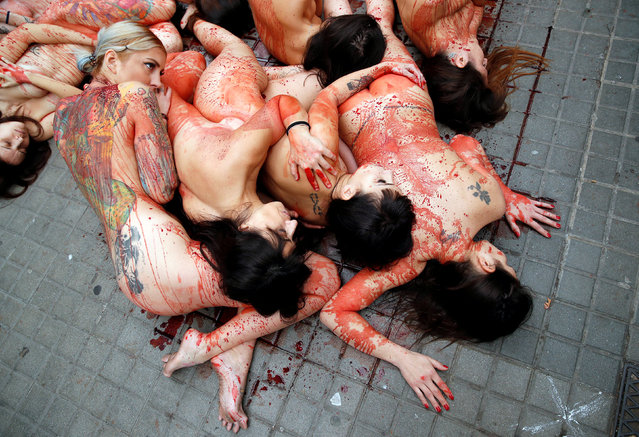
Naked activists for animal rights, covered in fake blood, perform during a protest against the use of fur and leather, at Catalunya Square in Barcelona, Spain, December 16, 2018. (Photo by Albert Gea/Reuters)
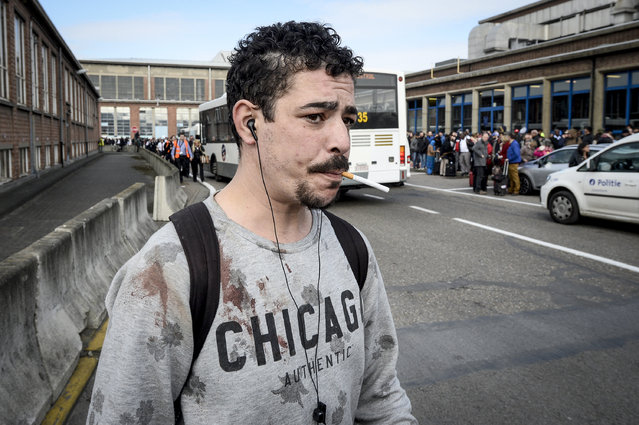
A man with blood on his shirt is evacuated from Brussels Airport in Zaventem, Belgium, on Tuesday, March 22, 2016. (Photo by Dirk Waem/Belga/Zuma Press/TNS)
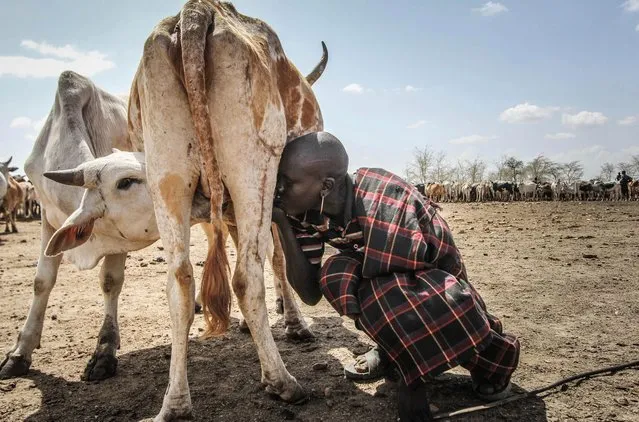
Cattle are the most important way of livelihood for the Karamojong: they provide milk, meat, blood and money when sold, Karamoja, Uganda, February 2017. (Photo by Sumy Sadurni/Barcroft Images)
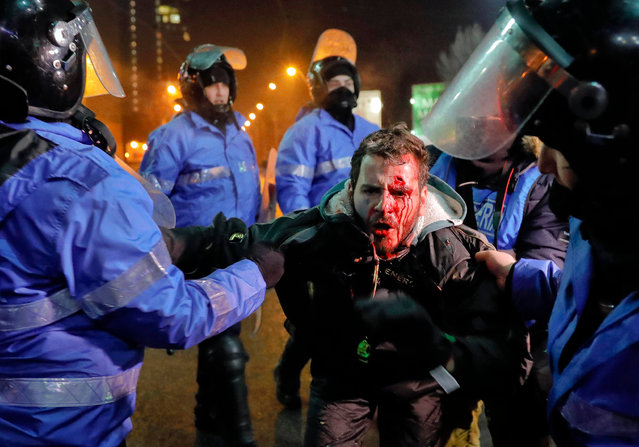
Romanian riot police detain a man, face covered in blood, after minor clashes erupted during a protest in Bucharest, Romania, Thursday, February 2, 2017. Brief clashes broke out between protesters and police in Romania¹s capital, as tens of thousands of people protested for the second night a government decision to decriminalise official misconduct. (Photo by Vadim Ghirda/AP Photo)
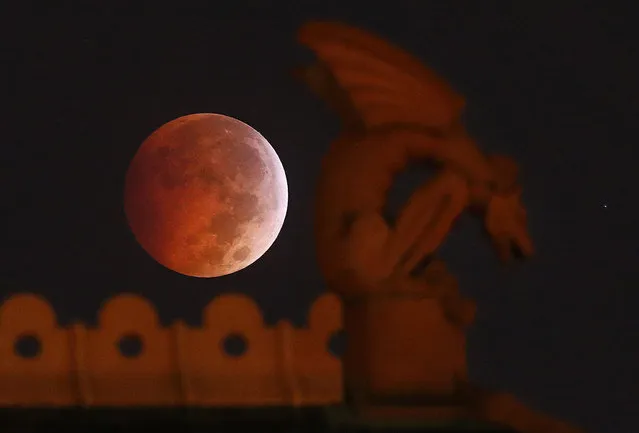
A lunar eclipse appears behind a gargoyle atop the old red Dallas County Courthouse early Wednesday morning, October 8, 2014. The moon appears orange or red, the result of sunlight scattering off Earth's atmosphere. This is known as the blood moon. (Photo by Tom Fox/AP Photo/The Dallas Morning News)
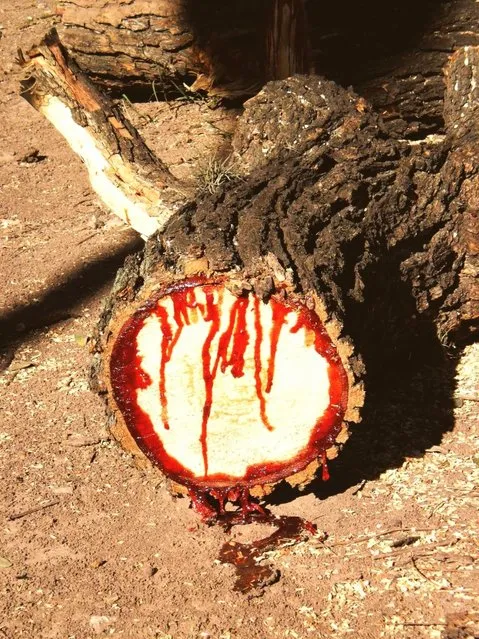
The bloodwood tree (Pterocarpus angolensis) is a deciduous tree with a high canopy, reaching about 15m in height and has dark bark. The red sap is used traditionally as a dye and in some areas mixed with animal fat to make a cosmetic for faces and bodies. It is also believed to have magical properties for the curing of problems concerning blood, apparently because of its close resemblance to blood. The name bloodwood for these trees stems from the dark red to brown sap that accumulates on wounds on the trunks.