Polar Bear club swimmers take their annual swim in the sea at Coney Island in New York City on January 1, 2014. (Photo by Curtis Means/ACE/INFphoto.com)
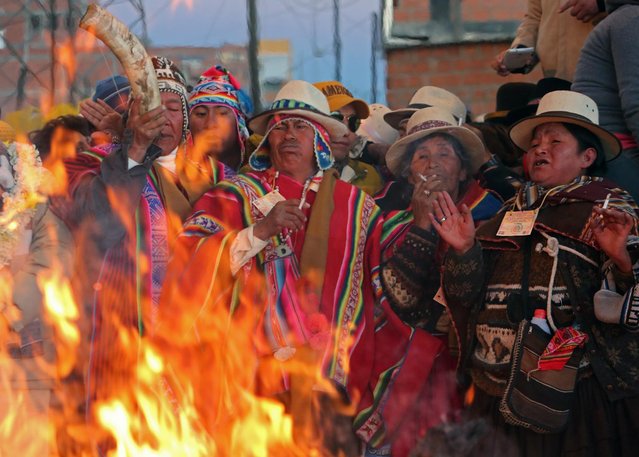
Local priests celebrate the “Aimara New Year”, an Andean Bolivian traditional festival that marks the winter solstice in El Alto, Bolivia, 21 June 2016. Aimara or Aymara means the Return of the Sun. (Photo by Martin Alipaz/EPA)
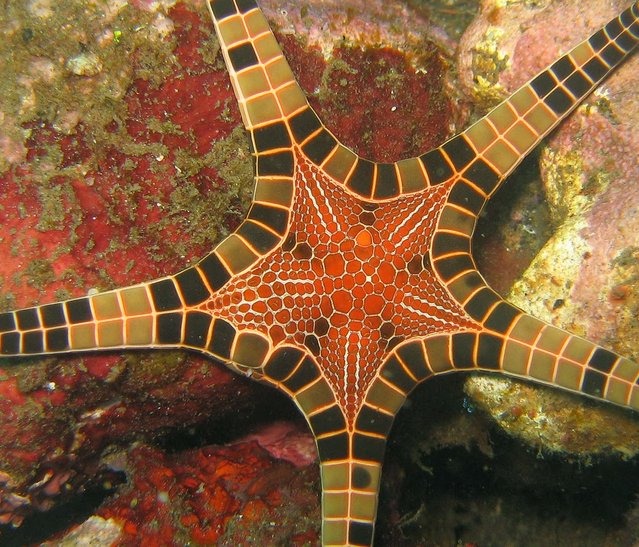
Iconaster longimanus, the icon star or double star, is a species of starfish in the family Goniasteridae. It is found in the west and central Indo-Pacific Ocean. The genus name comes from the Greek eikon, meaning portrait or image and possibly referring to the way the marginal plates frame the disc, and aster, meaning star. The specific name comes from the Latin longus manus and refers to the long, slender arms.
Hannan Iskandar gets ready before she starts to drive her car in her neighborhood, in Al Khobar, Saudi Arabia on June 24, 2018. Saudi Arabia ended its longstanding ban on women driving on June 24, 2018 – and the second the clock struck midnight, women across the country started their engines. (Photo by Hamad I Mohammed/Reuters)
A car stands in water on Ferry Road after two magnitude 6.0 and 5.5 earthquakes struck on June 13, 2011 in Christchurch, New Zealand. The aftershocks have followed four months after the major eathquake which hit the city on February 22, 2011 resulting in the deaths of 181 people. (Photo by Martin Hunter/Getty Images)
Relatives of an earthquake victim are led away from ruins by a Policeman, on October 25, 2011 in Van, Turkey. Media are reporting more than 400 people have been killed in the 7.2 earthquake that struck in Eastern Turkey on October 23. The earthquake has left up to 40,000 people homeless in almost freezing conditions. (Photo by Ahmad Halabisaz/Getty Images)
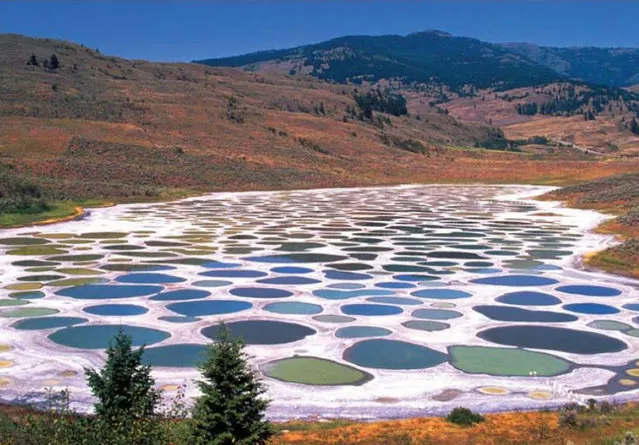
Originally known to the First Nations of the Okanagan Valley as Khiluk, which was- and remains today revered as a sacred site producing therapeutic waters. During World War I the minerals of Spotted Lake were used in manufacturing ammunition. Later the area came under the control of the Ernest Smith Family, for a term of about 40 years. In 1979 Smith attempted to create interest in a spa at the lake. The First Nations responded with an effort to buy the lake; in October 2001 they finally struck a deal. First Nations arranged the purchase of 22 hectares of land for a total of $720,000, and contributed about 20% of the cost. The Indian Affairs Department paid the remainder.