Loading...
Done
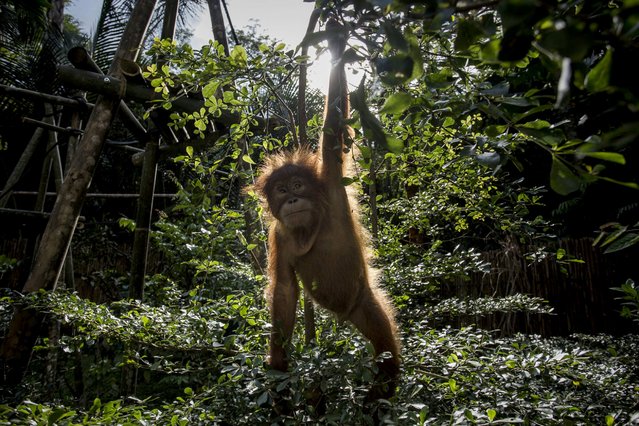
A Baby sumatran orangutan (Pongo abelii) plays around in a tree as they train at Sumatran Orangutan Conservation Programme's rehabilitation center on November 12, 2016 in Kuta Mbelin, North Sumatra, Indonesia. The Orangutans in Indonesia have been known to be on the verge of extinction as a result of deforestation and poaching. Found mostly in South-East Asia, where they live on the islands of Sumatra and Borneo, the endangered species continue to lose their habitat as a result of corporate expansion in a developing economy. Indonesia approved palm oil concessions on nearly 15 million acres of peatlands over the past years and thousands of square miles have been cleared for plantations, including the lowland areas that are the prime habitat for orangutans. (Photo by Ulet Ifansasti/Getty Images)

A Baby sumatran orangutan (Pongo abelii) plays around in a tree as they train at Sumatran Orangutan Conservation Programme's rehabilitation center on November 12, 2016 in Kuta Mbelin, North Sumatra, Indonesia. The Orangutans in Indonesia have been known to be on the verge of extinction as a result of deforestation and poaching. Found mostly in South-East Asia, where they live on the islands of Sumatra and Borneo, the endangered species continue to lose their habitat as a result of corporate expansion in a developing economy. Indonesia approved palm oil concessions on nearly 15 million acres of peatlands over the past years and thousands of square miles have been cleared for plantations, including the lowland areas that are the prime habitat for orangutans. (Photo by Ulet Ifansasti/Getty Images)
Details
16 Nov 2016 11:14:00
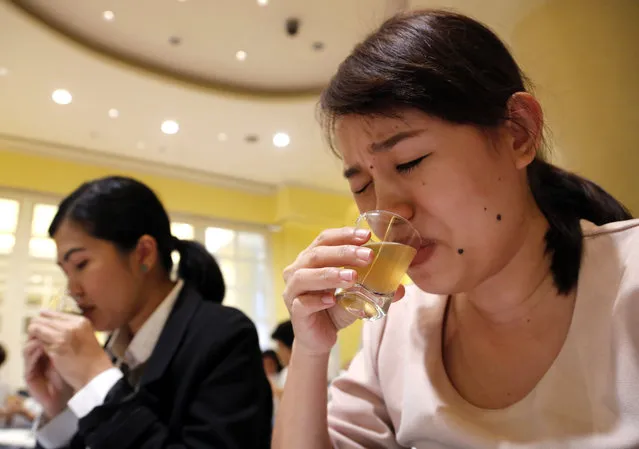
In this Thursday, February 19, 2015 photo, participants at a seminar on edible insects taste a Cricket Consomme at Le Cordon Bleu cooking school in Bangkok, Thailand. A group of chefs and food scientists at the esteemed French school's branch in Bangkok spent the week simmering, sautéing and grilling insects to extract innovative flavors they say could open a new frontier for the world of gastronomy. (Photo by Sakchai Lalit/AP Photo)

In this Thursday, February 19, 2015 photo, participants at a seminar on edible insects taste a Cricket Consomme at Le Cordon Bleu cooking school in Bangkok, Thailand. A group of chefs and food scientists at the esteemed French school's branch in Bangkok spent the week simmering, sautéing and grilling insects to extract innovative flavors they say could open a new frontier for the world of gastronomy. (Photo by Sakchai Lalit/AP Photo)
Details
22 Feb 2015 11:15:00
Members of the Legio X Fretensis (Malta) re-enactment group take part in a display of ancient Roman army life at Fort Rinella in Kalkara, outside Valletta, March 22, 2015. The event “Romanus”, organised by the Malta Heritage Trust, consisted of talks, hands-on displays, static exhibitions of weapons and equipment, food and wine tasting and large-scale re-enactments depicting different forms of Roman warfare in the field. (Photo by Darrin Zammit Lupi/Reuters)

Members of the Legio X Fretensis (Malta) re-enactment group take part in a display of ancient Roman army life at Fort Rinella in Kalkara, outside Valletta, March 22, 2015. The event “Romanus”, organised by the Malta Heritage Trust, consisted of talks, hands-on displays, static exhibitions of weapons and equipment, food and wine tasting and large-scale re-enactments depicting different forms of Roman warfare in the field. (Photo by Darrin Zammit Lupi/Reuters)
Details
23 Mar 2015 10:20:00
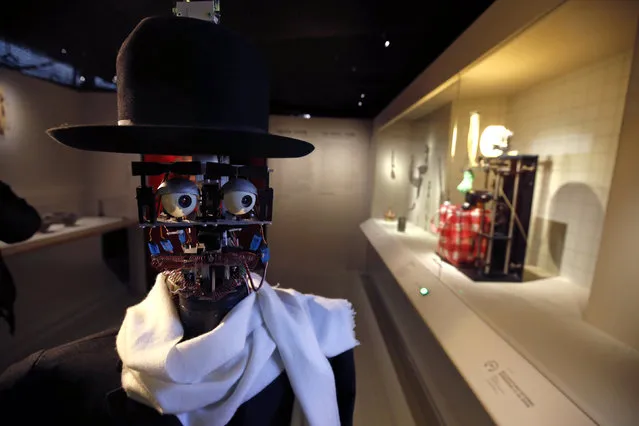
The Berenson robot strolls among visitors during the exhibition “Persona : Oddly Human” at the Quai Branly museum in Paris, France, February 23, 2016. The Berenson robot, developed in France in 2011, is the brainchild of anthropologist Denis Vidal and robotics engineer Philippe Gaussier. Its programming allows it to record reactions of museum visitors to certain pieces of art and then use the data to develop its own unique taste, which allows “Berenson” to judge whether or not it likes a certain work of art within an exhibition. (Photo by Philippe Wojazer/Reuters)

The Berenson robot strolls among visitors during the exhibition “Persona : Oddly Human” at the Quai Branly museum in Paris, France, February 23, 2016. The Berenson robot, developed in France in 2011, is the brainchild of anthropologist Denis Vidal and robotics engineer Philippe Gaussier. Its programming allows it to record reactions of museum visitors to certain pieces of art and then use the data to develop its own unique taste, which allows “Berenson” to judge whether or not it likes a certain work of art within an exhibition. (Photo by Philippe Wojazer/Reuters)
Details
25 Feb 2016 12:26:00
Animalistic Tendencies By Zarnala

Zarnala is a female illustrator with a knack for anthropomorphic illustration, combining human and animal elements to create something altogether new. Unlike other forms of anthropomorphic art one can find out there though, her work always retains a tasteful, professional edge similar to the feel I get from comics like Juanjo Garnido's take on Blacksad. With an awesome watercolor themed approach to all her illustration work and her use of graphic shapes to frame her characters, at times it gives her art a strangely retro look that reminds one of the works of Norman Rockwell and JC Leyendecker. Check out more of her work after the break!
Details
11 Dec 2013 11:08:00
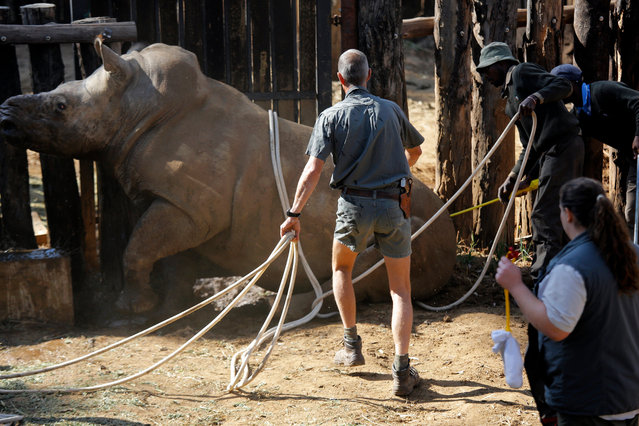
Conservation staff members move the eight-years-old White Rhino Seha into a truck in Johannesburg, South Africa, 28 July 2017. (Photo by Kim Ludbrook/EPA/EFE)

Conservation staff members move the eight-years-old White Rhino Seha into a truck in Johannesburg, South Africa, 28 July 2017. Seha is the only survivor after five rhinos where poached on the same game farm. South Africa has the world's largest population of Rhinos in the world. (Photo by Kim Ludbrook/EPA/EFE)
Details
06 Oct 2017 06:36:00
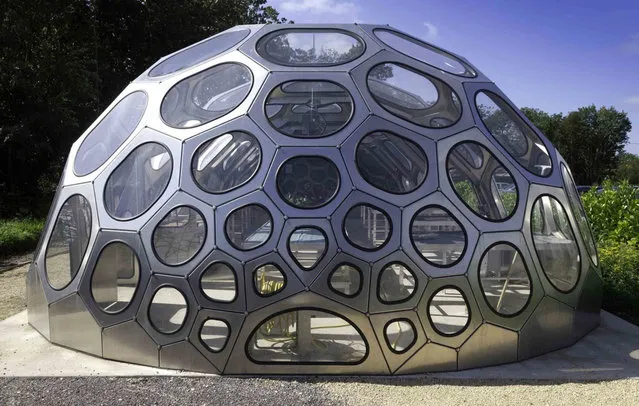
Greenhouse Greenhouse Bristol

A greenhouse is a contained quantity of air and light which extends the growing season and enables the thriving of plants otherwise alien to local climate. It creates a bubble of super-nature, where things otherwise impossible become possible. The smell, temperature, humidity and taste of things are significantly different than just outside the thin membrane. It enables us to create different kinds (or quantities) of food, but also to experience different climates and atmospheres. A greenhouse is by definition alien to its site, but creates a significant place in everyday life.
Details
25 Jun 2014 11:09:00
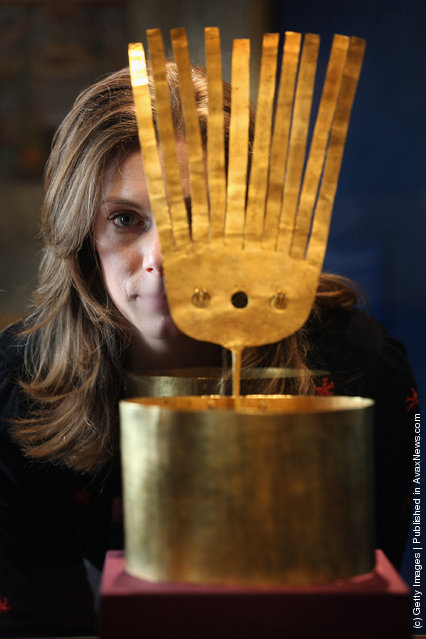
Alice Ross views a gold crown which was presented to Queen Victoria, part of the Royal Collection on display at the Queens Gallery

Alice Ross views a gold crown which was presented to Queen Victoria, part of the Royal Collection on display at the Queens Gallery on March 13, 2012 in Edinburgh, Scotland. The exhibition, which marks Her Majesty The Queen's Diamond Jubilee, reflects the tastes of monarchs and other members of the royal family who have shaped one of the world's great art collections. (Photo by Jeff J. Mitchell/Getty Images)
Details
14 Mar 2012 07:51:00