Loading...
Done
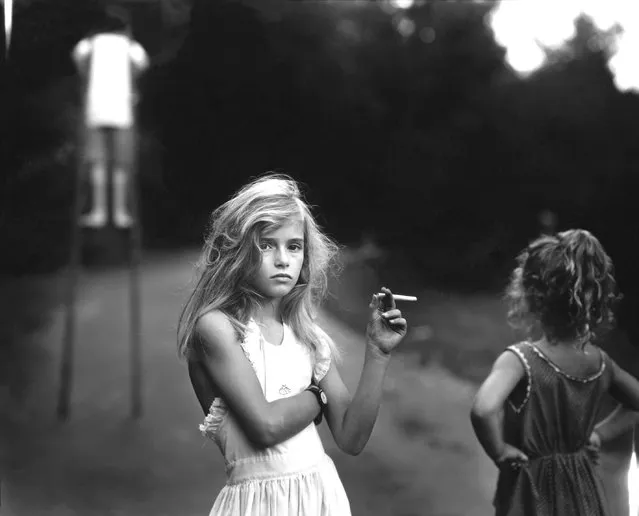
Candy Cigarette, 1989. (Photo by Sally Mann)

“Sally Mann (born in Lexington, Virginia, 1951) is one of America’s most renowned photographers. She has received numerous awards, including NEA, NEH, and Guggenheim Foundation grants, and her work is held by major institutions internationally. Her many books include Second Sight (1983), At Twelve (1988), Immediate Family (1992), Still Time (1994), What Remains (2003), Deep South (2005), Proud Flesh (2009), and The Flesh and the Spirit (2010). A feature film about her work, What Remains, debuted to critical acclaim in 2006. Mann is represented by Gagosian Gallery, New York. She lives in Virginia”.

Photo: Candy Cigarette, 1989. (Photo by Sally Mann)
Details
28 Apr 2012 11:32:00
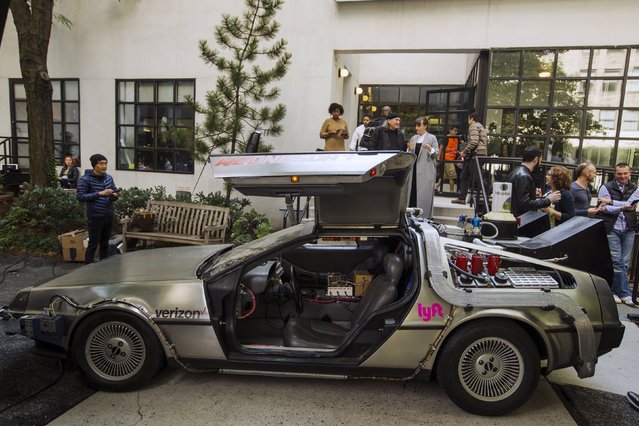
Pedestrians stop to look at and photograph a DeLorean Motor Company DMC-12 customized to look identical to the car used in the film "Back to the Future Part II" and that will be part of a Lyft promotion in New York, October 21, 2015. (Photo by Lucas Jackson/Reuters)

Pedestrians stop to look at and photograph a DeLorean Motor Company DMC-12 customized to look identical to the car used in the film "Back to the Future Part II" and that will be part of a Lyft promotion in New York, October 21, 2015. In the 1989 movie, main character Marty McFly traveled to the future to October 21, 2015. (Photo by Lucas Jackson/Reuters)
Details
24 Oct 2015 08:03:00
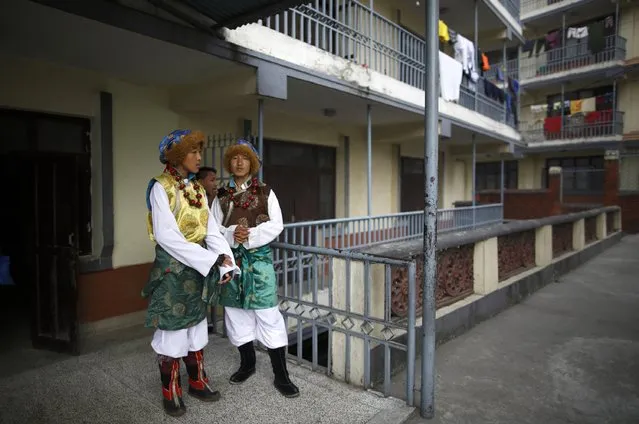
Tibetan boys dressed in traditional attire take part during a function organised by the Tibetan Refugee Community in Nepal,commemorating the 25th Anniversary of the Nobel Peace Prize conferment to exiled Tibetan spiritual leader Dalai Lama and the 66th International Human Rights Day in Kathmandu December 10, 2014. Nepal ceased issuing refugee papers to Tibetans in 1989 and recognizes Tibet to be a part of China. (Photo by Navesh Chitrakar/Reuters)

Tibetan boys dressed in traditional attire take part during a function organised by the Tibetan Refugee Community in Nepal,commemorating the 25th Anniversary of the Nobel Peace Prize conferment to exiled Tibetan spiritual leader Dalai Lama and the 66th International Human Rights Day in Kathmandu December 10, 2014. Nepal ceased issuing refugee papers to Tibetans in 1989 and recognizes Tibet to be a part of China. (Photo by Navesh Chitrakar/Reuters)
Details
11 Dec 2014 14:02:00
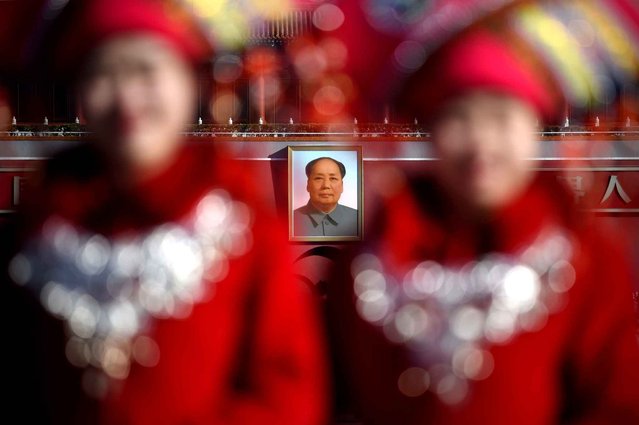
A portrait of late communist leader Mao Zedong is seen behind two hostesses as they pose for a picture at the Tiananmen Square during the 3nd plenary session of the National People's Congress in Beijing on March 13, 2016. China's Communist-controlled parliament opened its annual session on March 5 and is expected to appove a new five-year plan to tackle slowing growth in the world's second-largest economy. (Photo by Wang Zhao/AFP Photo)

A portrait of late communist leader Mao Zedong is seen behind two hostesses as they pose for a picture at the Tiananmen Square during the 3nd plenary session of the National People's Congress in Beijing on March 13, 2016. China's Communist-controlled parliament opened its annual session on March 5 and is expected to appove a new five-year plan to tackle slowing growth in the world's second-largest economy. (Photo by Wang Zhao/AFP Photo)
Details
14 Mar 2016 10:31:00
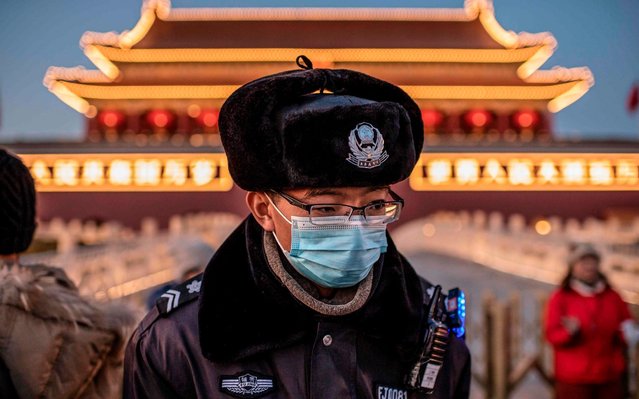
A police officer wearing a protective mask walks past the portrait of late communist leader Mao Zedong (not pictured) at Tiananmen Gate in Beijing on January 23, 2020. Large-scale Lunar New Year events in Beijing have been cancelled as part of national efforts to control the spread of a new SARS-like virus, city authorities announced on January 23. (Photo by Nicolas Asfouri/AFP Photo)

A police officer wearing a protective mask walks past the portrait of late communist leader Mao Zedong (not pictured) at Tiananmen Gate in Beijing on January 23, 2020. Large-scale Lunar New Year events in Beijing have been cancelled as part of national efforts to control the spread of a new SARS-like virus, city authorities announced on January 23. (Photo by Nicolas Asfouri/AFP Photo)
Details
25 Jan 2020 00:03:00
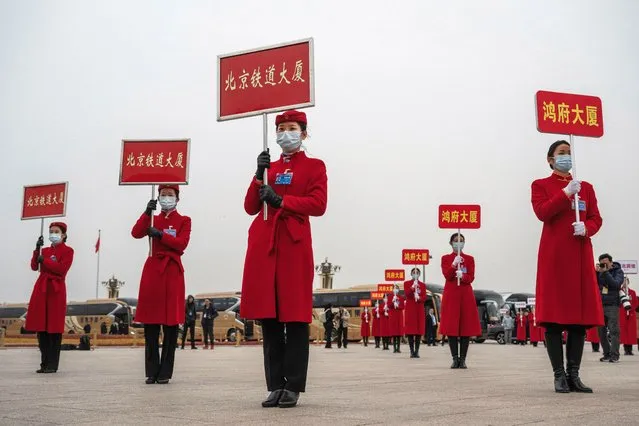
Hostesses wait to direct delegates to their buses and hotels after the opening session of the CPPCC, or Chinese Peoples Political Consultative Conference, in Tiananmen Square outside the Great Hall of the People on March 4, 2024 in Beijing, China.China's annual political gathering known as the Two Sessions will convene leaders and lawmakers to set the government's agenda for domestic economic and social development for the year. (Photo by Kevin Frayer/Getty Images)

Hostesses wait to direct delegates to their buses and hotels after the opening session of the CPPCC, or Chinese Peoples Political Consultative Conference, in Tiananmen Square outside the Great Hall of the People on March 4, 2024 in Beijing, China.China's annual political gathering known as the Two Sessions will convene leaders and lawmakers to set the government's agenda for domestic economic and social development for the year. (Photo by Kevin Frayer/Getty Images)
Details
09 Mar 2024 07:15:00
Queen of the North (created by Emilie Steele and Sebastian Dell’Uva) is one of the more intense rooms, with the bed surrounded by the head and hands of an icy goddess. (Photo by Asaf Kliger/IceHotel/The Guardian)

Founded in 1989, the Icehotel in Swedish Lapland is built from the snow up each year, using ice from the local river. The rooms are designed by international artists and this year feature spacemen and an ice queen. The hotel has 35 suites, featuring ice carvings designed by 36 different artists from 17 countries. (Photo by Asaf Kliger/IceHotel/The Guardian)
Details
20 Dec 2017 07:11:00


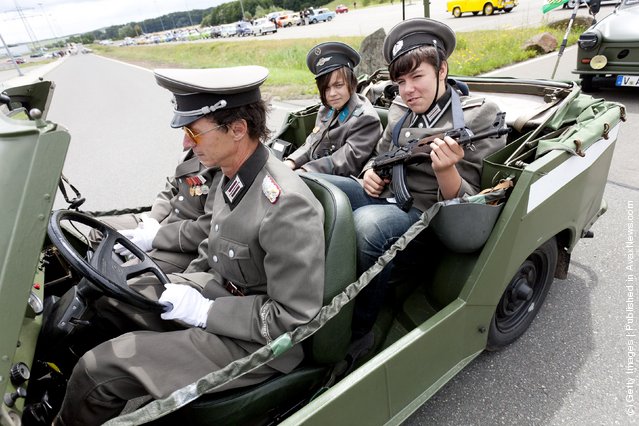
“The Trabant is a car that was produced by former East German auto maker VEB Sachsenring Automobilwerke Zwickau in Zwickau, Sachsen. It was the most common vehicle in East Germany, and was also exported to countries both inside and outside the communist bloc. The main selling points was that it had room for four adults and luggage in a compact, light and durable shell and that it was fast (when introduced) and durable. With its mediocre performance, smoky two-stroke engine, and production shortages, the Trabant is often cited as an example of the disadvantages of centralized planning; on the other hand, it is regarded with derisive affection as a symbol of the failed former East Germany and of the fall of communism (in former West Germany, as many East Germans streamed into West Berlin and West Germany in their Trabants after the opening of the Berlin Wall in 1989). It was in production without any significant changes for nearly 30 years with 3,096,099 Trabants produced in total”. – Wikipedia

Photo: Enthusiasts weared in uniforms of the former eastern german army trive in a military Trabant car as fans and owners of East German-era Trabant cars gather at the 2011 International Trabantfahrer Treffen (International Trabant Drivers Meeting) on June 26, 2011 in Zwickau, Germany. The Trabant, also known as the Trabi, was among the main cars produced in communist East Germany and built by VEB Sachsenring Automobilwerke in Zwickau for 30 years until 1989. Today the car has cult status for many followers and one company, IndiKar, is even seeking to revive the brand in a modern, electric version. (Photo by Carsten Koall/Getty Images)
Details
27 Jun 2011 12:21:00