Loading...
Done
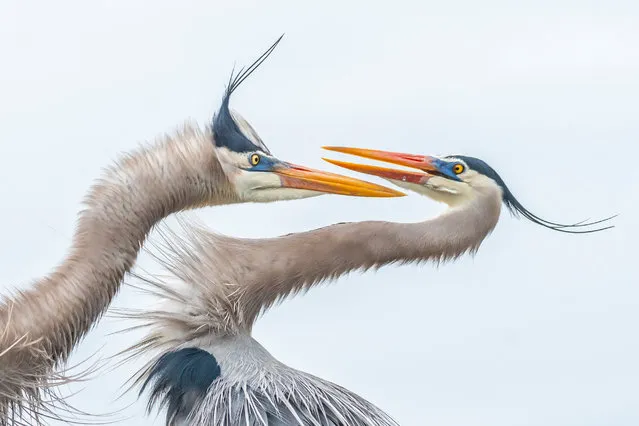
Melissa Rowell, amateur honourable mention. Wakodahatchee wetlands, Delray Beach, Florida, US. Equipped with sinewy necks and spear-like bills, great blue herons can lunge with fearsome speed to strike their aquatic prey. Adults will also employ rapid stabbing motions as one aspect of their complex courtship displays; they’re seemingly dangerous moves, but fitting to the intensity of mating season. (Photo by Melissa Rowell/Audubon photography awards)

Wakodahatchee wetlands, Delray Beach, Florida, US. Equipped with sinewy necks and spear-like bills, great blue herons can lunge with fearsome speed to strike their aquatic prey. Adults will also employ rapid stabbing motions as one aspect of their complex courtship displays; they’re seemingly dangerous moves, but fitting to the intensity of mating season. (Photo by Melissa Rowell/Audubon Photography Awards)
Details
17 Jul 2019 00:03:00
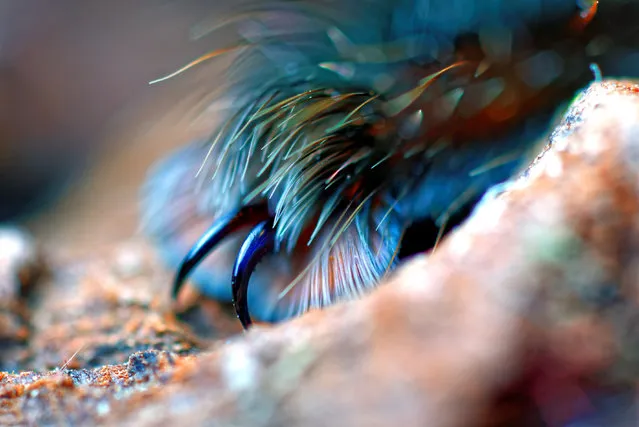
Brachypelma albopilosum, foot detail. (Photo by Michael Pankratz/Caters News Agency)

Michael Pankratz’s intriguing works focus specifically on the feet of tarantulas – an appendage that many have perhaps never focused on. The extreme close-ups of tarantulas’ “paws” show fine, colourful hairs, and sharp claws. Here: Brachypelma albopilosum, foot detail. (Photo by Michael Pankratz/Caters News Agency)
Details
19 Oct 2017 09:17:00


“The Red River Hog (Potamochoerus porcus), also known as the Bush Pig (but not to be confused with P. larvatus, common name “Bushpig”), is a wild member of the pig family living in Africa, with most of its distribution in the Guinean and Congolian forests. It is rarely seen away from rainforests, and generally prefers areas near rivers or swamps.

Red River Hogs eat grass, berries, roots, insects, molluscs, small vertebrates and carrion. They are capable of causing damage to plantations. Red River Hogs typically live in herds of 6-20 members led by a dominant boar. Sows rear 3-6 piglets at a time.”

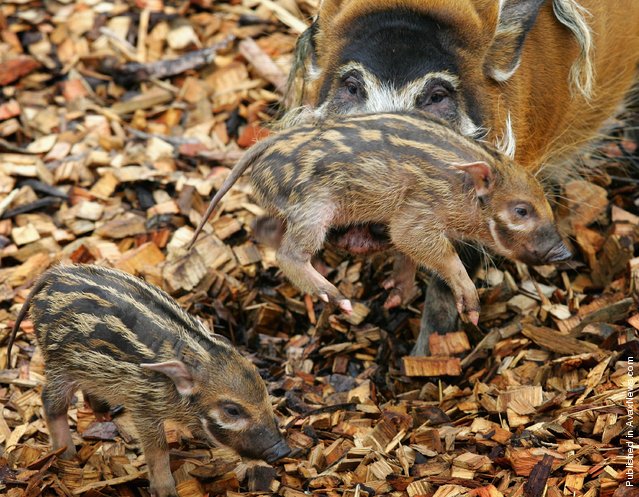
Photo: Two 17 day old red river hoglet twins forage for food next to their mother Bahiti at London Zoo on August 23, 2007 in London, England. Red River hoglets inhabit the forests and swamps of West and Central Africa. The recent additions to the London Zoo pig pen have been eagerly awaited by zoo keepers. (Photo by Chris Jackson/Getty Images)

Details
18 Mar 2011 15:15:00
Salespeople roll out a reproduction of the famous work “Girl with a Pearl Earring” at the artist village on June 11, 2014 in Shenzhen, China. The Dafen Artist Village in Guangdong province, China, is home to thousands of artists who reproduce some of the world's most iconic paintings as well as create their own works. The village, on the outskirts of Shenzhen, is becoming a major center for original Chinese art. (Photo by Palani Mohan/Getty images)

Salespeople roll out a reproduction of the famous work “Girl with a Pearl Earring” at the artist village on June 11, 2014 in Shenzhen, China. The Dafen Artist Village in Guangdong province, China, is home to thousands of artists who reproduce some of the world's most iconic paintings as well as create their own works. The village, on the outskirts of Shenzhen, is becoming a major center for original Chinese art. (Photo by Palani Mohan/Getty images)
Details
22 Jun 2014 10:25:00
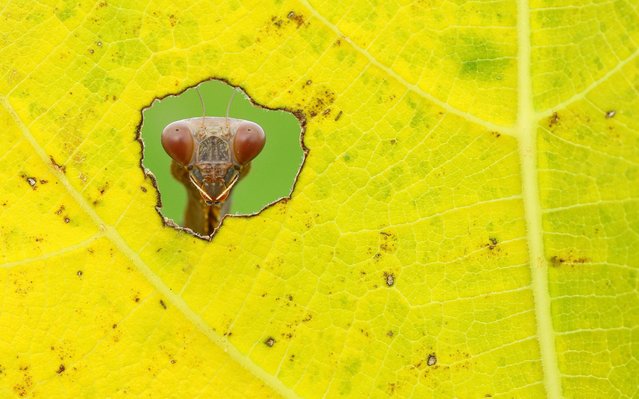
“Window of Autumn” by Hasan Baglar taken in Nicosia, Cyprus, which has come first in the All About Plants Section for the RHS Photographic Competition 2019. (Photo by Hasan Baglar/RHS/PA Wire Press Association)

“Window of Autumn” by Hasan Baglar taken in Nicosia, Cyprus, which has come first in the All About Plants Section for the RHS Photographic Competition 2019. (Photo by Hasan Baglar/RHS/PA Wire Press Association)
Details
09 Feb 2020 00:03:00
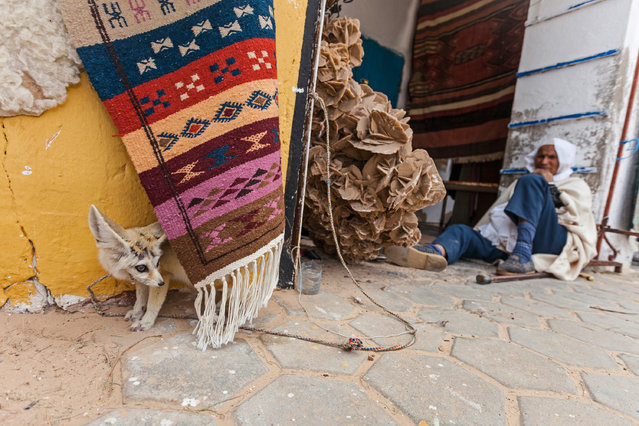
Sultan, a famous captive fennec that is displayed tied on a rope in front of a tourist shop, is the main attraction in the souk of Douz, a desert town in Tunisia. By the display of such a charismatic animal, tourists are often lured to buy things or pay for pictures. On inquiry, although Sultan has been caught as a pup in the wild, the owners of the shop reassure the foreigners stating that the animal is ‘domestic’. (Photo by Bruno D’Amicis/Fritz Pölking Prize/GDT EWPY 2015)

Sultan, a famous captive fennec that is displayed tied on a rope in front of a tourist shop, is the main attraction in the souk of Douz, a desert town in Tunisia. By the display of such a charismatic animal, tourists are often lured to buy things or pay for pictures. On inquiry, although Sultan has been caught as a pup in the wild, the owners of the shop reassure the foreigners stating that the animal is ‘domestic’. (Photo by Bruno D’Amicis/Fritz Pölking Prize/GDT EWPY 2015)
Details
23 Nov 2015 08:02:00
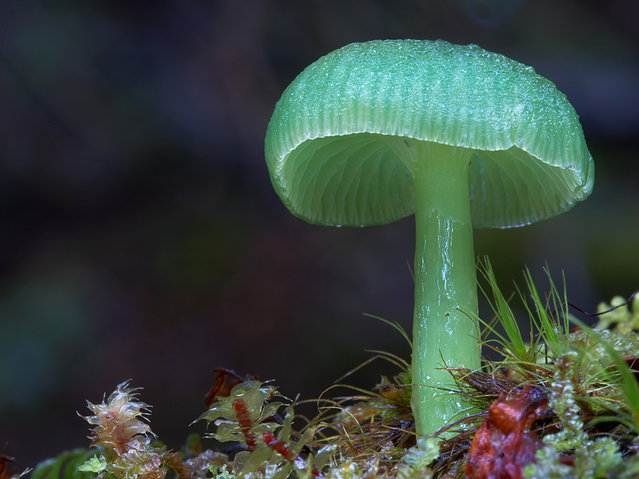
Hygrocybe graminicolor. (Photo and caption by Steve Axford)

Hygrocybe graminicolor. (Photo and caption by Steve Axford)
Details
19 May 2013 07:11:00
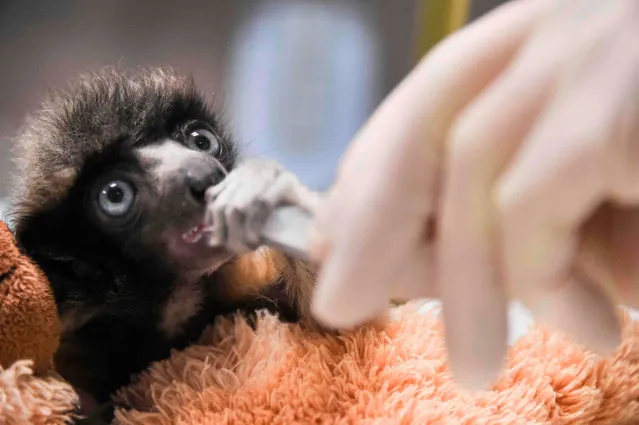
A veterinarian from the zoo of Besancon feeds “Soa”, a female crowned sifaka, in Besancon, eastern France, on February 18, 2019. The crowned sifaka is a critically endangered species from Madagascar. There were only 6 females over 20 individuals living in 7 zoos worldwide end of 2018. (Photo by Sébastien Bozon/AFP Photo)

A veterinarian from the zoo of Besancon feeds “Soa”, a female crowned sifaka, in Besancon, eastern France, on February 18, 2019. The crowned sifaka is a critically endangered species from Madagascar. There were only 6 females over 20 individuals living in 7 zoos worldwide end of 2018. (Photo by Sébastien Bozon/AFP Photo)
Details
24 Feb 2019 00:03:00