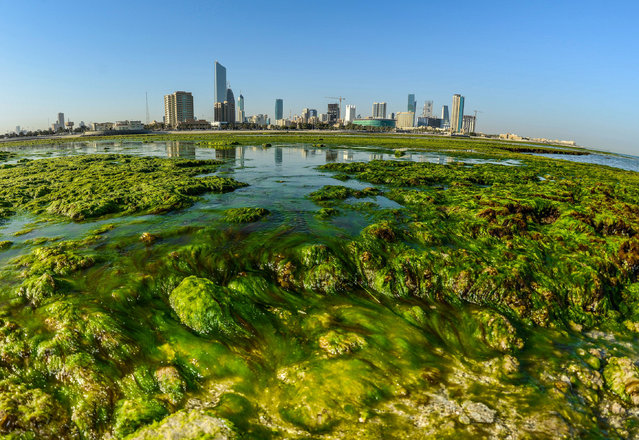
Green algae sits on a beach in Kuwait City, Kuwait, 28 February 2017. The formation of green algae is a normal phenomenon that occurs every year at the shores of Kuwait. (Photo by Raed Qutena/EPA)
Chinese women wear face-kinis as they walk in to the water to swim at the beach on August 20, 2014 in the Yellow Sea in Qingdao, China. The locally designed mask is worn by many local women to protect them from jellyfish stings, algae and the sun's ultraviolet rays. (Photo by Kevin Frayer/Getty Images)
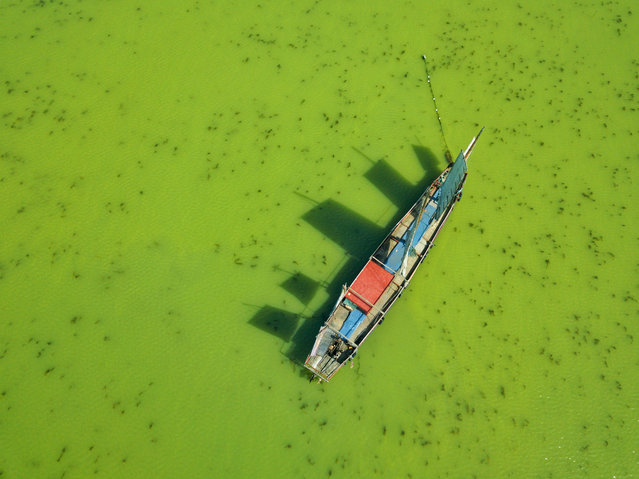
Aerial view of a boat working in the green water of Taihu Lake covered by blue-green algae, Wuxi city, Jiangsu province, China on May 23, 2018. (Photo by Imaginechina/Rex Features/Shutterstock)
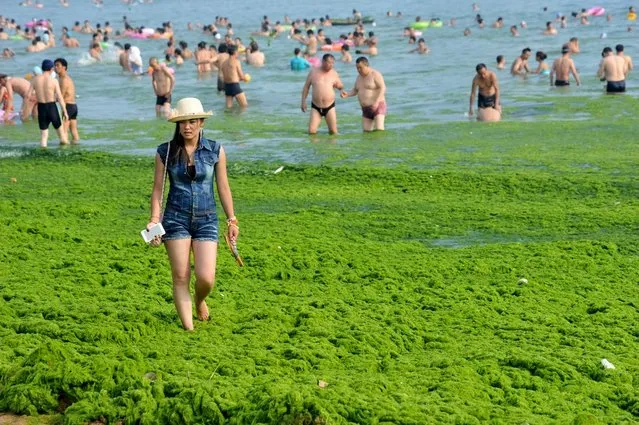
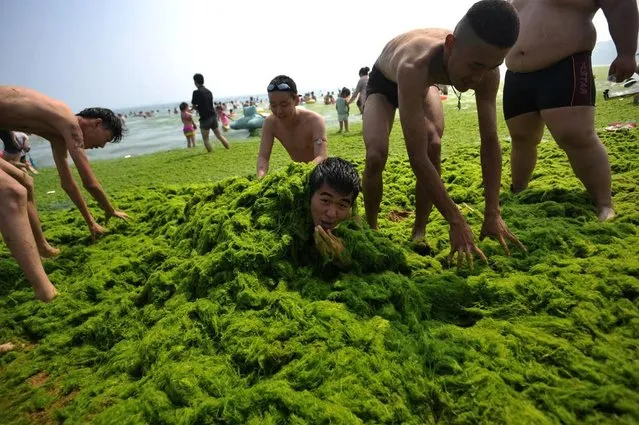
Tourists play at a beach covered by a thick layer of green algae on July 3, 2013 in Qingdao, China. A large quantity of non-poisonous green seaweed, enteromorpha prolifera, hit the Qingdao coast in recent days. More than 20,000 tons of such seaweed has been removed from the city's beaches. (Photo by China Foto Press)
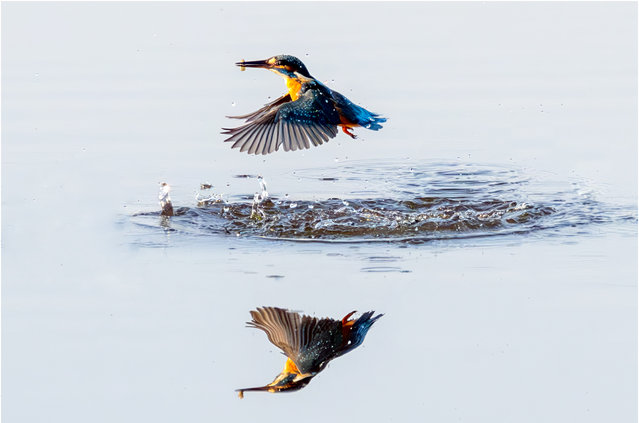
The picture dated September 19. 2024 shows a female Kingfisher feeding on small fish near Lancaster, UK. Kingfishers need to eat regularly and eat their own bodyweight in food each day. They primarily eat fish, such as minnows, and when they spot a fish they dive headfirst into the water and seize it with their sharp bills. (Photo by Brendan McGee/Bav Media)
Tourists play at a beach covered by a thick layer of green algae in Qingdao, China, on July 3, 2013. A large quantity of non-poisonous green seaweed, enteromorpha prolifera, hit China's Qingdao coast last month. More than 20,000 tons of such seaweed has been removed from the city's beaches. This has now become an annual summer event. (Photo by Whitehotpix/ZumaPress.com)
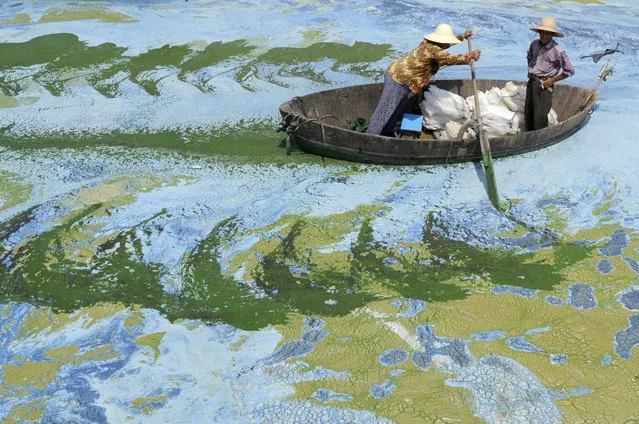
Growing cities, overuse of fertilizers and factory wastewater have degraded China's water supplies to the extent that half the nation's rivers and lakes are severely polluted. China aims to spend $850 billion to improve filthy water supplies over the next decade, but even such huge outlays may do little to reverse damage caused by decades of pollution and overuse in Beijing's push for rapid economic growth. Photo: Fishermen row a boat in the algae-filled Chaohu Lake in Hefei, Anhui province, June 19, 2009. (Photo by Jianan Yu/Reuters)
Catherine Hollis of Chester, Pa., and Izzy Weintraub of Atlantic City eat Cherrystone clams at Atlantic City's annual clam-eating contest September 16, 1946. They finished 96 and 66 clams respectively in 20 minutes. (Photo by Sam Myers/AP Photo)