Loading...
Done
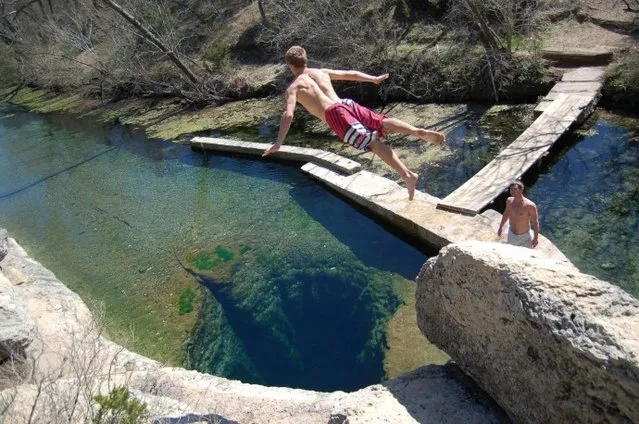
Dive The Deadly Jacob’s Well In Texas

Jacob's Well is a perennial karstic spring in the Texas Hill Country flowing from the bed of Cypress Creek, located northwest of Wimberley, Texas. The twelve foot (four meter) diameter mouth of the spring serves as a popular swimming spot for the local land owners whose properties adjoin Cypress Creek. From the opening in the creek bed, Jacob's Well cave descends vertically for about thirty feet (ten meters), then continues downward at an angle through a series of silted chambers separated by narrow restrictions, finally reaching a depth of one hundred and twenty feet (forty meters). Until the modern era, the Trinity Aquifer-fed natural artesian spring gushed water from the mouth of the cave, with a measured flow in 1924 of one hundred and seventy gallons per second (six hundred and forty liters per second) discharging six feet (two meters) into the air. The spring is the greatest source of water recharging the Edwards Aquifer.
Details
03 Jan 2014 08:20:00
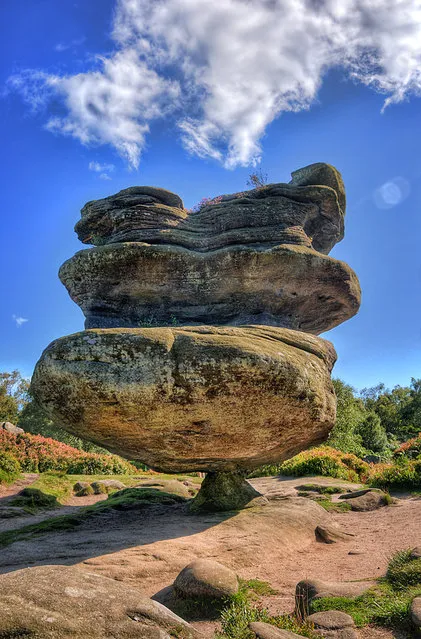
Brimham rocks, Nidderdale North Yorkshire, England

“A balancing rock, also called balanced rock or precarious boulder, is a naturally occurring geological formation featuring a large rock or boulder, sometimes of substantial size, resting on other rocks, bedrock or on glacial till. Some formations known by this name only appear to be balancing but are in fact firmly connected to a base rock by a pedestal or stem”. – Wikipedia

Photo: “The Brimham Rocks are balancing rock formations located on Brimham Moor in North Yorkshire, England. The rocks stand at a height of nearly 30 metres in an area owned by the National Trust which is part of the Nidderdale Area of Outstanding Natural Beauty”. – Wikipedia. (Photo by Tee Time Tony)
Details
06 May 2012 11:45:00
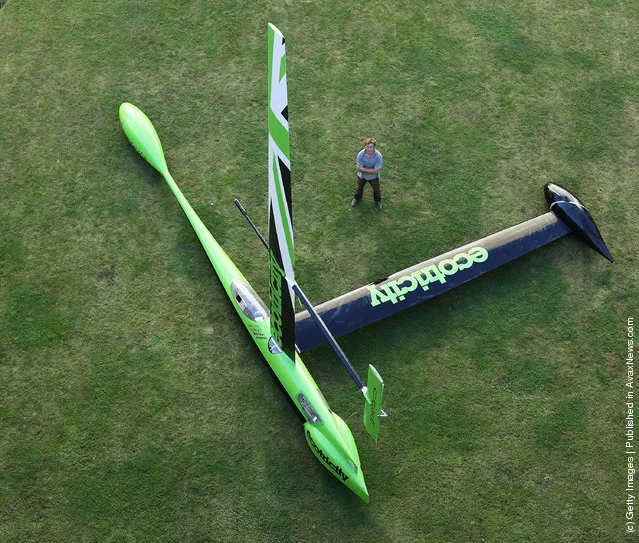
Ecotricity's Greenbird vehicle, designed and piloted by Richard Jenkins, broke the land speed world record for a wind-powered vehicle in 2009

“Ecotricity's Greenbird vehicle, designed and piloted by Richard Jenkins, broke the land speed world record for a wind-powered vehicle in 2009. Greenbird recorded a top speed of 126.4 mph (203.4 km/h), and sustained a speed of 126.2 mph (203.1 km/h) for the required time of three seconds, beating the previous, American held, record of 116 mph (186.7 km/h), set by Bob Schumacher in the Iron Duck in March 1999 at the same location”. – Wikipedia

Photo: Richard Jenkins poses for photographs with the world's fastest wind powered land Vehicle at Science Museum on August 3, 2009 in London, England. (Photo by Dan Kitwood/Getty Images)
Details
12 Dec 2011 12:30:00
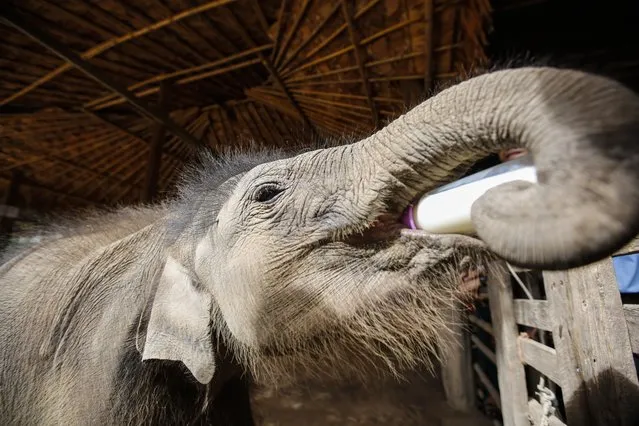
Mary, 8-months-old female orphan elephant, drinks milk at Winga Baw Elephant Conservation Camp during the ceremony to mark World Elephant Day at Bago Region, Myanmar, 12 August 2017. (Photo by Lynn Bo Bo/EPA/EFE)

Mary, 8-months-old female orphan elephant, drinks milk at Winga Baw Elephant Conservation Camp during the ceremony to mark World Elephant Day at Bago Region, Myanmar, 12 August 2017. Winga Baw Elephant Conservation Camp, 34-hectare former timber camp for logs located in Bago Region, currently has 14 elephants and was opened for recreation for locals as well as for tourists. World Elephant Day is marked annually on 12 August. (Photo by Lynn Bo Bo/EPA/EFE)
Details
15 Aug 2017 07:47:00
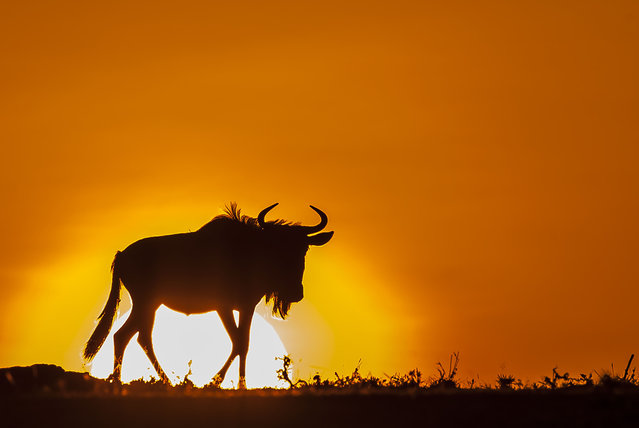
A blue wildebeest moves through grassland at dawn with the sun in the background in Mara Naboisho Conservancy, Kenya, Africa. (Photo by Renato Granieri/Caters News/Ardea)

These images show off some of the world's most majestic creatures silhouetted against the beautiful rising and setting sun. The vibrant pictures feature a variety of animals in the wild and were taken by a host of photographers at locations around the world. The striking images all have one thing in common: the photographers' awe-inspiring ability to perfectly capture the silhouettes of earth's beautiful creatures. Here: a blue wildebeest moves through grassland at dawn with the sun in the background in Mara Naboisho Conservancy, Kenya, Africa. (Photo by Renato Granieri/Caters News/Ardea)
Details
02 Sep 2015 11:12:00
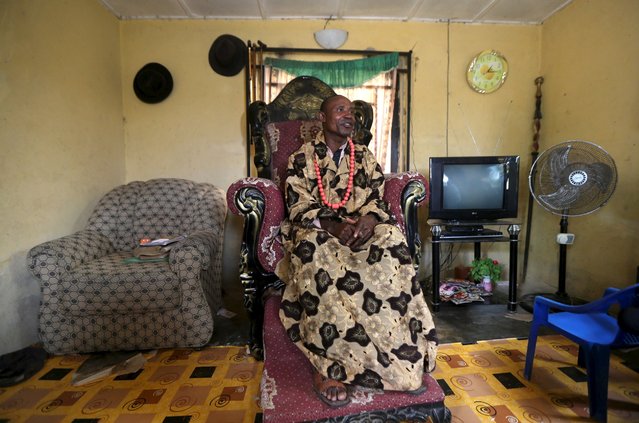
Deputy community chief of Yeneka village Douglas Oguta poses for a portrait in his home on the outskirts of the Bayelsa state capital, Yenagoa, in Nigeria's delta region October 8, 2015. (Photo by Akintunde Akinleye/Reuters)

Deputy community chief of Yeneka village Douglas Oguta poses for a portrait in his home on the outskirts of the Bayelsa state capital, Yenagoa, in Nigeria's delta region October 8, 2015. Tensions are building in the swampland of the Niger Delta as an amnesty that aimed to bring stability to Nigeria's volatile southern region is due to expire at the end of the year. While the region's towns and cities are mostly calm, local residents say kidnappings and armed robberies are on the increase in the mangrove swamps, where most oil wells are located. (Photo by Akintunde Akinleye/Reuters)
Details
17 Oct 2015 08:01:00
This photo taken on August 13, 2014, shows a robot carrying food to customers in a restaurant in Kunshan. It's more teatime than Terminator – a restaurant in China is electrifying customers by using more than a dozen robots to cook and deliver food. (Photo by Johannes Eisele/AFP Photo)

Located in Kunshan, eastern China, the restaurant relies on over a dozen machines for tasks such as greeting customers, waiting on tables and cooking basic meals. The eatery becomes the third café in the world to rely on the use of robot employees, potentially giving a glimpse into how future businesses could operate. Photo: This photo taken on August 13, 2014, shows a robot carrying food to customers in a restaurant in Kunshan. It's more teatime than Terminator – a restaurant in China is electrifying customers by using more than a dozen robots to cook and deliver food. (Photo by Johannes Eisele/AFP Photo)
Details
24 Aug 2014 09:40:00
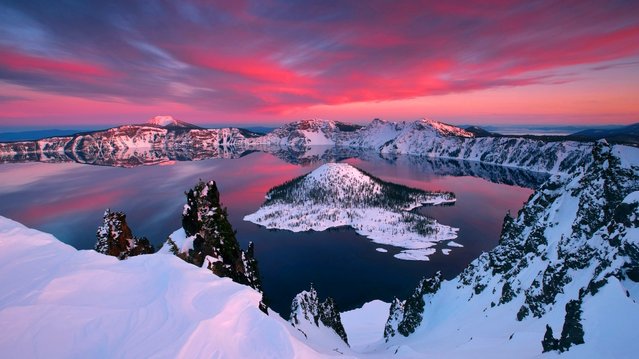
Crater Lake In Oregon

As you look at the majestic Crater Lake, located in south-central Oregon, United States, it is hard to imagine that thousands of years ago this place was one giant crater with scorching hot lava spilling over the sides. Those were the times of turmoil. Now, however, this place is the essence of tranquility. The lake that was formed, after the volcano died down, is amazingly clear due to the fact that the water isn’t moving at all. No rivers go in or out of the Crater Lake, and the water lost through evaporation is compensated by the rain and snowfall. This lake is also frighteningly deep – 1,943 feet (592 m) at its deepest point – making it the deepest lake in the United States. If you love nature and if you ever come to Oregon, this is truly a sight to behold.
Details
19 Nov 2014 14:14:00