Loading...
Done
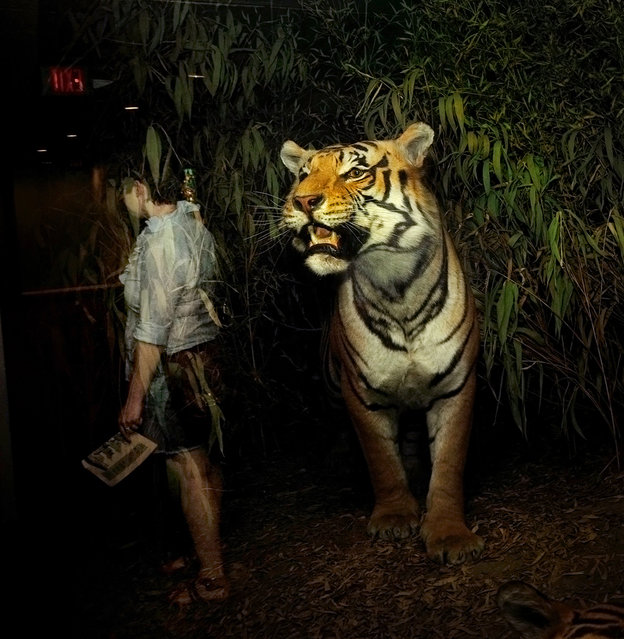
“Natural History”: Tiger. (Photo by Traer Scott)

“Natural History” is a series of completely candid single exposure images that merge the living and the dead to create allegorical narratives of our troubled co-existence with nature. Ghost-like reflections of modern visitors viewing wildlife dioramas are juxtaposed against the antique taxidermied subjects housed behind thick glass, their faces molded into permanent expressions of fear, aggression or fleeting passivity. After decades of over-hunting, climate change, poaching and destruction of habitat, many of these long dead diorama specimens now represent endangered or completely extinct species”. – Traer Scott. (Photo by Traer Scott)
Details
27 Oct 2014 11:39:00
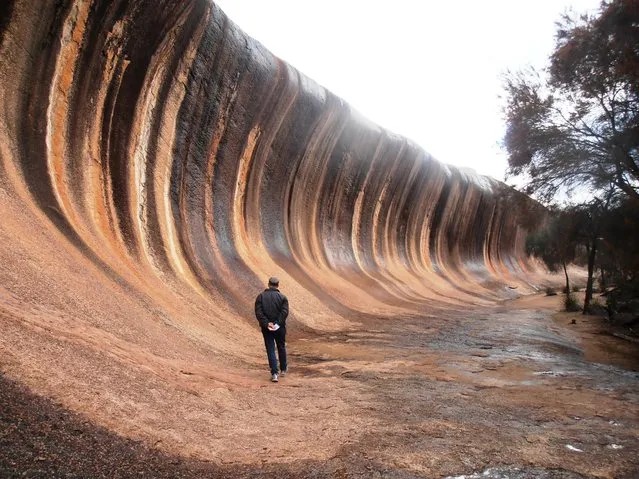
Wave Rock, Arizona

Wave Rock is a natural rock formation that is shaped like a tall breaking ocean wave. The "wave" is about 14 m (46 ft) high and around 110 m (360 ft) long. It forms the north side of a solitary hill, which is known as “Hyden Rock”. This hill, which is a granite inselberg, lies about 3 km (2 mi) east of the small town of Hyden and 296 km (184 mi) east-southeast of Perth, Western Australia. Wave Rock and Hyden Rock are part of a 160 ha (395-acre) nature reserve, Hyden Wildlife Park.
Details
12 Aug 2014 10:21:00
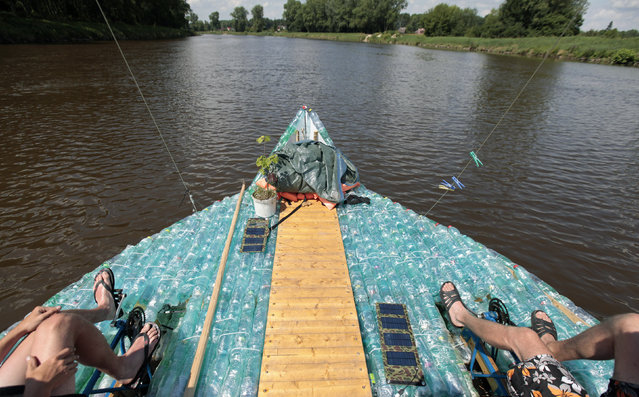
Jan Kara (R) and Jan Holan pedal their boat, made with plastic bottles, on the Elbe river near Kostelec nad Labem July 15, 2014. (Photo by David W. Cerny/Reuters)

Jan Kara (R) and Jan Holan pedal their boat, made with plastic bottles, on the Elbe river near Kostelec nad Labem July 15, 2014. Jan Kara, a 22-year-old student, and Jakub Bures, a 22-year-old car mechanic, built the 10-metre (32.8-feet) long boat from 5000 plastic bottles strapped to a wooden frame. (Photo by David W. Cerny/Reuters)
Details
22 Sep 2014 11:43:00
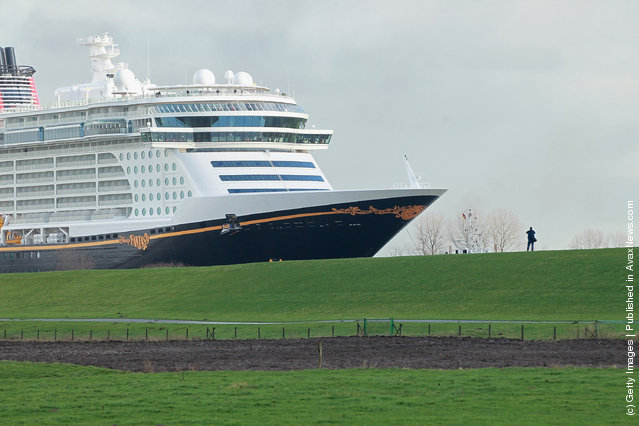
Tugboats haul the “Disney Fantasy” cruise ship backwards down Ems river after the ship departed from the Meyer Werft shipyards

An onlooker watches as the “Disney Fantasy” cruise ship is hauled backwards by a tugboat down the Ems River after the ship departed from the Meyer Werft shipyards on January 20, 2012 in Papenburg, Germany. The completed 130,000-tonne ship, which is 1,115 feet long and can accomodate 5,450 passengers, cast and crew, was on its way to the North Sea. (Photo by Sean Gallup/Getty Images)
Details
05 Feb 2012 12:56:00
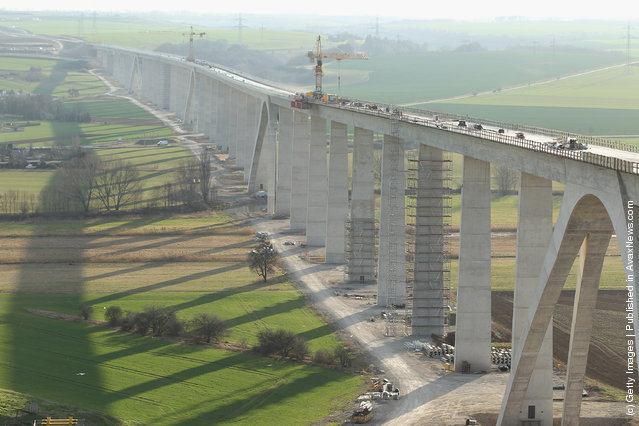
Unstrut Valley high-speed railway bridge near Karsdorf, Germany

Construction cranes stand on the Unstrut Valley high-speed railway bridge on March 19, 2012 near Karsdorf, Germany. The Unstrut bridge, which is 2,668m long (about 1.6 miles), is among 38 bridges and 26 tunnels German state rail carrier Deutsche Bahn is building along a new ICE high-speed railroad connection between Nuremberg, Erfurt, Halle, Leipzig and Berlin in a multi-billion Euro project across eastern Germany called the German Unity Transportation Project (Verkehrsprojekt der Deutschen Einheit). (Photo by Sean Gallup/Getty Images)
Details
22 Mar 2012 10:53:00
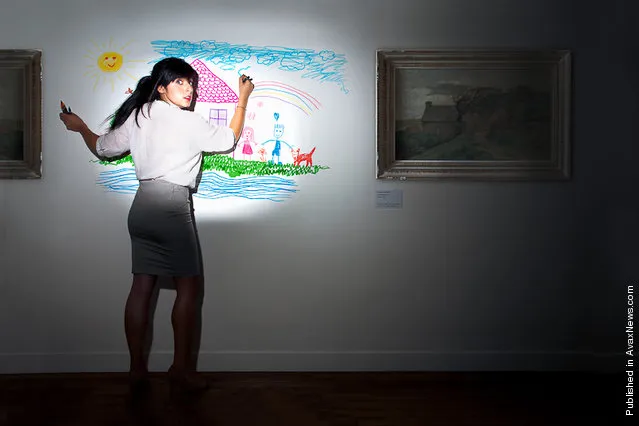
Photographers: Julien Mauve. Back To Childhood

“Julien Mauve is a Paris based professional web designer, front-end developer and content manager who loves innovation, experimentation and creation. Julien has taken up photography as a hobby. His collection Back to Childhood is all about bringing the long lost memories of early days into the adult life. How he came about that idea? Julien stumbled upon some of his old toys in his grandpa’s attic and felt a connection to every single one of them. Each toy brought back a fond memory”.
Details
06 Apr 2012 20:05:00
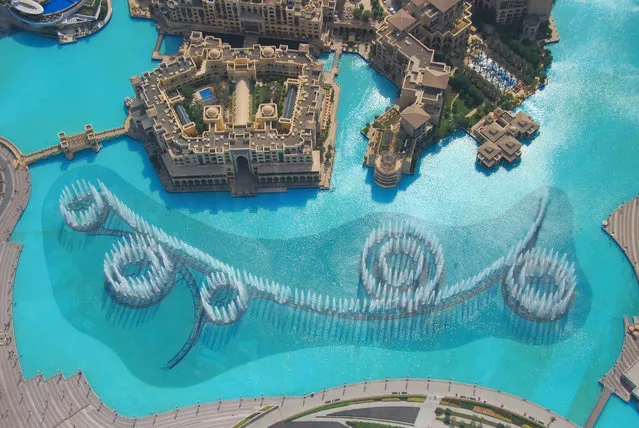
The Dubai Fountain

The Dubai Fountain is a record-setting choreographed fountain system set on the 30-acre manmade Burj Khalifa Lake, at the center of the Downtown Dubai development in Dubai, United Arab Emirates. It was designed by WET Design, the California-based company responsible for the fountains at the Bellagio Hotel Lake in Las Vegas. Illuminated by 6,600 lights and 25 colored projectors, it is 275 m (902 ft) long and shoots water 240 feet into the air accompanied by a range of classical to contemporary Arabic and world music. It was built at a cost of AED 800 million (USD 218 million).
Details
08 Jun 2015 10:55:00
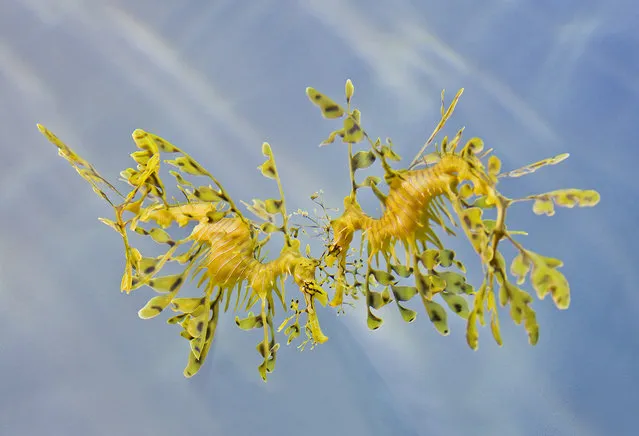
Leafy sea dragon

The leafy seadragon or Glauert's seadragon, Phycodurus eques, is a marine fish in the family Syngnathidae, which also includes the seahorses. It is the only member of the genus Phycodurus. It is found along the southern and western coasts of Australia. The name is derived from the appearance, with long leaf-like protrusions coming from all over the body. These protrusions are not used for propulsion; they serve only as camouflage. The leafy seadragon propels itself by means of a pectoral fin on the ridge of its neck and a dorsal fin on its back closer to the tail end. These small fins are almost completely transparent and difficult to see as they undulate minutely to move the creature sedately through the water, completing the illusion of floating seaweed.
Details
05 Sep 2012 08:51:00