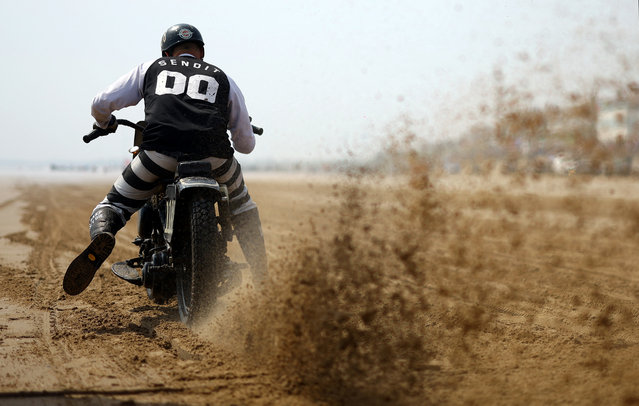
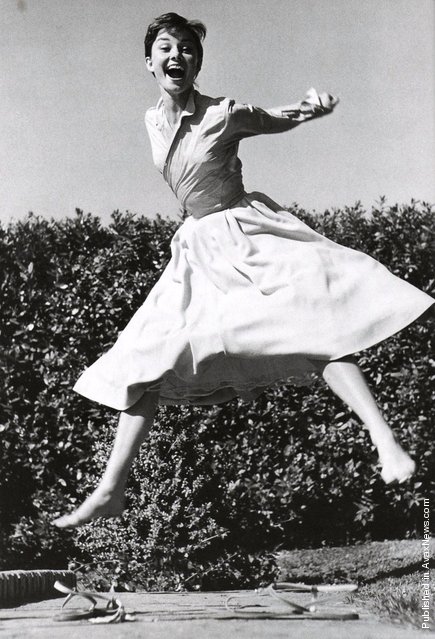
A motoring enthusiast takes part in the “Race The Waves” classic car and motorcycle meet at the beach in Bridlington, Britain, on May 12, 2024. (Photo by Lee Smith/Reuters)
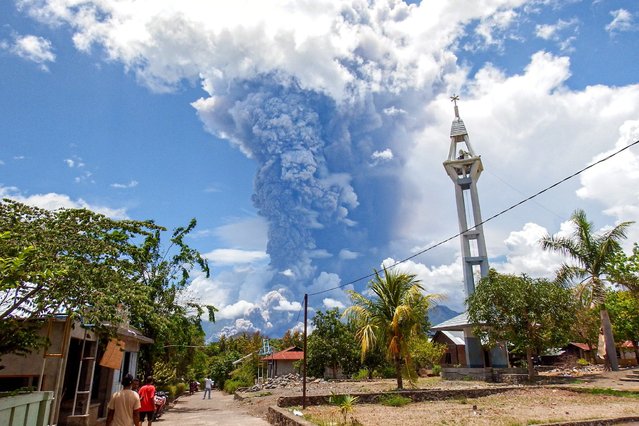
Schoolchildren run during the eruption of Mount Lewotobi Laki-Laki, as seen from Lewolaga village in East Flores, East Nusa Tenggara, Indonesia on November 7, 2024. (Photo by Arnold Welianto/AFP Photo)
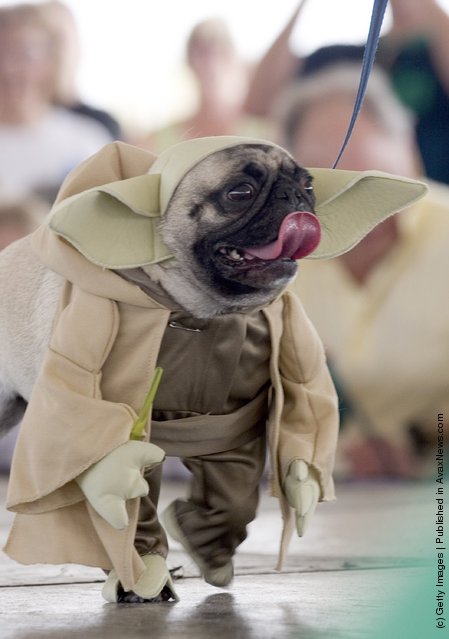
A pug dressed as Yoda from the movie Star Wars walks along the runway at the 9th Annual Pug Parade on February 25, 2006 in Bradenton, Florida. 117 pugs competed for 10 prizes in 6 categories. Proceeds from the event benefit the Sarasota County Humane Society. (Photo by Phillippe Diederich/Getty Images)
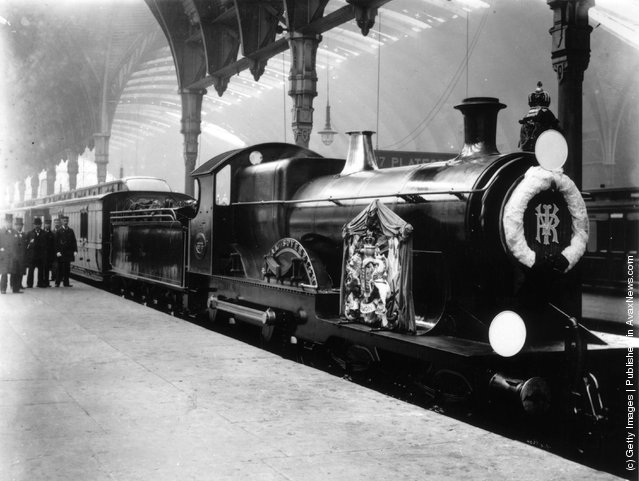
A spotless GWR (Great Western Railway) locomotive, the “Royal Sovereign” waiting to carry Queen Victoria's coffin. (Photo by Hulton Archive/Getty Images). 28th January 1901
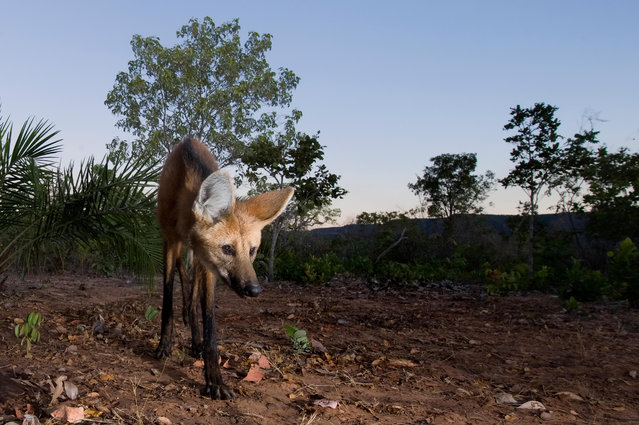
Global wildlife populations will decline by 67% by 2020 unless urgent action is taken to reduce human impact on species and ecosystems, warns the biennial Living Planet Index report from WWF (World Wide Fund for Nature) and ZSL (Zoological Society of London). From elephants to eels, here are some of the wildlife populations most affected by human activity. Here: The maned wolf is among the large mammals in the Brazilian Cerrado that are threatened by the increasing conversion of grasslands into farmland for grazing and growing crops. (Photo by Ben Cranke/Nature Picture Library/Alamy Stock Photo)