Loading...
Done
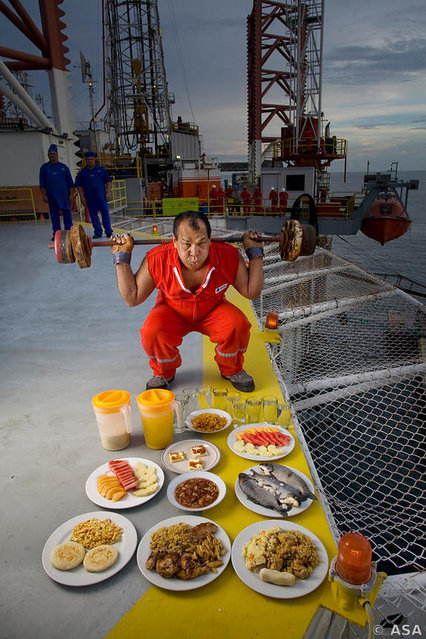
What the World Eats By Peter Menzel And Faith D'Aluisio Part 1

A stunning photographic collection featuring portraits of people from 30 countries and the food they eat in one day. In this fascinating study of people and their diets, 80 profiles are organized by the total number of calories each person puts away in a day. Featuring a Japanese sumo wrestler, a Massai herdswoman, world-renowned Spanish chef Ferran Adria, an American competitive eater, and more, these compulsively readable personal stories also include demographic particulars, including age, activity level, height, and weight. Essays from Harvard primatologist Richard Wrangham, journalist Michael Pollan, and others discuss the implications of our modern diets for our health and for the planet. This compelling blend of photography and investigative reportage expands our understanding of the complex relationships among individuals, culture, and food.
Details
23 Apr 2014 14:34:00
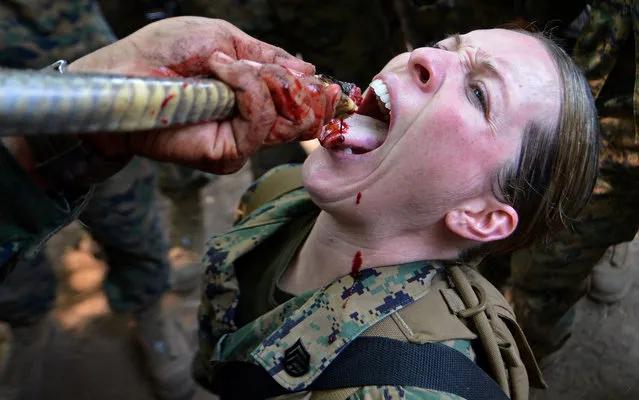
In a military base in the Thai province of Chon Buri February 20 U.S. Marines Navy with Thailand began their studies in jungle survival. The event is held in joint military exercises “Cobra Gold 2013”. During a jungle survival program February 20, 2013 taught by Royal Thai Special Forces in Sannapit, Thailand, U.S. Marines learned to catch cobras and drink their fresh blood, not to mention eat forest insects and pull the heads off of chicken. The training was part of Operation Cobra Gold 13, the 32nd edition of international military exercises hosted by the Thai. According to a U.S. Marines press release, Cobra Gold is the largest exercise of its kind in Asia and incorporates troops from five other nations in addition to the U.S. and Thailand. The Daily Mail reports that the Marines were invited to experience the local custom of drinking cobra blood after being taught to catch and kill cobras in the wild. As CNN notes, Cobra blood is believed to be a panacea and aphrodiasic in parts of Southeast Asia. In Jakarta, vendors can earn over $100 a night selling shots of cobra blood mixed with liquor. (Photo by Pornchai Kittiwongsakul/AFP Photo)

During a jungle survival program February 20, 2013 taught by Royal Thai Special Forces in Sannapit, Thailand, U.S. Marines learned to catch cobras and drink their fresh blood, not to mention eat forest insects and pull the heads off of chicken. The training was part of Operation Cobra Gold 13, the 32nd edition of international military exercises hosted by the Thai. According to a U.S. Marines press release, Cobra Gold is the largest exercise of its kind in Asia and incorporates troops from five other nations in addition to the U.S. and Thailand. The Daily Mail reports that the Marines were invited to experience the local custom of drinking cobra blood after being taught to catch and kill cobras in the wild. As CNN notes, Cobra blood is believed to be a panacea and aphrodiasic in parts of Southeast Asia. In Jakarta, vendors can earn over $100 a night selling shots of cobra blood mixed with liquor. (Photo by Pornchai Kittiwongsakul/AFP Photo)
Details
23 Feb 2013 11:52:00
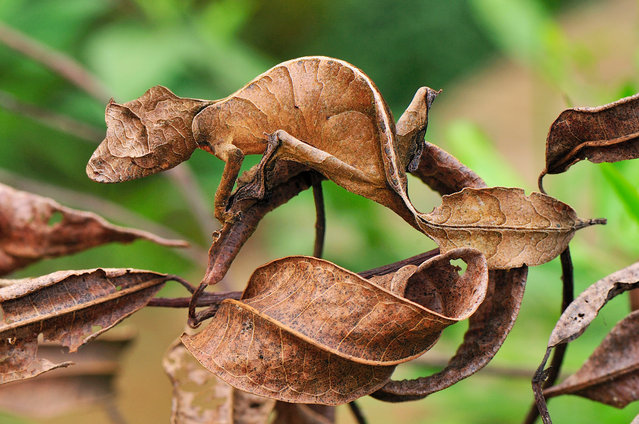
Is it a leaf? Is it tree bark? No, it’s the Satanic leaf-tailed gecko. Cleverly disguised as a rotting leaf, Madagascar’s camouflage king has red eyes, pointy horns and a taste for night hunting: it’s nature’s most devilish deceiver. (Photo by Thomas Marent/ARDEA)

Is it a leaf? Is it tree bark? No, it’s the Satanic leaf-tailed gecko. Cleverly disguised as a rotting leaf, Madagascar’s camouflage king has red eyes, pointy horns and a taste for night hunting: it’s nature’s most devilish deceiver. The twisted body and veiny skin echo the detail of a dry leaf, which ensures the gecko blends in with its forest home. The mottled tail appears to have sections missing, as though it has withered over time. This mini-monster epitomises survival of the fittest, having adapted gradually to become today’s extraordinary leaf impersonator. (Photo by Thomas Marent/ARDEA)
Details
20 Nov 2015 08:03:00
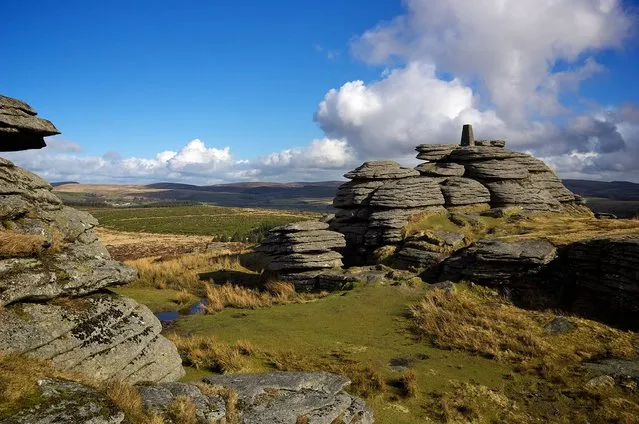
Dartmoor National Park. Located in South Devon and just a 30 minute drive away from Exeter, the Dartmoor National Park features rushing rivers, sprawling moorland and spooky forests. This stunning backdrop was the main reason it was chosen as the setting for Steven Spielberg’s film, Warhorse. (Photo by Diana Jarvis/VisitEngland)

Every year National Parks Week gives visitors a chance to celebrate the incredible woodland spaces around the UK. This year the National Parks Week runs from 28 July – 3 August and there are 10 national parks across England to explore. Each one has created a special event to celebrate the National Parks Week, from picnics and treasure hunt in the park to cycle rides, safari or outdoor art exhibition. (Photo by Diana Jarvis/VisitEngland)
Details
23 Jul 2014 10:15:00
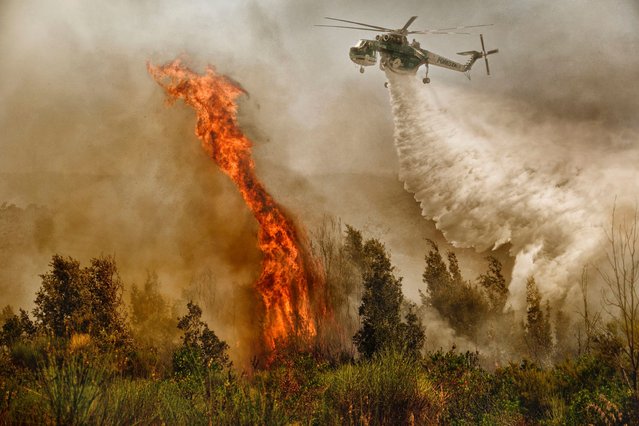
On target: Brave pilots are on a course straight into these enormous flames as they release tonnes of water onto the fire. (Photo by Antonio Grambone/Caters News Agency Ltd)

These are incredible pictures of skilled aircraft pilots flying through raging infernos to put out enormous flames. Daredevil Italian photographer Antonio Grambone, 46, jumped up close to the blaze to capture the incredible images of forest fires in the National Park of Cilento and Vallo di Diano, in the province of Salerno in Italy. At great risk to himself, Antonio captured these incredible shots making them appear like Italian masterpieces.

Photo: On target: Brave pilots are on a course straight into these enormous flames as they release tonnes of water onto the fire. (Photo by Antonio Grambone/Caters News Agency Ltd)
Details
02 Jun 2015 12:14:00
These chilling images prove there is no sign of life at this abandoned tuberculosis treatment hospital. Johnny Joo, 24, captured the eerie shots of the desolate TB ward, in Perrysburg, New York. Where equipment lies gathering rust and walls are left crumbling. (Photo by Johnny Joo/Caters News)

These chilling images prove there is no sign of life at this abandoned tuberculosis treatment hospital. Johnny Joo, 24, captured the eerie shots of the desolate TB ward, in Perrysburg, New York. Where equipment lies gathering rust and walls are left crumbling. The photojournalist, from Cleveland, Ohio, stumbled upon the facility, which shut its doors in 1995, before shooting what remains of the historic site. Johnny said the facility, named after Buffalo Mayor James Nobel Adam, remains something of an unknown quantity as it is surrounded by more than 500 acres of forest land. (Photo by Johnny Joo/Caters News)
Details
30 Jan 2015 10:37:00
What the World Eats By Peter Menzel And Faith D'Aluisio Part 2

A stunning photographic collection featuring portraits of people from 30 countries and the food they eat in one day. In this fascinating study of people and their diets, 80 profiles are organized by the total number of calories each person puts away in a day. Featuring a Japanese sumo wrestler, a Massai herdswoman, world-renowned Spanish chef Ferran Adria, an American competitive eater, and more, these compulsively readable personal stories also include demographic particulars, including age, activity level, height, and weight. Essays from Harvard primatologist Richard Wrangham, journalist Michael Pollan, and others discuss the implications of our modern diets for our health and for the planet. This compelling blend of photography and investigative reportage expands our understanding of the complex relationships among individuals, culture, and food.
Details
02 May 2014 09:20:00


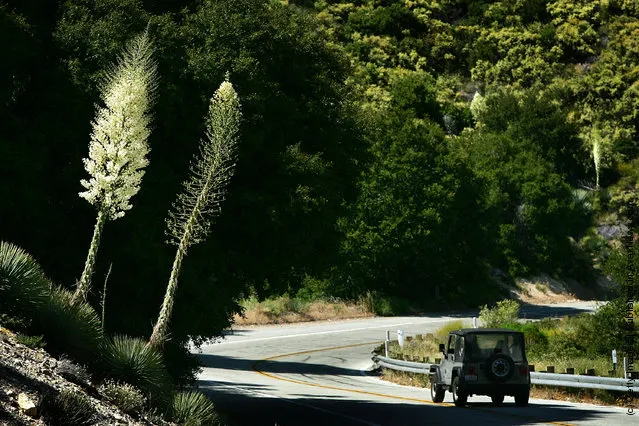
“Yucca is a genus of perennial shrubs and trees in the agave family, Agavaceae. Its 40-50 species are notable for their rosettes of evergreen, tough, sword-shaped leaves and large terminal panicles of white or whitish flowers. They are native to the hot and dry (arid) parts of North America, Central America, South America, and the Caribbean. Early reports of the species were confused with the cassava (Manihot esculenta). Consequently, Linnaeus mistakenly derived the generic name from the Carib word for the latter, yuca. It is also colloquially known in the midwest United States as “Ghosts in the graveyard”, as it is commonly found growing in rural graveyards and when in bloom the flowers appear as an apparition floating.” – Wikipedia

Photo: A yucca standing among flowers bursts forth a very large stalk of flowers as a heavy wildflower bloom on June 21, 2005 in the Angeles National Forest northwest of La Canada, California. (Photo by David McNew/Getty Images)
Details
29 Mar 2011 07:31:00