Loading...
Done
A Salvadoran clown is seen wearing colorful clothes and face make-up during the parade within the framework of the National Salvadoran Clown Day that is celebrated on the first Wednesday of every December by legislative decree in San Salvador, El Salvador on December 07, 2022. After the pandemic crisis, dozens of Salvadoran clowns took to the streets to celebrate their day, and invite families to respect the work of bringing smiles to children and adults in El Salvador. (Photo by Alex Pena/Anadolu Agency via Getty Images)

A Salvadoran clown is seen wearing colorful clothes and face make-up during the parade within the framework of the National Salvadoran Clown Day that is celebrated on the first Wednesday of every December by legislative decree in San Salvador, El Salvador on December 07, 2022. After the pandemic crisis, dozens of Salvadoran clowns took to the streets to celebrate their day, and invite families to respect the work of bringing smiles to children and adults in El Salvador. (Photo by Alex Pena/Anadolu Agency via Getty Images)
Details
16 Feb 2024 08:17:00
Belarus' Aryna Sabalenka poses with the 2023 Australian Open winner's trophy in Royal Botanic Garden in Melbourne on January 29, 2023, following her victory over Kazakhstan's Elena Rybakina in the women's singles final of the tennis tournament. (Photo by Carl Recine/Reuters)

Belarus' Aryna Sabalenka poses with the 2023 Australian Open winner's trophy in Royal Botanic Garden in Melbourne on January 29, 2023, following her victory over Kazakhstan's Elena Rybakina in the women's singles final of the tennis tournament. (Photo by Carl Recine/Reuters)
Details
19 Apr 2024 00:36:00
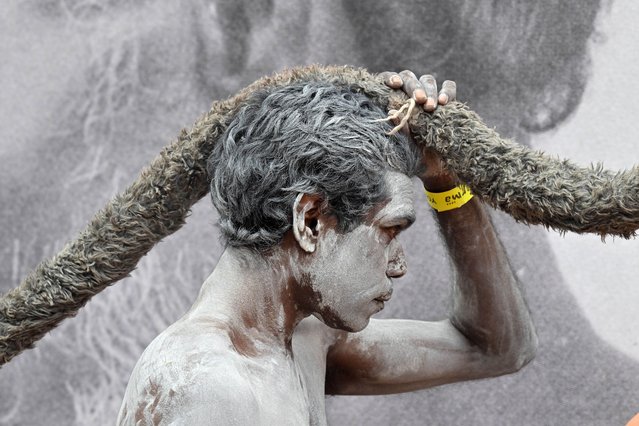
A member of the Gumatj clan performs a ceremonial welcome during the Garma Festival at the Gulkula ceremonial in the Gove Peninsula of the Northern Territory, Australia 03 August 2024. The Garma Festival is Australia’s largest Indigenous gathering, a 4-day celebration of Yolngu life and culture held in remote northeast Arnhem Land. (Photo by Mick Tsikas/EPA)

A member of the Gumatj clan performs a ceremonial welcome during the Garma Festival at the Gulkula ceremonial in the Gove Peninsula of the Northern Territory, Australia 03 August 2024. The Garma Festival is Australia’s largest Indigenous gathering, a 4-day celebration of Yolngu life and culture held in remote northeast Arnhem Land. (Photo by Mick Tsikas/EPA)
Details
10 Dec 2025 05:24:00
An Indian artist gives the finishing touches to a figure of the elephant-headed Hindu god Ganesha at a workshop ahead of the Ganesh Chaturthi festival in New Delhi on September 15, 2015. (Photo by Sajjad Hussain/AFP Photo)

An Indian artist gives the finishing touches to a figure of the elephant-headed Hindu god Ganesha at a workshop ahead of the Ganesh Chaturthi festival in New Delhi on September 15, 2015. The idol is meant for the forthcoming festival Ganesha Chaturthi, a ten-day long event which is celebrated all over India. During the Ganpati festival, that is celebrated as the birthday of Lord Ganesha, idols of the Hindu deity are worshipped at hundreds of pandals or makeshift tents before they are immersed into water bodies. This year, the festival starts on 17 September 2015. (Photo by Sajjad Hussain/AFP Photo)
Details
17 Sep 2015 10:38:00
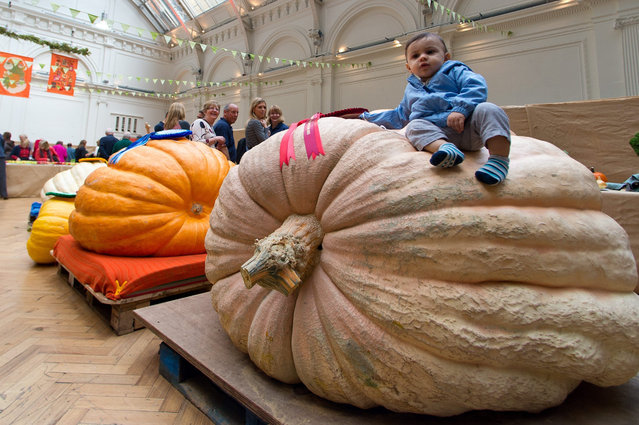
A toddler sits on the winner of the giant pumpkin category during the RHS (Royal Horticultural Society) London Harvest Festival Show at RHS Lindley Halls on October 6, 2015 in London, England. The traditional harvest themed show runs October 6-7 and showcases a wide range of late summer grown fruit and vegetables. (Photo by Ben Pruchnie/Getty Images)

A toddler sits on the winner of the giant pumpkin category during the RHS (Royal Horticultural Society) London Harvest Festival Show at RHS Lindley Halls on October 6, 2015 in London, England. The traditional harvest themed show runs October 6-7 and showcases a wide range of late summer grown fruit and vegetables. (Photo by Ben Pruchnie/Getty Images)
Details
09 Oct 2015 08:07:00
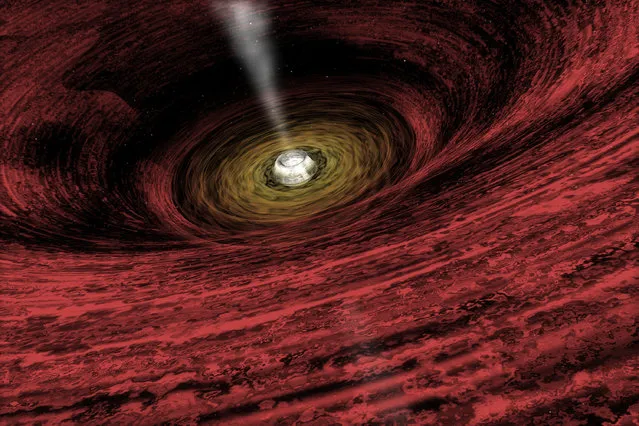
An artist's impression of a growing supermassive black hole located in the early Universe is seen in this NASA handout illustration released on June 15, 2011. Using the deepest X-ray image ever taken, astronomers found the first direct evidence that massive black holes were common in the early universe. This discovery from NASA's Chandra X-Ray Observatory shows that very young black holes grew more aggressively than previously thought, in tandem with the growth of their host galaxies. (Photo by Reuters/NASA/Chandra X-Ray Observatory/A.Hobart)

An artist's impression of a growing supermassive black hole located in the early Universe is seen in this NASA handout illustration released on June 15, 2011. Using the deepest X-ray image ever taken, astronomers found the first direct evidence that massive black holes were common in the early universe. This discovery from NASA's Chandra X-Ray Observatory shows that very young black holes grew more aggressively than previously thought, in tandem with the growth of their host galaxies. (Photo by Reuters/NASA/Chandra X-Ray Observatory/A.Hobart)
Details
11 Feb 2016 12:57:00
Alee Harrison, 13, wears the tv series “Doctor Who” on her legs as she works on a painting for Operation Blue Pride. (Photo by Greg Lovett/The Palm Beach Post)

Alee Harrison, 13, wears the tv series “Doctor Who” on her legs as she works on a painting for Operation Blue Pride. (Photo by Greg Lovett/The Palm Beach Post)
Details
26 Feb 2014 10:00:00
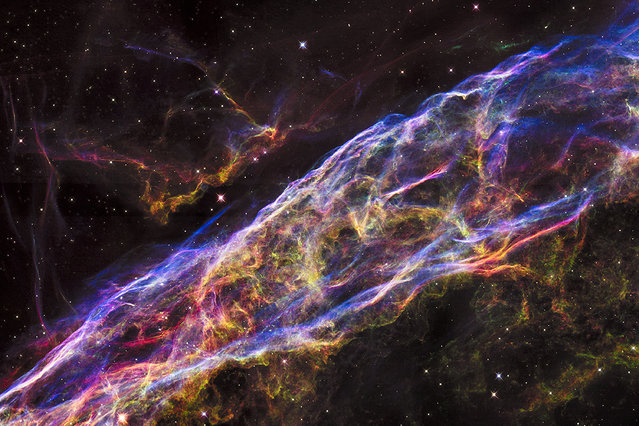
A small section of the expanding remains of the Veil Nebula, a massive star that exploded about 8,000 years ago. The entire nebula is 110 light-years across, covering six full moons on the sky as seen from Earth, and resides about 2,100 light-years away in the constellation Cygnus, the Swan. Image taken by NASA's Hubble Space Telescope. Released September 24, 2015. (Photo by Reuters/NASA/ESA/Hubble Heritage Team)

A small section of the expanding remains of the Veil Nebula, a massive star that exploded about 8,000 years ago. The entire nebula is 110 light-years across, covering six full moons on the sky as seen from Earth, and resides about 2,100 light-years away in the constellation Cygnus, the Swan. Image taken by NASA's Hubble Space Telescope. Released September 24, 2015. (Photo by Reuters/NASA/ESA/Hubble Heritage Team)
Details
10 Dec 2015 08:01:00