Loading...
Done
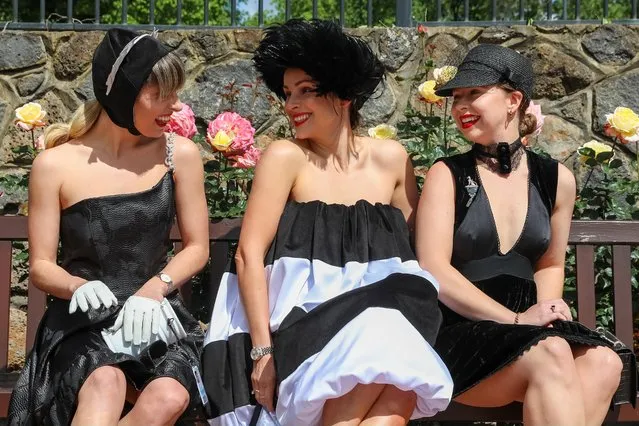
Spectators pose for a photo upon entry for Derby Day at Flemington Racecourse on October 30, 2021 in Melbourne, Australia. Victoria's COVID-19 restrictions have eased to allow spectators to return to Flemington racecourse for the first time since 2019. Up to 5,500 fully vaccinated fans are permitted to attend Derby Day, while the remainder of the Melbourne Cup Carnival Race days will have a spectator limit of 10,000 people. Under COVID-19 restrictions, all patrons to the Melbourne Cup Carnival will be separated into three zones, with allocated seats for the service of food and drink. Spectators will be required to wear masks at Flemington, despite Victoria's outdoor mask mandate easing on Friday. (Photo by Asanka Ratnayake/Getty Images)

Spectators pose for a photo upon entry for Derby Day at Flemington Racecourse on October 30, 2021 in Melbourne, Australia. Victoria's COVID-19 restrictions have eased to allow spectators to return to Flemington racecourse for the first time since 2019. (Photo by Asanka Ratnayake/Getty Images)
Details
18 Jun 2022 04:34:00
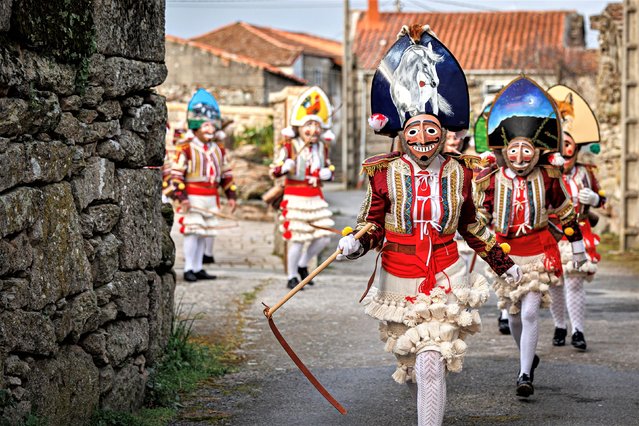
Locals dress up as Mazcaras to celebrate Entroido on February 21, 2023 in A Xironda, Spain. Entroido is an ancient rural carnival celebrated in Galicia during the previous days of Ash Wednesday. Each town has its traditional characters and costumes. In the small village of A Xironda, locals dress up as Mazcaras with their characteristic masks, cowbells at the waist and whips, and then run through the streets. (Photo by Brais Seara Fernandez/Getty Images)

Locals dress up as Mazcaras to celebrate Entroido on February 21, 2023 in A Xironda, Spain. Entroido is an ancient rural carnival celebrated in Galicia during the previous days of Ash Wednesday. Each town has its traditional characters and costumes. In the small village of A Xironda, locals dress up as Mazcaras with their characteristic masks, cowbells at the waist and whips, and then run through the streets. (Photo by Brais Seara Fernandez/Getty Images)
Details
17 May 2024 05:22:00
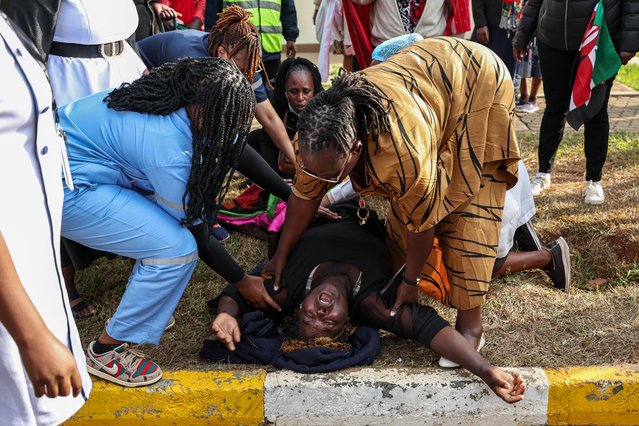
Susan Njeri (C), mother of late face mask vendor Boniface Mwangi Kariuki, breaks down at Kenyatta University Funeral Home in Nairobi, Kenya, 11 July 2025. Kariuki was shot by police on 17 June during protests over the death of a Kenyan blogger in police custody. He died two weeks later while receiving treatment. (Photo by Daniel Irungu/EPA)

Susan Njeri (C), mother of late face mask vendor Boniface Mwangi Kariuki, breaks down at Kenyatta University Funeral Home in Nairobi, Kenya, 11 July 2025. Kariuki was shot by police on 17 June during protests over the death of a Kenyan blogger in police custody. He died two weeks later while receiving treatment. (Photo by Daniel Irungu/EPA)
Details
18 Aug 2025 03:26:00
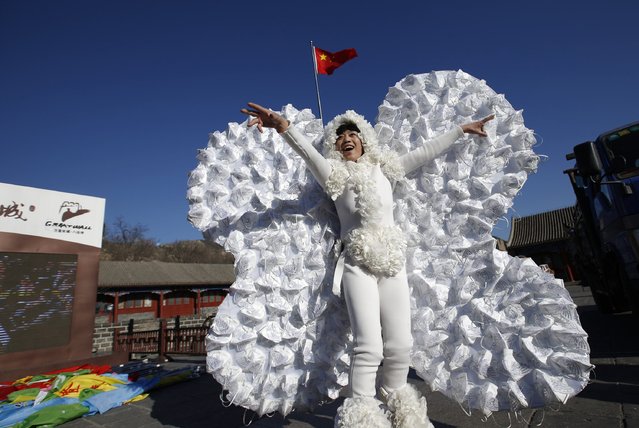
Chinese artist Kong Ning poses in a costume symbolizing a butterfly, which is decorated with 365 masks on its wings to represent the number of days in a year, during her performance art at the Badaling section of the Great Wall on the outskirts of Beijing January 1, 2015. (Photo by Kim Kyung-Hoon/Reuters)

Chinese artist Kong Ning poses in a costume symbolizing a butterfly, which is decorated with 365 masks on its wings to represent the number of days in a year, during her performance art at the Badaling section of the Great Wall on the outskirts of Beijing January 1, 2015. Kong, whose works include themes related to China's air pollution problem, named her new performance art “Hua Die” (transforming into a butterfly) and performed it on the first day of the new year as she hopes that China has clean air for this year. (Photo by Kim Kyung-Hoon/Reuters)
Details
02 Jan 2015 12:24:00
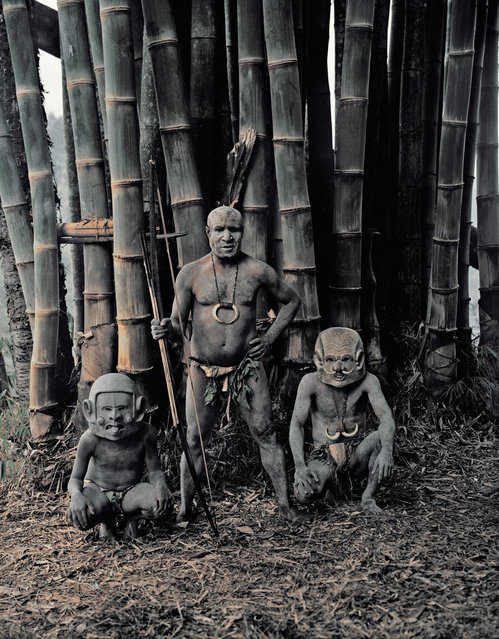
“Asaro from the Eastern Highlands”. The mudmen could not cover their faces with mud because the people of Papua New Guinea thought that the mud from the Asaro river was poisonous. So instead of covering their faces with this alleged poison, they made masks from pebbles that they heated and water from the waterfall, with unusual designs such as long or very short ears either going down to the chin or sticking up at the top, long joined eyebrows attached to the top of the ears, horns and sideways mouths. (Jimmy Nelson)

“Asaro from the Eastern Highlands”. The mudmen could not cover their faces with mud because the people of Papua New Guinea thought that the mud from the Asaro river was poisonous. So instead of covering their faces with this alleged poison, they made masks from pebbles that they heated and water from the waterfall, with unusual designs such as long or very short ears either going down to the chin or sticking up at the top, long joined eyebrows attached to the top of the ears, horns and sideways mouths. (Photo and caption by Jimmy Nelson)
Details
20 Oct 2013 08:54:00
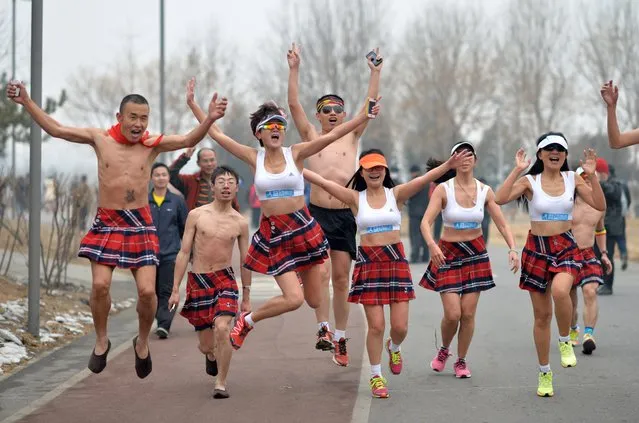
This picture taken on February 23, 2014 shows participants wearing dresses running half-naked in the annual 3.5 km Undie Run held in the Olympic Forest Park smog-covered Beijing. Some 200 participants took part in this event, many of them with gas masks,  as dangerous smog blighted swathes of northern China in recent days. (Photo by AFP Photo/STR)

This picture taken on February 23, 2014 shows participants wearing dresses running half-naked in the annual 3.5 km Undie Run held in the Olympic Forest Park smog-covered Beijing. Some 200 participants took part in this event, many of them with gas masks, as dangerous smog blighted swathes of northern China in recent days. (Photo by AFP Photo/STR)
Details
26 Feb 2014 10:26:00
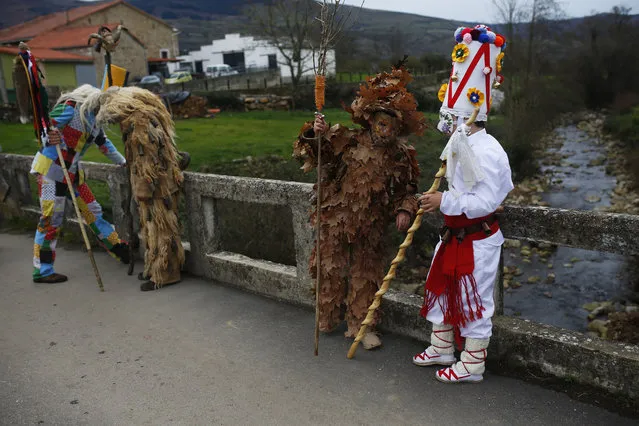
People dressed in costumes have a break while marching during the Vijanera Festival, in the small village of Silio, northern Spain, Sunday, January 3, 2016. The Vijanera masquerade, of pre-Roman origin, is the first carnival of the year in Europe symbolizing the triumph of good over evil and involving the participation of crowds of residents wearing different masks, animal skins and brightly coloured clothing with its own complex function and symbolism and becoming the living example of the survival of archaic cults to nature. (Photo by Francisco Seco/AP Photo)

People dressed in costumes have a break while marching during the Vijanera Festival, in the small village of Silio, northern Spain, Sunday, January 3, 2016. The Vijanera masquerade, of pre-Roman origin, is the first carnival of the year in Europe symbolizing the triumph of good over evil and involving the participation of crowds of residents wearing different masks, animal skins and brightly coloured clothing with its own complex function and symbolism and becoming the living example of the survival of archaic cults to nature. (Photo by Francisco Seco/AP Photo)
Details
04 Jan 2016 10:17:00
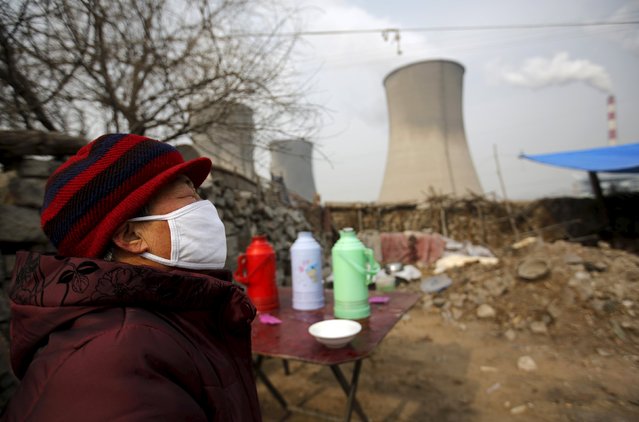
A woman wearing a mask reacts at her garden which  locates next to chimneys of coal-fired power plant in Shijiazhuang, Hebei province, China, January 28, 2015. Beijing introduced tougher regulations this year to combat pollution, keen to overhaul China's unwanted image of smog-choked cities, fouled waterways and heavy-metal tainted soil. (Photo by Kim Kyung-Hoon/Reuters)

A woman wearing a mask reacts at her garden which locates next to chimneys of coal-fired power plant in Shijiazhuang, Hebei province, China, January 28, 2015. Beijing introduced tougher regulations this year to combat pollution, keen to overhaul China's unwanted image of smog-choked cities, fouled waterways and heavy-metal tainted soil. (Photo by Kim Kyung-Hoon/Reuters)
Details
22 May 2015 12:06:00