Loading...
Done
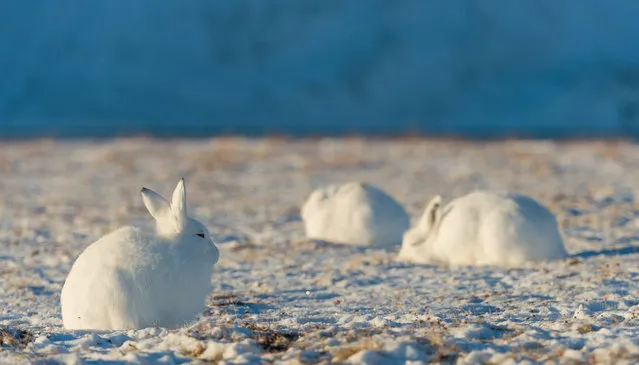
Arctic Hare

The arctic hare, or polar rabbit, is a species of hare which is adapted largely to polar and mountainous habitats. The arctic hare survives with a thick coat of fur and usually digs holes in the ground or under snow to keep warm and sleep. Arctic hares look like rabbits but have shorter ears, are taller when standing, and, unlike rabbits, can thrive in cold climates. They can travel together with many other hares, sometimes huddling with dozens or more, but are usually found alone, taking, in some cases, more than one partner. The arctic hare can run up to 60 kilometres per hour (40 mph). Its predators include the arctic wolf, arctic fox, and ermine.
Details
17 Mar 2014 13:56:00
A group of 1000 customers receive a facial massage at a sports centre in Jinan, Shandong province, China, May 4, 2015. (Photo by Reuters/Stringer)

A group of 1000 customers receive a facial massage at a sports centre in Jinan, Shandong province, China, May 4, 2015. A group of 1000 women were given a 30 minutes facial beauty treatment together on Monday that achieved a Guinness record for the largest group of people having beauty treatment in the same location, according to local media. (Photo by Reuters/Stringer)
Details
06 May 2015 13:17:00
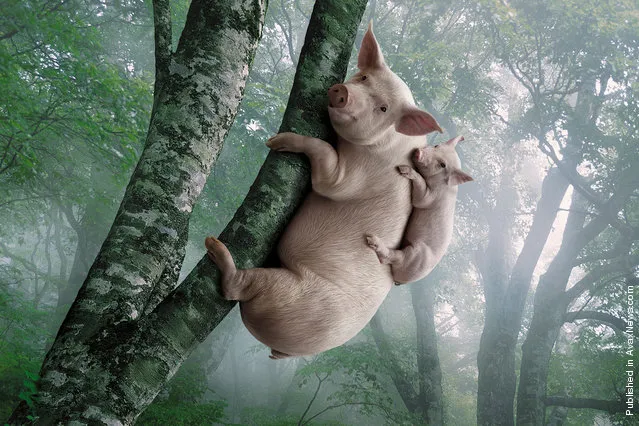
“The Hero”. (Christophe Kiciak)

“I started photography in June 2009. At the time, I was searching for a way to express both the rigorous scientist and the creative artist in me. There are few hobbies that let these two approaches work together, so I really was enthusiastic about it: I am now spending all my free time studying various techniques, contemplating others' fantastic work, and of course, making pictures”. – Christophe Kiciak. Photo: “The Hero”. (Photo by Christophe Kiciak)
Details
11 Jan 2013 15:40:00


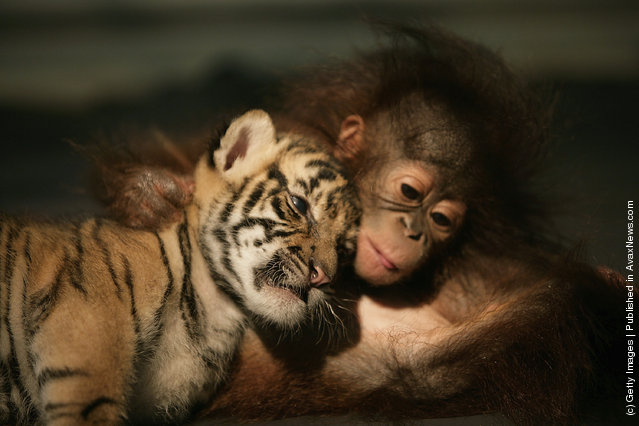
Dema and Manis, the 26-day-old endangered Sumatran Tiger cubs play together at the “Taman Safari Indonesia” Animal Hospital, on February 26, 2007 in Cisarua, Bogor Regency, West Java, Indonesia. The two Sumatran tiger-cubs recently born at the hospital have been rejected by their mother Cicis, while baby Orangutans, Irma and Nia have also been rejected by their mothers. All babies are being looked after by staff at the Animal Hospital. (Photo by: Dimas Ardian/Getty Images)
Details
24 Apr 2011 12:51:00
A woman uses the Aurasma app on an iPad which displays a virtual 3D animation of a Thundercat character which her colleague pretends to fight at the 2012 London Toy Fair

A woman uses the Aurasma app on an iPad which displays a virtual 3D animation of a Thundercat character which her colleague pretends to fight at the 2012 London Toy Fair at Olympia Exhibition Centre on January 24, 2012 in London, England. The annual fair, which is organised by the British Toy and Hobby Association, brings together toy manufacturers with retailers from around the world. (Photo by Oli Scarff/Getty Images)
Details
25 Jan 2012 11:57:00
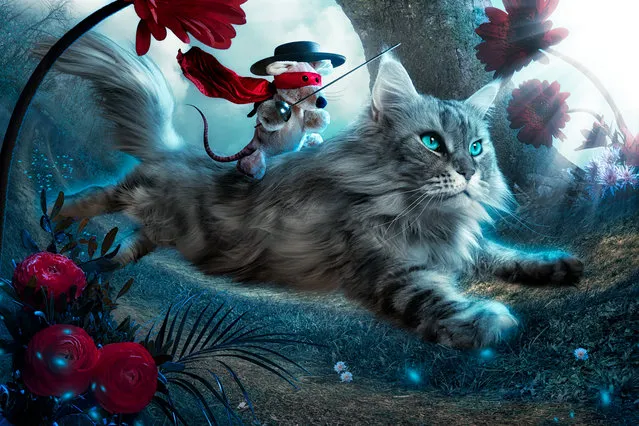
Photographers: LSD AKA marco*paolo

“LSD Photo Advertising Studio is comprised of Marco and Paolo. They are photographers who compose, shoot and post-produce all of their images together. For over ten years, they have been creating images from start to finish. Marco and Paolo have different backgrounds of experience: Paolo started as an illustrator then a photographer, and now he’s at Marco’s side and in his head throughout shooting. In turn, Paolo does all the post-production with Marco in his head and at his side. Marco has always worked as photographer”. – Tim Mitchell
Details
23 Feb 2012 10:07:00
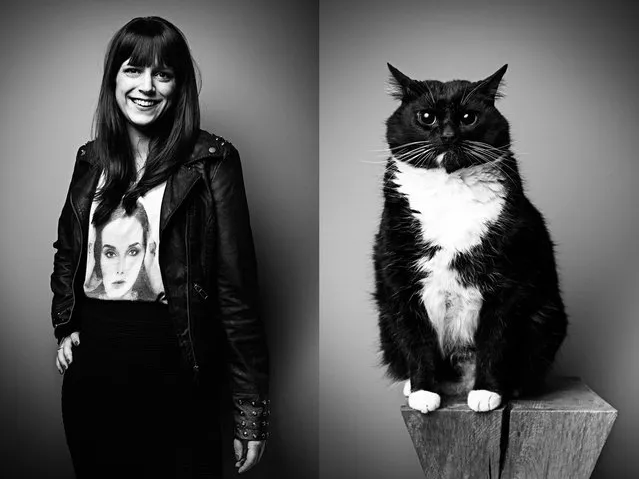
Pet owner Isabel with her blind housecat, “Captain Jack”. (Photo by Tobias Lang)

German photographer Tobias Lang had a brilliant idea, he started photographing his friends and their pets and suddenly folks from all over the world where asking him to capture them too. Check out his Facebook page to see. Tobias is in the process of putting together a coffee table book of his impressive collection. Photo: Pet owner Isabel with her blind housecat, “Captain Jack”. (Photo by Tobias Lang)
Details
30 Jul 2013 08:37:00
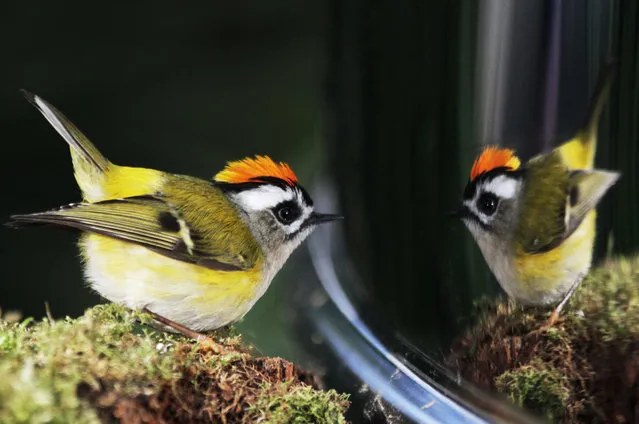
Golden-Crowned Kinglet

Golden-crowned Kinglets boldly bear their flashy lemon-yellow crest and a black eyebrow stripe. Taking a good look at them might be rather challenging, since they spend most of their time in the dense fir foliage or spruce. However, if you’re patient enough to find them, listen for their shrill, thin song. Though these “little Kings” are only a tad bit larger than a hummingbird, they can survive easily extreme cold by huddling close together. They breed in montane west and the far north and only visit North America during winter.
Details
21 Jan 2015 13:20:00