Loading...
Done
The Bund Sightseeing Tunnel In Shanghai

The Bund Sightseeing Tunnel is not an adventure for the light hearted. The trippy visuals and sound effects are rather bizarre and creepy. They look like something out of a nightmare or a psychedelic trip. Maybe the creators of this project did experiment with some illicit drugs to gain inspiration for this project. Moreover, it is more likely than not that some people tried going to this tourist attraction after “preparing” themselves beforehand. This trippy tunnel stretches from Pudong to Puxi in Shanghai, China, and is rated as one of the top five tourist attractions. We recommend visiting this place; just don’t take your kids along for the ride, since it might prove to be too scary for them.
Details
06 Feb 2015 12:27:00
Sweet Couple: Dog And Cat

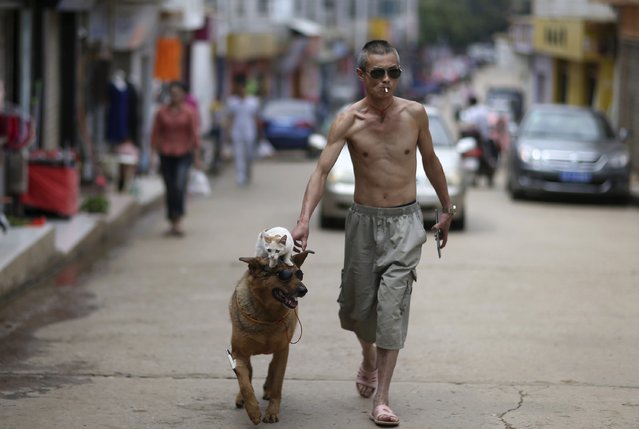
On the streets of Kunming, Yunnan Province, you can find odd couple – a dog and a cat who sits on his four-legged companion. They are Vantsay and Mimi. The owner of animals, a 42-year-old retired policeman Xu Jin is surprised with so strong friendship. “When I got the dog, and I began to take her for a walk, the cat became plaintive, – says the man. – So I bought a leash and began to take her too. Soon, however, the cat began to tire and quickly realized that it is much easier to ride on the back of a dog. ”
Details
18 Mar 2015 11:01:00
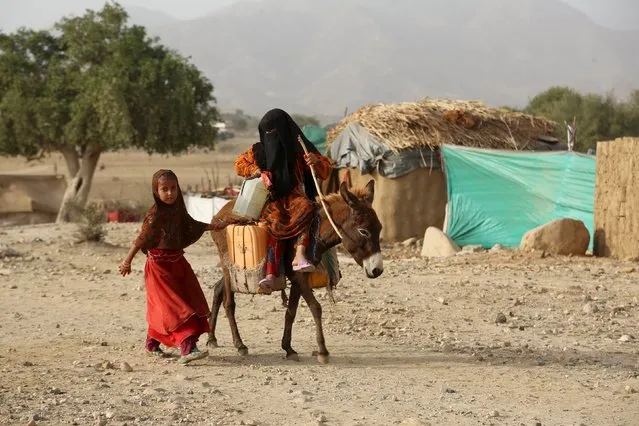
A girl rides a donkey as another walks by at the Shawqaba camp for internally displaced people who were forced to leave their villages by the war in Yemen's northwestern province of Hajjah March 12, 2016. In northwest Yemen, one of the poorest countries in the Middle East, about 400 families uprooted by the war have been stuck in the Shawqaba camp in Hajjah province for the past year. Residents live in poorly built huts that protect them neither from summer heat nor winter cold in a camp that lacks the most basic services. (Photo by Abduljabbar Zeyad/Reuters)

A girl rides a donkey as another walks by at the Shawqaba camp for internally displaced people who were forced to leave their villages by the war in Yemen's northwestern province of Hajjah March 12, 2016. In northwest Yemen, one of the poorest countries in the Middle East, about 400 families uprooted by the war have been stuck in the Shawqaba camp in Hajjah province for the past year. Residents live in poorly built huts that protect them neither from summer heat nor winter cold in a camp that lacks the most basic services. (Photo by Abduljabbar Zeyad/Reuters)
Details
09 Apr 2016 13:16:00
These black-and-white photos are taken from the new book “Armoured Warfare in the First World War 1916 – 1918” by Anthony Tucker-Jones and published by Pen & Sword Military. “Interestingly the British, French and Germans took completely different approaches with varying results”. The British military produced “Little Willie” in Autumn 1915 weighing 18 tonnes, which had a crew of two plus four gunners. “Inspired by a tracked artillery tractor “Little Willie” was referred to as a water tank – hence the name tank – to ensure secrecy”, said Anthony. “This led to the strange looking Mark I with its peculiar rhomboid shape, designed to cross trenches with guns in sponsons on either side. The Germans saw the tank as unchivalrous and were slow to grasp its utility. They favoured the Stormtrooper (specialist soldiers used to infiltrate enemy trenches) and artillery, not the tank”, said Anthony. “However, they didn’t hesitate to make use of captured British tanks. Although the tank helped secure victory and German soldiers dubbed it “Germany’s Downfall” the country was ultimately brought to its knees by the Allies blockade”. Here: British troops hitch a ride on a Mark IV after the massed tank fleet spearheading attack at Cambrai on November 20, 1917. (Photo by Anthony Tucker-Jones/Mediadrumworld.com)

These black-and-white photos are taken from the new book “Armoured Warfare in the First World War 1916 – 1918” by Anthony Tucker-Jones and published by Pen & Sword Military. Here: British troops hitch a ride on a Mark IV after the massed tank fleet spearheading attack at Cambrai on November 20, 1917. (Photo by Anthony Tucker-Jones/Mediadrumworld.com)
Details
23 Feb 2017 00:02:00
The Crazy Swing At Casa Del Arbol in Ecuador

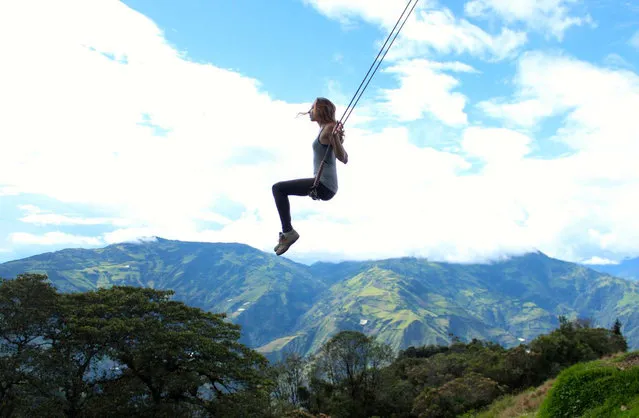
Located at La Casa Del Arbol or “The Treehouse” in Baños, Ecuador, this small house was built for the stunning view on the Tungurahua Volcano it offers. But the real attraction is the swing attached to one of the tree's branches. It is far from your average swing, and it is surnamed the "Swing at the End of the World" for a good reason. Located off a giant cliff at over 2,600 meters above sea level and with absolutely no safety features, this swing promises a serious thrill to whoever is brave enough to ride it.
Details
10 Mar 2014 13:49:00
American Bikers By Sandro Miller

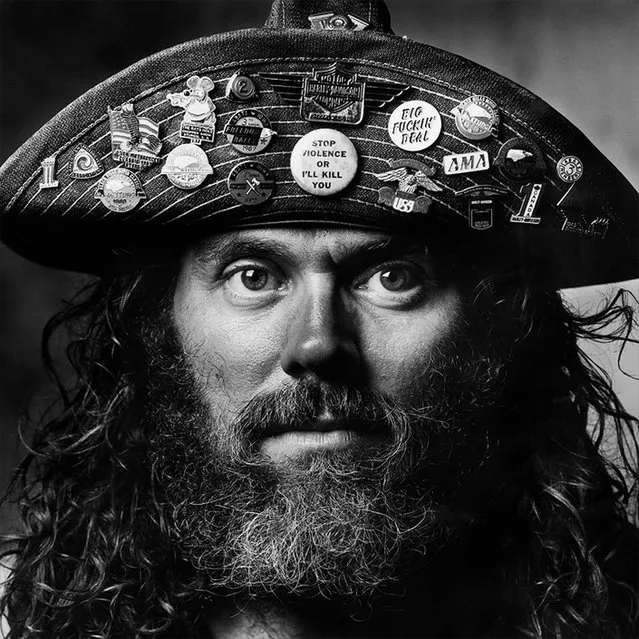
Bikers are the knights of the modern times. They ride their steel horses; they drink and brawl and have their own strict code of honor. Some people view them as land-dwelling pirates; however, they are so much more than that. Photographer Sandro Miller is one of the few people who decided to look deeper than their rugged exterior, realizing that it takes more than a Harley Davidson bike and a leather jacket to make a biker. A true biker cannot be chained to a single place. The spirit of the true biker demands change, it seeks adventure, and it thirsts for freedom! (Photo by Sandro Miller)
Details
26 Nov 2014 14:50:00
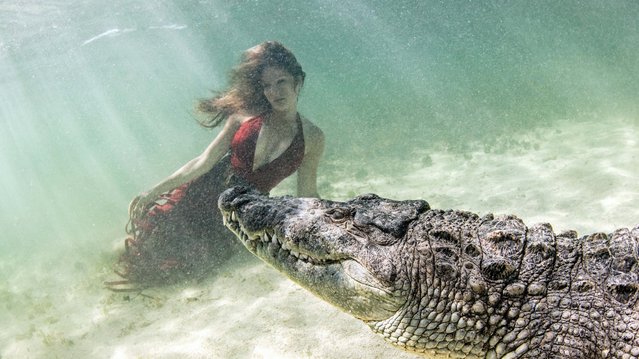
A model poses with a crocodile at Chinchorro Banks, Mexico on June 21, 2018. (Photo by Ken Kiefer/Caters News Agency)

A model poses with a crocodile at Chinchorro Banks, Mexico on June 21, 2018. These crocs had a lot to smile about – sporting huge toothy grins as they posed with stunning models in incredible underwater snaps. The brave models held their breath as they came face to face with the magnificent predators during the daring shoot. Photographer Ken Kiefer took a two hour boat ride to reach the carnivorous crocs at Chinchorro Banks, Mexico, along with his wife and model, Kimber and model, Melodie Trevino. (Photo by Ken Kiefer/Caters News Agency)
Details
25 Jul 2018 08:42:00
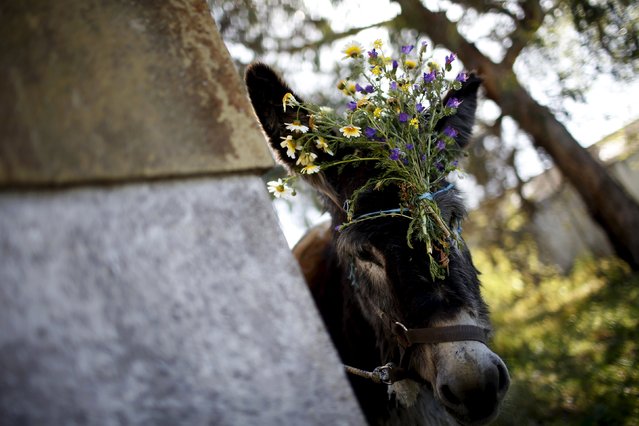
A donkey is seen before the start of the procession of the “Virgem da Atalaia” during Holy Week at Alcochete, near Lisbon April 5, 2015. (Photo by Rafael Marchante/Reuters)

A donkey is seen before the start of the procession of the “Virgem da Atalaia” during Holy Week at Alcochete, near Lisbon April 5, 2015. Women ride donkeys during the “Virgem da Atalaia” procession, that has been held annually for about 400 years. In the past, only single women rode the donkeys to ask for help from the Virgin to find a husband. (Photo by Rafael Marchante/Reuters)
Details
06 Apr 2015 09:43:00