Loading...
Done
Argentine-Spanish model Georgina Rodriguez attends the Kering Foundation's Caring for Women dinner during the Spring-Summer 2026 New York Fashion Week in New York City, U.S., September 11, 2025. (Photo by Angelina Katsanis/Reuters)

Argentine-Spanish model Georgina Rodriguez attends the Kering Foundation's Caring for Women dinner during the Spring-Summer 2026 New York Fashion Week in New York City, U.S., September 11, 2025. (Photo by Angelina Katsanis/Reuters)
Details
28 Sep 2025 03:34:00
Canadian fashion model Winnie Harlow  at Atlantis The Royal's Dolce&Gabbana x Ounass takeover at Cloud 22 on October 05, 2025 in Dubai, United Arab Emirates. (Photo by Cedric Ribeiro/Getty Images for Atlantis The Royal/ Dolce&Gabbana x Ounass)

Canadian fashion model Winnie Harlow at Atlantis The Royal's Dolce&Gabbana x Ounass takeover at Cloud 22 on October 05, 2025 in Dubai, United Arab Emirates. (Photo by Cedric Ribeiro/Getty Images for Atlantis The Royal/ Dolce&Gabbana x Ounass)
Details
23 Oct 2025 04:05:00
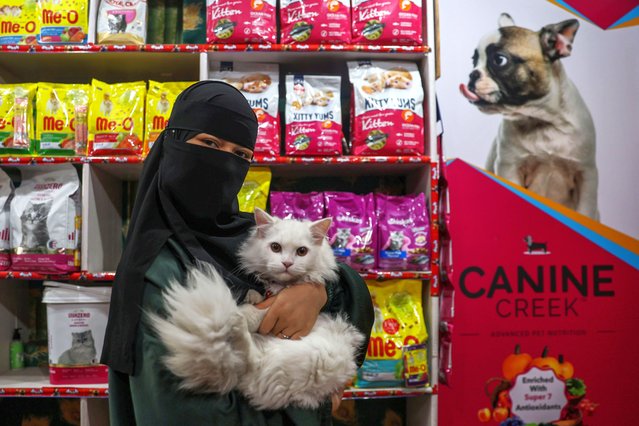
A girl holds her newly purchased pet cat while posing for a photograph at a pet shop in Srinagar, the summer capital of Indian Kashmir, 10 November 2025. Kashmir is seeing more pet owners, especially of Persian cats. Over 6,000 cat bite cases were reported last year, accounting for nearly half of the rabies control budget. Experts urge vaccination as demand for pedigree pets continues to rise. (Photo by Farooq Khan/EPA)

A girl holds her newly purchased pet cat while posing for a photograph at a pet shop in Srinagar, the summer capital of Indian Kashmir, 10 November 2025. Kashmir is seeing more pet owners, especially of Persian cats. Over 6,000 cat bite cases were reported last year, accounting for nearly half of the rabies control budget. Experts urge vaccination as demand for pedigree pets continues to rise. (Photo by Farooq Khan/EPA)
Details
16 Nov 2025 04:16:00
A recent undated handout picture released by the Guinness World Records on September 9, 2014, shows 49-year-old trick golf artist Karsten Maas, from Denmark, who secured his place in the 2015 Guinness World Records book for creating the world’s longest usable golf club. It measures 4.37, (14ft 5in) in length and has been used to drive a ball a distance of 165.46m (542ft 10.16in). (Photo by Ranald Mackechnie/AFP Photo/Guinness World Records)

A recent undated handout picture released by the Guinness World Records on September 9, 2014, shows 49-year-old trick golf artist Karsten Maas, from Denmark, who secured his place in the 2015 Guinness World Records book for creating the world’s longest usable golf club. It measures 4.37, (14ft 5in) in length and has been used to drive a ball a distance of 165.46m (542ft 10.16in). The 60th anniversary edition of the Guinness World Records book will reflect on six decades of record-breaking, whilst also featuring the latest additions to the oddball hall of fame. (Photo by Ranald Mackechnie/AFP Photo/Guinness World Records)
Details
14 Sep 2014 10:21:00
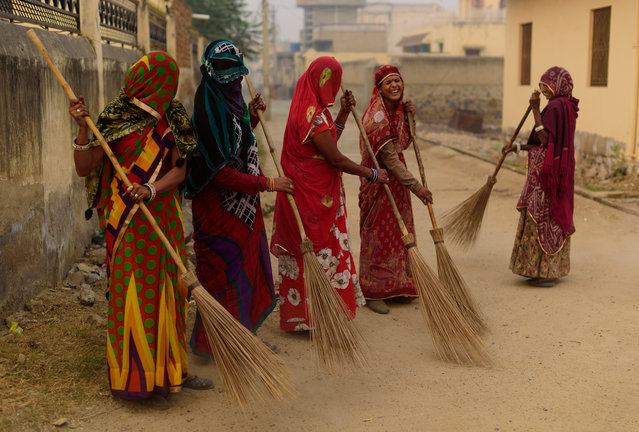
“Early morning in Mandawa, rural Rajasthan: it was the morning of Diwali and the streets were swept by smiling women in brightly coloured sarees as I took an early morning cup of chai. Celebrations started later, when darkness fell”. (Photo by Hamish Scott-Brown/Guardian Witness)

“Early morning in Mandawa, rural Rajasthan: it was the morning of Diwali and the streets were swept by smiling women in brightly coloured sarees as I took an early morning cup of chai. Celebrations started later, when darkness fell”. (Photo by Hamish Scott-Brown/Guardian Witness)
Details
20 Dec 2016 12:57:00
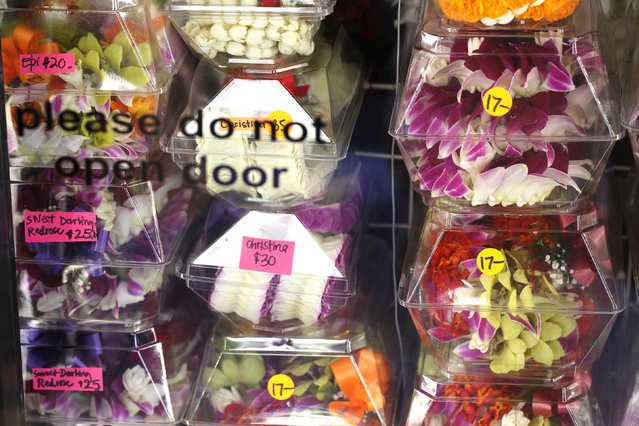
A selection of hand-made leis, traditional Hawaiian necklaces made of flowers and worn mostly on special occasions, fill a cooler at Lin's Lei Shop in the Chinatown district of Honolulu, Hawaii December 22, 2015. Hawaii, whose economy depends heavily on tourism, sees a brief lull in visitors each year in January and February. But in addition to the usual tourist destinations, the state shows a unique overlay of mainland U.S. culture atop tropical beauty year-round. (Photo by Jonathan Ernst/Reuters)

A selection of hand-made leis, traditional Hawaiian necklaces made of flowers and worn mostly on special occasions, fill a cooler at Lin's Lei Shop in the Chinatown district of Honolulu, Hawaii December 22, 2015. Hawaii, whose economy depends heavily on tourism, sees a brief lull in visitors each year in January and February. But in addition to the usual tourist destinations, the state shows a unique overlay of mainland U.S. culture atop tropical beauty year-round. (Photo by Jonathan Ernst/Reuters)
Details
16 Jan 2016 08:00:00
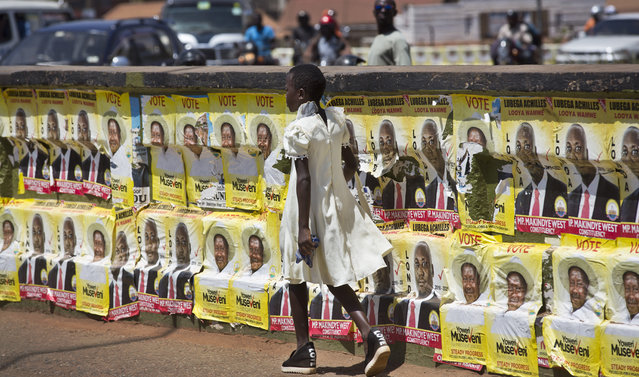
A girl walks past campaign posters for long-time President Yoweri Museveni, as well as for local members of Parliament, on a street in Kampala, Uganda Wednesday, February 17, 2016. On the eve of presidential elections, a heavy police and military presence could be seen in the capital Kampala. (Photo by Ben Curtis/AP Photo)

A girl walks past campaign posters for long-time President Yoweri Museveni, as well as for local members of Parliament, on a street in Kampala, Uganda Wednesday, February 17, 2016. On the eve of presidential elections, a heavy police and military presence could be seen in the capital Kampala. (Photo by Ben Curtis/AP Photo)
Details
18 Feb 2016 13:39:00
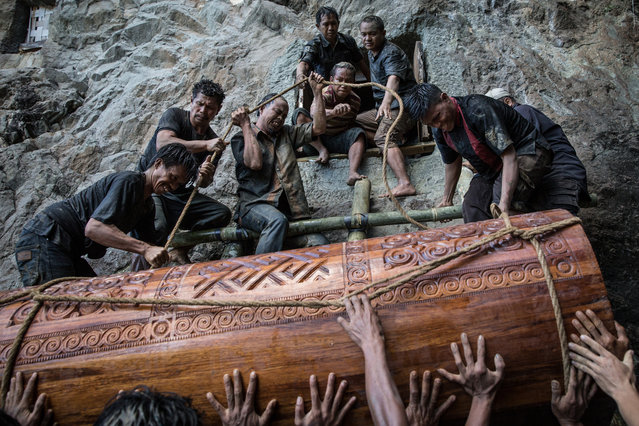
It is said that Torajans are people who “live to die”. For this Indonesian ethnic group, funerals are such extravagant events that they sometimes attract tourists. Families can postpone burials years (and the deceased are considered sick and hosted at home until the funeral) until the family can raise enough money and gather as many relatives as possible. And then it’s a jubilant multiday social event with a parade, dances and animal sacrifices. Agung Parameswara photographed these funerary practices when he traveled to South Sulawesi province, where the Torajans live. But often, their funeral isn’t the last time the dead are seen. In August, crypts are opened, coffins are slid back out and bodies delicately unsheathed. This tender ritual is known as Ma’Nene, which is customarily performed every few years. (Photo by Agung Parameswara/The Washington Post)

It is said that Torajans are people who “live to die”. For this Indonesian ethnic group, funerals are such extravagant events that they sometimes attract tourists. Families can postpone burials years (and the deceased are considered sick and hosted at home until the funeral) until the family can raise enough money and gather as many relatives as possible. And then it’s a jubilant multiday social event with a parade, dances and animal sacrifices. Agung Parameswara photographed these funerary practices when he traveled to South Sulawesi province, where the Torajans live. (Photo by Agung Parameswara/The Washington Post)
Details
06 Oct 2016 09:15:00