Loading...
Done
Residents of the Huachipa populous district, east of Lima, are helped on March 17, 2017, by police and firemen rescue teams to cross over flash floods hitting their neighbourhood and isolating its residents. The climatic phenomenon El Niño is causing muddy rivers overflows on the entire Peruvian coast, isolating hundreds of people, mostly residents of Lima's industrial belt neighbourhoods. (Photo by Cris Bouroncle/AFP Photo)

Residents of the Huachipa populous district, east of Lima, are helped on March 17, 2017, by police and firemen rescue teams to cross over flash floods hitting their neighbourhood and isolating its residents. The climatic phenomenon El Niño is causing muddy rivers overflows on the entire Peruvian coast, isolating hundreds of people, mostly residents of Lima's industrial belt neighbourhoods. (Photo by Cris Bouroncle/AFP Photo)
Details
22 Mar 2017 10:10:00
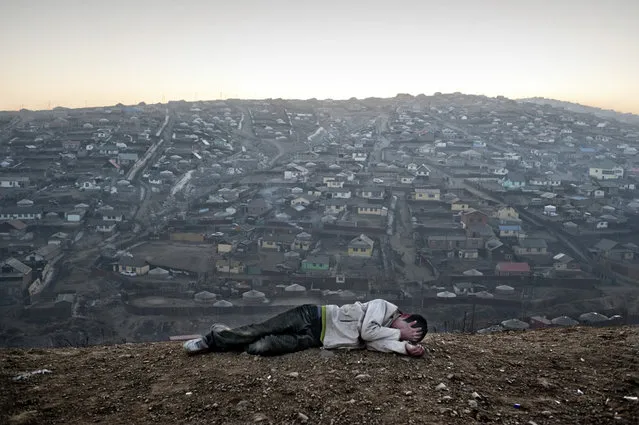
Asia, Mongolia, March 27, 2011. A view of Ulaan Baator over the shoulder of a slumbering drunk. Alcoholism is a huge problem in the city, home to almost half of Mongolia's people. The capital's population has doubled in the past two years, expanding outward in a haphazard sprawl, and many inhabitants live in slums known as the “Gher District”. (Photo by Alessandro Grassani)

“Environmental Migrants: The Last Illusion” by photographer Alessandro Grassani, documents the life of people in Kenya, Mongolia and Bangladesh who migrate to escape environmental stresses to the city of their own countries in hopes for a better life. Here: Asia, Mongolia, March 27, 2011. A view of Ulaan Baator over the shoulder of a slumbering drunk. Alcoholism is a huge problem in the city, home to almost half of Mongolia's people. The capital's population has doubled in the past two years. High levels of unemployment and poverty await herders who abandon rural areas and arrive in the city, illiterate and untrained in any skills necessary for urban jobs. (Photo by Alessandro Grassani)
Details
21 Jul 2015 10:10:00
A driverless vehicle runs at Vanke's Building Research Centre testing area in Dongguan, south China's Guangdong province November 2, 2015. The country's largest property developer, China Vanke, is investing in its own robots to do certain jobs in the face of a labor shortage in the world's most populated country. This driverless car is among the robots that Vanke is aiming to bring in. (Photo by Tyrone Siu/Reuters)

A driverless vehicle runs at Vanke's Building Research Centre testing area in Dongguan, south China's Guangdong province November 2, 2015. The country's largest property developer, China Vanke, is investing in its own robots to do certain jobs in the face of a labor shortage in the world's most populated country. This driverless car is among the robots that Vanke is aiming to bring in. (Photo by Tyrone Siu/Reuters)
Details
10 Nov 2015 08:01:00
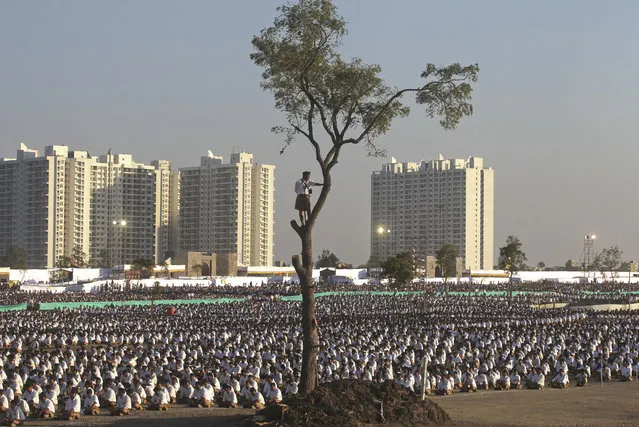
A member of the Hindu nationalist Rashtriya Swayamsevak Sangh (RSS) or the National Volunteers Association keeps watch from the top of a tree as others sit on the ground during their daylong camp on the outskirts of Pune, Maharashtra state, India, Sunday, January 3, 2016. Hindus, make up more than 80 percent of India's population of 1.25 billion. (Photo by Rafiq Maqbool/AP Photo)

A member of the Hindu nationalist Rashtriya Swayamsevak Sangh (RSS) or the National Volunteers Association keeps watch from the top of a tree as others sit on the ground during their daylong camp on the outskirts of Pune, Maharashtra state, India, Sunday, January 3, 2016. Hindus, make up more than 80 percent of India's population of 1.25 billion. (Photo by Rafiq Maqbool/AP Photo)
Details
05 Jan 2016 08:02:00
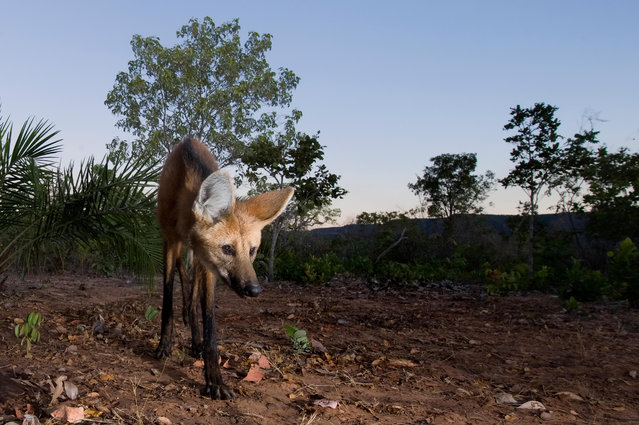
The maned wolf is among the large mammals in the Brazilian Cerrado that are threatened by the increasing conversion of grasslands into farmland for grazing and growing crops. (Photo by Ben Cranke/Nature Picture Library/Alamy Stock Photo)

Global wildlife populations will decline by 67% by 2020 unless urgent action is taken to reduce human impact on species and ecosystems, warns the biennial Living Planet Index report from WWF (World Wide Fund for Nature) and ZSL (Zoological Society of London). From elephants to eels, here are some of the wildlife populations most affected by human activity. Here: The maned wolf is among the large mammals in the Brazilian Cerrado that are threatened by the increasing conversion of grasslands into farmland for grazing and growing crops. (Photo by Ben Cranke/Nature Picture Library/Alamy Stock Photo)
Details
28 Oct 2016 10:47:00
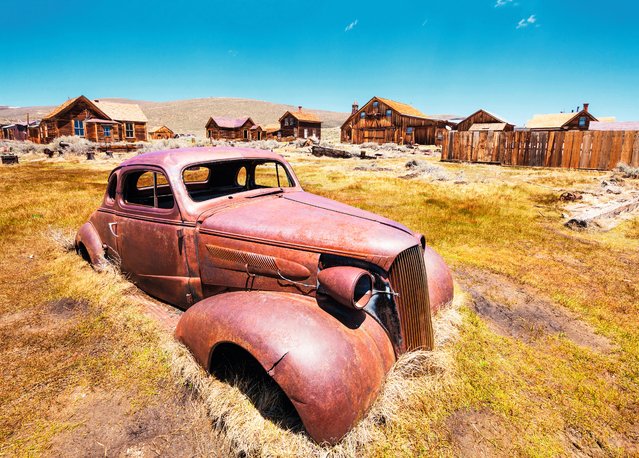
Bodie, Mono County, California. Gold was discovered at Bodie in 1859 (just after the initial California gold rush) and it went from mining camp to boomtown. Its decline began in 1880, when word spread of new boomtowns elsewhere. The Standard Consolidated Mine closed in 1913, and four years later the Bodie Railway was abandoned. By 1940 the population was down to 40. Today, Bodie is maintained in a state of arrested decay as a visitor attraction. (Photo by Alamy Stock Photo)

Kieron Connolly’s new book of photographs of more than 100 once-busy and often elegant buildings gives an idea of how the world might look if humankind disappeared. Here: Bodie, Mono County, California. Gold was discovered at Bodie in 1859 (just after the initial California gold rush) and it went from mining camp to boomtown. Its decline began in 1880, when word spread of new boomtowns elsewhere. The Standard Consolidated Mine closed in 1913, and four years later the Bodie Railway was abandoned. By 1940 the population was down to 40. Today, Bodie is maintained in a state of arrested decay as a visitor attraction. (Photo by Alamy Stock Photo)
Details
07 Sep 2016 09:50:00
Carolaine Reis and her son Miguel Alves, residents of the Aglomerado da Serra favela, wear a protective mask against the spread of the new Coronavirus (COVID-19) made by the seamstresses of the Remexe Favelinha studio, in the Aglomerado da Serra favela, on April 13, 2020 in Belo Horizonte, Brazil. Facial masks follow the protocol and guidelines defined by the Ministry of Health. Around 6,000 masks have already been produced. The masks are being distributed to a part of the population and sold throughout the country, in the amount of 5 reais per unit. (Photo by Pedro Vilela/Getty Images)

Carolaine Reis and her son Miguel Alves, residents of the Aglomerado da Serra favela, wear a protective mask against the spread of the new Coronavirus (COVID-19) made by the seamstresses of the Remexe Favelinha studio, in the Aglomerado da Serra favela, on April 13, 2020 in Belo Horizonte, Brazil. Facial masks follow the protocol and guidelines defined by the Ministry of Health. Around 6,000 masks have already been produced. The masks are being distributed to a part of the population and sold throughout the country, in the amount of 5 reais per unit. (Photo by Pedro Vilela/Getty Images)
Details
16 Apr 2020 00:03:00
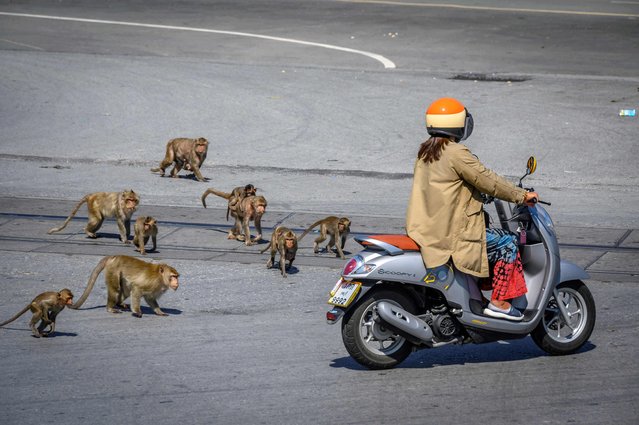
This picture taken on June 20, 2020 shows longtail macaques chasing a woman on a scooter in the town of Lopburi, some 155km north of Bangkok. Residents barricaded indoors, rival gang fights and no-go zones for humans. Welcome to Lopburi, an ancient Thai city overrun by monkeys super-charged on junk food, whose population is growing out of control. (Photo by Mladen Antonov/AFP Photo)

This picture taken on June 20, 2020 shows longtail macaques chasing a woman on a scooter in the town of Lopburi, some 155km north of Bangkok. Residents barricaded indoors, rival gang fights and no-go zones for humans. Welcome to Lopburi, an ancient Thai city overrun by monkeys super-charged on junk food, whose population is growing out of control. (Photo by Mladen Antonov/AFP Photo)
Details
12 Jul 2020 00:05:00