Loading...
Done
Plitvice Lakes National Park

Plitvice Lakes National Park is the oldest national park in Southeast Europe and the largest national park in Croatia. The national park was founded in 1949 and is situated in the mountainous karst area of central Croatia, at the border to Bosnia and Herzegovina. The important north-south road connection, which passes through the national park area, connects the Croatian inland with the Mediterranean coastal region.
Details
12 Aug 2012 16:42:00
Winter Brings Heavy Snowfalls To Tyrol And Bavaria

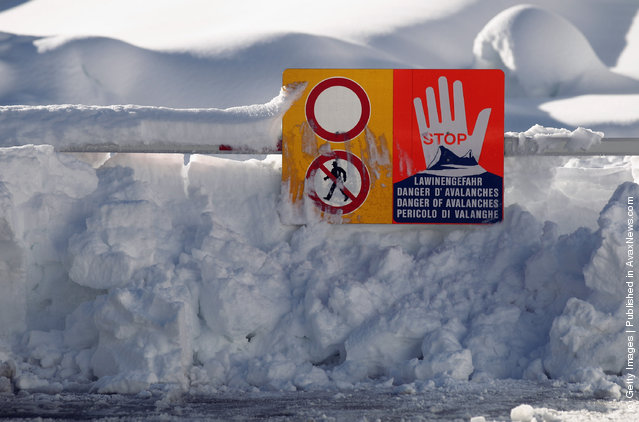
A sign reading “STOP Danger of Avalanches” blocks a local road on January 11, 2012 near Ischgl, Austria. Over the last few days heavy snowfalls have caused chaos in parts of Austria and Switzerland by blocking rail and road connections, stranding vacationers at mountain ski resorts and creating the risk of avalanches throughout the region. (Photo by Johannes Simon/Getty Images)
Details
12 Jan 2012 12:42:00
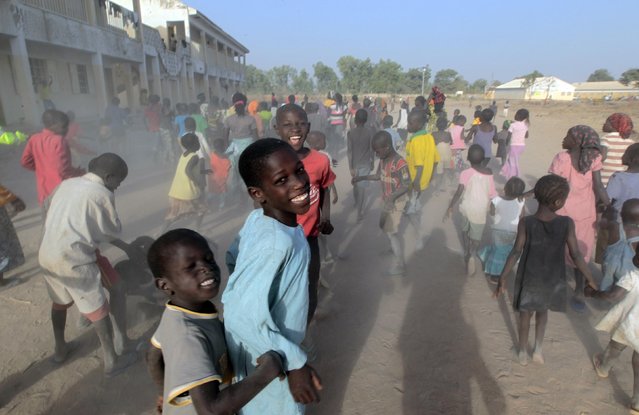
Children displaced as a result of Boko Haram attacks in the northeast region of Nigeria, run at a camp for internally displaced persons (IDP) in Yola, Adamawa State January 13, 2015. Boko Haram says it is building an Islamic state that will revive the glory days of northern Nigeria's medieval Muslim empires, but for those in its territory life is a litany of killings, kidnappings, hunger and economic collapse. (Photo by Afolabi Sotunde/Reuters)

Children displaced as a result of Boko Haram attacks in the northeast region of Nigeria, run at a camp for internally displaced persons (IDP) in Yola, Adamawa State January 13, 2015. Boko Haram says it is building an Islamic state that will revive the glory days of northern Nigeria's medieval Muslim empires, but for those in its territory life is a litany of killings, kidnappings, hunger and economic collapse. (Photo by Afolabi Sotunde/Reuters)
Details
21 Jan 2015 13:12:00
In this Saturday, Oct. 24, 2015 photo, a Lebanese Shiite supporter of Hezbollah with a tattoo on his head that reads in Arabic, “Oh Ali”, beats his chest during the holy day of Ashoura, in the southern suburb of Beirut, Lebanon. A growing number of Shiite Muslims in Lebanon are getting tattoos with religious and other Shiite symbols since the civil war in neighboring Syria broke out five years ago, fanning sectarian flames across the region. (Photo by Hassan Ammar/AP Photo)

In this Saturday, Oct. 24, 2015 photo, a Lebanese Shiite supporter of Hezbollah with a tattoo on his head that reads in Arabic, “Oh Ali”, beats his chest during the holy day of Ashoura, in the southern suburb of Beirut, Lebanon. A growing number of Shiite Muslims in Lebanon are getting tattoos with religious and other Shiite symbols since the civil war in neighboring Syria broke out five years ago, fanning sectarian flames across the region. (Photo by Hassan Ammar/AP Photo)
Details
30 Jul 2016 11:02:00
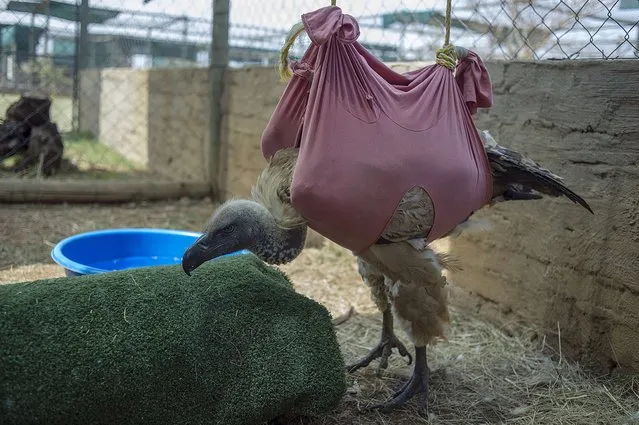
An injured vulture is treated at the VulPro Vulture Rehabilitation Centre in Hartebeepoortdam in the Magalisburg region on September 15, 2015. Confined to southern Africa, just under 4,000 breeding pairs of Cape Vultures remain in the wild, mostly in South Africa, Lesotho and Botswana. Unless conservation efforts are successful, Africa's largest vulture species may be facing eventual extinction. (Photo by Mujahid Safodien/AFP Photo)

An injured vulture is treated at the VulPro Vulture Rehabilitation Centre in Hartebeepoortdam in the Magalisburg region on September 15, 2015. Confined to southern Africa, just under 4,000 breeding pairs of Cape Vultures remain in the wild, mostly in South Africa, Lesotho and Botswana. Unless conservation efforts are successful, Africa's largest vulture species may be facing eventual extinction. (Photo by Mujahid Safodien/AFP Photo)
Details
19 Sep 2015 12:27:00
Young revelers take part in a parade called "La Calabiuza" on November 1, 2015, on the eve of the Day of the Dead in Tonacatepeque, 20 kms (13 miles) north of San Salvador. During the celebration, the residents of Tonacatepeque, originally an indigenous community, recall the characters from the mythology of Cuscatlan – pre-Columbian west and central regions of El Salvador – and their dead relatives. (Photo by Marvin Recinos/AFP Photo)

Young revelers take part in a parade called "La Calabiuza" on November 1, 2015, on the eve of the Day of the Dead in Tonacatepeque, 20 kms (13 miles) north of San Salvador. During the celebration, the residents of Tonacatepeque, originally an indigenous community, recall the characters from the mythology of Cuscatlan – pre-Columbian west and central regions of El Salvador – and their dead relatives. (Photo by Marvin Recinos/AFP Photo)
Details
04 Nov 2015 11:50:00
In this Sunday, November 16, 2014 photo, Nepalese women pick tea at a tea garden of Kanyam in Illam district, around 500 kilometers (310 miles) from Katmandu, Nepal. Illam is a hilly district of tea gardens and estates in eastern Nepal's Himalayan region with one of its largest and most productive tea estate being Kanyam estates. (Photo by Niranjan Shrestha/AP Photo)

In this Sunday, November 16, 2014 photo, Nepalese women pick tea at a tea garden of Kanyam in Illam district, around 500 kilometers (310 miles) from Katmandu, Nepal. Illam is a hilly district of tea gardens and estates in eastern Nepal's Himalayan region with one of its largest and most productive tea estate being Kanyam estates. The district produces orthodox tea, hand-processed or machine rolled, which is generally exported to international markets, specially Europe and the United States. Most of the tea pickers here are paid 186 Nepalese Rupees (US $ 2) for 8 hours of work everyday. (Photo by Niranjan Shrestha/AP Photo)
Details
19 Nov 2014 14:28:00
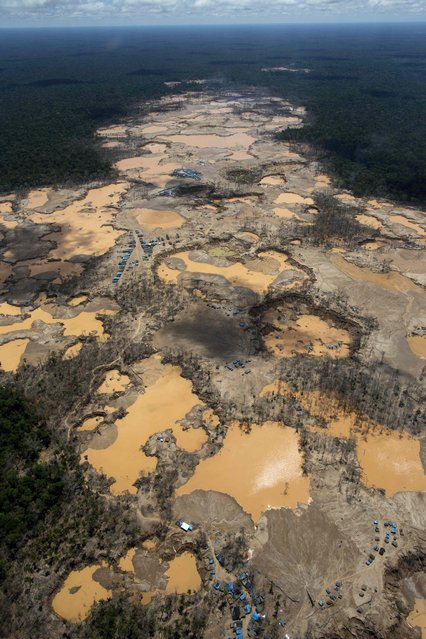
This November 11, 2014 aerial photo, shows a deforested area dotted with blue tarps, marking the area where miners reside, and craters filled with water, caused by illegal gold mining activities, in La Pampa, in Peru's Madre de Dios region. (Photo by Rodrigo Abd/AP Photo)

This November 11, 2014 aerial photo, shows a deforested area dotted with blue tarps, marking the area where miners reside, and craters filled with water, caused by illegal gold mining activities, in La Pampa, in Peru's Madre de Dios region. Less than a month before Peru plays host to global climate talks, the government sent a battalion of police into southeastern jungles to dismantle illegal gold-mining mining camps. Peru's anti-illegal mining czar, retired army Gen. Augusto Soto, marched the men to the wasteland known as La Pampa, where 50,000 hectares of rainforest have been obliterated in the past six years. (Photo by Rodrigo Abd/AP Photo)
Details
21 Nov 2014 12:35:00