Loading...
Done
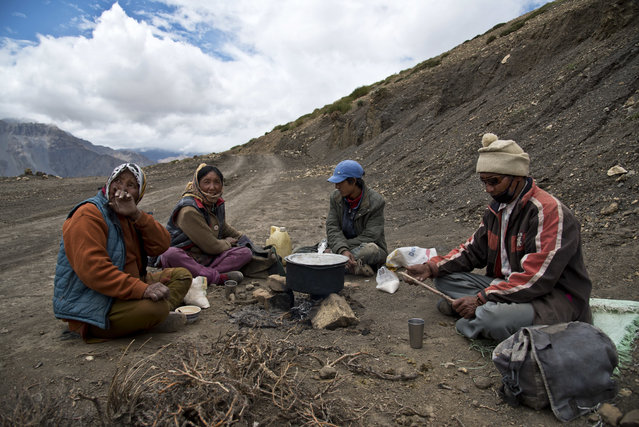
In this August 17, 2016, photo, from left to right, Chhering Chodom, 60, Tashi Yangzom, 50, Lobsang Chhering, 27, and Dorje Tandup, 58, drink milk tea on the side of the road. For centuries, the sleepy valley nestled in the Indian Himalayas remained a hidden Buddhist enclave forbidden to outsiders. Enduring the harsh year-round conditions of the high mountain desert, the people of Spiti Valley lived by a simple communal code – share the Earth's bounty, be hospitable to neighbors, and eschew greed and temptation at all turns. That's all starting to change, for better or worse. Since India began allowing its own citizens as well as outsiders to visit the valley in the early 1990s, tourism and trade have boomed. And the marks of modernization, such as solar panels, asphalt roads and concrete buildings, have begun to appear around some of the villages that dot the remote landscape at altitudes above 4,000 meters (13,000 feet). (Photo by Thomas Cytrynowicz/AP Photo)

In this August 17, 2016, photo, from left to right, Chhering Chodom, 60, Tashi Yangzom, 50, Lobsang Chhering, 27, and Dorje Tandup, 58, drink milk tea on the side of the road. For centuries, the sleepy valley nestled in the Indian Himalayas remained a hidden Buddhist enclave forbidden to outsiders. Enduring the harsh year-round conditions of the high mountain desert, the people of Spiti Valley lived by a simple communal code – share the Earth's bounty, be hospitable to neighbors, and eschew greed and temptation at all turns. That's all starting to change, for better or worse. (Photo by Thomas Cytrynowicz/AP Photo)
Details
15 Sep 2016 09:22:00
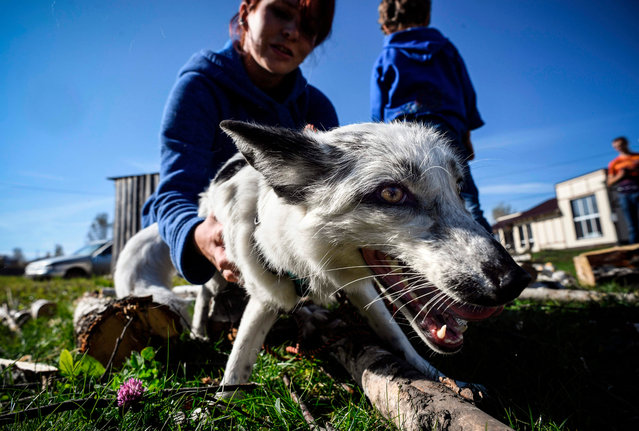
Tatyana Abramova, 33, plays with her home fox Plombir at her countryside house outside Siberian city of Novosibirsk on September 12, 2020. The official start of the Soviet experiment to better understand the domestication of animals by humans began in 1959, and was initiated by geneticists Dmitri Beliaiev and Lioudmila Trout on a farm in Akademgorodok, the scientific center of excellence in Siberia. Their primary objective was to domesticate foxes, to understand how the ancestor of wolves, another canine, evolved into a loyal and loving dog. And understand what this domestication tells us about the genetic evolution of species. (Photo by Alexander Nemenov/AFP Photo)

Tatyana Abramova, 33, plays with her home fox Plombir at her countryside house outside Siberian city of Novosibirsk on September 12, 2020. The official start of the Soviet experiment to better understand the domestication of animals by humans began in 1959, and was initiated by geneticists Dmitri Beliaiev and Lioudmila Trout on a farm in Akademgorodok, the scientific center of excellence in Siberia. Their primary objective was to domesticate foxes, to understand how the ancestor of wolves, another canine, evolved into a loyal and loving dog. And understand what this domestication tells us about the genetic evolution of species. (Photo by Alexander Nemenov/AFP Photo)
Details
25 Oct 2020 00:05:00
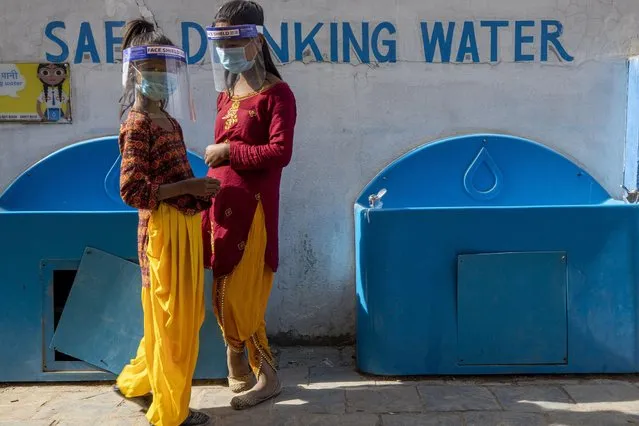
Students of Yuba Pratibha School, wearing a face shield and masks at school during a coronavirus pandemic in Kathmandu, Nepal, 26 November 2020. The head Teacher of Yuba Pratibha School, Yanga Raj Dahal, started to conduct classes for students, who can’t afford and attend online classes, with strict sanitary regime, providing also free face masks and shields for students. However majority of schools have been conducting online classes in Nepal from 19 March 2020 as part of precautionary measures against the spread of the coronavirus Covid-19. (Photo by Narendra Shrestha/EPA/EFE)

Students of Yuba Pratibha School, wearing a face shield and masks at school during a coronavirus pandemic in Kathmandu, Nepal, 26 November 2020. The head Teacher of Yuba Pratibha School, Yanga Raj Dahal, started to conduct classes for students, who can’t afford and attend online classes, with strict sanitary regime, providing also free face masks and shields for students. However majority of schools have been conducting online classes in Nepal from 19 March 2020 as part of precautionary measures against the spread of the coronavirus Covid-19. (Photo by Narendra Shrestha/EPA/EFE)
Details
16 Dec 2020 00:05:00
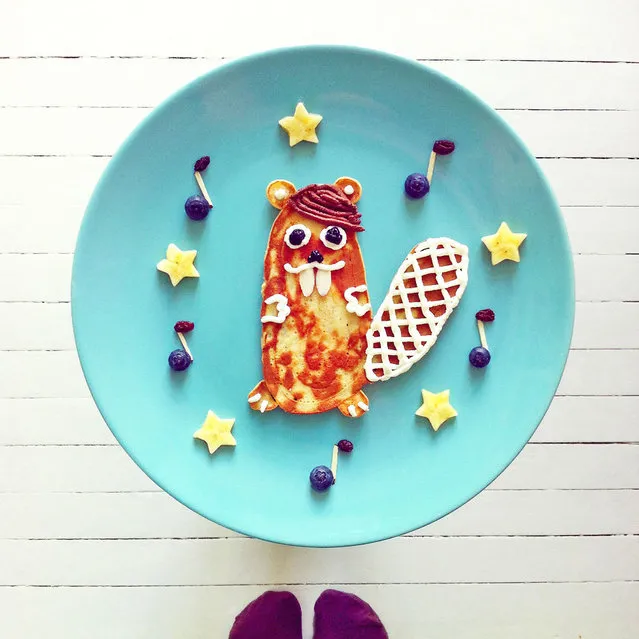
Art Toast Project By Ida Skivenes

Many parents know the stubborn reluctance of children to start breakfast, and adults themselves sometimes miss the morning meal. But the situation would look very different if they had the opportunity every day to enjoy the mouth-watering pictures on the plates, which are of conventional products creates by Ida Skivenes.


See Also: Food Artist Hong Yi
Details
29 Apr 2013 10:02:00
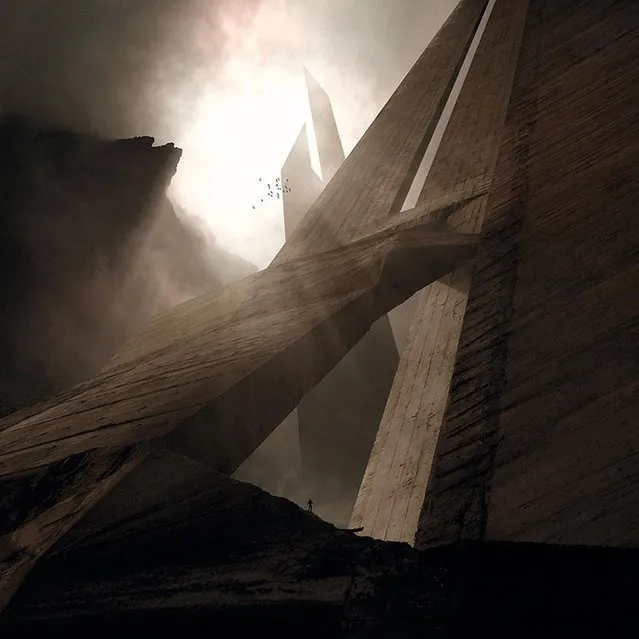
Parallel Worlds By Karezoid Michal Karcz

Karezoid Michal Karcz is a photographer from Warsaw, Poland. He first started with painting, which helped him to develop a vision that was hard to create with other visual techniques. Then in early 90s discovered photography. His early fascinations of painting and photography have been combined into one piece, with the use of digital tools. Digital photography gave him the opportunity to generate unique realities that were impossible to be created with an ordinary dark room techniques.
Details
20 Jul 2013 18:06:00
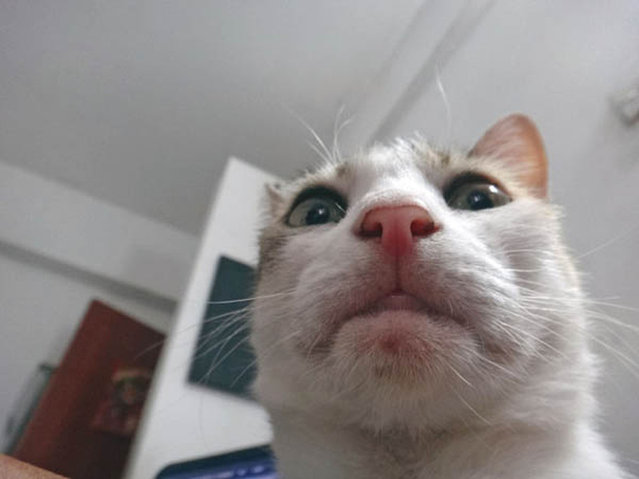
Cats Taking Selfies Part 1

The selfie is the most popular photography trend of the internet today. It's gotten so popular, in fact, that even our beloved feline friends have started to catch on. I dare you to keep the smile off your face for this one!


See also:Cats Taking Selfies Part 2
Details
16 Mar 2014 15:47:00
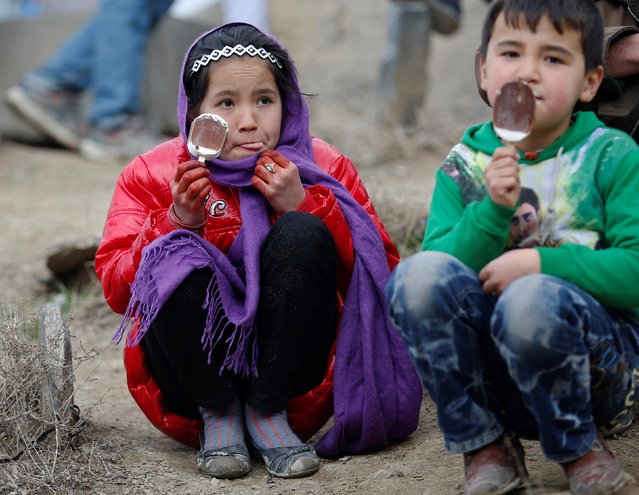
Afghan children have ice cream during the Afghan New Year (Newroz) celebration in Kabul March 21, 2014. (Photo by Ahmad Masood/Reuters)

Afghan children have ice cream during the Afghan New Year (Newroz) celebration in Kabul March 21, 2014. Afghanistan uses the Persian calendar which runs from the vernal equinox. The calendar takes as its start date the time when the Prophet Mohammad moved from Mecca to Medina in 621 AD. The current Persian year is 1393. (Photo by Ahmad Masood/Reuters)
Details
24 Mar 2014 08:19:00
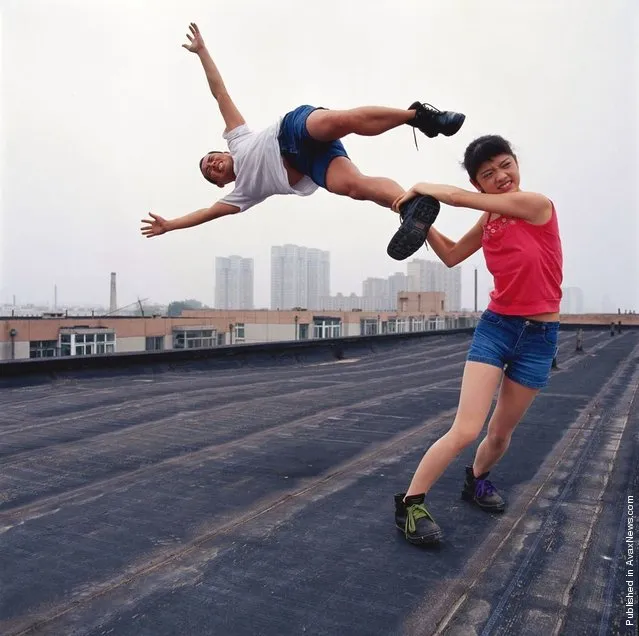
Love at the high place 1 Li Wei

“Li Wei (born in 1970, Hubei, China) is a contemporary artist from Beijing, China. His work often depicts him in apparently gravity-defying situations. Wei started off his performance series, Mirroring, and later on took off attention with his Falls series which shows the artist with his head and chest embedded into the ground. His work is a mixture of performance art and photography that creates illusions of a sometimes dangerous reality. Li Wei states that these images are not computer montages and works with the help of props such as mirror, metal wires, scaffolding and acrobatics”. – Wikipedia

Photo: Love at the high place I (Photo by Li Wei)
Details
25 Apr 2012 12:36:00