Loading...
Done
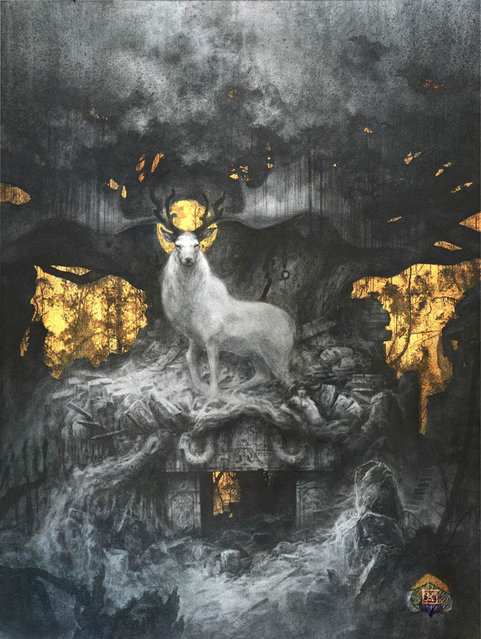
Myth Art By Yoann Lossel

Working in graphite, gold leaf and mixed media assemblage, Yoann Lossel creates fantastic myth based worlds and scenarios. They have a beautiful graceful ambiance, full of spiritual timelessness and ancient rituals. He is a French painter and designer currently living in the Forest of Broceliande in Brittany, a landscape steeped in Celtic and Arthurian myth. Reflecting this environment – Yoann’s works take the viewer through mythic and imaginary lands, imbued with ancient tales and iconic mysteries.
Details
20 Dec 2013 11:54:00
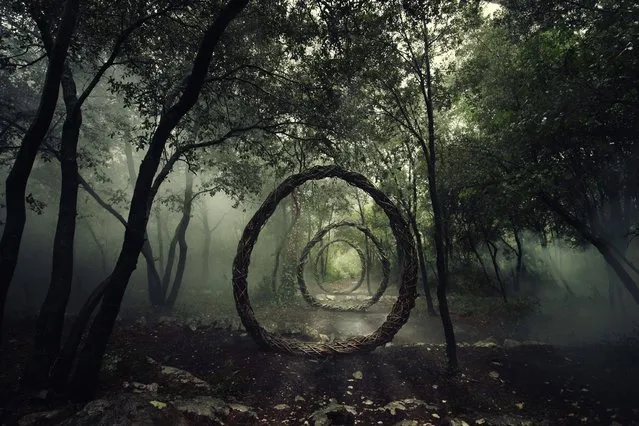
Forest Sculptor Spencer Byles

In an extraordinary act of devotion to his art, sculptural artist Spencer Byles spent a year creating beautiful sculptures out of natural and found materials throughout the unmanaged forests of La Colle Sur Loup (where he lived with his family), Villeneuve Loubet and Mougins. He worked together with elements of his natural surroundings to create artwork that blends seamlessly with the environment.
Details
05 Aug 2015 11:40:00
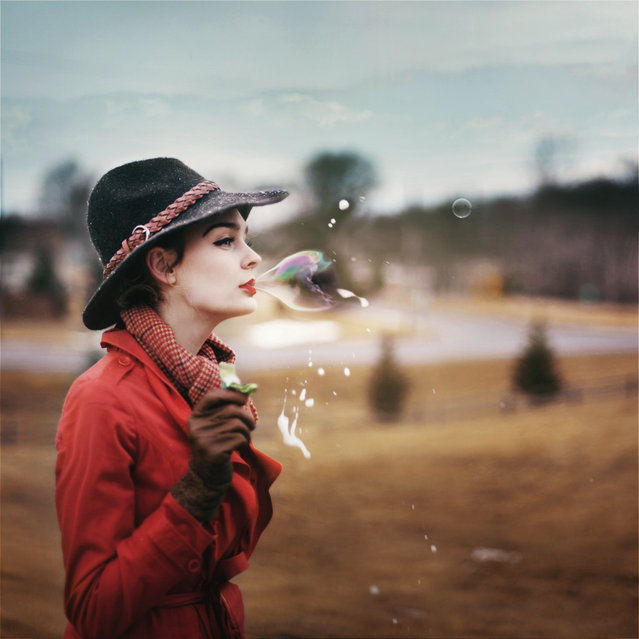
All my life i lived in a bubble. (Photo by Karrah Kobus)

“Sometimes i feel like photographers have uncovered a special secret. A crazy, amazing, and beautiful secret. The key to truly living. All i want is to be alive”. – Karrah Kobus

Photo: “All my life i lived in a bubble”. (Photo by Karrah Kobus)


Details
16 Dec 2012 11:05:00
Sephora Presents Kat Von D's First Solo Art Show At Sephora Mexico City

Kat Von D attends her first solo art show “New American Beauty” at Sephora Antara store on March 1, 2012 in Mexico City, Mexico. (Photo by Victor Chavez/Getty Images For Sephora)
Details
05 Mar 2012 11:33:00
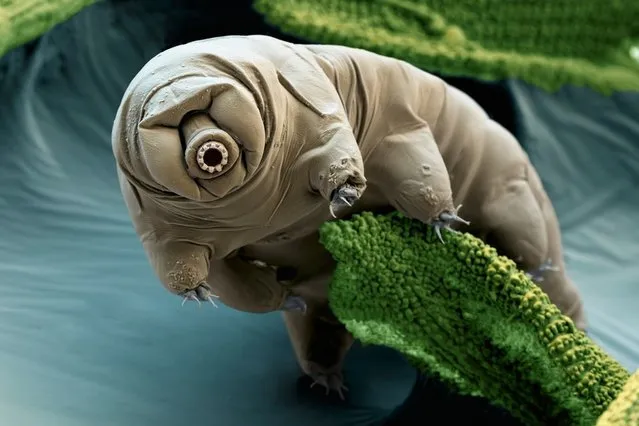
Tardigrades (commonly known as waterbears or moss piglets). (Photo by SPL/East News)

“Tardigrades (commonly known as waterbears or moss piglets) are small, water-dwelling, segmented animals with eight legs. Tardigrades were first discovered in 1773 by Johann August Ephraim Goeze, who called them kleiner Wasserbär, meaning “little water bear” in German. The name Tardigrada means “slow walker” and was given by Lazzaro Spallanzani in 1777. The name water bear comes from the way they walk, reminiscent of a bear's gait. The biggest adults may reach a body length of 1.5 millimetres (0.059 in), the smallest below 0.1 mm. Freshly hatched tardigrades may be smaller than 0.05 mm”. – Wikipedia. Photo: Tardigrades. (Photo by SPL/East News)
Details
26 Sep 2012 09:55:00
One of the theories says that the coils originate from the desire to look more attractive by exaggerating sexual dimorphism, as women have more slender necks than men. (Photo by Ye Aung Thu/AFP Photo)

This photo taken on April 16, 2014 shows ethnic Kayan women wearing traditional clothes and bronze rings around tbeir neck in Panpet village, Demoso township in Kayah state, eastern Myanmar. Some ethnic Kayan women, also known as Padaung, begin wearing the bronze rings on their neck and legs from a young age. Usually they start wearing six to ten rings when they are five to ten-years-old and then they put on one more ring a year for years after then. (Photo by Ye Aung Thu/AFP Photo)
Details
23 Apr 2014 08:56:00


“eLEGS is a wearable, artificially intelligent, bionic device that enables people with paralysis to stand up and walk again. The exoskeleton is battery-powered and rechargeable, fitting comfortably and securely over clothing. Initially, eLEGS will be used under medical supervision for rehabilitation and training”. – BerkeleyBionics.com

Photo: Paralysis victim Stephanie Sablan (L) is helped by physical therapist Shonna Moran as she walks using eLEGS robotic legs at Santa Clara Valley Medical Center on May 25, 2011 in San Jose, California. Sablan, 24, was paralyzed from the waist down earlier this year when she was in a car accident and has begun using the newly developed eLEGS made by Berkeley Bionics. The robot-like battery powered eLEGS fit over clothing and enables people with paralysis to stand up and walk again. (Photo by Justin Sullivan/Getty Images)
Details
26 May 2011 09:56:00
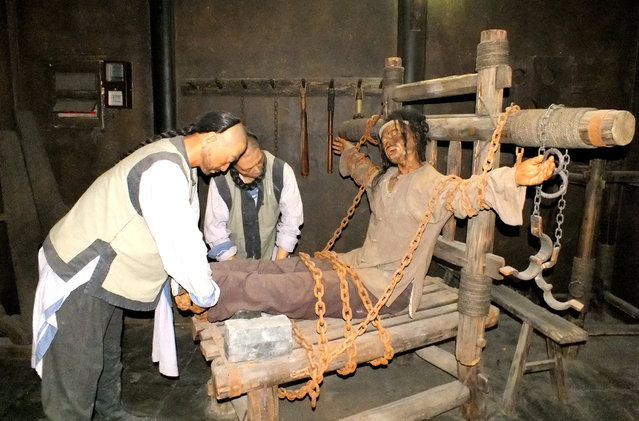
Wax figures with torture instrument named “torture-rack” are seen on October 25, 2014 in Huai'an, Jiangsu province of China. The exhibition, which opened last year at an educational center in the eastern city of Huai'an, includes reenactments of prisoners being hung over a fire, flayed and being tortured on what is known as a “Tiger Bench” – pictured above – a Qing dynasty (1644-1912) device that contorted victims' legs and arms in high pressure positions that could break bones or tear apart joints. (Photo by ChinaFotoPress)

Organizers of an exhibition of ancient instruments of torture in Huai'an, Jiangsu province, have suggested that children, heart disease patients and people with high blood pressure stay away because of the vivid depictions of shocking cruelty. The exhibition has more than 200 instruments of torture on display in the 50,000-square-meter exhibition halls of a restored ancient building. Wax figures, along with sound and light techniques, are incorporated for scary effect. The local government said the exhibition is for tourists and historians to research ancient torture practices. (Photo by ChinaFotoPress)
Details
29 Oct 2014 12:22:00