Loading...
Done
The Indian community and supporters living in Brazil celebrate the festival of colors in Sao Paulo, Brazil on March 24, 2024. A Burst of Colors and Tradition Holi, characterized by vivid hues, gulaal, and rituals, transcends mere festivity; it's a grand jubilation of joy and camaraderie. Legend has it that the festival commemorates the triumph of Lord Narasimha over the demon Hiranyakashyap, representing the victory of righteousness over malevolence. (Photo by Dario Oliveira/ZUMA Press Wire/Rex Features/Shutterstock)

The Indian community and supporters living in Brazil celebrate the festival of colors in Sao Paulo, Brazil on March 24, 2024. A Burst of Colors and Tradition Holi, characterized by vivid hues, gulaal, and rituals, transcends mere festivity; it's a grand jubilation of joy and camaraderie. Legend has it that the festival commemorates the triumph of Lord Narasimha over the demon Hiranyakashyap, representing the victory of righteousness over malevolence. (Photo by Dario Oliveira/ZUMA Press Wire/Rex Features/Shutterstock)
Details
21 Jul 2025 03:22:00
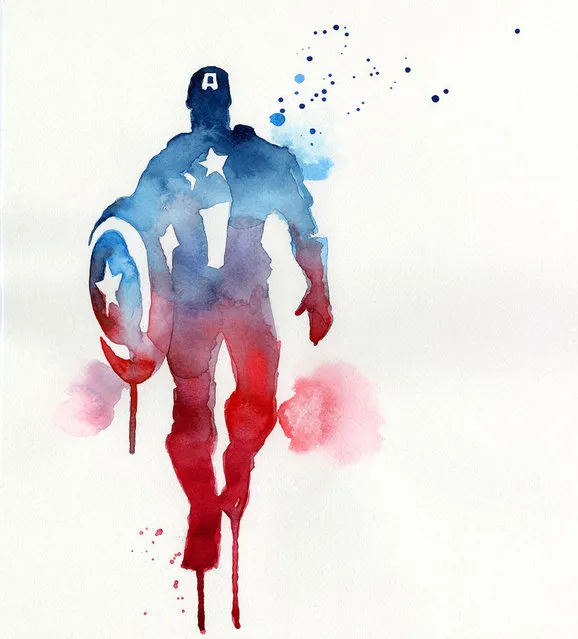
Watercolor Superheroes By Blule

Blule is the brand of French illustrator/designer, Clementine, who currently resides in Australia and has worked as an industrial designer for companies such as Fila, and L’Oreal among others. She starts every image with a pencil sketch on handmade Indian watercolor paper sheet and uses high quality French watercolor paint to achieve the desired effect.
Details
22 Jun 2014 10:10:00
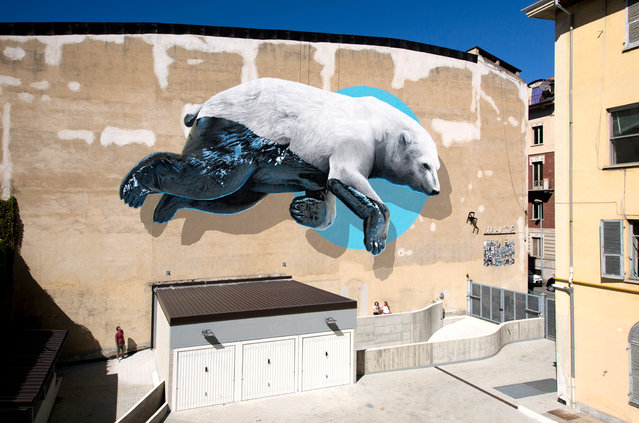
A polar bear whose bottom half is caked in oily black gunk. A whale wrapped in striped fabric: a pseudo straightjacket. These are the messes climate change leaves behind, the things we know are happening but often don’t have the opportunity to see with our own eyes. Swiss street art duo Christian Rebecchi and Pablo Togni, otherwise known as NeverCrew, met in art school when they were 15 and started making work together soon after. As a team, the artists adorn the world with eye-popping and gut-wrenching images depicting the consequences of humanity’s actions on earth. Here: “Black machine” mural painting and installation on the Colosseo theater in Turin, Italy, in September 2015. (Photo by NeverCrew/The Huffington Post)

A polar bear whose bottom half is caked in oily black gunk. A whale wrapped in striped fabric: a pseudo straightjacket. These are the messes climate change leaves behind, the things we know are happening but often don’t have the opportunity to see with our own eyes. Swiss street art duo Christian Rebecchi and Pablo Togni, otherwise known as NeverCrew, met in art school when they were 15 and started making work together soon after. As a team, the artists adorn the world with eye-popping and gut-wrenching images depicting the consequences of humanity’s actions on earth. (Photo by NeverCrew/The Huffington Post)
Details
13 Aug 2016 11:09:00
Guinness Rishi – The Human Flag

67-year-old Guinness Rishi constantly tries to make his family and the entire Indian people by constantly setting new records. He previously became father of the world’s oldest adoptee, after taking custody of his 61-year-old brother-in-law, and built the tallest sugar-cube tower in the world, which stood at 64 inches.
Details
09 Oct 2014 12:16:00
Wooden Churches - Travelling In The Russian North By Richard Davies Part 2

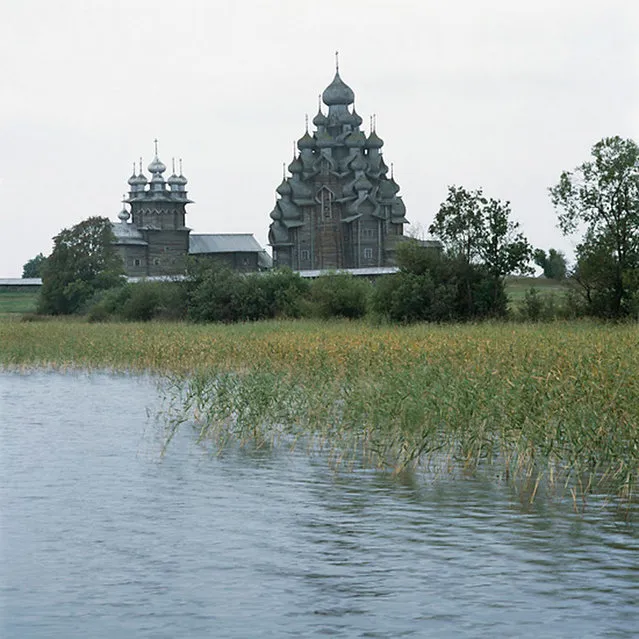
While communism, collectivism, worms, dry rot and casual looting failed to destroy the majestic wooden churches of Russia, it may be ordinary neglect that finally does them in. Dwindled now to several hundred remaining examples, these glories of vernacular architecture lie scattered amid the vastness of the world’s largest country. Just over a decade ago, Richard Davies, a British architectural photographer, struck out on a mission to record the fragile and poetic structures. Austerely beautiful and haunting, “Wooden Churches: Traveling in the Russian North” (White Sea Publishing; $132) is the result. Covering thousands of miles, Mr. Davies described how he and the writer Matilda Moreton tracked down the survivors from among the thousands of onion-domed structures built after Prince Vladimir converted to Christianity in 988.

See also: Wooden Churches Part1
Details
28 Nov 2013 12:13:00
Wooden Churches - Travelling In The Russian North By Richard Davies Part 1

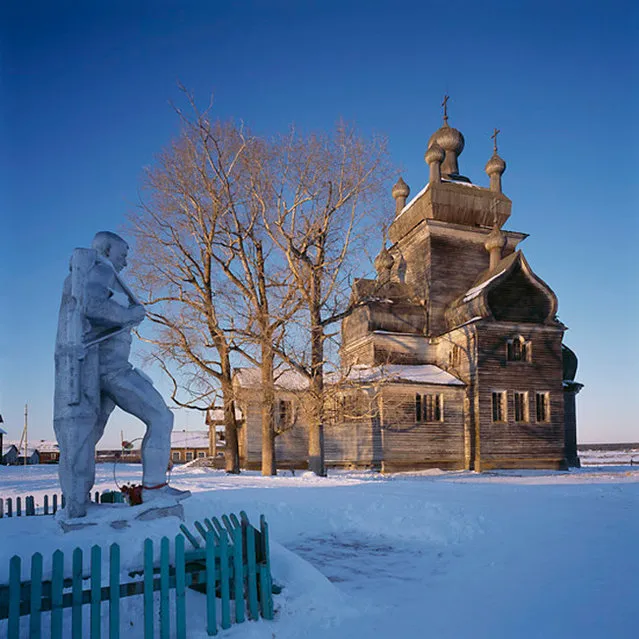
While communism, collectivism, worms, dry rot and casual looting failed to destroy the majestic wooden churches of Russia, it may be ordinary neglect that finally does them in. Dwindled now to several hundred remaining examples, these glories of vernacular architecture lie scattered amid the vastness of the world’s largest country. Just over a decade ago, Richard Davies, a British architectural photographer, struck out on a mission to record the fragile and poetic structures. Austerely beautiful and haunting, “Wooden Churches: Traveling in the Russian North” (White Sea Publishing; $132) is the result. Covering thousands of miles, Mr. Davies described how he and the writer Matilda Moreton tracked down the survivors from among the thousands of onion-domed structures built after Prince Vladimir converted to Christianity in 988.
Details
25 Nov 2013 12:47:00
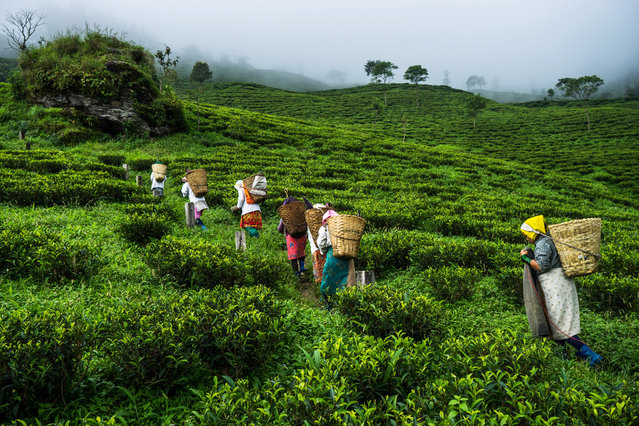
Workers carry baskets of hand-picked tea leaves at the Makaibari Tea Estate in Kurseong, West Bengal, India, on Monday, September 8, 2014. The 155-year-old Makaibari Tea Estate recently sold it's Darjeeling tea, named Silver Tips Imperial, for $1,850 a kilo to buyers from the U.K., the U.S. and Japan, becoming the most expensive Indian tea ever sold. (Photo by Sanjit Das/Bloomberg)

Workers carry baskets of hand-picked tea leaves at the Makaibari Tea Estate in Kurseong, West Bengal, India, on Monday, September 8, 2014. The 155-year-old Makaibari Tea Estate recently sold it's Darjeeling tea, named Silver Tips Imperial, for $1,850 a kilo to buyers from the U.K., the U.S. and Japan, becoming the most expensive Indian tea ever sold. (Photo by Sanjit Das/Bloomberg)
Details
19 Oct 2014 12:41:00
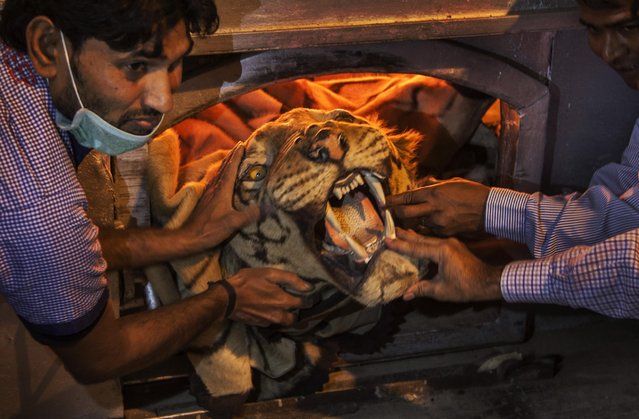
Indian authorities hold a tiger skin as they set fire to a stockpile of illegal wildlife parts at the Delhi Zoo in New Delhi, India, Sunday, November 2, 2014. A stockpile of tiger skins, elephant tusks, rhino horns and other illegal animal parts were burned Sunday in an effort to discourage wildlife smuggling in South Asia. (Photo by Tsering Topgyal/AP Photo)

Indian authorities hold a tiger skin as they set fire to a stockpile of illegal wildlife parts at the Delhi Zoo in New Delhi, India, Sunday, November 2, 2014. A stockpile of tiger skins, elephant tusks, rhino horns and other illegal animal parts were burned Sunday in an effort to discourage wildlife smuggling in South Asia. (Photo by Tsering Topgyal/AP Photo)
Details
03 Nov 2014 12:44:00