Loading...
Done
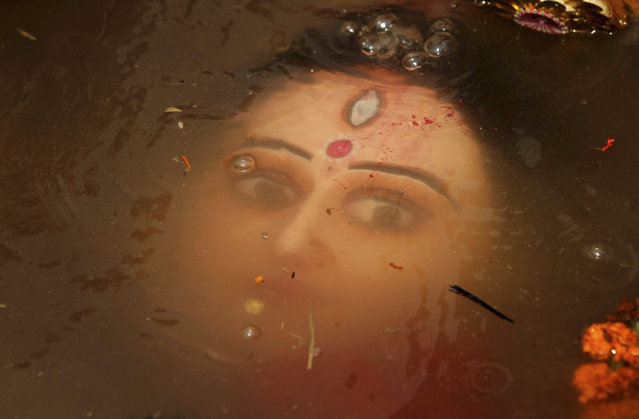
An idol of Hindu goddess Durga floats in water as devotees immerse the same in the River Kuakhai after the Durga Puja festival in Bhubaneswar, India, Saturday, October 24, 2015. The immersion of idols marks the end of the festival that commemorates the slaying of a demon king by lion-riding, 10-armed goddess Durga, marking the triumph of good over evil. (Photo by Biswaranjan Rout/AP Photo)

An idol of Hindu goddess Durga floats in water as devotees immerse the same in the River Kuakhai after the Durga Puja festival in Bhubaneswar, India, Saturday, October 24, 2015. The immersion of idols marks the end of the festival that commemorates the slaying of a demon king by lion-riding, 10-armed goddess Durga, marking the triumph of good over evil. (Photo by Biswaranjan Rout/AP Photo)
Details
26 Oct 2015 08:04:00
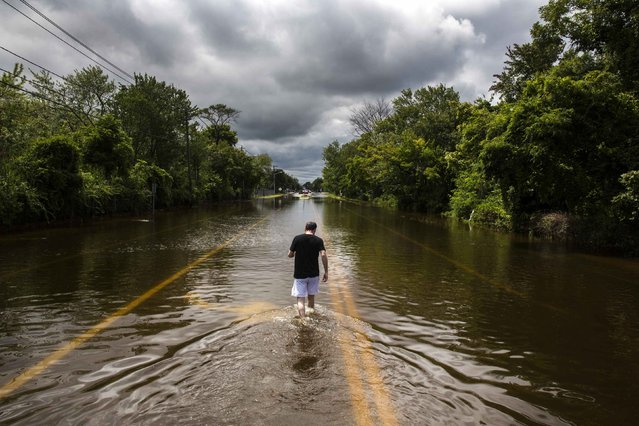
A man walks down a flooded road in Islip, New York August 13, 2014. More than a foot of rain hit parts of New York's Long Island on Wednesday, enough to set a preliminary state record, triggering flash floods and swamping cars on major roads that were turned into rivers during the morning rush hour. (Photo by Lucas Jackson/Reuters)

A man walks down a flooded road in Islip, New York August 13, 2014. More than a foot of rain hit parts of New York's Long Island on Wednesday, enough to set a preliminary state record, triggering flash floods and swamping cars on major roads that were turned into rivers during the morning rush hour. (Photo by Lucas Jackson/Reuters)
Details
14 Aug 2014 11:18:00
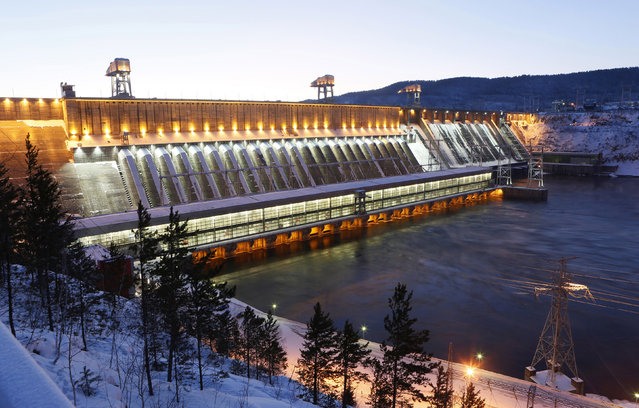
A general view shows the Krasnoyarsk hydro-electric power station on the Yenisei River near the Siberian city of Krasnoyarsk, Russia, January 13, 2016. The power plant, owned by EuroSibEnergo company, part of En+ Group, with a generating capacity of 6,000 megawatt (MW), has a ferro-concrete dam 124-metres high and 1065-metres long and is the second largest Russian hydroelectric power station. About 85% of the energy generated is intended for the Rusal Krasnoyarsk aluminium smelter, according to representatives of the power station. (Photo by Ilya Naymushin/Reuters)

A general view shows the Krasnoyarsk hydro-electric power station on the Yenisei River near the Siberian city of Krasnoyarsk, Russia, January 13, 2016. The power plant, owned by EuroSibEnergo company, part of En+ Group, with a generating capacity of 6,000 megawatt (MW), has a ferro-concrete dam 124-metres high and 1065-metres long and is the second largest Russian hydroelectric power station. About 85% of the energy generated is intended for the Rusal Krasnoyarsk aluminium smelter, according to representatives of the power station. (Photo by Ilya Naymushin/Reuters)
Details
16 Jan 2016 08:03:00
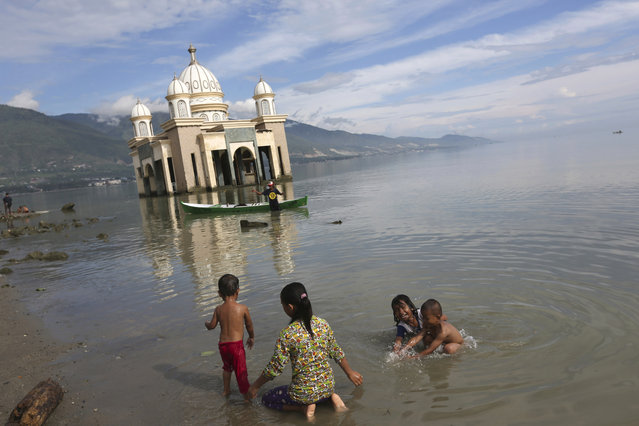
In this Wednesday, April 3, 2019, photo, children play in the water on a beach as a mosque collapsed during the Sept. 28, 2018, earthquake is seen in the background in Palu, Central Sulawesi, Indonesia. The earthquake spawned a large localized tsunami that wiped out coastal areas, while liquefaction caused by the shaking turned entire neighborhoods into rivers of sludge. The disaster killed thousands of people, making it the world’s deadliest seismic event in 2018. (Photo by Tatan Syuflana/AP Photo)

In this Wednesday, April 3, 2019, photo, children play in the water on a beach as a mosque collapsed during the Sept. 28, 2018, earthquake is seen in the background in Palu, Central Sulawesi, Indonesia. The earthquake spawned a large localized tsunami that wiped out coastal areas, while liquefaction caused by the shaking turned entire neighborhoods into rivers of sludge. The disaster killed thousands of people, making it the world’s deadliest seismic event in 2018. (Photo by Tatan Syuflana/AP Photo)
Details
04 May 2019 00:05:00
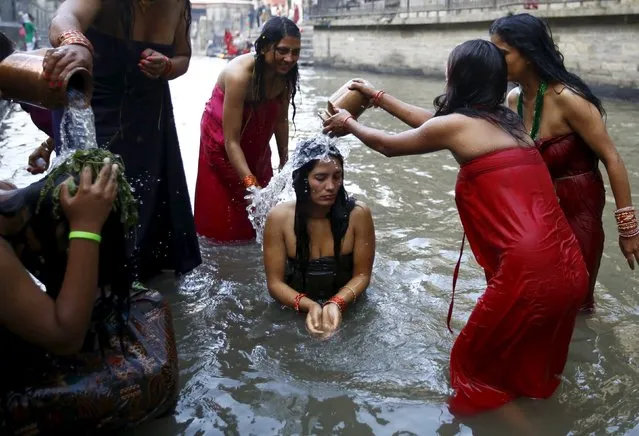
Nepalese women performs ritual as they take a holy bath in the Bagmati River, during the Rishi Panchami festival, in Kathmandu, Nepal September 18, 2015. Rishi Panchami is observed on the last day of Teej when women worship Sapta Rishi (Seven Saints) to ask for forgiveness for sins committed during their menstrual periods throughout the year. (Photo by Navesh Chitrakar/Reuters)

Nepalese women performs ritual as they take a holy bath in the Bagmati River, during the Rishi Panchami festival, in Kathmandu, Nepal September 18, 2015. Rishi Panchami is observed on the last day of Teej when women worship Sapta Rishi (Seven Saints) to ask for forgiveness for sins committed during their menstrual periods throughout the year. The Hindu religion considers menstruation as a representation of impurity and women are prohibited from taking part in religious practices during their monthly menstruations. (Photo by Navesh Chitrakar/Reuters)
Details
21 Sep 2015 12:23:00
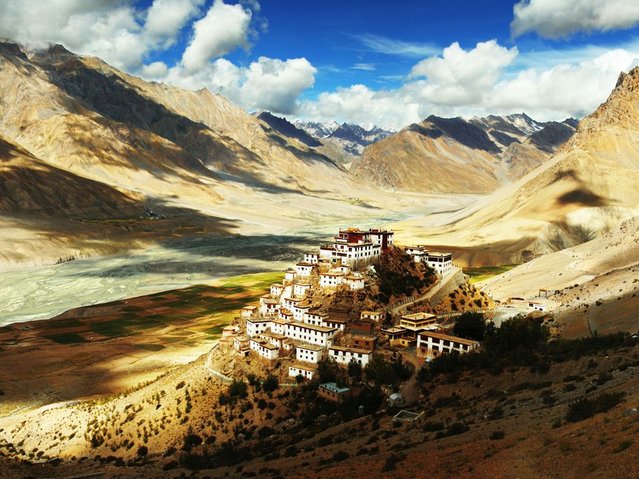
Buddhist Monastery Key Gompa

Key Gompa (also spelled Ki, Kye or Kee) is a Tibetan Buddhist monastery located on top of a hill at an altitude of 4,166 metres (13,668 ft) above sea level, close to the Spiti River, in the Spiti Valley of Himachal Pradesh, Lahaul and Spiti district, India. It is the biggest monastery of Spiti Valley and a religious training centre for Lamas. It reportedly had 100 monks in 1855.
Details
05 Dec 2013 10:48:00
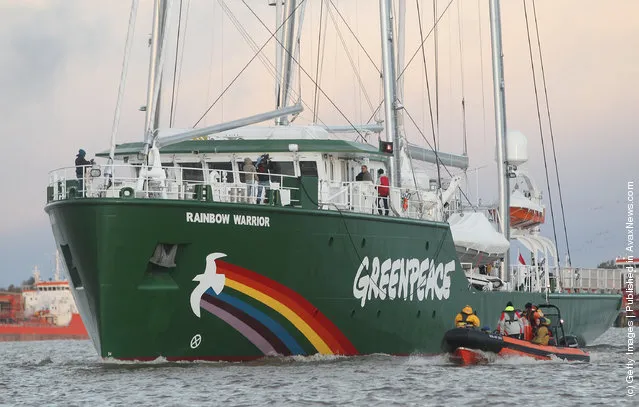
The Rainbow Warrior III, the newest ship of the enivornmental conservation organization Greenpeace

The Rainbow Warrior III, the newest ship of the enivornmental conservation organization Greenpeace, makes its way to port on the Elbe River on October 20, 2011 in Hamburg, Germany. The Rainbow Warrior III, 53 meters long, designed by Greenpeace and built in Poland and Germany, is a EUR 23 million project completed last week. (Photo by Sean Gallup/Getty Images)
Details
21 Oct 2011 09:35:00
An employee of Paris city Hall removes padlocks clipped by lovers on the fence of the Pont des Arts over the River Seine in Paris, December 9, 2014. For years, visiting couples have hung brass padlocks on the iron grills lining the city's bridges to symbolise their undying love – they write their names on the locks, then toss the key into the Seine below. (Photo by Philippe Wojazer/Reuters)

An employee of Paris city Hall removes padlocks clipped by lovers on the fence of the Pont des Arts over the River Seine in Paris, December 9, 2014. For years, visiting couples have hung brass padlocks on the iron grills lining the city's bridges to symbolise their undying love – they write their names on the locks, then toss the key into the Seine below. About 700,000 love locks are added every few months and Paris officials say they are damaging the bridges and threatening safety because of the added weight. (Photo by Philippe Wojazer/Reuters)
Details
10 Dec 2014 12:24:00