Loading...
Done
Camila Iachini, 8, performs with her bike during celebrations for the 400th anniversary of the founding of the neighbourhood Petare, in Caracas, Venezuela on February 17, 2021. (Photo by Leonardo Fernandez Viloria/Reuters)

Camila Iachini, 8, performs with her bike during celebrations for the 400th anniversary of the founding of the neighbourhood Petare, in Caracas, Venezuela on February 17, 2021. (Photo by Leonardo Fernandez Viloria/Reuters)
Details
12 Mar 2021 10:07:00
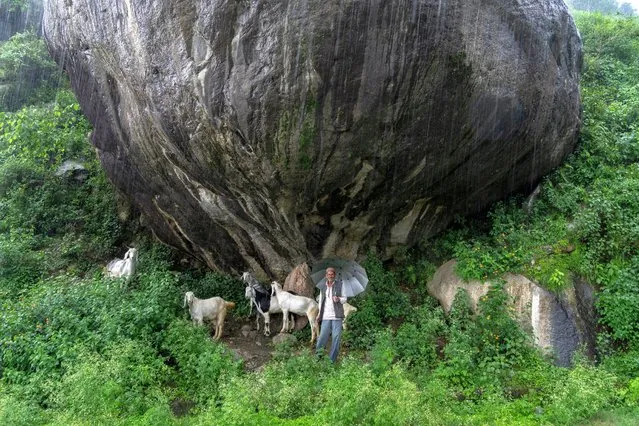
A shepherd with his flock shelters from the rain under a huge boulder in Dharmsala, India, Monday, August 8, 2022. (Photo by Ashwini Bhatia/AP Photo)

A shepherd with his flock shelters from the rain under a huge boulder in Dharmsala, India, Monday, August 8, 2022. (Photo by Ashwini Bhatia/AP Photo)
Details
16 Aug 2022 05:29:00
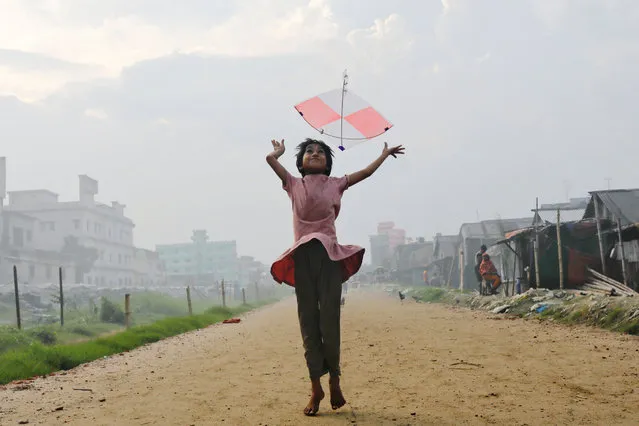
A girl flies a kite in the afternoon in Dhaka, Bangladesh on August 3, 2022. (Photo by Mohammad Ponir Hossain/Reuters)

A girl flies a kite in the afternoon in Dhaka, Bangladesh on August 3, 2022. (Photo by Mohammad Ponir Hossain/Reuters)
Details
18 Aug 2022 06:10:00
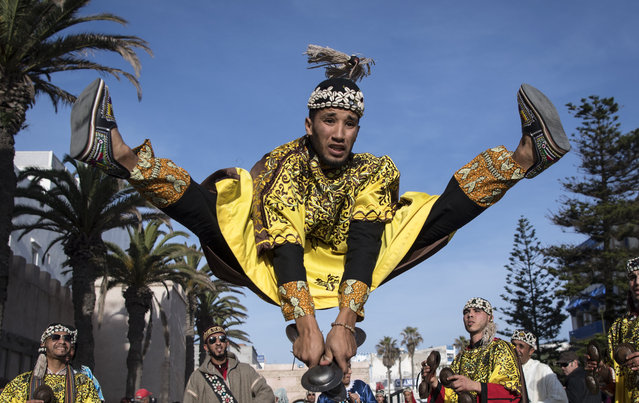
A Gnawa traditional group performs in the city of Essaouira on December 14, 2019, to celebrate the decision of adding the Gnawa culture to UNESCO's list of Intangible Cultural Heritage of Humanity. Gnawa culture, a centuries-old Moroccan practice rooted in music, African rituals and Sufi traditions, was added to UNESCO's list of Intangible Cultural Heritage of Humanity earlier in the week. Gnawa refers to a “set of musical productions, fraternal practices and therapeutic rituals where the secular mixes with the sacred”, according to the nomination submitted by Morocco. Often dressed in colourful outfits, Gnawa musicians play the guenbri, a type of lute with three strings, accompanied by steel castanets called krakebs. (Photo by Fadel Senna/AFP Photo)

A Gnawa traditional group performs in the city of Essaouira on December 14, 2019, to celebrate the decision of adding the Gnawa culture to UNESCO's list of Intangible Cultural Heritage of Humanity. Gnawa culture, a centuries-old Moroccan practice rooted in music, African rituals and Sufi traditions, was added to UNESCO's list of Intangible Cultural Heritage of Humanity earlier in the week. Gnawa refers to a “set of musical productions, fraternal practices and therapeutic rituals where the secular mixes with the sacred”, according to the nomination submitted by Morocco. Often dressed in colourful outfits, Gnawa musicians play the guenbri, a type of lute with three strings, accompanied by steel castanets called krakebs. (Photo by Fadel Senna/AFP Photo)
Details
18 Dec 2019 00:05:00
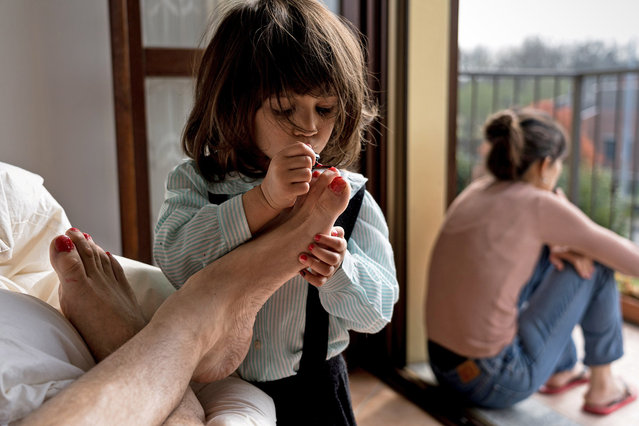
Life in lockdown: Schoolteacher Marzio Toniolo, 35, takes a picture of his two-year-old daughter Bianca painting his toenails as they while away time at home in San Fiorano, one of the original “red zone” towns in northern Italy that has now been extended to the whole country, as his wife, Bianca's mum Chiara Zuddas looks out from their balcony, March 20, 2020. Toniolo has been documenting how his family has dealt with being under quarantine since it began for them in February. (Photo by Marzio Toniolo via Reuters)

Life in lockdown: Schoolteacher Marzio Toniolo, 35, takes a picture of his two-year-old daughter Bianca painting his toenails as they while away time at home in San Fiorano, one of the original “red zone” towns in northern Italy that has now been extended to the whole country, as his wife, Bianca's mum Chiara Zuddas looks out from their balcony, March 20, 2020. Toniolo has been documenting how his family has dealt with being under quarantine since it began for them in February. (Photo by Marzio Toniolo via Reuters)
Details
09 Apr 2020 00:03:00
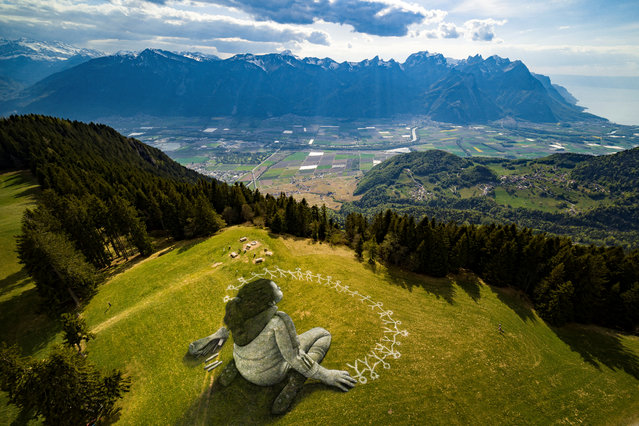
An artwork called “Beyond Crisis” by French artist Guillaume Legros aka Saype and created with an eco paint made out of chalk and coal over a 3000 sqm field is pictured during the coronavirus disease (COVID-19) outbreak in Leysin, Switzerland, April 24, 2020 in this picture obtained by Reuters April 26, 2020. (Photo by Valentin Flauraud/SAYPE/Handout via Reuters)

An artwork called “Beyond Crisis” by French artist Guillaume Legros aka Saype and created with an eco paint made out of chalk and coal over a 3000 sqm field is pictured during the coronavirus disease (COVID-19) outbreak in Leysin, Switzerland, April 24, 2020 in this picture obtained by Reuters April 26, 2020. (Photo by Valentin Flauraud/SAYPE/Handout via Reuters)
Details
27 May 2020 00:05:00
An orphan plays with her new hula hoop during the food and toy distribution, for total about 500 orphans in 11 orphanages, by National Muslim COVID-19 Response Committee to celebrate Eid al-Fitr, the Muslim holiday which marks the end of the fasting month of Ramadan at Good hope markazil Banatil Islamia orphans centre in Nairobi, Kenya, on May 25, 2020. (Photo by Yasuyoshi Chiba/AFP Photo)

An orphan plays with her new hula hoop during the food and toy distribution, for total about 500 orphans in 11 orphanages, by National Muslim COVID-19 Response Committee to celebrate Eid al-Fitr, the Muslim holiday which marks the end of the fasting month of Ramadan at Good hope markazil Banatil Islamia orphans centre in Nairobi, Kenya, on May 25, 2020. (Photo by Yasuyoshi Chiba/AFP Photo)
Details
06 Jun 2020 00:01:00
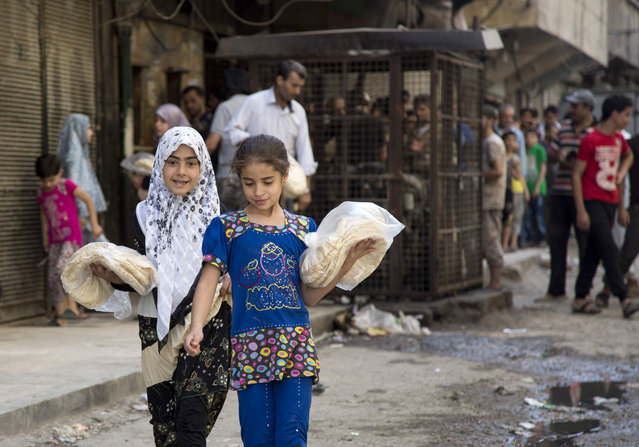
Syrian girls carry bags with bread as people queue up outisde a bakery in a rebel held neighbourhood in the northern city of Aleppo on July 12, 2016. Since mid-2012, Aleppo has been roughly divided between government control in the west and rebel control in the east, and has suffered enormous destruction in the war that has killed more than 280,000 people nationwide. Last week, a government advance brought regime troops within firing range of the Castello Road, the only remaining supply route into the opposition-held east, effectively severing rebel neighbourhoods from the outside world. With their route to the outside world cut, there is no new flour coming to the city's bakeries, and fuel to light their ovens is also now hard to find. (Photo by Karam Al-Masri/AFP Photo)

Syrian girls carry bags with bread as people queue up outisde a bakery in a rebel held neighbourhood in the northern city of Aleppo on July 12, 2016. Since mid-2012, Aleppo has been roughly divided between government control in the west and rebel control in the east, and has suffered enormous destruction in the war that has killed more than 280,000 people nationwide. Last week, a government advance brought regime troops within firing range of the Castello Road, the only remaining supply route into the opposition-held east, effectively severing rebel neighbourhoods from the outside world. With their route to the outside world cut, there is no new flour coming to the city's bakeries, and fuel to light their ovens is also now hard to find. (Photo by Karam Al-Masri/AFP Photo)
Details
08 Aug 2016 10:02:00