Loading...
Done
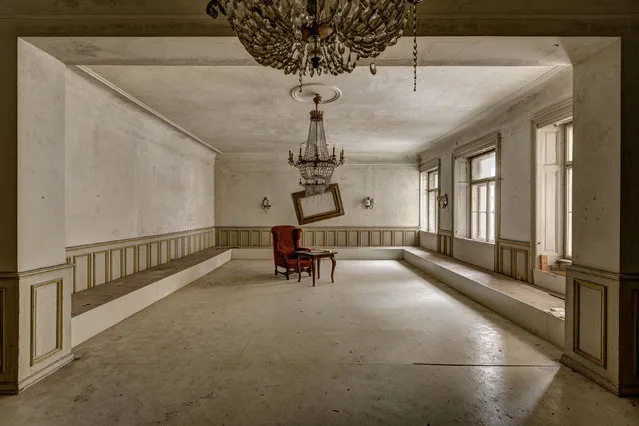
Grand banqueting halls, opulent lobbies and vast ballrooms; you could easily be forgiven for thinking this was a collection of photographs was documenting some of Europe’s grandest hotels. However, a closer look will reveal the majestic rooms to be engulfed in swathes of dust and moss; hotels that once hosted royals and high society abandoned to the elements. (Photo by Thomas Windisch/Caters News)

Grand banqueting halls, opulent lobbies and vast ballrooms; you could easily be forgiven for thinking this was a collection of photographs was documenting some of Europe’s grandest hotels. However, a closer look will reveal the majestic rooms to be engulfed in swathes of dust and moss; hotels that once hosted royals and high society abandoned to the elements. This is the latest result of urban exploration photography, going beyond “no entry” signs to capture images of dilapidated buildings across Europe. IT worker Thomas Windisch, from Graz in Austria, indulged his passion for photography by traveling across the continent, visiting over 100 abandoned hotels along the way. Here: inside a hotel in Austria. (Photo by Thomas Windisch/Caters News)
Details
24 Mar 2015 10:26:00
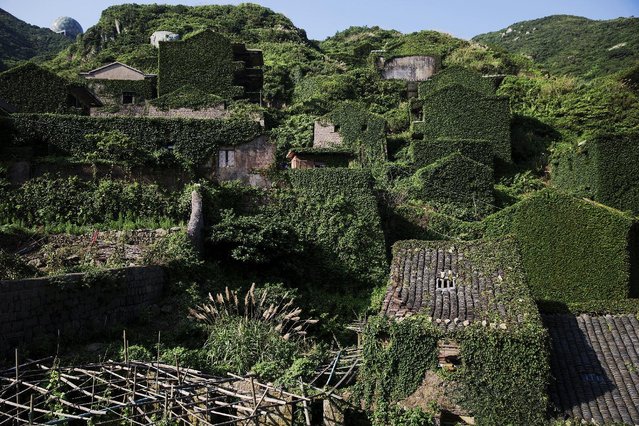
Plants grow on houses in the abandoned fishing village of Houtouwan on the island of Shengshan July 26, 2015. (Photo by Damir Sagolj/Reuters)

Plants grow on houses in the abandoned fishing village of Houtouwan on the island of Shengshan July 26, 2015. Just a handful of people still live in a village on Shengshan Island east of Shanghai that was once home to more than 2,000 fishermen. Every day hundreds of tourists visit Houtouwan, making their way on narrow footpaths past tumbledown houses overtaken by vegetation. The remote village, on one of more than 400 islands in the Shengsi archipelago, was abandoned in the early 1990s as first wealthy residents then others moved away, aiming to leave problems with education and food delivery behind them. (Photo by Damir Sagolj/Reuters)
Details
30 Jul 2015 12:24:00
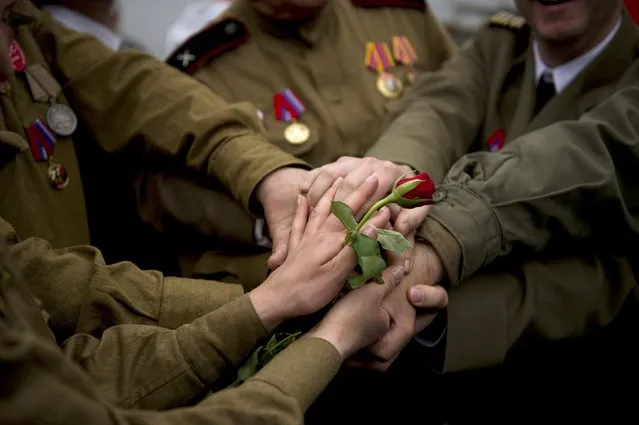
Members of a historical re-enactment group dressed as U.S. and Soviet Army soldiers take part in Elbe Day celebrations, in eastern German city of Torgau at the river Elbe, April 25, 2015. (Photo by Stefanie Loos/Reuters)

Members of a historical re-enactment group dressed as U.S. and Soviet Army soldiers take part in Elbe Day celebrations, in eastern German city of Torgau at the river Elbe, April 25, 2015. Elbe Day commemorates the encounter of the Allies 70 years ago, on the 25th of April 1945 when American and Soviet army units joined together on the destroyed bridge over the river Elbe. The photograph of the meaningful handshake made its way around the world and became a symbol of the near end of World War II in Europe. (Photo by Stefanie Loos/Reuters)
Details
26 Apr 2015 08:58:00
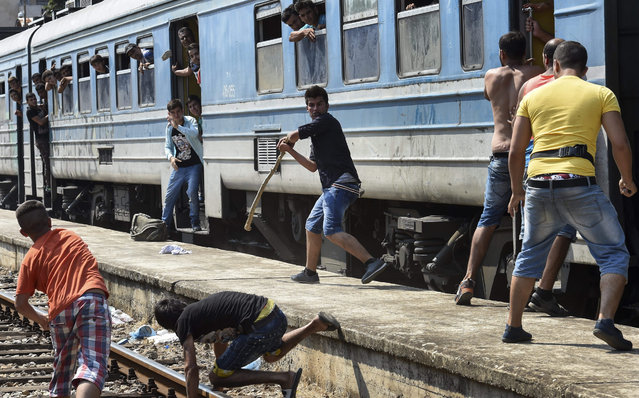
Migrants with a stick, stones and knife fight with each other after a brawl erupted over a place in an overcrowded train heading to the Serbian border at the train station in Gevgelija, The Former Yugoslav Republic of Macedonia, 14 August 2015. (Photo by Georgi Licovski/EPA)

Migrants with a stick, stones and knife fight with each other after a brawl erupted over a place in an overcrowded train heading to the Serbian border at the train station in Gevgelija, The Former Yugoslav Republic of Macedonia, 14 August 2015. The number of migrants passing through Macedonia increases day by day, local sources said. From the beginning of the year to mid-June 2015, nearly 160,000 migrants landed in the southern European countries, mainly Greece and Italy, on their way to wealthier countries in Western and Northern Europe, according to estimates by the International Organization for Migration (IOM). (Photo by Georgi Licovski/EPA)
Details
15 Aug 2015 11:10:00
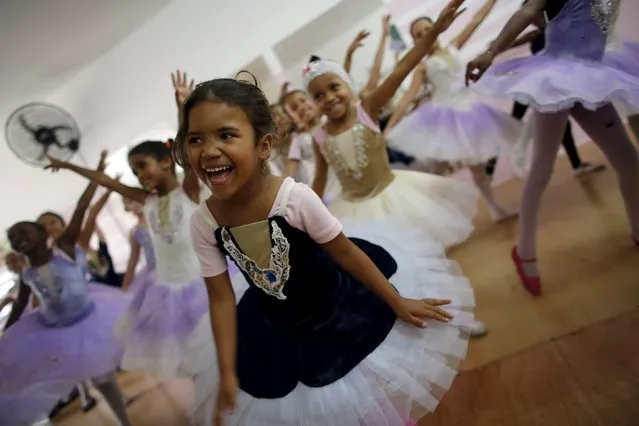
Young girls take ballet lessons at the New Dreams dance studio in the Luz neighborhood known to locals as Cracolandia (Crackland) in Sao Paulo, Brazil, August 14, 2015. (Photo by Nacho Doce/Reuters)

Young girls take ballet lessons at the New Dreams dance studio in the Luz neighborhood known to locals as Cracolandia (Crackland) in Sao Paulo, Brazil, August 14, 2015. For the young girls learning to jump and plie, the dance studio provides a way forward and out of the difficult environment they have grown up in. Brazil is one of the world's highest consuming countries of crack cocaine, and Cracolandia, or “Crack Land”, located in the outskirts of Sao Paulo, is one of the most intense and brutal hubs. (Photo by Nacho Doce/Reuters)
Details
18 Aug 2015 13:59:00
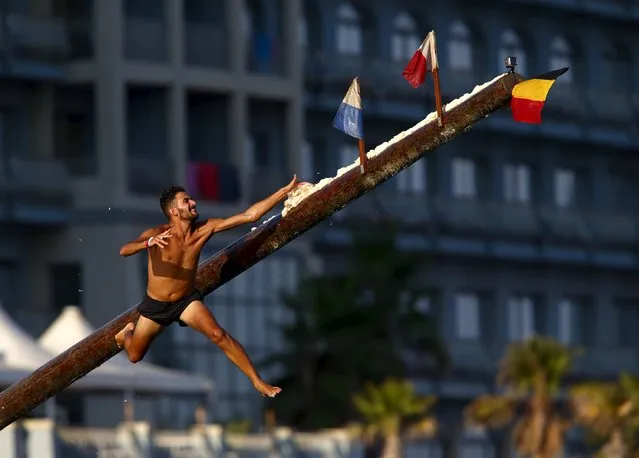
A competitor tries to swipe away some grease as he slips off the “gostra”, a pole covered in grease, during the celebrations for the religious feast of St Julian, patron of the town of St Julian's, outside Valletta August 30, 2015. (Photo by Darrin Zammit Lupi/Reuters)

A competitor tries to swipe away some grease as he slips off the “gostra”, a pole covered in grease, during the celebrations for the religious feast of St Julian, patron of the town of St Julian's, outside Valletta August 30, 2015. In the traditional “gostra”, a game stretching back to the Middle Ages, young men, women and children have to make their way to the top of a pole and try to uproot one of the flags to win prizes. Photo by Darrin Zammit Lupi/Reuters)
Details
31 Aug 2015 12:16:00
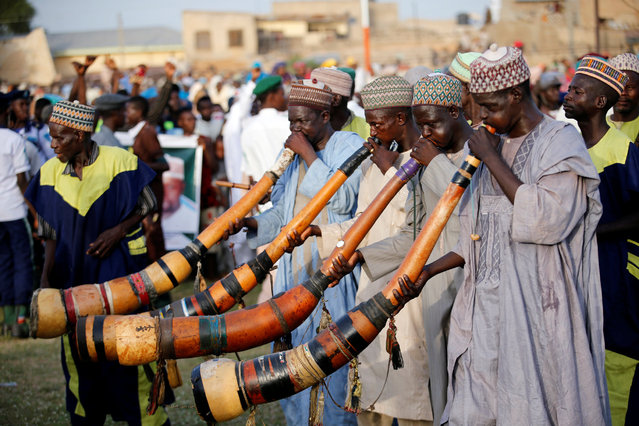
Traditional trumpeters perform during the durbar festival on the second day of Eid-al-Fitr celebrations in Nigeria's northern city of Kano, July 7, 2016. (Photo by Akintunde Akinleye/Reuters)

Traditional trumpeters perform during the durbar festival on the second day of Eid-al-Fitr celebrations in Nigeria's northern city of Kano, July 7, 2016. The Durbar festival begins with prayers, followed by a parade of the Emir and his entourage on horses, accompanied by music players, and ending at the Emir's palace. The Durbar festival had been in hausaland for more than 500 years. It was introduced by sarki muhammadu rumfa of kano in the late 14th century, as a way of demonstrating military power and skills before going to war. The festival is also an opportunity for local leaders to pay homage to emir throughout the jahi cheering. (Photo by Akintunde Akinleye/Reuters)
Details
09 Jul 2016 09:35:00
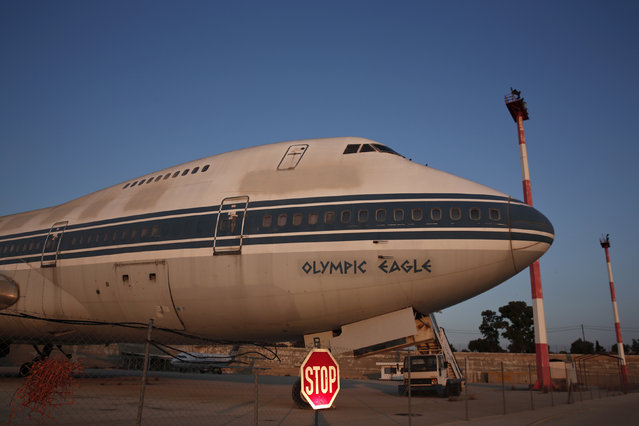
An Olympic Airways airplane stands on the premises of the former Athens International airport, Hellenikon June 16, 2014. (Photo by Yorgos Karahalis/Reuters)

An Olympic Airways airplane stands on the premises of the former Athens International airport, Hellenikon June 16, 2014. For about six decades Hellenikon was Athens' only airport but it closed down in 2001 to make way for a newer, more modern airport before the city hosted the 2004 Olympic Games. After languishing for years as a wasteland of crumbling terminals, Hellenikon is set for resurrection as a glitzy coastal resort. Lamda Development, controlled by Greece's powerful Latsis family and leading a consortium of Chinese and Abu-Dhabi based companies, has big dreams for the area since signing a 915 million euro deal for a 99-year lease in March 2014. (Photo by Yorgos Karahalis/Reuters)
Details
10 Jul 2014 12:29:00