Loading...
Done
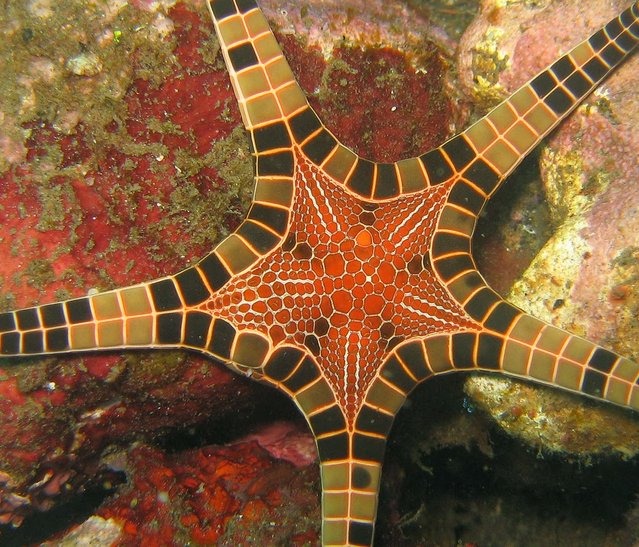
Conaster Iongimanus AKA The Icon Star Or Double Star

Iconaster longimanus, the icon star or double star, is a species of starfish in the family Goniasteridae. It is found in the west and central Indo-Pacific Ocean. The genus name comes from the Greek eikon, meaning portrait or image and possibly referring to the way the marginal plates frame the disc, and aster, meaning star. The specific name comes from the Latin longus manus and refers to the long, slender arms.
Details
14 Jul 2014 12:50:00
Polar Bear club swimmers take their annual swim in the sea at Coney Island in New York City on January 1, 2014. (Photo by Curtis Means/ACE/INFphoto.com)

Polar Bear club swimmers take their annual swim in the sea at Coney Island in New York City on January 1, 2014. (Photo by Curtis Means/ACE/INFphoto.com)
Details
03 Jan 2014 10:38:00
Local priests celebrate the “Aimara New Year”, an Andean Bolivian traditional festival that marks the winter solstice in El Alto, Bolivia, 21 June 2016. Aimara or Aymara means the Return of the Sun. (Photo by Martin Alipaz/EPA)

Local priests celebrate the “Aimara New Year”, an Andean Bolivian traditional festival that marks the winter solstice in El Alto, Bolivia, 21 June 2016. Aimara or Aymara means the Return of the Sun. (Photo by Martin Alipaz/EPA)
Details
22 Jun 2016 12:57:00
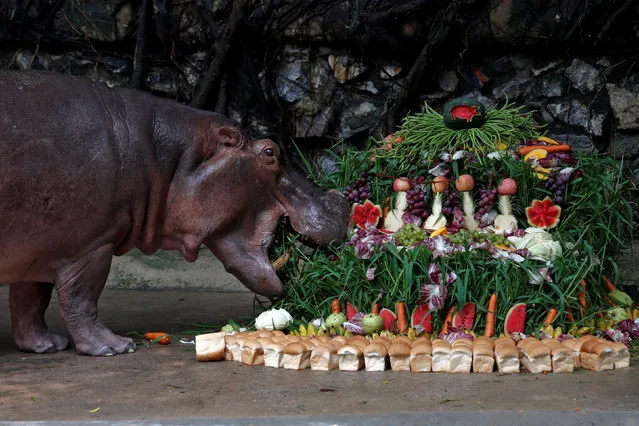
A female hippopotamus named “Mali”, which means Jasmine, eats fruits arranged to look like a cake during her 50th birthday celebration at Dusit Zoo in Bangkok, Thailand September 23, 2016. (Photo by Chaiwat Subprasom/Reuters)

A female hippopotamus named “Mali”, which means Jasmine, eats fruits arranged to look like a cake during her 50th birthday celebration at Dusit Zoo in Bangkok, Thailand September 23, 2016. (Photo by Chaiwat Subprasom/Reuters)
Details
25 Sep 2016 07:06:00
Drastic inequality is by no means new in New York. Jacob A. Riis was called a muckraker after he chose to spotlight the city’s poverty at the turn of the 20th century by photographing it. Here: Sweatshop in Hester Street, 1889-1890. (Photo by Jacob A. Riis/Museum of the City of New York, Gift of Roger William Riis)

Drastic inequality is by no means new in New York. Jacob A. Riis was called a muckraker after he chose to spotlight the city’s poverty at the turn of the 20th century by photographing it. Here: Sweatshop in Hester Street, 1889-1890. (Photo by Jacob A. Riis/Museum of the City of New York, Gift of Roger William Riis)
Details
16 Nov 2015 08:12:00
Buns are stamped the Chinese characters “Ping An”, meaning peaceful and safe, inside a bakery, at Hong Kong's Cheung Chau island, China May 17, 2015, ahead of the upcoming Bun Festival on May 25. (Photo by Tyrone Siu/Reuters)

Buns are stamped the Chinese characters “Ping An”, meaning peaceful and safe, inside a bakery, at Hong Kong's Cheung Chau island, China May 17, 2015, ahead of the upcoming Bun Festival on May 25. The festival celebrates the islanders' deliverance from famine many centuries ago and is meant to placate ghosts and restless spirits. (Photo by Tyrone Siu/Reuters)
Details
24 May 2015 09:49:00
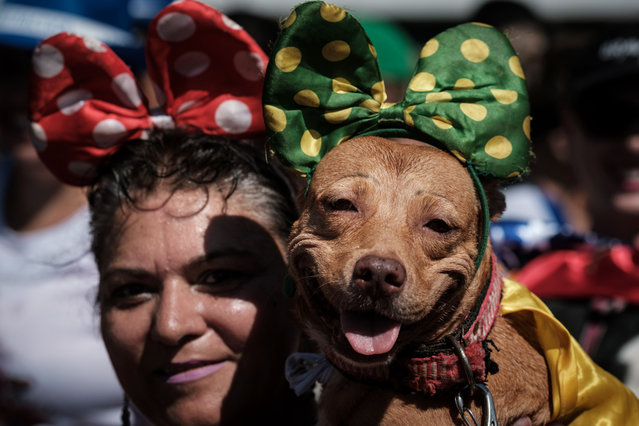
A reveller holds her dog dressed in costume, during the Rio Dog Carnival, known as the Blocao – with “bloco” meaning street party and “cao” dog, during pre- carnival celebrations at Copacabana beach in Rio de Janeiro, Brazil, on February 19, 2017. (Photo by Yasuyoshi Chiba/AFP Photo)

A reveller holds her dog dressed in costume, during the Rio Dog Carnival, known as the Blocao – with “bloco” meaning street party and “cao” dog, during pre- carnival celebrations at Copacabana beach in Rio de Janeiro, Brazil, on February 19, 2017. (Photo by Yasuyoshi Chiba/AFP Photo)
Details
22 Feb 2017 00:05:00
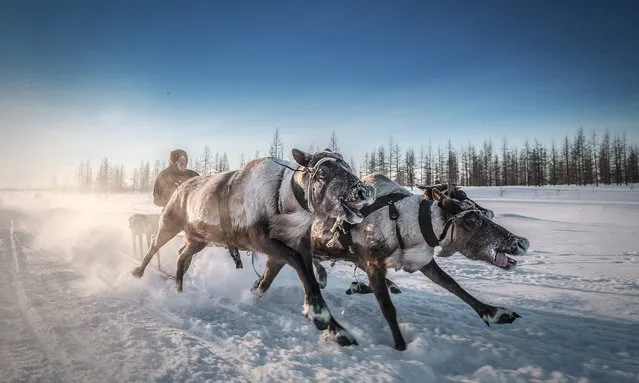
Take me away, deer, Russia. The Nenet people of Arctic Russia use reindeer and sledges as a prime mode of transport. The animals’ navigational ability means that in severe conditions they are sometimes the only hope of survival. (Photo by Kamil Nureev/Smithsonian Photo Contest)

Take me away, deer, Russia. The Nenet people of Arctic Russia use reindeer and sledges as a prime mode of transport. The animals’ navigational ability means that in severe conditions they are sometimes the only hope of survival. (Photo by Kamil Nureev/Smithsonian Photo Contest)
Details
06 Mar 2017 00:05:00