Loading...
Done
Passengers wearing protective masks travel on an over crowded train towards capital city, amid concerns about the spread of the coronavirus disease (COVID-19), in Colombo, Sri Lanka, July 8, 2020. (Photo by Dinuka Liyanawatte/Reuters)

Passengers wearing protective masks travel on an over crowded train towards capital city, amid concerns about the spread of the coronavirus disease (COVID-19), in Colombo, Sri Lanka, July 8, 2020. (Photo by Dinuka Liyanawatte/Reuters)
Details
15 Aug 2020 00:01:00
Blossoms and dust are blown by the wind as Jasmin Ricks, left, and her sister, Jessica Ricks, center, take in the cherry blossoms near the Tidal Basin in Washington on April 12, 2018. (Photo by Matt McClain/The Washington Post)

Blossoms and dust are blown by the wind as Jasmin Ricks, left, and her sister, Jessica Ricks, center, take in the cherry blossoms near the Tidal Basin in Washington on April 12, 2018. (Photo by Matt McClain/The Washington Post)
Details
01 May 2018 00:03:00
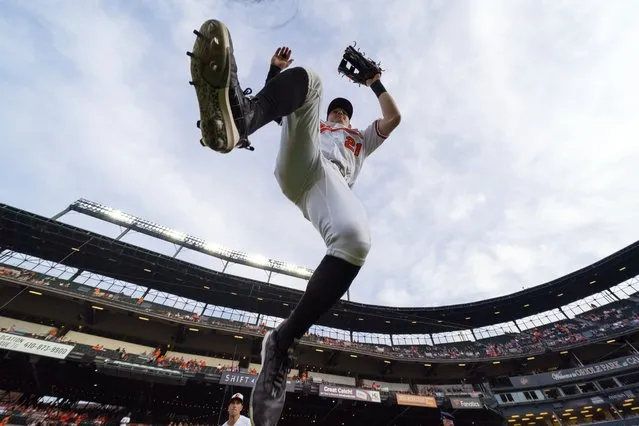
Baltimore Orioles center fielder Austin Hays leaps while taking the field prior to the first inning of a baseball game against the Cleveland Guardians, Tuesday, May 30, 2023, in Baltimore. (Photo by Julio Cortez/AP Photo)

Baltimore Orioles center fielder Austin Hays leaps while taking the field prior to the first inning of a baseball game against the Cleveland Guardians, Tuesday, May 30, 2023, in Baltimore. (Photo by Julio Cortez/AP Photo)
Details
07 Jun 2023 03:55:00
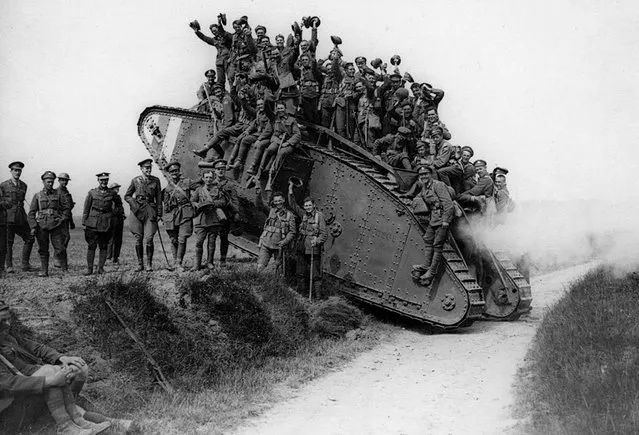
These black-and-white photos are taken from the new book “Armoured Warfare in the First World War 1916 – 1918” by Anthony Tucker-Jones and published by Pen & Sword Military. “Interestingly the British, French and Germans took completely different approaches with varying results”. The British military produced “Little Willie” in Autumn 1915 weighing 18 tonnes, which had a crew of two plus four gunners. “Inspired by a tracked artillery tractor “Little Willie” was referred to as a water tank – hence the name tank – to ensure secrecy”, said Anthony. “This led to the strange looking Mark I with its peculiar rhomboid shape, designed to cross trenches with guns in sponsons on either side. The Germans saw the tank as unchivalrous and were slow to grasp its utility. They favoured the Stormtrooper (specialist soldiers used to infiltrate enemy trenches) and artillery, not the tank”, said Anthony. “However, they didn’t hesitate to make use of captured British tanks. Although the tank helped secure victory and German soldiers dubbed it “Germany’s Downfall” the country was ultimately brought to its knees by the Allies blockade”. Here: British troops hitch a ride on a Mark IV after the massed tank fleet spearheading attack at Cambrai on November 20, 1917. (Photo by Anthony Tucker-Jones/Mediadrumworld.com)

These black-and-white photos are taken from the new book “Armoured Warfare in the First World War 1916 – 1918” by Anthony Tucker-Jones and published by Pen & Sword Military. Here: British troops hitch a ride on a Mark IV after the massed tank fleet spearheading attack at Cambrai on November 20, 1917. (Photo by Anthony Tucker-Jones/Mediadrumworld.com)
Details
23 Feb 2017 00:02:00
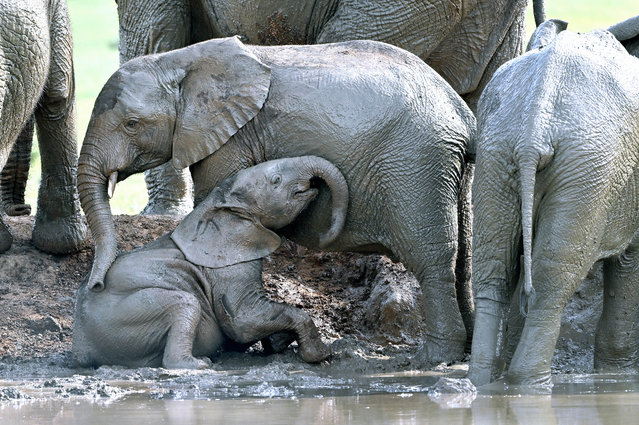
The moment baby elephant gets a helping hand to escape the slippery waterhole was caught on camera in the Addo Elephant National Park in the Eastern Cape of South Africa in the last decade of August 2025. (Photo by Anne Laing/Caters News Agency)

The moment baby elephant gets a helping hand to escape the slippery waterhole was caught on camera in the Addo Elephant National Park in the Eastern Cape of South Africa in the last decade of August 2025. (Photo by Anne Laing/Caters News Agency)
Details
07 Sep 2025 04:51:00


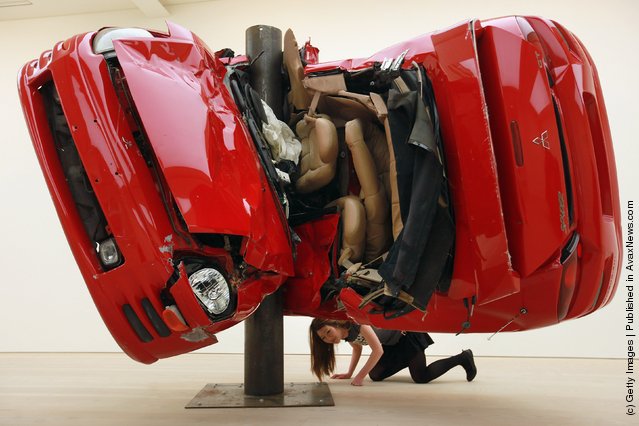
A gallery assistant at the Saatchi Gallery admires a sculpture by artist Dirk Skreber entitled “Untitled (Crash 1)” on May 26, 2011 in London, England. The sculpture features in the Saatchi Gallery's exhibition, “The Shape of Things to Come: New Sculpture” which showcases work from 20 international artists. (Photo by Oli Scarff/Getty Images)
Details
27 May 2011 08:14:00
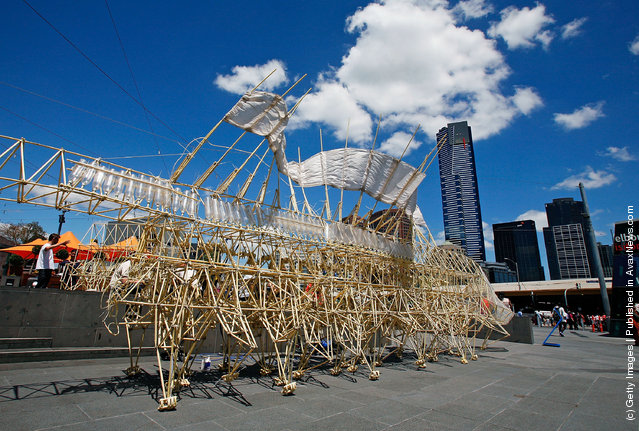
The “Strandbeest” sculpture created by Dutch artist Theo Jansen “walks” at Federation Square

The “Strandbeest” sculpture created by Dutch artist Theo Jansen walks at Federation Square on February 1, 2012 in Melbourne, Australia. The 12 metre long, 4 metre high and 2 metre wide structure built of plastic tubes and bottles designed to walk using wind energy will be on display at Federation Square until February 26. (Photo by Scott Barbour/Getty Images)
Details
01 Feb 2012 10:36:00
Prada Marfa Is IIlegal Roadside Ad

Prada Marfa is a permanently installed sculpture by artists Elmgreen and Dragset, situated 1.4 miles (2.3 km) northwest of Valentine, Texas, just off U.S. Highway 90 (US 90), and about 26 miles (42 km) northwest of the city of Marfa. The installation was inaugurated on October 1, 2005. The artists called the work a "pop architectural land art project."
Details
22 Sep 2014 09:42:00