Loading...
Done
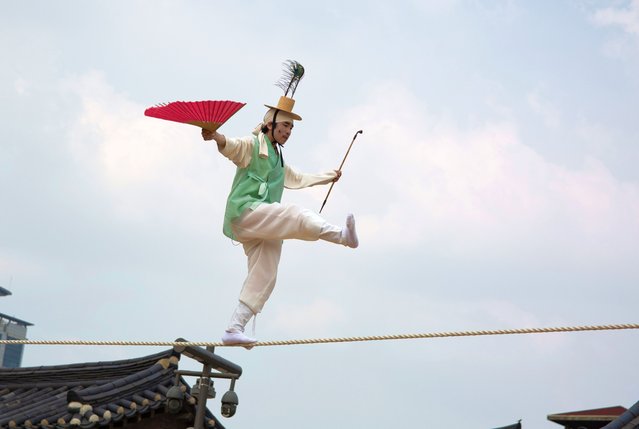
South Korean tightrope walker Nam Chang-dong performs “Jultage” or Tightrope walking during the traditional festival “Dano” at Namsan Hanok village in Seoul, South Korea, 14 June 2021. The festival falls on the fifth day of the fifth month of the lunar calendar. Only 30 audience members were allowed to attend the performance amid the coronavirus COVID-19 pandemic. (Photo by Jeon Heon-Kyun/EPA/EFE)

South Korean tightrope walker Nam Chang-dong performs “Jultage” or Tightrope walking during the traditional festival “Dano” at Namsan Hanok village in Seoul, South Korea, 14 June 2021. The festival falls on the fifth day of the fifth month of the lunar calendar. Only 30 audience members were allowed to attend the performance amid the coronavirus COVID-19 pandemic. (Photo by Jeon Heon-Kyun/EPA/EFE)
Details
18 Jul 2021 06:12:00
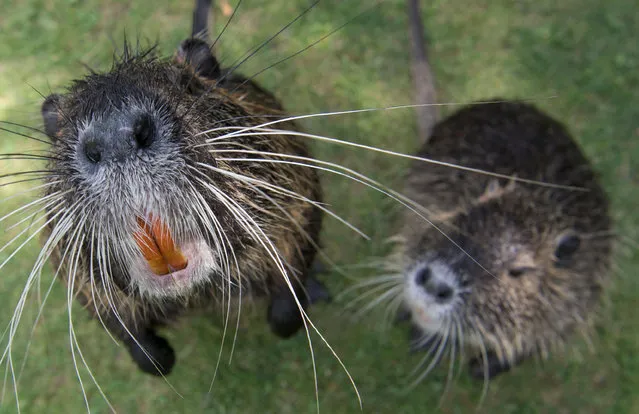
Nutrias venture near the camera at the river Nidda in Frankfurt am Main, Germany, 15 June 2017. The rabbit sized animals are often confused with biebers by amateurs. (Photo by Boris Roessler/DPA)

Nutrias venture near the camera at the river Nidda in Frankfurt am Main, Germany, 15 June 2017. The rabbit sized animals are often confused with biebers by amateurs. (Photo by Boris Roessler/DPA)
Details
18 Jun 2017 03:24:00
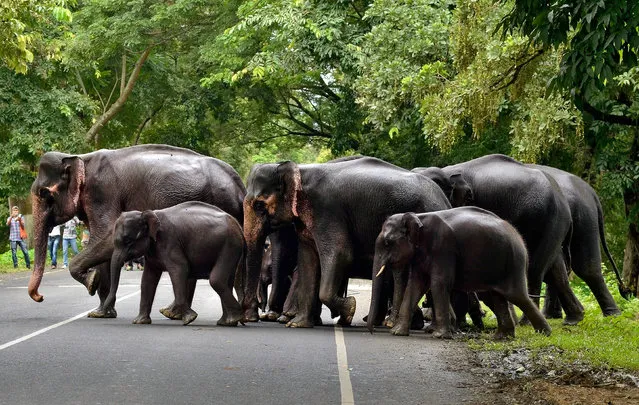
A herd of elephants cross a road that passes through the flooded Kaziranga National Park in the northeastern state of Assam, India, July 12, 2017. (Photo by Anuwar Hazarika/Reuters)

A herd of elephants cross a road that passes through the flooded Kaziranga National Park in the northeastern state of Assam, India, July 12, 2017. (Photo by Anuwar Hazarika/Reuters)
Details
15 Jul 2017 08:26:00
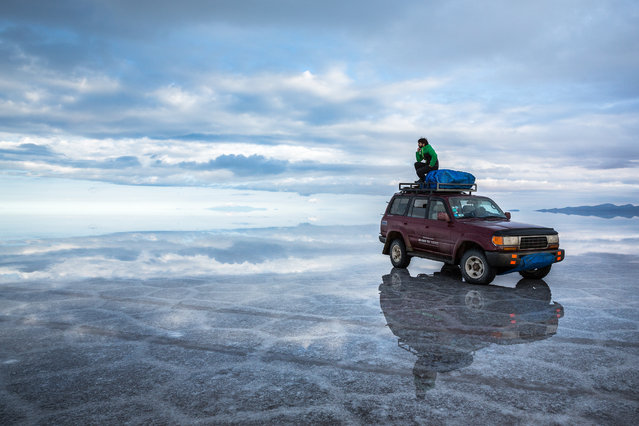
At 10,582 square kilometres, the Bolivian salt flats – otherwise known as Salar de Uyuni – are the largest on the planet and contain between 50 and 70% of the world’s lithium reserves. After exploring Chile and Argentina, photographer Joel Santos decided to travel to Bolivia in January 2017 to check the salt flats off his bucket list. With an electrical storm rolling in, Joel and his two travelling companions were the only souls left on the vast flats and captured the eerie flats without a person in sight. (Photo by Joel Santos/Barcroft Images)

At 10,582 square kilometres, the Bolivian salt flats – otherwise known as Salar de Uyuni – are the largest on the planet and contain between 50 and 70% of the world’s lithium reserves. After exploring Chile and Argentina, photographer Joel Santos decided to travel to Bolivia in January 2017 to check the salt flats off his bucket list. With an electrical storm rolling in, Joel and his two travelling companions were the only souls left on the vast flats and captured the eerie flats without a person in sight. (Photo by Joel Santos/Barcroft Images)
Details
12 Aug 2019 00:03:00
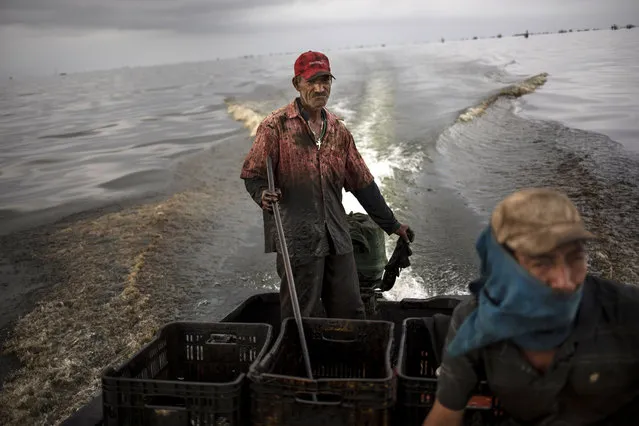
Fisherman Jose Miguel Perez, whose nickname is “Taliban”, navigates the oil infested waters of Lake Maracaibo, near Cabimas, Venezuela, May 21, 2019. Nobody lives as closely with the environmental fallout of Venezuela's collapsing oil industry as the fishermen who scratch out an existence on the blackened, sticky shores of Lake Maracaibo. (Photo by Rodrigo Abd/AP Photo)

Fisherman Jose Miguel Perez, whose nickname is “Taliban”, navigates the oil infested waters of Lake Maracaibo, near Cabimas, Venezuela, May 21, 2019. Nobody lives as closely with the environmental fallout of Venezuela's collapsing oil industry as the fishermen who scratch out an existence on the blackened, sticky shores of Lake Maracaibo. (Photo by Rodrigo Abd/AP Photo)
Details
26 Nov 2019 00:03:00
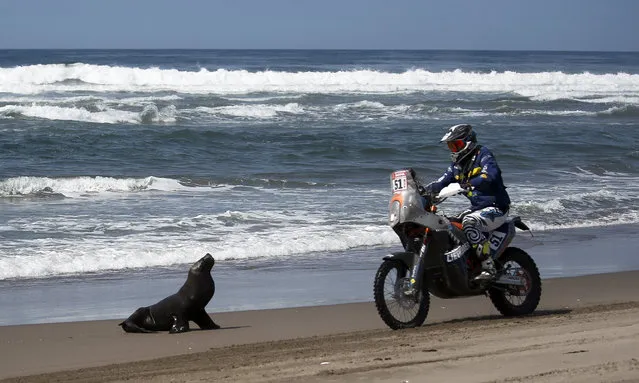
Dutch driver Hans Jos Liefhebber on his KTM drives next to a seal during the fifth stage of the 2018 Dakar Rally, between San Juan de Marcona and Arequipa, on the beach of Puerto Lomas, Peru, 10 January 2018. The 2018 Dakar says goodbye to the dunes with its fifth and final stage over the Peruvian desert and begins to take height as it enters the Andean mountain range, heading for Bolivia. (Photo by David Fernandez/EPA/EFE)

Dutch driver Hans Jos Liefhebber on his KTM drives next to a seal during the fifth stage of the 2018 Dakar Rally, between San Juan de Marcona and Arequipa, on the beach of Puerto Lomas, Peru, 10 January 2018. The 2018 Dakar says goodbye to the dunes with its fifth and final stage over the Peruvian desert and begins to take height as it enters the Andean mountain range, heading for Bolivia. (Photo by David Fernandez/EPA/EFE)
Details
17 Jan 2018 07:50:00
Members of Panchayati Akhara Bada Udasin take part in a religious procession as they head towards the Kumbh Mela festival ahead of the royal bath near the Sangam, the confluence of three of the holiest rivers in Hindu mythology – Ganga, Yamuna, and the mythical Saraswati – in Prayagraj, Uttar Pradesh, India, 12 January 2025. Every 12 years, Hindu pilgrims gather for ritual baths at the river's banks during the Maha Kumbh Mela festival. (Photo by Rajat Gupta/EPA)

Members of Panchayati Akhara Bada Udasin take part in a religious procession as they head towards the Kumbh Mela festival ahead of the royal bath near the Sangam, the confluence of three of the holiest rivers in Hindu mythology – Ganga, Yamuna, and the mythical Saraswati – in Prayagraj, Uttar Pradesh, India, 12 January 2025. Every 12 years, Hindu pilgrims gather for ritual baths at the river's banks during the Maha Kumbh Mela festival. (Photo by Rajat Gupta/EPA)
Details
18 Jan 2025 04:05:00
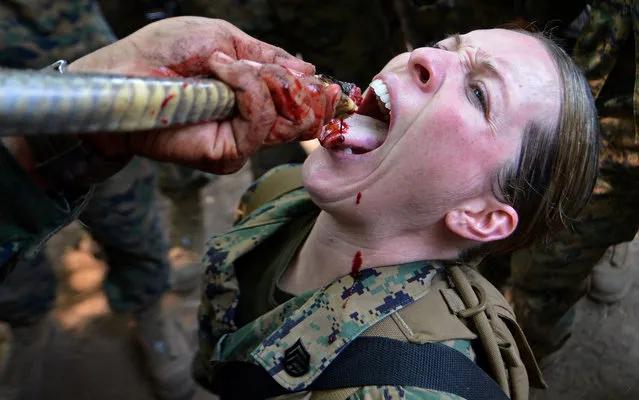
In a military base in the Thai province of Chon Buri February 20 U.S. Marines Navy with Thailand began their studies in jungle survival. The event is held in joint military exercises “Cobra Gold 2013”. During a jungle survival program February 20, 2013 taught by Royal Thai Special Forces in Sannapit, Thailand, U.S. Marines learned to catch cobras and drink their fresh blood, not to mention eat forest insects and pull the heads off of chicken. The training was part of Operation Cobra Gold 13, the 32nd edition of international military exercises hosted by the Thai. According to a U.S. Marines press release, Cobra Gold is the largest exercise of its kind in Asia and incorporates troops from five other nations in addition to the U.S. and Thailand. The Daily Mail reports that the Marines were invited to experience the local custom of drinking cobra blood after being taught to catch and kill cobras in the wild. As CNN notes, Cobra blood is believed to be a panacea and aphrodiasic in parts of Southeast Asia. In Jakarta, vendors can earn over $100 a night selling shots of cobra blood mixed with liquor. (Photo by Pornchai Kittiwongsakul/AFP Photo)

During a jungle survival program February 20, 2013 taught by Royal Thai Special Forces in Sannapit, Thailand, U.S. Marines learned to catch cobras and drink their fresh blood, not to mention eat forest insects and pull the heads off of chicken. The training was part of Operation Cobra Gold 13, the 32nd edition of international military exercises hosted by the Thai. According to a U.S. Marines press release, Cobra Gold is the largest exercise of its kind in Asia and incorporates troops from five other nations in addition to the U.S. and Thailand. The Daily Mail reports that the Marines were invited to experience the local custom of drinking cobra blood after being taught to catch and kill cobras in the wild. As CNN notes, Cobra blood is believed to be a panacea and aphrodiasic in parts of Southeast Asia. In Jakarta, vendors can earn over $100 a night selling shots of cobra blood mixed with liquor. (Photo by Pornchai Kittiwongsakul/AFP Photo)
Details
23 Feb 2013 11:52:00