Loading...
Done
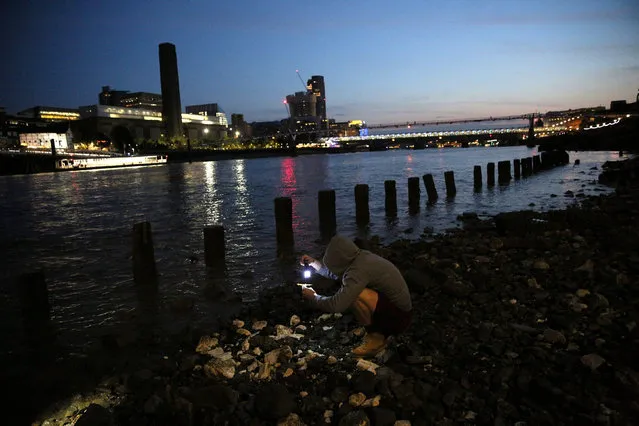
A mudlark uses a torch to look for items on the bank of the River Thames in London, Britain June 06, 2016. Mudlarking is believed to trace its origins to the 18th and 19th century, when scavengers searched the Thames' shores for items to sell. These days, history and archaeology fans are the ones hoping to find old relics such as coins, ceramics, artifacts or everyday items from across centuries. They wait for the low tide and then scour specific areas of exposed shores. "If you're in a field you could be out all day long, with the river you're restricted to about two or three hours," mudlark Nick Stevens said. While many just use the naked eye for their searches, others rely on metal detectors for which a permit from the Port of London Authority is needed. Digging also requires consent. (Photo by Neil Hall/Reuters)

A mudlark uses a torch to look for items on the bank of the River Thames in London, Britain June 06, 2016. Mudlarking is believed to trace its origins to the 18th and 19th century, when scavengers searched the Thames' shores for items to sell. These days, history and archaeology fans are the ones hoping to find old relics such as coins, ceramics, artifacts or everyday items from across centuries. their finds with the Portable Antiquities Scheme. Any item over 300 years old must be recorded. (Photo by Neil Hall/Reuters)
Details
27 Aug 2016 10:43:00
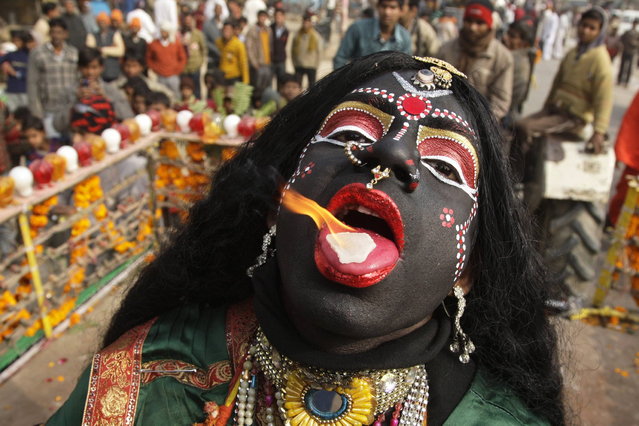
A man dressed as Hindu goddess Kali, the goddess of power, performs with a burning camphor tablet on his tongue during a religious procession ahead of the “Kumbh Mela”, or Pitcher Festival, in the northern Indian city of Allahabad January 6, 2013. During the festival, hundreds of thousands of Hindus take part in a religious gathering at the banks of the river Ganges. The festival is held every 12 years in different Indian cities. (Photo by Jitendra Prakash/Reuters)

A man dressed as Hindu goddess Kali, the goddess of power, performs with a burning camphor tablet on his tongue during a religious procession ahead of the “Kumbh Mela”, or Pitcher Festival, in the northern Indian city of Allahabad January 6, 2013. During the festival, hundreds of thousands of Hindus take part in a religious gathering at the banks of the river Ganges. The festival is held every 12 years in different Indian cities. (Photo by Jitendra Prakash/Reuters)
Details
14 Jan 2013 10:54:00
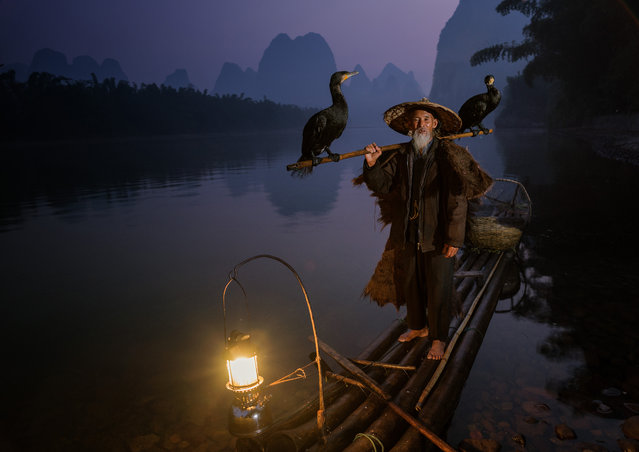
“On the Li River near Xingping in China, Cormorant fishermen work the waterways before dawn amidst the spectacular limestone towers of the Karst landscape.  The birds are trained to fetch fish from the inky depths but not swallow them. The fisherman accepts the fish from the birds who dive back for more. Here, still before dawn, the fisherman and his birds head for home”. (Photo and caption by Neville Jones/2014 Sony World Photography Awards)

“On the Li River near Xingping in China, Cormorant fishermen work the waterways before dawn amidst the spectacular limestone towers of the Karst landscape. The birds are trained to fetch fish from the inky depths but not swallow them. The fisherman accepts the fish from the birds who dive back for more. Here, still before dawn, the fisherman and his birds head for home”. (Photo and caption by Neville Jones/2014 Sony World Photography Awards)
Details
21 Mar 2014 08:44:00
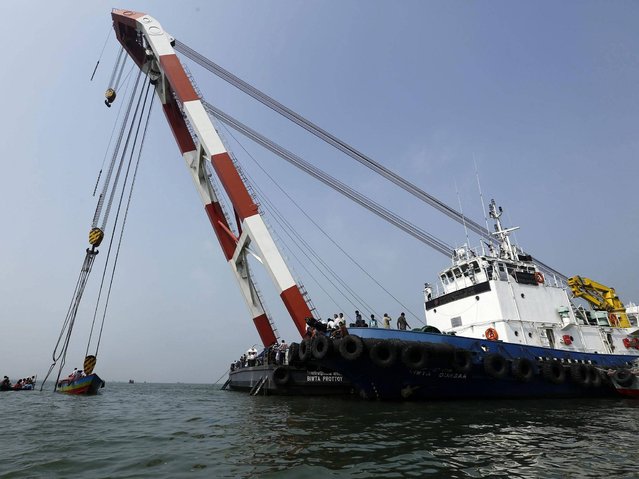
Rescue operations are undergoing to recover the sunken ferry MV Miraj 4 in the Megna River near Munshiganj, Bangladesh, 16 May 2014. The death toll in the Bangladesh ferry disaster rose to 26 on 16 May, including children and women and many more feared dead as the ferry, carrying more than 200 passengers on board, sunk during a storm on 15 may 2014, police authorities said. (Photo by Abir Abdullah/EPA)

Rescue operations are undergoing to recover the sunken ferry MV Miraj 4 in the Megna River near Munshiganj, Bangladesh, 16 May 2014. The death toll in the Bangladesh ferry disaster rose to 26 on 16 May, including children and women and many more feared dead as the ferry, carrying more than 200 passengers on board, sunk during a storm on 15 may 2014, police authorities said. (Photo by Abir Abdullah/EPA)
Details
18 May 2014 10:28:00
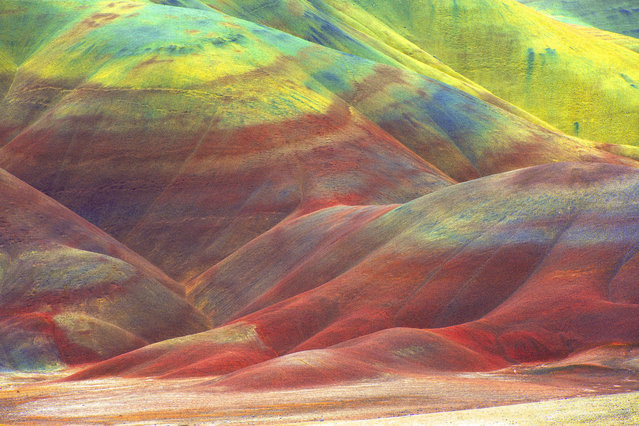
Layers of breathtaking colour streak the rolling hills of this vast desert, making the landscape appear as though it has been tie-dyed. The natural phenomenon, nicknamed the “Painted Desert”, was formed when the area was once a river floodplain. (Photo by Mark Brodkin/Solent News/SIPA Press)

Layers of breathtaking colour streak the rolling hills of this vast desert, making the landscape appear as though it has been tie-dyed. The natural phenomenon, nicknamed the “Painted Desert”, was formed when the area was once a river floodplain. Each colour corresponds to a different underground geological feature – rocks which have seemingly dyed the layers of earth above. Formed from volcanic activity, the hills at the John Day Fossil Beds National Monument in East Central Oregon, USA, are almost bursting with colour. Pictured: The colourful hills at the John Day Fossil Beds National Monument in East Central Oregon, USA. (Photo by Mark Brodkin/Solent News/SIPA Press)
Details
30 Jul 2014 11:00:00
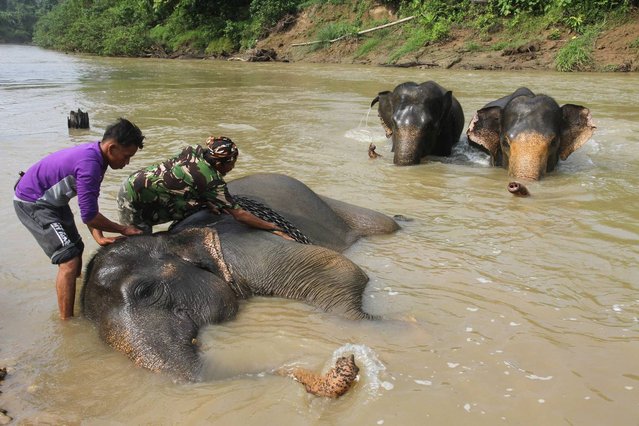
Indonesian mahouts (elephant masters) bathe elephants prior to a daily patrol at a Conservation Respons Unite (CRU) to control elephant-human conflicts in Serbajadi, East Aceh on April 7, 2016. Elephants have joined the front line in the fight against poaching and illegal logging in the dense jungles of Sumatra. Guided by their Indonesian mahouts, they trek alongside rivers, over rough terrain and deep into the rainforest in an area that is home to numerous endangered species, from orangutans to tigers, but which has suffered devastating deforestation in recent years. (Photo by AFP Photo/Januar)

Indonesian mahouts (elephant masters) bathe elephants prior to a daily patrol at a Conservation Respons Unite (CRU) to control elephant-human conflicts in Serbajadi, East Aceh on April 7, 2016. Elephants have joined the front line in the fight against poaching and illegal logging in the dense jungles of Sumatra. Guided by their Indonesian mahouts, they trek alongside rivers, over rough terrain and deep into the rainforest in an area that is home to numerous endangered species, from orangutans to tigers, but which has suffered devastating deforestation in recent years. (Photo by AFP Photo/Januar)
Details
11 Apr 2016 10:24:00
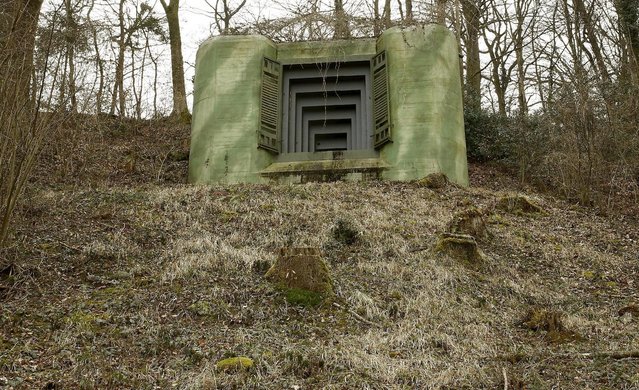
A bunker at aformer Swiss artillery fortress called Heldsberg stands near the town of St. Margareten, Switzerland March 22, 2015. Heldsberg fortress, located on the Swiss-Austrian border near the River Rhine and Lake Constance was built from 1938 to 1940 and remained in military use until 1992. Since 1993 it is open to the public as Fortress Museum Heldsberg. (Photo by Arnd Wiegmann/Reuters)

A bunker at aformer Swiss artillery fortress called Heldsberg stands near the town of St. Margareten, Switzerland March 22, 2015. Heldsberg fortress, located on the Swiss-Austrian border near the River Rhine and Lake Constance was built from 1938 to 1940 and remained in military use until 1992. Since 1993 it is open to the public as Fortress Museum Heldsberg. (Photo by Arnd Wiegmann/Reuters)
Details
09 Jan 2016 08:03:00
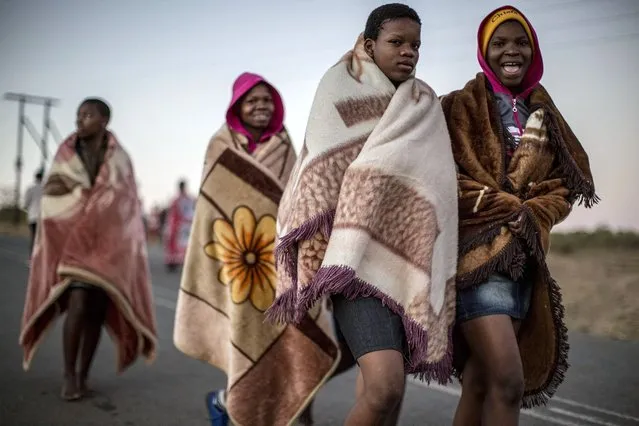
South African maidens wrap themselves in blankets as they head to a ritual bath in a local river on September 5, 2014 at the eNyokeni Royal Palace in Nongoma in the KwaZulu-Natal region ahead of the 13th anniversary of the Reed Dance (uMkhosi woMhlanga) celebrated by the Zulu King Goodwill Zwelithin. (Photo by Marco Longari/AFP Photo)

South African maidens wrap themselves in blankets as they head to a ritual bath in a local river on September 5, 2014 at the eNyokeni Royal Palace in Nongoma in the KwaZulu-Natal region ahead of the 13th anniversary of the Reed Dance (uMkhosi woMhlanga) celebrated by the Zulu King Goodwill Zwelithin. As part of the ceremony, the young women dance bare-breasted for the king, each carrying a long reed, deposited later as they approach the King and is a cultural celebration that promotes respect for young women, and preserves the custom of keeping girls as virgins until marriage. (Photo by Marco Longari/AFP Photo)
Details
07 Sep 2014 13:04:00